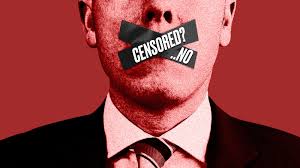
Blue Press Journal – The Kimmel conundrum: it seems the Trump administration’s attempt to silence the late-night host has backfired in a big way. New polling released Friday suggests that the public is not buying what the Republicans are selling, and instead, they’re calling foul on the FCC’s strong-arming tactics.
But what’s even more interesting is that the public thinks FCC Director Brendan Carr crossed the line with his comments. A full 43% of adults say his remarks were unacceptable, while only 26% think they were okay.
Acceptability of Carr’s Comments
Percentage
Unacceptable
43%
Acceptable
26%
Unsure
31%
As Senator Ted Cruz so aptly put it, “That’s right out of ‘Goodfellas.’ We shouldn’t be threatening government power to force him off air. That’s a real mistake.” Even a Republican as conservative as Cruz recognizes that the FCC’s actions are a clear overreach.
Kimmel’s comments, after all, were not without merit. The Trump administration and its allies have been working overtime to assign blame for Kirk’s murder to the “left,” in a blatant attempt to gin up outrage against Democrats. It’s a tired old tactic, and the public is not buying it.
The Trump administration’s push to silence Kimmel has only served to highlight the very issue he was trying to address. It’s a classic case of shooting oneself in the foot, and the public is not amused.
So, to all the Republicans dancing on Kimmel’s metaphorical grave, beware: the public is watching, and they’re not impressed.
Blue Press Journal – In the aftermath of Charlie Kirk’s tragic killing, a striking paradox has emerged: conservatives, once vocal critics of cancel culture, are now embracing it with alarming fervor. The impulse to condemn those who celebrated the murder is understandable, but the hypocrisy is glaring. Conservatives, who long championed free speech and open discourse, are now calling for individuals to be fired and ostracized for online remarks, effectively mirroring the very “progressive scolds” they once denounced.
This about-face is particularly galling, as it echoes the same dynamics that drove some to support Donald Trump in 2024. The “woke right” has adopted a more aggressive and official approach to censorship, potentially violating not only the spirit but also the letter of the 1st Amendment. The Attorney General’s threat to prosecute printers who refuse to print vigil posters and to target individuals for “hate speech” is a chilling example of this trend.
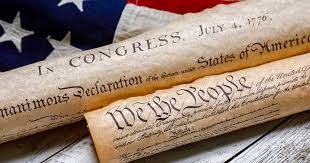
The First Amendment’s sacred right to freedom of speech boldly stands as a fierce guardian against the oppressive grasp of government censorship, ensuring that not only can we express ourselves freely, but we also have the unassailable right to receive information! It fiercely dismisses any discrimination against speakers, protecting the voice of every individual, while shielding them from unjust tort liability for their words. Furthermore, it vehemently prohibits the government from imposing its will on individuals and corporations, refusing to allow anyone to be coerced into uttering or financially endorsing speech that goes against their deeply held beliefs!
The irony is compounded by the fact that conservatives are now advocating for the same kind of coercive measures they once criticized progressives for. The demand that printers must produce images for vigils is eerily reminiscent of the controversy over bakers being forced to cater to gay weddings. The Charlie Kirk Data Foundation’s searchable list of individuals who posted mean tweets has already led to a purge, with prominent figures like Jimmy Kimmel facing suspension.
As comedian Tim Dillon astutely observed, the Trump agenda bears an unsettling resemblance to the dystopian scenarios once warned about by conspiracy theorists. The erosion of values, morals, and principles in favor of political expediency is a grim reality. The notion that free speech, limited government, and fiscal restraint are sacrosanct only when convenient is a stark reminder that, in the Trump era, hypocrisy knows no bounds.
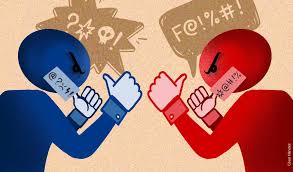
Blue Press Journal – We’ve all felt it – a rising tension in our society, an undercurrent of anger that often boils over into something more destructive. As we witness an increasingly polarized America, we, as observers, must ask ourselves: what fuels this escalation, and what role do our media landscapes play?
For some time now, we have been watching a concerning trend unfold. Platforms traditionally associated with right-wing media, including prominent figures like President Donald Trump and a growing number of right-wing podcasters, have utilized their considerable reach to disseminate rhetoric that, at times, veades dangerously into hate speech. This isn’t just about political disagreement; we are talking about language that demonizes opponents, incites fear, and in many documented cases, appears to lay the groundwork for real-world violence.
The connection isn’t always direct, a simple cause-and-effect. Yet, when we see a consistent pattern of inflammatory language coupled with a rise in violent incidents, we cannot ignore the potential correlation. It’s a sobering thought: are the words echoing across our airwaves and internet channels contributing to a more violent America?
The Data Speaks: An Asymmetry in Violence
When we examine the data and various analyses conducted by civil society organizations and research institutions, a disturbing trend emerges. While violence can regrettably stem from any part of the political spectrum, evidence consistently suggests that a disproportionate amount of politically motivated violence and threats in recent years has originated from individuals and groups identifying with the right.
This isn’t to say that the left is entirely without fault in rhetorical excesses or occasional violent outbursts, but the scale and frequency differ significantly. As one analyst put it, “While all forms of political violence are reprehensible, ignoring the dominant source of this aggression is to willfully misunderstand the present threat landscape.”
To illustrate this, let’s consider a generalized overview based on observed trends:
Ideological Origin (Generalized)
Examples of Violent Incidents/Threats
Observed Frequency of Major Incidents
Right-Wing Extremism
Domestic terrorism, hate crimes, political violence, threats against officials, anti-government actions
Higher
Left-Wing Extremism
Property destruction, clashes with authorities, targeted threats (less frequent than right-wing)
Lower
Note: This table presents a generalized observation based on available aggregate data and analyses, not an exhaustive statistical breakdown. Both categories can exhibit rhetorical extremism, but the progression to physical violence has shown an observable asymmetry.
The numbers compel us to confront an uncomfortable truth: the ecosystem of right-wing media, with its potent blend of grievance politics, conspiracy theories, and often dehumanizing language, appears to be a significant accelerant in the engine of violence gripping our nation.
Beyond Group Blame: Focusing on Individual Accountability
However, we must also be careful not to fall into the trap of collective blame. While we identify trends and highlight the influence of platforms and figures, the ultimate responsibility for violent actions lies with the individual perpetrators. It is crucial for us to stop blaming entire groups for the actions of a few, or even many, and instead focus on holding individuals accountable for their specific words and their specific actions.
This means demanding accountability from those who wield significant public platforms. When a President or a popular podcaster uses language that can be reasonably interpreted as inciting violence, they must understand the weight of their words. As the late Justice Louis Brandeis famously stated, “The greatest dangers to liberty lurk in insidious encroachment by men of zeal, well-meaning but lacking in understanding.” Their zeal, even if perceived as well-meaning by some, can have profound and dangerous consequences when translated into inflammatory rhetoric.
We must also empower individuals to critically evaluate the information they consume and to resist the urge to act on hateful impulses. Our collective future depends on our ability to discern truth from incitement and to uphold the values of peaceful discourse and democratic process.
Ultimately, we have the power to change this trajectory. By acknowledging the problem, examining the evidence, and holding both influential figures and individual actors accountable, we can begin to mend the divisions and reclaim a more civil, less violent America.
Blue Press Journal (Opinion) – In a shocking display of politicization, President Donald Trump immediately seized upon the tragic murder of a young man from a pro-Trump MAGA family to further his own agenda. Before the shooter’s identity was even known, Trump began to spin the narrative to his advantage, demonstrating a staggering lack of empathy and a blatant disregard for the truth. As he often does, Trump resorted to divisive rhetoric, proclaiming, “We must take a stand against the enemies of our great nation.”
Trump’s oval office address was a masterclass in doublespeak, as he eulogized the victim, Charlie Kirk, as an “icon of free speech” while simultaneously vowing to silence progressive voices that criticize Kirk’s pro-gun, pro-violence, and white nationalist views. This blatant hypocrisy is a hallmark of Trump’s presidency, and it is nothing short of appalling. As Trump himself has said, “We’re going to take back our country, and we’re going to make America great again.” Great for what and who?
The President’s words are not just empty rhetoric; they have real-world consequences. By demonizing Democrats and labeling them “scum” and “the enemy within,” Trump is creating an environment in which violence against his opponents is not only tolerated but encouraged. The consequences of this toxic rhetoric are all too real. From the violent attack on Nancy Pelosi’s husband to the plot to kidnap Michigan Governor Gretchen Whitmer, the list of incidents inspired by Trump’s words is growing.
As Trump said, “The fake news media is the enemy of the people.” But it is not the media that is the enemy; it is the divisive rhetoric and the violence it inspires that pose a threat to our democracy. Trump’s silence on the Minnesota legislator and her husband who were murdered just two months ago is deafening. His failure to condemn the torching of the Pennsylvania governor’s home or the school shootings that have become all too common is a stark reminder of his priorities.
In a democracy, political differences are meant to be resolved through peaceful means, not violence. But Trump’s actions and words suggest that he is more interested in exploiting tragedy for his own gain than in leading the country towards a more united and peaceful future. As he tweeted, “The Democrats are trying to steal the election.” But it is not the Democrats who are stealing the election; it is Trump who is stealing the narrative, using his platform to spread falsehoods and incite violence.
The American people deserve better. We need a leader who will bring us together, not drive us further apart. We need a leader who will condemn violence in all its forms, not just when it suits their political agenda. As Trump himself has said, “We’re going to win so bigly.” But at what cost? The cost of our democracy, our freedom, and our very lives.
It is time for Trump to take responsibility for his words and actions. It is time for him to recognize the harm that his rhetoric has caused and to work towards healing the divisions that he has created. As the great American poet Maya Angelou once said, “Do the best you can until you know better. Then when you know better, do better.” Trump must do better. He must be better. For the sake of our country, for the sake of our democracy, and for the sake of our very lives.
Blue Press Journal – The recent death of Charlie Kirk, a prominent conservative figure, has sparked a flurry of reactions from both sides of the political spectrum. While Kirk was known for his outspoken and often divisive views, his death has been exploited by some to further inflame tensions and shift the blame onto the left. As the President and far-right podcasters continue to fan the flames, it’s essential to take a step back and assess the situation with a critical and nuanced perspective.
Kirk’s legacy is complex, to say the least. He consistently courted controversy by denying climate change, opposing mask and vaccine mandates, and targeting liberal academics. His views on issues like white privilege, the Civil Rights Act of 1964, and Martin Luther King Jr. were particularly egregious, with him referring to the former as a “myth,” the latter as a “huge mistake,” and the civil rights icon as “overrated.” As he once said, “The idea of white privilege is a myth, it’s a concept that’s been created to divide us.” Such statements only serve to underscore the deep-seated divisions that exist within our society.
However, in the aftermath of his death, it’s crucial to recognize that the left did not cause it. The attempts by Republicans and the conservative far right to silence opposing voices and shift the blame are not only disingenuous but also counterproductive. As the President continues to weigh in, inflaming the situation with his words, it’s clear that enough is enough. We need to take a collective step back and acknowledge that the polarization and division that plagues our nation will only be exacerbated by such actions.
As the renowned social commentator, Noam Chomsky, once said, “The smart way to keep people passive and obedient is to strictly limit the spectrum of acceptable opinion, but allow very lively debate within that spectrum.” It’s time for both sides to engage in a more constructive and respectful dialogue, one that acknowledges the complexities of the issues at hand and seeks to find common ground.
The recent attacks on Democrat former House Speaker Nancy Pelosi’s husband and Pennsylvania’s Democrat Governor Josh Shapiro’s house are stark reminders of the dangers of unchecked rhetoric and the importance of promoting civil discourse. As the great civil rights leader, Martin Luther King Jr., once said, “Darkness cannot drive out darkness; only light can do that. Hate cannot drive out hate; only love can do that.” It’s time for us to choose a different path, one that prioritizes empathy, understanding, and respect for differing perspectives.
The tragic death of Charlie Kirk should serve as a catalyst for reflection and growth, rather than further polarization. By acknowledging the complexities of the issues at hand and seeking to find common ground, we can work towards a more inclusive and respectful public discourse. As the former President, Barack Obama, once said, “We are the ones we’ve been waiting for. We are the change that we seek.” It’s time for us to take ownership of our collective future and strive for a more civil and compassionate society.
In the aftermath of the tragic death of right-wing activist Charlie Kirk, Rep. Jasmine Crockett (D-Texas) has come out swinging against conservatives who are hastily blaming Democrats for the fatal shooting at Utah Valley University. Crockett’s scathing critique highlights the hypocrisy and lack of evidence behind the conservative narrative.
“I hate that some of my colleagues on the other side of the aisle immediately came out and said, ‘This is on the Democrats,’” Crockett said during a press conference on Friday. “Like, we don’t even know who did what, and they’re already pointing fingers.” Numerous conservatives, including Fox News host Jesse Watters and President Donald Trump, have jumped to conclusions, accusing Democrats and the media of being responsible for Kirk’s death.
However, a closer examination of the facts reveals a different story. The suspected killer’s family appears to have ties to MAGA policies, and previous attempts on Trump’s life have been linked to individuals with Republican affiliations. Thomas Matthew Crooks, who attempted to assassinate Trump in Pennsylvania last year, was a registered Republican, while Ryan Routh, who allegedly tried to shoot Trump at his Florida golf club, had once supported him.
Crockett argues that the conservative blame game is a deflection from the real issue at hand: the pervasive influence of white supremacy ideology in these violent incidents. “We’re not going to talk about the fact that the vast majority of these shootings, whether they are seen as political or not, are linked to white supremacy ideology,” she said. “But we don’t want to do anything about that.”
The congresswoman’s persuasive argument exposes the flaws in the conservative narrative and highlights the need for a more nuanced and evidence-based discussion. Rather than prematurely pointing fingers, Crockett urges her colleagues to engage in a constructive conversation about the root causes of violence and work towards finding solutions. As the investigation into Kirk’s death continues, one thing is clear: the blame game must stop, and the pursuit of truth and justice must begin.
Kirk called the, “The Democrat Party is a party of division, a party of hate, and a party of intolerance.” Such statements fueled the passions of many conservatives, who felt that their values and beliefs were under attack. Kirk’s organization, Turning Point USA, became a hub for young MAGA conservatives, providing a platform for them to express their opinions and mobilize against the perceived progressive/liberal agenda.
Kirk’s rhetoric was not only but also damaging to the fabric of American society. By demonizing the opposing party, Kirk contributed to the erosion of civil discourse and the polarization of the country. As former President Barack Obama once said, “If you watch the news, you’ll see that the animosity, the division, the polarization – it’s all gotten worse.” Kirk’s actions, while intended to rally his base, ultimately added to this toxic environment.
Charlie Kirk openly expressed bigoted, homophobic, and Islamophobic views, stating that Islam threatens America. His evangelical Christian beliefs heavily influence his politics, leading him to reject the separation of church and state (part of our constitution) and advocated for a Christian state against “wokeism”. He consistently attacked mask/vaccine mandates during Covid-19, which took millions of Americans lives, and targeting progressive academics with the “Professor Watchlist”, targeting liberal academics, which has been denounced as a form of harassment comparable to a McCarthyite witch-hunt. Additionally, Kirk denied climate change, supported fossil fuels over renewables, opposed DEI programs, and called white privilege a “myth,” the Civil Rights Act of 1964 a “huge mistake,” and Martin Luther King “overrated.”
A couple of years ago, after mass school shootings, Kirk made a comment about some gun deaths in the U.S. being “worth it” to ensure the continued existence of the second amendment to the U.S. constitution, which is the right to keep and bear arms.
“It’s worth it to have a cost of, unfortunately, some gun deaths every single year, so that we can have the Second Amendment to protect our other God-given rights,” he said during an April 5, 2023, appearance at the Salt Lake City campus of Awaken Church. “That is a prudent deal.”
During an appearance with Trump in Georgia last fall, he claimed that Democrats “stand for everything God hates”, adding: “This is a Christian state. I’d like to see it stay that way.”
As Republican strategist, John Weaver, noted, “The problem is that we’re in an era where people are more interested in being right than in being truthful.” Kirk’s approach, while effective in galvanizing his supporters, contributed to this problem. By prioritizing partisan gains over factual accuracy and respectful dialogue, he and others like him have made it more challenging for Americans to engage in constructive debate and find common ground.
Charlie Kirk was a significant figure in the MAGA movment and for Donald Trump, his anti-Democrat “bomb throwing” had a corrosive effect on American politics. By promoting division and spreading misinformation, Kirk’s actions ultimately made America worse. As the country moves forward, it is essential to recognize the importance of respectful discourse and factual accuracy in rebuilding a more united and informed society. As the late Senator John McCain once said, “We need to remind ourselves that we’re all in this together, that we’re all Americans, and that our shared values and interests are more important than our differences.”
It is essential to express that our thoughts and prayers are with his family during this difficult time, and we believe that violence is never a solution to political discourse.
When asked by Nobles if Republicans should be held accountable for the shooting of two Democratic lawmakers in Minnesota, Mace’s response was telling. Nobles referenced the killing of former Democratic Minnesota House Speaker Melissa Hortman and her husband, Mark, as well as the injuring of Democratic state Sen. John Hoffman and his wife, Yvette, in a separate attack. Mace’s attempt to deflect the question only served to highlight her own hypocrisy.
Mace’s initial claim that “Democrats own” Kirk’s death was widely criticized, with many arguing that it was premature and irresponsible to assign blame without knowing the facts. By attempting to shift the blame to Democrats, Mace was accused of engaging in the very same divisive rhetoric that she condemned. As Nobles pointed out, if Mace’s logic is applied consistently, then Republicans would also be responsible for the violence perpetrated against Democratic lawmakers.
The exchange has sparked widespread condemnation, with many labeling Mace’s comments as a clear example of Republican partisan hypocrisy.
Blue Press Journal – The senseless murder of right-wing organizer Charlie Kirk has sent shockwaves across the nation, and rightfully so. It is a tragic reminder that violence has no place in our political discourse. However, it is equally disturbing to note that the outrage and condemnation from the MAGA community seem to be selectively applied. When conservative figures are targeted, there is widespread outrage, but when Democratic lawmakers, schoolchildren, or other innocent lives are lost to gun violence, the response is often muted or even nonexistent.
This dichotomy is a direct result of the “eliminationist rhetoric” perpetuated by President Donald Trump and his allies. This toxic language has created a climate where political opponents are not just deemed wrong, but evil, dangerous, and deserving of eradication. As scholars have noted, this rhetoric leaves no room for disagreement or coexistence, only destruction.
GOP Rep. Anna Paulina Luna’s recent post on X is a perfect example of this phenomenon. While claiming to be sick of the rhetoric, she promptly blamed liberals and the media for Kirk’s murder, insisting that calling Republicans fascists “caused this.” This blatant hypocrisy is staggering, especially considering her response to the murder of a Democratic Minnesota legislator and her husband, where she blamed Gov. Tim Walz for planning to speak at an anti-Trump rally.
In this moment, we are faced with a stark reality: the right is escalating, and the answer to disagreement cannot be to silence opposition with threats of violence. This is not democracy; it is fascism, plain and simple. Conservative activist Christopher Rufo’s demand to jail political opponents under the pretext of “chaos” is a chilling example of this trend.
As Kirk himself admitted in 2023, “You will never live in a society when you have an armed citizenry and you won’t have a single gun death. That is nonsense… But I … think it’s worth it. I think it’s worth to have a cost of, unfortunately, some gun deaths every single year so that we can have the Second Amendment to protect our other God-given rights. That is a prudent deal. It is rational.” For Kirk, gun deaths were not a tragedy to be prevented, but a cost to be accepted. This cavalier attitude towards human life is appalling and highlights the depths of the problem we face.
As we navigate this treacherous landscape, it is essential to remember that disagreement is not only inevitable but also necessary in a functioning democracy. However, the answer cannot be to silence opposition with violence or intimidation. We must condemn the eliminationist rhetoric that has led us to this point and work towards a more inclusive, respectful, and peaceful discourse. The future of our nation depends on it.
Eliminationism – claims a moral purpose, holding that political opponents are ―a cancer on the body politic that must be excised—either by separation from the public at large, through censorship, or by outright extermination—in order to protect the purity of the nation.




 Blue Press Journal