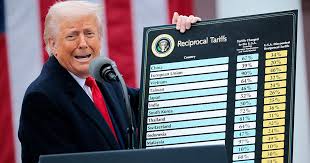
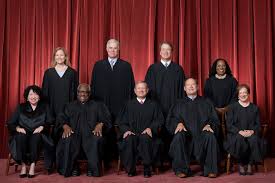
BLUE PRESS JOURNAL (D.C) – In a landmark decision, the Supreme Court delivered a significant blow to President Donald Trump’s trade policies, ruling 6-3 on Friday to invalidate certain “emergency” tariffs imposed during his administration. The high court’s verdict decisively reasserts Congress’s constitutional authority over taxation, curtailing unchecked executive power in international trade.
The ruling centered on the International Emergency Economic Powers Act (IEEPA), which the Court determined did not authorize the President to unilaterally impose tariffs. Chief Justice John Roberts, writing for the majority, critically observed that the expansive interpretation of IEEPA by the administration to levy broad tariffs was unsustainable. “Those words cannot bear such weight,” Roberts stated, referring to the Act’s language.
This decision marks a rebuke of Trump’s trade war tactics, which often bypassed congressional oversight, and suggests a costly reckoning. A U.S. appeals court had previously ruled many “reciprocal” tariffs unlawful, pausing refund processes until the Supreme Court weighed in [Source: Reuters, “U.S. appeals court says Trump’s China tariffs unlawful,” e.g., August 2023 report]. While small businesses that sued stand to gain refunds, the path ahead for others seeking redress is still being clarified. This ruling underscores the critical importance of democratic checks and balances against executive overreach in economic policy, potentially paving the way for substantial financial implications for the government.
Blue Press Journal– As the midterm elections approach, the deepening financial turmoil experienced by American farmers has morphed into a significant political dilemma for the Republican Party. According to former Republican strategist Rick Wilson, the fallout from President Donald Trump’s economic policies is manifesting in a way that could reshape the political landscape in rural America.
In a recent Substack post, Wilson, co-founder of the anti-Trump organization The Lincoln Project, articulated a stark reality: many of Trump’s staunchest supporters are now grappling with a harsh economic truth. He stated, “Welcome to the ‘Find Out’ phase of the most expensive political experiment in American history. As we head into 2026, rural America is discovering that you can’t eat ‘owning the libs,’ and you can’t pay a mortgage with Facebook memes.”
In the 2024 election, rural Americans did more than just support Trump; they made a perilous commitment to his policies. In the nation’s 444 farming-dependent counties, Trump garnered nearly 78% of the vote. Now, these areas are witnessing the catastrophic effects of what Wilson terms “MAGA-nomics,” as multi-generational family farms face unprecedented challenges. The metaphor of “Leopards Eating People’s Faces” epitomizes the irony of voters suffering from the very policies they championed.
The Impact of Tariffs on Farmers
The Trump administration’s imposition of sweeping tariffs has severely impacted farmers’ incomes. Wilson describes the consequences succinctly: “For farmers, this wasn’t ‘winning’—it was a state-sponsored execution.” China, which once accounted for half of all U.S. soybean exports, has largely ceased buying American agricultural products. By 2026, major crop revenues faced staggering declines: corn fell by $169 per acre, soybeans by $114, and cotton nearly $400. According to projections, net farm income is expected to plummet by $41 billion this year—a staggering 23% decrease, marking one of the sharpest declines seen in decades (U.S. Department of Agriculture, 2023).
The Labor Crisis Intensified by Immigration Policies
The plight of farmers has been further exacerbated by the Trump administration’s aggressive immigration policies. As Wilson aptly noted, “If tariffs were the heart attack, immigration policy was the stroke.” The push for mass deportations resulted in a labor crisis that farmers could not ignore. With roughly 70% of farmworkers being foreign-born, the labor force rapidly dwindled. In states like New Jersey and California, crops were left to rot in the fields, and one grower reported a staggering loss of $5 million due to a lack of available labor to harvest.
Political Ramifications for the GOP
The financial fallout from these policies has transformed into a political liability for the GOP. Wilson warns, “For Republicans running in 2026, this is a slow-motion catastrophe. They’re chained to an incumbent who is bankrupting his most loyal voters.” The irony is profound: the very individuals who rallied behind Trump’s trade wars and immigration policies are now suffering the consequences. Experts had predicted these outcomes, yet the farmers who built Trump’s support base are now paying the price.
As rural America grapples with an economic crisis ignited by misguided policies, the political fallout for the GOP could be catastrophic. With the 2026 elections looming, uncertainty reigns over whether the party can extricate itself from the devastating consequences of Trump’s economic blunders or if they will be shackled to a disillusioned base that is growing ever more despondent.
President Trump’s latest 100% tariff threat against Canada will hurt American consumers, damage U.S. industries, and strain vital trade relationships. Learn why Trump’s trade war is bad economics and worse policy.
Blue Press Journal – President Donald Trump’s recent threat Satruday to impose a 100% tariff on Canadian imports has sent shockwaves through North American trade circles. The move, aimed at punishing Canada for its newly negotiated trade concessions with China, reflects the same protectionist instincts that have defined Trump’s economic agenda since his first term. But beyond the political theater, tariffs like these come with a steep price — one paid directly by American consumers, businesses, and workers.
The Canada-China Trade Context
Earlier this month, Canadian Prime Minister Mark Carney announced a deal with China to lower tariffs on Chinese electric vehicles in exchange for reduced import taxes on Canadian agricultural products. While Canada maintains no free-trade agreement with China, the arrangement was crafted to support Canadian farmers and diversify trade relationships amid global tensions.
Trump initially praised the deal, but quickly reversed course, accusing Canada of becoming a “drop-off port” for Chinese goods destined for the U.S. His retaliation? Threatening a 100% import tax on Canadian goods if Ottawa proceeds — a move that would affect everything from steel to agricultural products to critical minerals.
Why Tariffs Hurt Americans More Than They Help
Tariffs are often sold to voters as a way to protect domestic industries, but the reality is that tariffs operate as a hidden tax on U.S. consumers. When the U.S. imposes tariffs, importers pay higher costs, which are then passed along to businesses and consumers in the form of higher prices.
According to a 2019 study by the Federal Reserve Bank of New York, U.S. tariffs during the Trump administration’s first trade war with China led to $1.4 billion in additional costs per month for American consumers. Similarly, research from the Peterson Institute for International Economics found that the average U.S. household paid $800 more per year due to tariff-driven price increases.
For context:
Canada is the largest export destination for 36 U.S. states.
Nearly $2.7 billion USD in goods and services cross the Canada-U.S. border daily.
Canada supplies 60% of U.S. crude oil imports and 85% of U.S. electricity imports.
It is also a key supplier of steel, aluminum, uranium, and critical minerals essential for the auto industry, defense and technology.
Imposing a 100% tariff on these imports would cause instant price spikes in energy, manufacturing, and consumer goods — directly hitting U.S. households and industries.
Economic Fallout of Trump’s Tariff Threat
If enacted, Trump’s proposed tariffs would:
Raise Costs for Energy and Manufacturing – U.S. industries dependent on Canadian oil, electricity, and metals would face supply shortages and higher costs.
Damage Cross-Border Supply Chains – The deeply integrated Canada-U.S. manufacturing sector, especially in automotive and aerospace, would be disrupted.
Invite Retaliation from Canada – Ottawa could respond with its own tariffs on U.S. exports, hurting American farmers, particularly in states that rely on agricultural trade with Canada.
Undermine NATO and Western Alliances – Trump’s antagonistic stance toward Canada, paired with his push to acquire Greenland and social media provocations, risks alienating a key ally.
Political Theater vs. Economic Reality
Trump’s rhetoric — including calling Carney “Governor Carney” and posting altered maps showing Canada as part of U.S. territory — may play well to a certain political base. But such antics undermine serious diplomatic relationships and erode trust among allies.
Carney’s speech at the World Economic Forum in Davos, urging “middle powers” to unite against coercive tactics by great powers, clearly struck a nerve with Trump. As Carney’s popularity rises on the world stage, Trump’s trade threats appear less about protecting American workers and more about retaliating against political rivals.
The Consumer’s Perspective
For the average American, tariffs mean:
Higher grocery bills (due to increased costs on Canadian agricultural imports).
More expensive cars and electronics (Canadian manufacturing is a key part of U.S. supply chains).
Higher energy costs (Canadian oil, electricity, and uranium are essential to U.S. energy security).
In short: Tariffs punish consumers first, industries second, and political rivals last.
So What Does it Mean
President Trump’s threat of a 100% tariff on Canadian goods is more than a diplomatic provocation — it’s an economic self-inflicted wound. Canada is one of America’s most important trading partners, and disrupting that relationship will raise prices, strain industries, and weaken alliances.
If history is any guide, Trump’s tariffs will not force Canada to change course with China. Instead, they will drive up costs for American families, hurt U.S. competitiveness, and isolate the United States in a world where cooperation — not coercion — is the key to economic success.
BLUE PRESS JOURNAL – Remember when President Trump announced his so-called “Liberation Day” tariffs back in April 2025? He promised they’d be a shot in the arm for American workers — especially in manufacturing. The message was simple: slap big taxes on most imports, force companies to “buy American,” and watch U.S. factories roar back to life.
Well, fast-forward to today, and the “roaring” sounds you’re hearing are more like the groans of laid-off workers.
The Job Numbers Tell the Story
Let’s start with the cold, hard math: Since the tariffs went into effect, the U.S. economy has been adding jobs at one-tenth the pace it did under President Biden. According to the Bureau of Labor Statistics (BLS), Biden’s term saw an average of around 400,000 jobs per month in 2021–2022 (BLS Jobs Data). Under Trump’s post-tariff economy in 2025, that’s closer to 40,000 per month — a stunning slowdown for a country not in a recession.
And manufacturing? The very sector Trump claimed he was rescuing? It’s been shrinking. Every single month since the tariffs were announced in April 2025, manufacturing employment has ticked downward. The most recent BLS data shows 67,000 fewer manufacturing jobs now than when the tariffs began (BLS Manufacturing Employment).
Why Tariffs Backfire
Economists have been warning for years that tariffs don’t work the way politicians promise. Sure, they make imported goods more expensive, but they also raise costs for U.S. businesses that depend on imported parts and materials. That means higher prices for consumers and squeezed profit margins for manufacturers — the very people you’re supposedly helping.
Back in 2018, during Trump’s first term, the Peterson Institute for International Economics estimated that his steel and aluminum tariffs actually cost more manufacturing jobs than they preserved (PIIE Analysis). The same pattern seems to be repeating in 2025.
The Domino Effect on the Economy
When manufacturers cut jobs, it doesn’t just hurt factory towns. It ripples out to suppliers, shipping companies, local restaurants, and pretty much any business that depends on those workers’ paychecks. Even sectors not directly tied to imports can get caught in the drag because tariffs slow overall economic activity.
And let’s not forget — these tariffs function like a tax increase on everyday Americans. When the cost of imported goods goes up, so do the prices on store shelves. That’s inflationary pressure at a time when many families are still trying to get their budgets under control.
The Political Spin vs. Economic Reality
Of course, the White House is spinning this as “short-term pain for long-term gain.” The problem is, we’ve heard that before. In 2018 and 2019, Trump’s trade war with China was supposed to bring manufacturing roaring back. Instead, U.S. manufacturing output fell and job growth slowed (Federal Reserve Industrial Production Data).
Now in 2025, history is repeating itself — only the tariffs are broader, the job losses faster, and the excuses flimsier. You can call it “Liberation Day” if you want, but for tens of thousands of American workers, it feels more like eviction day.
Bottom Line
Tariffs make for great political theater. They let a president look “tough” on trade without having to pass complicated legislation. But the economic reality is that they’re a blunt instrument — and when you swing a blunt instrument, you often hurt the very people you claim to be protecting.
If the goal was to “liberate” Americans, the 2025 tariffs have certainly done that — they’ve liberated them from their jobs, from stable paychecks, and in some cases, from their ability to keep the lights on.
Blue Press Journal – The fate of the Trump administration’s tariff regime is currently being weighed by the Supreme Court, and President Donald Trump is anxiously awaiting the outcome. However, regardless of the court’s decision, one thing is clear: tariffs are bad news for American consumers.
The tariffs imposed by the Trump administration have been touted as a means to protect American industries and reduce the trade deficit. However, the reality is that these tariffs have resulted in increased costs for American businesses and consumers. By imposing tariffs on imported goods, the administration has essentially levied a tax on American consumers, who are forced to pay higher prices for everyday products.
The Unintended Consequences of Tariffs
The tariffs have had far-reaching consequences, affecting not just the targeted industries but also the broader economy. American companies that rely on imported goods have seen their costs rise, leading to higher prices for consumers and reduced competitiveness in the global market. Moreover, the tariffs have sparked retaliatory measures from other countries, harming American exporters and farmers.
A Victory for Consumers
A decision by the Supreme Court to limit or strike down the Trump administration’s tariff regime would be a welcome relief for American consumers. It would help to reduce the costs of goods and services, boost economic growth, and promote free trade. On the other hand, if the court upholds the tariffs, it would perpetuate a trade policy that has been detrimental to American consumers.
As the Supreme Court weighs the fate of the Trump administration’s tariff regime, American consumers should be hoping for a decision that prioritizes their interests and promotes a more open and free trading system.
Blue Press Journal – In a striking critique, Fox News chief political analyst Brit Hume slammed President Donald Trump’s handling of the US trade war, pointing out that the administration’s own policies have left American farmers reeling. Trump’s proposed $12 billion aid package for embattled farmers is merely a Band-Aid on a wound caused by his own “disastrous policies,” Hume argued.
The aid package, which includes $11 billion in one-time payments to crop farmers and $1 billion for other crops, is an admission that Trump’s trade war has taken a toll on the agricultural sector. The President’s steep international tariffs, touted as a boon to the US, have instead hurt American farmers who are now being subsidized with taxpayer dollars.
During a roundtable event on Monday, Trump boasted that his trade war had generated the funds needed to bail out crop farmers. He also praised his tariffs on social media, claiming they were benefiting the US. However, economists argue that it’s hypocritical for Trump to take credit for helping farmers when his own policies are the root cause of their problems.
“This is not a bridge loan; this is a subsidy,” Hume said, referring to the Agriculture Department’s new Farmer Bridge Assistance Program. “And it’s put the president now in a position where he’s got to try to help the farmers.”
Trump’s tariffs, which include a 10% baseline tariff on all imports and levies on China as high as 30%, were supposed to be paid for by foreign countries. However, the costs have been passed on to American consumers, including farmers who are struggling to stay afloat.
The President’s attempt to spin the aid package as a success story has been met with skepticism. As Hume noted, “Trump is using our tax dollars to fix his poor judgment and economic policy.” The $12 billion bailout is a clear acknowledgment that Trump’s trade war has failed, and that American taxpayers are footing the bill.
As the trade war continues to drag on, it’s unclear how much longer farmers will be able to weather the storm. One thing is certain: Trump’s policies have come home to roost, and it’s the American taxpayer who is being left to pick up the tab. It’s funny that farmers supported Trump in large numbers for his election and now taxpayers have to pay for their poor decision.
Blue Press Journal (DC) – As the Trump administration prepares to announce a $12 billion farm aid package on Monday, it’s clear that the president’s trade war with China has taken a devastating toll on American farmers. The aid, which will be doled out to farmers who grow crops such as corn, soybeans, and wheat, is a tacit admission that Trump’s economic policies have failed.
The trade dispute with China has been particularly brutal for soybean and sorghum farmers, who rely heavily on exports to China. With more than half of their crops shipped overseas each year, the imposition of tariffs has effectively shut off their biggest market. It’s no surprise, then, that these farmers are being targeted for relief.
But here’s the rub: this bailout is not just a necessary evil to help struggling farmers; it’s also a symptom of a broader problem. The Trump administration’s aggressive trade policies have created uncertainty and chaos in the agricultural sector, and now taxpayers are being asked to foot the bill.
As a nation, we’re being told that this is the price we must pay for Trump’s “America First” agenda. But is it really worth it? By subsidizing one group of Americans over others, we’re abandoning the free market principles that have made our economy great. In a true free market, businesses that can’t compete go out of business. It’s the way the system is supposed to work.
But under Trump’s administration, it seems we’re moving towards a more socialist model, where the government picks winners and losers. It’s a disturbing trend, and one that Republicans should be particularly concerned about. After all, the GOP has long been the party of small government and free enterprise.
The fact that Trump’s farm bailout is being framed as a reward for farmers who supported his tariffs is even more galling. It’s a brazen attempt to buy off a key constituency, rather than addressing the underlying issues that are driving the agricultural sector’s woes.
As the administration prepares to announce this massive bailout, it’s worth asking: what’s next? Will we see more handouts for other industries that are struggling as a result of Trump’s policies? The answer, unfortunately, is likely yes.
For now, American taxpayers will be forced to foot the bill for Trump’s trade war. It’s a costly experiment, and one that we’re all being forced to pay for. As we watch the $12 billion farm bailout unfold, it’s clear that the real losers here are not just the farmers, but the American people as a whole.
Blue Press Journal – As the economic landscape of the United States continues to evolve, the influence of policies, particularly those of Donald Trump, remains a critical topic of discussion. Promising to combat inflation “on day one” of his presidency, Trump’s economic policies aimed to create a vigorous and prosperous economy. However, a closer examination reveals a contrasting reality, marked by persistent inflation and declining consumer sentiment.
Inflation Trends Under Trump’s Policies
Inflation in the U.S. has remained stubbornly high, recently reported at 3%, a figure that represents a significant trend upward since April 2025. This uptick coincided with Trump’s announcement of his tariff program, a keystone of his economic strategy. Tariffs were intended to protect American industries by taxing imports, thereby making domestically produced goods potentially more competitive. However, a side effect of such measures has been an increase in prices, as businesses often pass on the costs of tariffs to consumers.
Despite Trump’s assertion that there is “virtually no inflation” during his presidency, the reality has proved otherwise. In a bid to highlight the achievements of his administration, Trump often pointed to positive economic indicators, such as low unemployment rates and stock market performance, neglecting to address the inflationary pressures that were beginning to mount. As businesses grappled with increased costs, many consumers were left to shoulder the burden through higher prices on goods and services.
The Disconnect Between Policy and Consumer Experience
Trump’s commitment to ending inflation was a significant part of his campaign rhetoric, promising a return to “better economic times.” Yet, as inflation has persisted, many Americans find themselves increasingly discontent with their financial situations. According to a recent report by Bloomberg News, consumer sentiment has plummeted to near-record lows, with personal finance perceptions at their dimmest since 2009.
The ongoing inflation crisis is deeply intertwined with consumer sentiment. As prices rise, the purchasing power of the average American decreases, causing anxiety and frustration. Insights from Bloomberg indicate that concerns over the high cost of living and job security are growing; the probability of personal job loss has reached its highest level since July 2020. Such anxiety can fuel a negative feedback loop, where consumer confidence wanes, leading to reduced spending and potential economic stagnation.
The Implications for Future Economic Stability
While proponents highlight the initial gains in employment and stock performance, the issues of rising inflation and consumer dissatisfaction cannot be overlooked. The tariffs, while intended to protect American interests, may have inadvertently contributed to the inflationary pressures felt by consumers today.
As policymakers and economists examine the lessons learned from the Trump administration, it is crucial to recognize the multifaceted nature of economic management. Addressing inflation requires a holistic approach that considers both production costs and consumer behavior.
Trump’s Policies
The economic policies of Donald Trump, marked by a decisive shift toward protectionism and rhetoric promising to curb inflation, have not yielded the desired outcomes for many Americans. With inflation lingering and consumer sentiment at a low ebb, it is evident that the path to robust economic recovery is fraught with challenges. The ongoing saga of inflation and consumer confidence serves as a reminder that economic policies must be adaptable, responsive, and focused on the well-being of all citizens.
Blue Press Journal – Despite Donald Trump’s repeated assertions that prices are “way down,” the reality is that grocery prices are rising at a rate nearly twice as fast as they were during the final year of the Biden administration. The data, sourced from the Bureau of Labor Statistics, tells a starkly different story than the one Trump is peddling.
According to a HuffPost analysis of the data, inflation for food items has been running at 3.1% since Trump declared his trade war against the rest of the world in early April. This is compared to 1.8% in Biden’s final year. The numbers are clear: Trump’s tariffs have led to increased costs for American consumers, and the impact is being felt at the grocery store.
The Impact of Trump’s Tariffs
Trump’s tariffs, which are paid by American importers at ports of entry, have hit products from virtually every country, including those with which the United States has free trade agreements. Items like coffee, bananas, sugar, and seafood have seen some of the most dramatic price increases thanks to tariffs.
Product
Price Increase Since Trump’s Tariffs
Coffee
12.1%
Bananas
8.5%
Sugar
7.3%
Seafood
6.2%
The data makes it clear that Trump’s claims about prices being lower are, in fact, a lie. “I can’t tell you why the president lies, but I can tell you that everything he has said about prices being lower is a lie,” said University of Michigan economist Justin Wolfers. “I’m starting to think that he doesn’t actually care about the cost of living.”
Experts agree that Trump’s tariffs are increasing costs for U.S. consumers and will continue to make Americans poorer as long as they remain in effect. “I have no insight on why the president says what he says, but tariffs are increasing costs for U.S. consumers, and they will continue to make Americans poorer as long as they remain in effect,” said Erica York, vice president of federal tax policy at the Tax Foundation.
The Reality of Grocery Price Inflation
The numbers are stark: in the months since Trump announced his so-called “Liberation Day” tariffs on goods from the rest of the world, inflation on groceries is running at 3.1% on an annualized basis. This is a significant increase from the 1.8% rate seen during Biden’s final year.
It’s clear that Trump’s lies about prices are not fooling Americans. As the data continues to show rising grocery prices, it’s becoming increasingly difficult for Trump to spin the narrative. The reality is that his tariffs are having a negative impact on American consumers, and it’s time for a change.
Trump’s claims about prices being “way down” are not supported by the data. The numbers reveal rising grocery prices and increased costs for consumers. Experts warn that Trump’s tariffs are devastating the economy. How long will Americans be misled by Trump’s lies about prices?
Blue Press Journal (Opinion) – As the nation grapples with the chaos and destruction wrought by the Trump administration, many are left wondering: how long do we have to tolerate this regime? The answer, much like the Trump presidency itself, remains shrouded in uncertainty. Despite his boasts of strength and stability, the truth is that Trump’s grip on power is weakening, and the cracks are beginning to show.
The recent events in Chicago, where kids and cops were tear-gassed, serve as a stark reminder of the administration’s willingness to use force to suppress dissent. Meanwhile, a judge is holding ICE and CBP officials accountable for their actions, a move that underscores the growing pushback against the administration’s draconian immigration policies. The destruction of the East Wing of the White House, which has left Americans horrified, is a potent symbol of the regime’s disdain for the very institutions it is supposed to uphold.
Even Trump’s loyal base is beginning to show signs of disillusionment. As UFC fighters start to turn away from him, it’s clear that the president’s aura of invincibility is starting to fade. His promises to make life better for his white male base, which included claims that he would “end inflation on day one,” “make America affordable again,” and “slash energy and electricity prices by half within 12 months,” have proven to be nothing more than empty rhetoric.
In reality, Trump’s policies have made things worse. Instead of cutting energy prices, his killing off of Biden’s green energy projects in exchange for fossil fuel campaign money has led to skyrocketing electricity prices nationwide. The cost of groceries and housing has also increased, leaving many Americans struggling to make ends meet. As Trump himself once said, “We’re going to win so bigly, you won’t even believe it.” But for many Americans, the only thing that’s “bigly” is the size of their bills.
The regime’s association with child rapists, including Jeffrey Epstein, has also come under scrutiny. Mike Johnson’s attempts to engineer a cover-up have been exposed, and Republicans are finally starting to demand answers. As one Republican representative noted, “The American people deserve to know the truth about the president’s association with these individuals.” Trump’s response, predictably, has been to deny any wrongdoing and attack his critics. But as the saying goes, “you can’t hide the truth forever.”
As the international community watches in horror, Trump’s policies are damaging America’s relationships with its allies. His embrace of Putin and Netanyahu, his betrayal of Ukraine, and his saber-rattling against Venezuela have all contributed to a growing sense of unease. The tariffs he has imposed on Brazil, which were recently blocked by five Republican senators, are just the latest example of his misguided economic policies. As one senator noted, “These tariffs are a tax on American consumers, and they will only serve to hurt our economy.”
In the end, it’s clear that Trump’s regime is weaker than he wants us to believe. The question is, how long can he hold things together? As the walls begin to close in, and his loyal followers start to abandon ship, it’s likely that we won’t have to tolerate this regime for much longer. As Trump himself once said, “I’m a winner, I’m a champion, I’m a master builder.” But for many Americans, the only thing he’s building is a legacy of chaos and destruction.






 Blue Press Journal