Tag: china

  • Farmer in Upstate New York gets Lesson on Trump Tariffs

    Economists are sounding the alarm, cautioning that tariffs will pose a significant financial burden for homeowners and the real estate industry. This is due to the fact that the U.S. heavily relies on Canada for building materials.

    The impact of these tariffs is not limited to homeowners and the real estate sector; American farmers are also feeling the squeeze. A recent story in the Syracuse sheds light on this issue. According to Syracuse.com reporter Geoff Herbert, a dairy farmer named Gilbert, who owns Adon Farms in Potsdam, New York, found himself facing a hefty bill for livestock feed imported from Ontario, Canada. The recent tariff resulted in Gilbert having to pay an extra $2200 for his feed order.

    Despite President Trump’s claims, tariffs are actually paid by domestic importers, not foreign exporters. Gilbert, like many other farmers, is now grappling with the added costs imposed by these tariffs. The situation is further complicated for Adon Farms as the price of the milk they sell is determined by a local co-op, and there are no nearby U.S. suppliers for their feed.

    Additionally, other significant challenges have been pointed out by Garry Douglas, President of the North Country Chamber of Commerce, indicating that several businesses are facing difficulties as well. A local manufacturing company anticipates an increase of $16 million due to rising raw material costs from Canada, while a paper mill is experiencing distress as the specific type of wood required for production is exclusively sourced from northern regions.

    One must wonder, where is Congresswoman Elise Stefanik? The staunch Trump supporter appears to have neglected her voters during a time of urgent need, failing to take decisive action on tariffs and the devastating consequences they have wrought.

    As if things weren’t tough enough, the prospect of levies on fertilizer or farm equipment looms on the horizon. It seems that MAGA land, where Adon Farms is located, is now facing the real-world consequences of Trump’s policies. How do MAGA voters feel about these developments? It’s a question worth pondering as the impact of tariffs hits close to home.

  • US Consumer Sentiment Drops off the Cliff

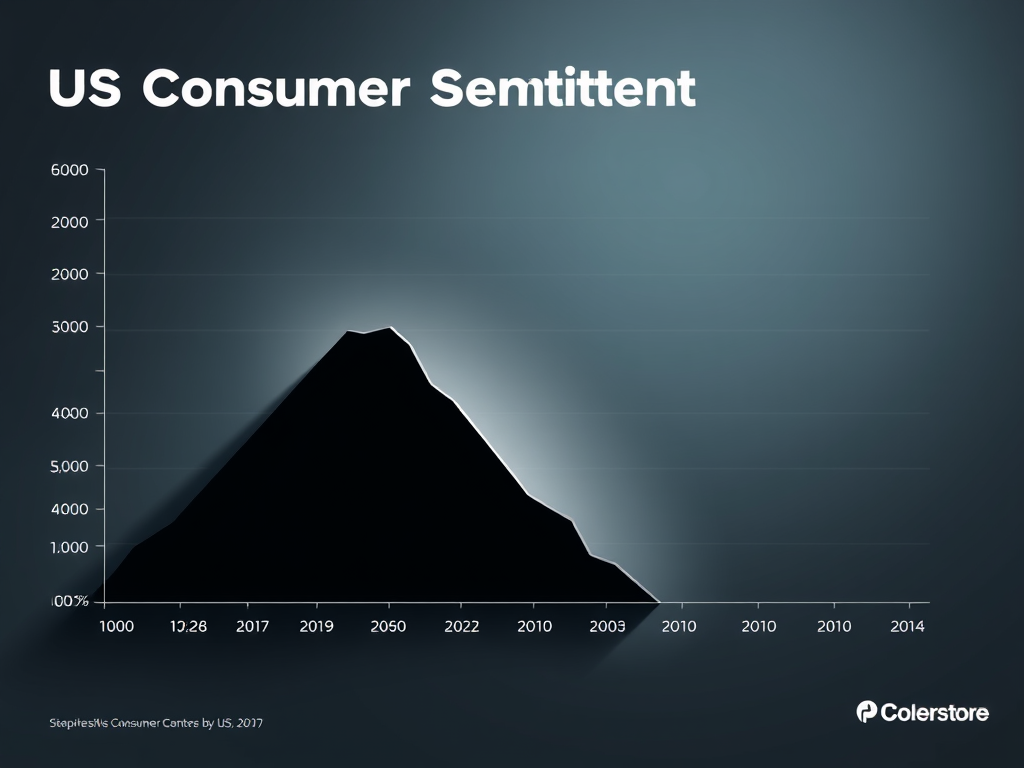
    US consumer sentiment has fallen to its second-lowest point in more than 70 years, signaling a concerning trend that is likely to deteriorate further in the coming months.

    The University of Michigan’s Surveys of Consumers, released on Friday, revealed that U.S. consumer sentiment took a nosedive of 11% at the beginning of April compared to the previous month. This decline was widespread and unanimous across all demographics, including age, income, education, geographic region, and political affiliation.

    The latest report indicates that overall consumer sentiment has now dropped to its second-lowest level since the early 1950s. Lindsay Owens, the executive director of the Groundwork Collaborative, expressed her concerns in a statement, emphasizing that today’s plummeting consumer sentiment numbers may just be the tip of the iceberg.

    Thanks to Trump’s reckless trade policies, markets are in chaos, retirement accounts are in shambles, and shipping orders have come to a screeching halt. Brace yourselves for price spikes, shortages, and the looming threat of a recession in the near future, according to Owens. 

    To add insult to injury, as consumers brace themselves for impending disaster, Congress is recklessly tearing apart the safety net they might desperately need when the economic catastrophe hits. President Trump isn’t just failing to lead; he’s plunging us headfirst into a reckless kamikaze mission, oblivious to the chaos he’s creating.

    If the administration can secure even a few deals in this chaotic time, we should brace ourselves for the heavy weight of drastically increased tariffs, effectively slapping tax hikes on American consumers and businesses. It is utterly baffling why the world is being forced to endure such pointless drama!

  • Trump’s Tariff Flip-Flop: Drive U.S. Stocks Down Again

    Despite President Trump’s surprising reversal on tariffs, U.S. stocks took a nosedive back into the red. The confusion and threats surrounding Trump’s trade war with China are causing major turmoil in the economy.

    Trump’s focus on China, NEW 145% as of today, has led to tariffs on their products skyrocketing. Even if negotiations bring that down to 50%, and other countries only face 10% tariffs, the U.S. economy is still at risk of stunted growth and decreased corporate profits. And of course higher consumer prices for us non-billionaires. 

    Francis Lun, CEO of Geo Securities, summed it up perfectly: “With Donald Trump, it’s like playing a game of roulette. You never know what’s coming next.” The market is drowning in uncertainty, and the looming threat of recession is far from fading.

    The news of China planning to cut back on imported U.S. films hit the entertainment industry hard. Warner Brothers Discovery saw a 13.1% drop in stock prices, while Disney took a 6.7% hit.

    In this chaotic environment, thanks Trump, how are investors supposed to make sound decisions? It’s like trying to navigate a minefield blindfolded. Good luck out there! Your 401 is losing money by the hour!

    What it means to you: Overall Price Level & Distributional Effects: The price level from all 2025 tariffs rises by 2.9% in the short-run, the equivalent of an average per household consumer loss of $4,700 in 2024$. Annual pre-substitution losses for households at the bottom of the income distribution are $2,100.

  • Yes, we are still in the midst of a trade war: Tell it like it is Main Stream Media!

    Yes, we are still in the midst of a trade war. The world is currently facing a 10% tariff on all goods, with Canada experiencing a 25% tariff on major items. Despite what the mainstream media may be saying, it is clear that the White House is dictating the narrative. President Trump’s lack of understanding and unclear end game is evident in his actions.

    The tariff battle between the world’s top two economies has escalated, with President Trump now targeting China directly. Despite fears of a recession, Trump has increased tariffs on China to a staggering 125%. This move has intensified the standoff between the two nations, putting their economies and global interests at risk. The competition between the U.S. and China spans various sectors, from artificial intelligence to monetary policy, heightening the stakes.

    Following Beijing’s response to Trump’s tariffs with equal measures, Trump raised the tariffs even further, only to be met with a similar response from China. The escalating tariffs have now reached 84% on U.S. products going to China. In a bold but stupid move, Trump has announced that Chinese imports to the U.S. will face a 125% tariff, citing China’s lack of respect for global markets.

    The situation leaves little room for negotiation, as both sides refuse to back down. The mainstream media’s portrayal of the situation as less severe is misleading. The EU, Canada, and China are all engaged in a trade war with the U.S., with significant consequences for consumers. It won’t be long before the impact is felt, with prices of goods likely to skyrocket. The reality of this trade war is far from what is being portrayed.

  • Trump Has Lost it!! We will say it if the National Press will not

    With today’s 90-day delay of most tariffs, let’s not forget about the 25% on cars and steel and aluminum, and the whopping 125% on China. One has to wonder, is Trump all there? I mean, there was no plan in place, not even within his own administration, as they were giving different rationales on the Sunday talk shows.

    In a surprising turn of events, Trump took to his favorite social media platform to announce that he is graciously reducing tariffs on all countries to a mere 10% for the next 90 days. This comes after his previous misleading descriptions of tariffs as “reciprocal.” However, China will now face a staggering 125% tariff on their exports to the U.S.   Get ready to pay more at Walmart, Target and the like. 

    Countries that exported more to the United States than they imported from American manufacturers were hit with tariffs higher than the 10% baseline. This disproportionately affected poorer countries, whose citizens cannot afford to purchase American goods. For example, Vietnam faced a “reciprocal” tariff of 46%, while Lesotho, a country Trump claimed to have never heard of, was slapped with a 50% tariff.

    The high tariff rate on Chinese goods may come as a shock to Americans accustomed to purchasing cheap household items made there. A T-shirt that once cost $9.99 at Walmart will now likely be priced at over $20. Let’s not forget the MAGA hats that are made in China, well that will also more than double. 

    Now, Trump claims he will negotiate with 75 countries. Is he really willing to give up his weekly golf games for this? How long will this charade last?  Given the track record of this administration incompetence that’s not a promising game plan. 

    In the end, prices will inevitably rise as China shows no signs of backing down. And if the tariffs are lowered, where is the revenue that Trump promised they would bring in? Oh, the mysteries of Trump’s trade policies.  He has lost it.  

    It appears this is just another scatter brain idea Trump didn’t think out. 

  • Experts are Sounding the Alarm on Trump’s Tariffs

    Experts are sounding the alarm on Trump’s tariffs, warning of dire consequences as the trade war with China escalates. China has retaliated by raising its tariff on the U.S. to a staggering 84%, while John Bolton cautions that Trump’s lack of understanding on tariffs could lead to disastrous outcomes. Bolton bluntly stated, “Trump has no idea what he’s talking about. He doesn’t grasp how tariffs function.” 

    Jamie Dimon, CEO of J.P. Morgan Chase, has grimly predicted a recession as a probable result of Trump’s relentless tariff actions. Dimon expressed his concerns, stating, “A recession is likely on the horizon.”

    As tensions rise, Beijing has implemented various countermeasures in response to Trump’s decision to increase tariffs on Chinese imports to a whopping 104%. China has taken legal action against the U.S. at the World Trade Organization and imposed further restrictions on American companies conducting business with Chinese counterparts.

    Despite calls for dialogue and negotiation, China remains steadfast in its stance. Ministry of Foreign Affairs spokesman Lin Jian emphasized the need for equality, respect, and mutual benefit in resolving issues.

    The repercussions of this escalating trade war are dire. Financial markets are expected to experience significant volatility, U.S. inflation pressures will rise, the industrial base will weaken, and the risk of an economic recession looms large. Ultimately, Trump’s tariff strategy may prove to be a self-destructive move that backfires on the U.S.

  • Trump’s Trade Advisor Invented a Fake Economist To Sell His Tariff Views

    The absurd tale that inspired Trump’s tariffs plan is truly a masterpiece of deception and delusion. In a stroke of genius, Peter Navarro, a key adviser to President Trump, conjured up a fictional character named Ron Vara to bolster his arguments about the economic threat posed by China. This phantom figure, with his fake memo and fake email address, managed to convince Trump to embrace the idea of tariffs as a solution to all of America’s problems.

    It’s truly a work of fiction worthy of a Pulitzer Prize. Navarro, the mastermind behind this elaborate ruse, was able to dupe not only Trump but also Jared Kushner, who brought him on board as an economic adviser during the 2016 campaign. The fact that Navarro’s go-to expert, Ron Vara, doesn’t actually exist is just the cherry on top of this ridiculous sundae.

    Now, as we witness the havoc wreaked by Trump’s tariffs on the U.S. economy, we can only shake our heads in disbelief. Who knew that all it would take to bring about economic ruin was a president with “great ideas” and a penchant for imaginary experts? The sheer audacity of it all is truly mind-boggling.

    So, here we are, in the midst of economic chaos, all thanks to the brilliant mind of Donald Trump. Who needs real experts and sound economic policy when you have a fictional character like Ron Vara to guide the way? It’s a tale for the ages, a cautionary fable about the dangers of putting your faith in fake news and fake experts and Donald Trump!

  • Dumbest’ Recession Ever: GOP Will Pay For Trump’s Tariffs

    Few Republicans are willing to defend the president’s tariffs, leaving the party vulnerable for the first time in Trump’s new term. The implementation of these tariffs marks a significant shift from the global trend of decreasing trade barriers, with economists warning that Americans could face thousands of dollars in increased prices each year, while the U.S. economy is expected to slow sharply.

    According to the Yale Budget Lab, the Trump administration’s tariffs could result in the average household facing an additional $3,800 in expenses this year. This includes a 10% universal tariff, higher tariffs on approximately 60 countries, as well as existing import taxes on steel, aluminum, and cars. Inflation is projected to soar to over 4%, up from the current 2.8%, with the economy facing minimal growth, as estimated by Nationwide Financial.

    The repercussions of these tariffs were felt on Thursday, as the S&P 500 index plummeted by 4.8%, marking its worst day since the pandemic began. The Dow Jones Industrial Average also took a hit, dropping over 1,600 points, causing the average 401 retirement account to lose over $8,000 in just one day.

    Economists predict that the average U.S. tariff could reach nearly 25% once fully implemented on April 9, surpassing levels seen in over a century and even exceeding the infamous 1930 Smoot-Hawley tariffs, which exacerbated the Great Depression.

    The impact of these tariffs will be particularly harsh on Asian countries, with duties on Vietnamese imports rising to 46% and on Indonesia to 32%. Some Chinese imports could face tariffs as high as 79%, affecting major U.S. import sources for shoes like Nike, which produced half of its shoes and one-third of its clothing in Vietnam last year.

    Best Buy’s stock plummeted by a staggering 17.8%, a devastating blow attributed to the global production of its electronics. United Airlines also suffered a significant loss of 15.6%, as fears of a weakening global economy deterred customers from traveling for business or leisure. Target, too, experienced a sharp decline of 10.9%, with concerns mounting over the financial strain on its customers amidst persistent inflation. The once thriving giants of the retail and travel industries now find themselves teetering on the edge of uncertainty, as the world grapples with economic turmoil.

  • Why Is Elon Musk Receiving Top-Secret Military Briefings?

    “You cannot believe things like this! It seems that fact is indeed stranger than fiction. Billionaire Elon Musk is scheduled to receive a briefing from the Defense Department on the country’s top-secret plans for potential war with China. The news was first reported by The New York Times.

    The report, which cited two U.S. officials, has raised eyebrows, especially considering Musk’s business interests in China, a major U.S. adversary, as the country plays a significant role in Tesla manufacturing.

    Elon Musk, now a so-called defense expert, is strangely entangled in slashing federal jobs and undermining our veterans. Can we genuinely afford to have a South African immigrant privy to such sensitive and classified information? It feels like there’s a far more sinister agenda at work, aimed at dismantling our federal agencies and eroding crucial services. This scenario reads like a chilling plot from a dystopian novel, where a foreign power infiltrates and takes control of the United States from the inside! And let’s not overlook Trump’s cozy relationship with Russia and his alarming shift in stance on Ukraine.

    The plans to brief Musk on the top-secret preparations have been independently confirmed by several news outlets. However, it remains unclear if the briefing will proceed following these reports.

    Musk is reportedly planning to cut up to 60,000 civilians from the Defense Department, according to a senior defense official. It does not sound like Trump and Musk are truly serious about protecting the United States. Once again, it reads like a plot of a takeover of the United States.

  • Emptying Our Wallets: Why Trump Tariffs Hurt US Consumers

    For years, the debate around tariffs has raged, often framed as a tool to protect domestic industries and bring jobs back home. However, a closer look reveals a less palatable truth: tariffs, ultimately, hit the pockets of American consumers hard. While the intention might be noble, the reality is that these taxes on imported goods often translate into higher prices, reduced choices, and a weakened economy for everyone.

    So, how do tariffs negatively impact the average American? Here’s a breakdown:

    1. Higher Prices for Everyday Goods: This is perhaps the most immediate and noticeable effect. When a tariff is placed on imported goods like clothing, electronics, or even ingredients for our favorite foods, the cost of importing those goods increases. Businesses, often with tight margins, are left with two choices: absorb the cost (which can be unsustainable) or pass it on to the consumer in the form of higher prices.

    Think about that imported washing machine you were looking to buy. A tariff on imported steel, for example, increases the cost of the materials used to make it, driving up the retail price. Suddenly, that washing machine isn’t so affordable anymore. This applies to countless products we use daily, from smartphones to coffee beans.

    2. Less Choice and Reduced Competition: Tariffs protect domestic industries by making imported goods less competitive. While this sounds good on paper, it can stifle innovation and lead to complacency. Without the pressure of foreign competition, domestic companies may become less motivated to improve their products, offer competitive pricing, or explore new innovations.

    This translates to fewer choices for consumers. Instead of having a range of products to choose from, consumers might be stuck with fewer, potentially more expensive, options offered by a shrinking pool of domestic suppliers. This lack of competition ultimately limits consumer power and pushes prices higher.

    3. Supply Chain Disruptions and Increased Uncertainty: Modern supply chains are incredibly complex and interconnected. Tariffs disrupt these carefully orchestrated systems, forcing businesses to scramble for alternative suppliers, which can be time-consuming and costly. This disruption can also lead to shortages of certain goods, further driving up prices.

    Moreover, the uncertainty surrounding tariffs can scare businesses from investing and expanding. The threat of new tariffs or changes to existing ones makes it difficult for companies to plan for the future, leading them to delay investments, cut back on hiring, and ultimately hindering economic growth.

    4. Retaliatory Tariffs and Trade Wars: Tariffs rarely happen in isolation. When one country imposes tariffs on another, the affected country often retaliates with its own tariffs. This tit-for-tat escalation, known as a trade war, can severely disrupt global trade and damage economies on both sides.

    American farmers, for instance, have been significantly impacted by retaliatory tariffs on agricultural products. Reduced demand for their goods leads to lower prices and financial hardship, demonstrating the widespread impact of trade wars that ultimately impact consumers through higher grocery bills.

    5. Reduced Purchasing Power: Ultimately, the combined effect of higher prices, reduced choices, and economic uncertainty translates to a reduced purchasing power for American consumers. Every dollar spent on higher-priced goods is a dollar less that can be used for other necessities, savings, or investments. This can have a significant impact on household budgets, particularly for low- and middle-income families.

    While Trump often argues for their benefits in protecting domestic industries, the evidence suggests that the costs far outweigh the benefits, particularly for US consumers. Tariffs act as a hidden tax, eroding purchasing power, limiting choices, and disrupting the economy. A focus on free trade, fair competition, and policies that foster innovation will ultimately benefit American consumers far more than protectionist measures that leave us all paying the price.