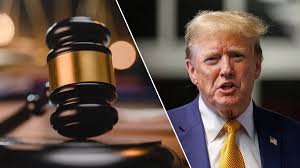
BLUE PRESS JOURNAL (D.C) – In a landmark decision, the Supreme Court delivered a significant blow to President Donald Trump’s trade policies, ruling 6-3 on Friday to invalidate certain “emergency” tariffs imposed during his administration. The high court’s verdict decisively reasserts Congress’s constitutional authority over taxation, curtailing unchecked executive power in international trade.
The ruling centered on the International Emergency Economic Powers Act (IEEPA), which the Court determined did not authorize the President to unilaterally impose tariffs. Chief Justice John Roberts, writing for the majority, critically observed that the expansive interpretation of IEEPA by the administration to levy broad tariffs was unsustainable. “Those words cannot bear such weight,” Roberts stated, referring to the Act’s language.
This decision marks a rebuke of Trump’s trade war tactics, which often bypassed congressional oversight, and suggests a costly reckoning. A U.S. appeals court had previously ruled many “reciprocal” tariffs unlawful, pausing refund processes until the Supreme Court weighed in [Source: Reuters, “U.S. appeals court says Trump’s China tariffs unlawful,” e.g., August 2023 report]. While small businesses that sued stand to gain refunds, the path ahead for others seeking redress is still being clarified. This ruling underscores the critical importance of democratic checks and balances against executive overreach in economic policy, potentially paving the way for substantial financial implications for the government.
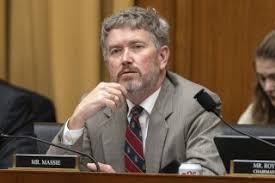
Blue Press Journal – In a sharply worded interview on ABC’s This Week, Representative Thomas Massie (R‑KY) accused President Donald Trump, senior cabinet members, and top White House officials of deliberately shielding a network of wealthy individuals tied to the late convicted sex offender Jeffrey Epstein. Massie called the effort a “systematic cover‑up” designed to protect what he labeled the “Epstein class” – a circle of billionaires who allegedly mingle with names appearing in the heavily redacted documents.
Massie reminded viewers that Trump had once promised full transparency after acknowledging social outings with Epstein‑linked guests in New York City and West Palm Beach. “He said he would be open about the issue,” Massie said, “yet he remains entrenched in the very class he vowed to expose.”
Since Epstein’s 2019 death (during Trumps first term) —officially ruled a suicide, though contested by his family—political pressure to release the remaining files has intensified. During the 2024 campaign, Trump and his allies pledged to make every Epstein‑related record public. After taking office, however, the administration stalled, dismissing the files as a “Democrat hoax” and delivering only heavily redacted versions from the Justice Department.
The limited disclosures have already raised fresh questions. According to a recent statement by Rep. Jamie Raskin (D‑MD), a search of unredacted text for “Don,” “Donald,” and “Trump” generated more than one million hits. The same files suggest deeper ties between Trump’s inner circle—Commerce Secretary Howard Lutnick, CMS Administrator Mehmet Oz, and former strategist Steve Bannon—and Epstein than previously reported.
While no direct criminal evidence against Trump or his aides has emerged, the growing web of connections fuels mounting political scrutiny. Massie seized the moment to label the current administration the “Epstein administration,” accusing it of retaliating against his push for full disclosure. In turn, Trump has publicly attacked Massie and even endorsed Massie’s primary opponent, underscoring the partisan stakes surrounding the dossier.
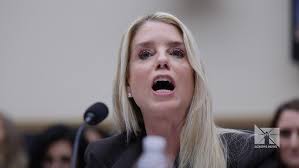
Blue Press Journal – During a recent House Judiciary Committee hearing, U.S. Attorney General Pam Bondi displayed an alarming disregard for democratic oversight, delivering a performance characterized by open hostility, personal insults, and an unsettling evasion of critical questions regarding a Department of Justice (DOJ) “enemies list” and the ongoing Jeffrey Epstein scandal. Her conduct underscored a deep-seated contempt for congressional authority and the public’s right to transparency, leaving many to question the integrity of the nation’s top law enforcement official.
A Pattern of Evasion and Disrespect
The hearing, intended to provide crucial oversight of the DOJ, quickly devolved into a testament to Bondi’s uncooperative stance. From the outset, Bondi reportedly lashed out at Democratic members of Congress, showcasing a level of disrespect rarely seen in such proceedings. Her refusal to acknowledge the profound harm inflicted upon victims of convicted sex offender Jeffrey Epstein, coupled with her dismissive attitude towards direct inquiries, painted a grim picture. As Rep. Mary Gay Scanlon (D-Pa.) pressed for answers, Bondi’s tactics became glaringly apparent: deflection, obstruction, and outright refusal to engage. The atmosphere grew so tense that Ranking Member Jamie Raskin (D-Md.) was compelled to implore Bondi to cease her “wild goose chase, another tangent,” in a desperate attempt to steer her back to the pressing matters at hand. Her disdain for the legislative body was palpable, making a mockery of the oversight process.
The Perilous “Enemies List” and Bondi’s Hypocrisy
At the heart of Scanlon’s questioning was the alarming revelation of an “enemies list” being compiled by the DOJ under Bondi’s direction. This initiative stems from President Donald Trump’s National Security Presidential Memorandum 7 (NSPM-7), signed months after the President baselessly claimed the “radical left” was “directly responsible” for an activist’s assassination. NSPM-7 mandates federal agencies to develop strategies to “investigate and disrupt networks, entities, and organizations that foment political violence,” with a disturbing focus on anti-fascist or left-wing groups.
Bondi’s subsequent memo to the DOJ took this directive a step further, ordering the compilation of a list of potential “domestic terrorism” groups. This move is particularly egregious given Bondi’s prior sworn testimony that the DOJ would “never be an enemies list.” As The Guardian recently reported, legal scholars across the spectrum have condemned these directives, citing profound constitutional concerns regarding freedom of speech and association, calling them “a chilling return to McCarthyism.”
When Scanlon directly asked Bondi to confirm the existence of this list, the Attorney General defiantly declared she was “not going to answer yes or no,” instead pivoting to an unrelated arrest of an “antifa member” in Minneapolis. This blatant attempt to obfuscate and avoid accountability was consistent with her overall performance. “We understand your current position is that you have a secret list of people or groups who you are accusing of domestic terrorism, but you won’t share it with Congress,” Scanlon retorted, exposing the deeply troubling implications of Bondi’s stonewalling.
A Broader Pattern of Surveillance and Suppression
Bondi’s evasiveness is not an isolated incident but rather part of a disturbing pattern under the current administration. Independent journalist Ken Klippenstein previously revealed that the FBI and Department of Homeland Security (DHS) have already amassed “secret and obscure” watchlists targeting pro-Palestinian and anti-Immigration and Customs Enforcement (ICE) protesters, labeling them “domestic terrorists.” Further, CNN reported on a DHS memo directing ICE agents in Minneapolis to collect personal data on protesters, while an ICE agent in Maine brazenly threatened a citizen filming him with inclusion in a “nice little database.” Despite these mounting reports, DHS Assistant Secretary for Public Affairs Tricia McLaughlin publicly denied the existence of any such database, a claim that strains credulity given the overwhelming evidence.
These actions, amplified by Bondi’s current stonewalling, illustrate a concerted effort to weaponize government agencies against political dissent. As Rep. Scanlon powerfully warned, “Americans have never tolerated political demagogues who use the government to punish people on an enemies list.” Such tactics historically brought down figures like Senator Joseph McCarthy and President Richard Nixon. The current administration, and Attorney General Bondi’s complicity, appear poised to follow a similar, ignominious path.
Blue Press Journal D.C. — A significant political maneuver on Capitol Hill this week has thrown President Trump’s favored trade weapon, tariffs, back into the spotlight, exposing deep divisions within the Republican Party and rekindling critical debate about their economic impact on American consumers. House Speaker Mike Johnson’s attempt to block future votes on Trump-era tariffs failed dramatically on Tuesday, signaling a growing bipartisan unease with protectionist trade policies.
In a rare display of internal dissent, three Republican lawmakers – Thomas Massie of Kentucky, Kevin Kiley of California, and Don Bacon of Nebraska – joined forces with Democrats to defeat a crucial procedural measure by a slim 217-214 margin. This unexpected revolt clears the path for the House to consider resolutions disapproving of President Trump’s 25% duties on Canadian goods, and potentially others.
For nearly a year, House Republican leadership had shielded its members from politically difficult votes on these tariffs, a strategy that crumbled on Tuesday. The procedural block, last extended in September, allowed members to avoid taking a stand on duties that have fomented uncertainty and drawn criticism from various economic sectors. Rep. Kiley, speaking after his “no” vote, emphasized the importance of institutional integrity, stating, “I don’t think that the House should be limiting the authority of members and enlarging the power of leadership at the expense of our members.”
The Hidden Cost: Tariffs and Your Pocketbook
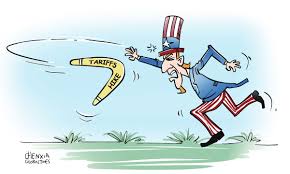
While often framed as tools to protect domestic industries, economic analyses, including those from organizations like the Tax Foundation and reports cited by outlets such as The Wall Street Journal, have consistently demonstrated that tariffs act as a direct tax on American consumers and businesses. These import duties inevitably drive up costs for manufacturers and retailers, ultimately leading to higher prices on store shelves for everything from imported components to finished goods. Consumers, often unknowingly, bear the burden of these added expenses, seeing their purchasing power eroded.
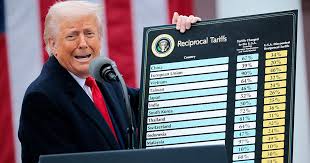
Indeed, the long-term imposition of Trump’s “reciprocal” tariffs on a multitude of countries has generated economic headwinds, stifling competition and adding significant overhead for companies across various sectors.
With the shield now gone, Democrats are poised to force votes, even if largely symbolic given potential presidential vetoes. Their goal is clear: to put House Republicans on record regarding their support for these controversial duties. As the Supreme Court weighs the legality of the President’s authority to impose such sweeping tariffs, the renewed congressional focus underscores a critical question: At what cost do these protectionist policies come, and who ultimately pays the price?
WASHINGTON — A federal judge has once again ruled against the Trump administration’s efforts to restrict congressional oversight of immigration detention centers, finding that the policy likely violates existing federal law ensuring lawmakers’ access to those facilities.
U.S. District Judge Jia Cobb, appointed by President Biden, issued the decision Monday, halting a Department of Homeland Security (DHS) directive that would have required members of Congress to provide seven days’ notice before conducting visits to Immigration and Customs Enforcement (ICE) centers. The rule, reinstated last month by DHS Secretary Kristi Noem, applied to facilities funded under the so-called “Big Beautiful Bill,” a Republican-backed spending package enacted last summer that omitted a long-standing access provision.
This ruling marks the second time Judge Cobb has sided with a group of Democratic lawmakers who filed suit to preserve their ability to conduct unannounced inspections. In December, Cobb previously found that the Trump administration violated a congressional “rider” attached to DHS’s annual appropriations bill — a provision guaranteeing lawmakers the right to visit detention sites without advance notice.
In her latest opinion, Cobb criticized the administration’s argument that it could feasibly separate funding streams to determine which facilities were covered by the rider and which were not. “Defendants’ declarant provides almost no details or specifics as to how DHS and ICE would accomplish this task in the face of the practical challenges raised by Plaintiffs,” Cobb wrote.
Legal experts note that the decision reaffirms Congress’s constitutional oversight powers and underscores the judiciary’s role in upholding legislative intent. The ruling effectively prevents DHS from enforcing the notice requirement while the lawsuit proceeds.
Understanding Appropriations Riders and Congressional Oversight
Appropriations riders are provisions in spending bills that direct or limit the use of federal funds. Congress has often used these riders to oversee executive agencies, particularly in sensitive areas like immigration enforcement, environmental regulation, and defense spending.
According to the Congressional Research Service, riders have been used since the early 20th century to ensure compliance with congressional mandates, such as requiring public reporting on detainee conditions and restricting the transfer of Guantánamo Bay prisoners.
Judge Cobb’s ruling reinforces that these riders carry the force of law and cannot be sidestepped by administrative reinterpretation or selective funding designations.
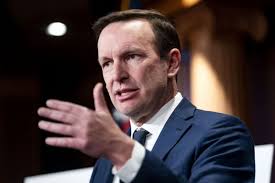
Blue Press Journal – In a sharp rebuke of Trump administration officials, Senator Chris Murphy (D-Conn.) accused Defense Secretary Pete Hegseth and Secretary of State Marco Rubio of deceiving both Congress and the American public regarding the U.S. military’s recent actions in Venezuela. The senator’s remarks come in response to U.S.-led operation that resulted in the capture of Venezuelan President Nicolás Maduro and his wife, Cilia Flores—an event that has sparked serious debate about the scope of executive authority in foreign interventions.
According to Murphy, administration officials “literally lied to our face” before the Venezuelan operation, insisting that the mission was a limited counternarcotics effort and not an attempt at regime change. “They aren’t being straight with the American people,” Murphy stated, emphasizing the absence of any formal briefing for Congress to clarify the operation’s objectives or strategy moving forward.
Questions Over War Powers and Executive Authority
Murphy’s criticism also reignites discussion about the War Powers Act of 1973, a law designed to ensure that Congress maintains oversight over the deployment of U.S. armed forces. Under the Act, the president must notify Congress within 48 hours of committing military forces to action and withdraw them within 60 days unless Congress authorizes the use of force.
By bypassing this process, Murphy argues, the administration has undermined constitutional checks and balances. “Even if there are dictators around the world, that does not give any president unilateral power to invade another nation,” he said, cautioning that such actions erode the legitimacy of U.S. foreign policy and set a dangerous precedent for future administrations.
The Broader Implications for U.S. Foreign Policy
The controversy underscores a recurring tension between the executive branch and Congress over control of military operations abroad. Critics contend that the lack of transparency not only damages America’s global credibility but also risks dragging the nation into unwarranted conflicts.

 Blue Press Journal