Tag: democracy

  • Why the Republican “SAVE Act” Threatens American Voters – Costly, Undemocratic, and Discriminatory

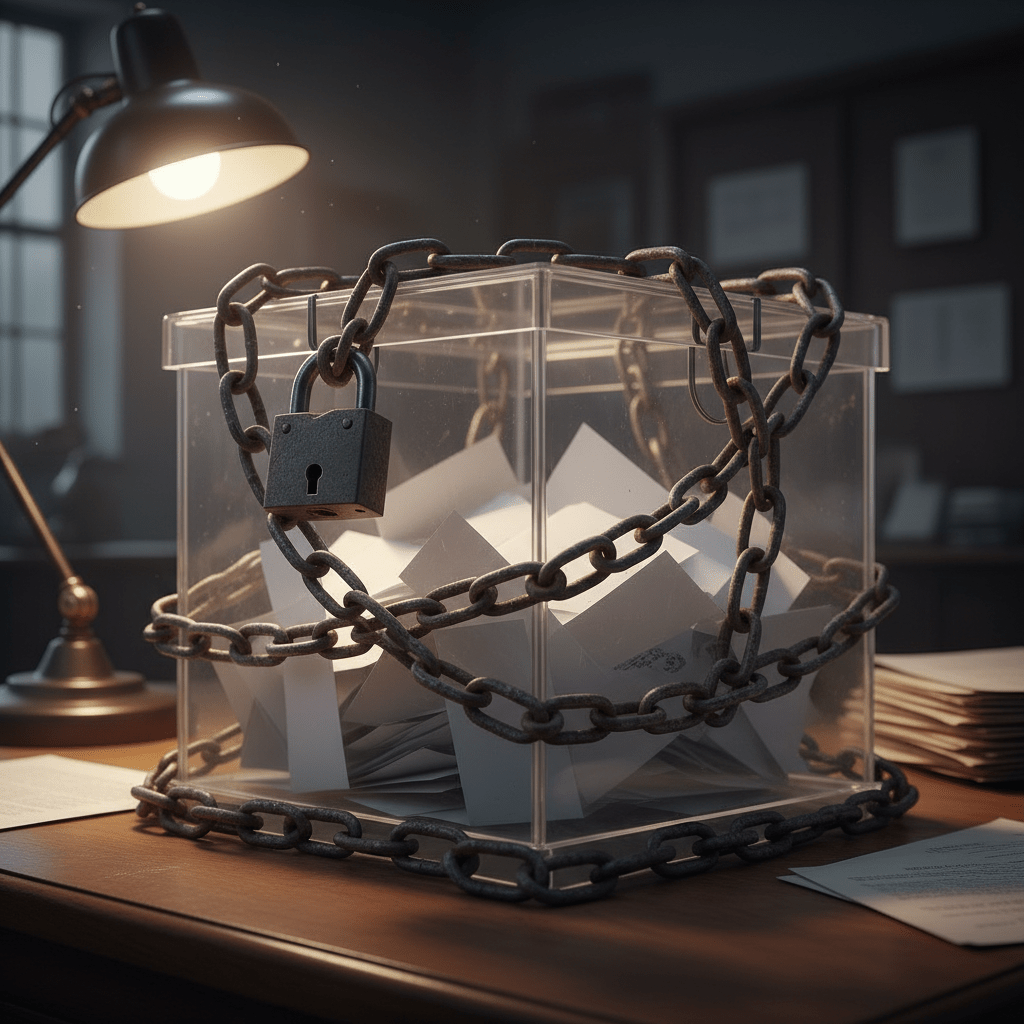
    Clear ballot box filled with papers, wrapped in heavy metal chains and secured with a padlock.

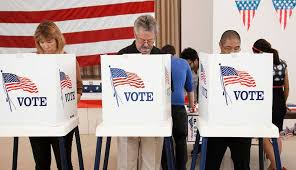
    Blue Press Journal – The Republican‑backed “Secure American Voter Eligibility (SAVE) Act,” championed by President Donald Trump’s allies, proposes that every voter present a passport or an original birth certificate to cast a ballot. While the bill is marketed as a safeguard against fraud, the reality is far more troubling: it would impose prohibitive costs, undermine constitutional authority, and disproportionately disenfranchise women, low‑income workers, and minority communities.

    A Financial Burden No Voter Can Afford

    A standard U.S. passport now costs $165 for an adult, plus an additional $35 for expedited service (U.S. Department of State, 2024). For many Americans, especially those earning the federal minimum wage of $7.25 per hour, this fee represents a full day’s wages. The SAVE Act’s requirement for a passport would also force voters to navigate a complex application process that can take weeks—time many cannot spare from multiple jobs or childcare duties.

    Equally daunting is the demand for an original birth certificate. In many states, obtaining a certified copy costs $10‑$30 and can take up to six weeks, according to the National Center for Health Statistics. For a single mother working two jobs, the combined expense and delay could effectively strip her of the right to vote in a single‑day election.

    Constitutional Overreach

    The U.S. Constitution explicitly reserves the conduct of elections to the states (Art. I, § 4). By imposing a uniform federal identification requirement, the SAVE Act usurps state authority and creates a single, nationwide voting rule that many states have already deemed unnecessary. Legal scholars from Harvard Law School have warned that “federal ID mandates risk violating the Elections Clause by overriding state‑crafted eligibility standards” (Harvard Law Review, 2023).

    Targeting Women and Married‑Status Voters

    Women, especially those who are married, are uniquely vulnerable. Many married couples share a single birth‑certificate file, and some states issue a “marriage certificate” rather than an individual birth record for privacy reasons. Requiring an original birth certificate therefore forces women to navigate a bureaucratic maze that can delay or prevent voting. 

    Dr. Maria Lopez, a political scientist at the University of California, Berkeley, told The New York Times: “The SAVE Act would create a gendered barrier. Women who are caretakers often lack the time and resources to procure these documents, effectively silencing a significant portion of the electorate.” (NYT, April 2024).

    Voices From the Ground

    Local activists echo these concerns. Johnathan Reed, director of the voter‑rights group Fair Elections Now, testified before the Senate Judiciary Committee: “Our data shows that 23 % of low‑income voters have never held a passport, and 15 % cannot readily obtain a certified birth certificate. This bill would lock them out of democracy.” (Senate Hearing Transcript, June 2024).

    Similarly, Emily Watkins, a single mother of three from Ohio, told ABC News: “I work nights at a factory and mornings at a daycare. Paying $165 for a passport just to vote is impossible. The SAVE Act would tell me my voice doesn’t matter.” (ABC News, May 2024).

    A Trump‑Era Power Play

    Critics argue the legislation is less about fraud and more about political power. Donald Trump’s 2022 campaign rally in Iowa featured the slogan “Secure the Vote, Save the Nation,” a thinly veiled appeal to a voter‑suppression strategy that has haunted his administration. Political analysts from The Washington Postnote that “the SAVE Act aligns with Trump’s broader effort to reshape the electorate in favor of the GOP, regardless of constitutional limits.” (Washington Post, July 2024).

    The SAVE Act is an expensive, unconstitutional, and discriminatory roadblock that threatens to silence millions of Americans—particularly women, low‑income workers, and minority voters. Rather than protecting elections, it weaponizes bureaucratic hurdles to tilt the democratic process in favor of a single party. As the nation heads toward the 2026 elections, safeguarding universal suffrage must remain a priority, not a political pawn.
  • The Unrelenting Shadow of the Big Lie: Trump’s Assault on Election Integrity

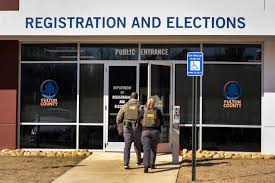
    The bedrock of American democracy—free and fair elections—is under persistent assault from debunked claims of election fraud, notably propagated by Donald Trump. This ongoing narrative, termed the “big lie,” recently escalated in Fulton County, Georgia, where officials are taking extraordinary legal action against the FBI.

    Fulton County Challenges FBI Over Seized Ballots

    Blue Press Journal – Fulton County has requested a federal court to compel the FBI to return ballots and election documents from the 2020 election, seized during a warehouse search near Atlanta. This move responds to Trump’s “persistent demands for retribution over claims, without evidence, that fraud cost him victory in Georgia,” which have been “debunked” by numerous audits and investigations.

    Fulton County’s legal filing directly challenges the FBI’s actions, asserting that the federal government breached the Fourth Amendment, which protects individuals against “unreasonable searches and seizures.” The filing argues the affidavit for the search lacked “probable cause,” instead describing “types of human errors that its own sources confirm occur in almost every election — without any intentional wrongdoing whatsoever.” As the filing succinctly states, “The Fourth Amendment demands ‘probable cause’ — not ‘possible cause.’” Fulton County Chairman Robb Pitts emphasized the gravity, stating, “This case is not only about Fulton County. This is about elections across Georgia and across the nation.”

    Trump’s Rhetoric: A Threat to Democratic Norms

    This incident is not isolated; it aligns with Trump’s stated desire to “take over” elections in Democratic-run areas, referencing “15 places” for targeting. Critics fear this rhetoric could lead to actions “beyond the Constitution,” a concern echoed by U.S. Sen. Mark Warner (D-Va.). Trump’s infamous 2020 call pressuring Georgia’s Secretary of State Brad Raffensperger to “find” 11,780 ballots remains a stark reminder of his willingness to undermine election results.

    Despite a White House spokesperson trying to frame Trump’s remarks as supporting the SAVE Act, Trump claimed that cities like Atlanta face “horrible corruption on elections,” insisting “the federal government should not allow that.” This position directly contradicts the Constitution, which grants states authority over election administration, leading even Republican Senator Thom Tillis (R-N.C.) to state, “Nationalizing elections and picking 15 states seems a little off strategy.” The involvement of figures like Tulsi Gabbard—mentioned as Trump’s Director of National Intelligence—at the Fulton search raises concerns about the boundaries between intelligence and law enforcement.

    Ultimately, the actions in Fulton County and Trump’s rhetoric embody the “big lie,” seeking to erode faith in democratic institutions and undermine elections. As Chairman Pitts said about the seized ballots, “What they’re doing with the ballots now, we don’t know, but if counted fairly, the results will be the same.” Vigilance against those undermining election integrity is crucial.

  • Federal Agents at the Polls: Trump’s Brazen Threat to Democracy and a Violation of Law

    Blue Press Journal – The integrity of our democratic elections is a cornerstone of American society. Yet, alarming patterns of federal interference, particularly from U.S. Immigration and Customs Enforcement (ICE), threaten to undermine this fundamental right. It is unequivocally illegal for ICE or any federal agents to be present at polling sites, actively interfering with the electoral process. This isn’t just about preserving norms; it’s about upholding federal and state law against a dangerous trend of voter intimidation.

    The Illegality of Federal Presence at Polling Sites

    Multiple federal statutes explicitly prohibit the presence of armed federal agents at or near polling locations. The bedrock of these protections includes:

    • 18 U.S. Code § 592 – Troops at polls: This critical federal law makes it a crime for any officer or member of the Armed Forces, or “any officer or employee of the United States,” to “bring troops or armed men to the place where a general or special election is held, unless it be necessary to repel armed enemies of the United States.” This clearly applies to federal agents like ICE, whose presence, particularly if armed or uniformed, is designed to intimidate, not to repel foreign enemies. Source: Cornell Law – 18 U.S. Code § 592
    • The Voting Rights Act of 1965, Section 11(b): This landmark civil rights legislation prohibits any person from intimidating, threatening, or coercing any other person for voting or attempting to vote. The presence of federal agents, especially those known for aggressive enforcement, inherently creates an intimidating environment, directly violating the spirit and letter of this act. Source: U.S. Department of Justice – The Voting Rights Act of 1965

    Beyond federal statutes, numerous state laws reinforce these protections, often prohibiting armed personnel, electioneering, or interference within a specified distance of polling places. These state-level mandates underscore a bipartisan commitment to ensuring unfettered access to the ballot box, free from overt or implied coercion.

    Trump’s Dangerous Playbook: Suppressing the Vote Through Fear

    As leading investigative journalists have meticulously documented, Donald Trump has consistently demonstrated an unconcealed disdain for democratic elections that could undermine his pursuit of total power, his 2020 Big Lie is a prime example. Concerns about ICE’s role in this authoritarian agenda first emerged with alarming clarity in 2025. Trump launched aggressive immigration enforcement operations in major cities like Los Angeles and Chicago, then threatened to deploy National Guard troops to back them up.

    Figures like California Governor Gavin Newsom and Illinois Governor J.B. Pritzker, both Democrats, immediately recognized these operations for what they were: not merely about deporting undocumented immigrants, but a preview for leveraging armed federal agents to seize control of elections and suppress dissent. Congressional Democrats have increasingly voiced alarm, especially as chaos related to these tactics escalated in communities like Minnesota. This experience shows that even absent ICE directly surrounding polls, Trump’s immigration enforcement operations spread enough fear and chaos to terrorize minority communities and significantly transform how campaigns are run.

    Targeting Democracy’s Pillars

    This tactic is no accident. Black, Latino, and Asian communities are major components of the Democratic Party coalition. Instilling fear and creating a climate of uncertainty within these communities serves a clear purpose: to suppress their votes and unfairly aid the Republican Party. The GOP’s historical reliance on voter suppression, whether through restrictive ID laws or purges of voter rolls, finds a new and profoundly dangerous iteration in the weaponization of federal law enforcement.

    Yet, despite these brazen attempts to tear apart communities and suppress the vote, there’s a powerful counter-narrative emerging. In places like Minnesota, Trump’s actions have, ironically, spurred a rise in dispersed community networks. These grassroots efforts document ICE activities, challenge arrests, and provide mutual aid to those too afraid to leave their homes. This resilience demonstrates that while the threat to our democracy is real, so is the will of the people to protect it.

    The presence of ICE at polling sites is not merely an act of intimidation; it is an assault on American democracy, a flagrant violation of federal and state laws designed to protect the sanctity of the ballot. We must remain vigilant, hold leaders accountable, and ensure that our elections remain free, fair, and accessible to every eligible voter, without fear of federal interference.

    TAGS: ICE, polling sites, voter suppression, election integrity, federal law, state law, Donald Trump, GOP, democracy, civil rights, voting rights, voter intimidation, election interference, 18 U.S. Code 592, Voting Rights Act, political weaponization

  • Protecting Our Freedoms: A Landmark Ruling Upholds Senator Kelly’s First Amendment Rights

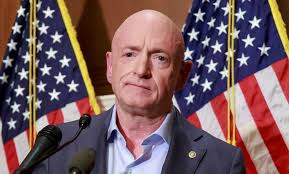
    Blue Press Journal – In a pivotal decision safeguarding constitutional liberties, a federal judge has decisively blocked attempts by Defense Secretary Pete Hegseth to censure and demote Senator Mark Kelly. This ruling underscores the critical importance of free speech, especially for those who have dedicated their lives to defending our nation.

    The controversy arose after Senator Kelly, a distinguished retired combat veteran, appeared in a video advocating that service members should not follow unlawful orders. This action drew the ire of President Donald Trump, who accused the participating lawmakers of “seditious behavior,” leading to aggressive attempts by the administration to punish them.

    A Victory for Constitutional Principles

    District Judge Richard Leon, appointed by President George W. Bush, issued a scathing opinion rejecting the Defense Department’s efforts. (read the fill option here) While acknowledging the well-established doctrine that active-duty military personnel have less vigorous First Amendment protections, Judge Leon firmly declared that these principles do not extend to retired servicemembers, “much less a retired servicemember serving in Congress and exercising oversight responsibility over the military.” See: ACLU on Military Free Speech Rights for context on speech limitations for active military personnel and the historical precedent.

    Judge Leon condemned the administration’s argument that military decisions are exempt from judicial review, stating, “Defendants have trampled on Senator Kelly’s First Amendment freedoms and threatened the constitutional liberties of millions of military retirees.” His ruling is a powerful affirmation that constitutional checks and balances remain vital, even when challenged by executive power.

    The Indispensable Role of the First Amendment

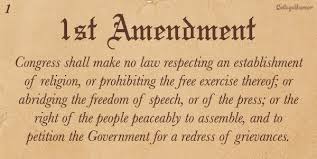
    This case highlights why the First Amendment is not merely a legal clause but the bedrock of American democracy. It guarantees the freedom of speech, religion, press, assembly, and petition, empowering citizens – including retired military personnel – to hold their government accountable and engage in public discourse without fear of reprisal. For veterans like Senator Kelly, who have sacrificed to protect these very freedoms, the ability to speak out on matters of national importance is paramount. As Judge Leon eloquently stated, the administration should “reflect and be grateful for the wisdom and expertise that retired servicemembers have brought to public discussions and debate on military matters.” Further reading on the importance of free speech in a democratic society can be found via the National Constitution Center.

    Senator Kelly rightly asserted that this fight was never just about him, but about sending a message to millions of veterans that their constitutional rights are not diminished upon retirement. This ruling ensures that the voices of experience and integrity, crucial for robust public debate, continue to enrich our nation’s dialogue.

  • The Erosion of the First Amendment: A Critical Examination of Trump’s and Bondi’s Attack on Press Freedom

    Why a Free Press is Essential for Democracy—and Why We Must Defend It…the Arrest of Don Lemon

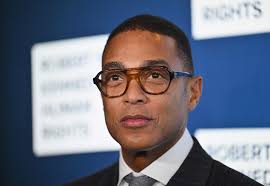
    Blue Press Journal – In recent months, the integrity of the First Amendment has come under unprecedented scrutiny, raising alarms about press freedom in America. The alarming arrest of independent journalist Don Lemon, along with fellow reporters Georgia Fort, Trahern Jeen Crews, and Jamael Lydell Lundy, while covering protests in Minnesota, exemplifies the growing hostility toward the press under the Trump administration. This troubling trend is further exacerbated by Attorney General Pam Bondi’s vocal support for measures that actively undermine journalistic freedoms.

    The First Amendment is a cornerstone of American democracy, safeguarding the freedoms of speech, press, assembly, and the right to petition the government. As Thomas Jefferson famously stated, “Our liberty depends on the freedom of the press, and that cannot be limited without being lost.” Jefferson’s insightful words highlight the critical role of a free press in holding those in power accountable and ensuring that citizens have access to the truth.

    The circumstances surrounding Lemon’s arrest in Los Angeles during the Grammy Awards underscore a worrisome trend. His attorney, Abbe Lowell, described the incident as a direct assault on the First Amendment. “Don has been a journalist for 30 years,” Lowell emphasized, underscoring the constitutional protections surrounding Lemon’s work. “There is no more important time for people like Don to be doing this work.”

    Instead of focusing on accountability for federal agents responsible for the deaths of peaceful protesters, the Trump Justice Department appears more intent on silencing journalists. This alarming pattern points to a broader trend of authoritarianism, aiming to suppress dissent and manipulate narratives. The Trump administration’s approach to the press has shifted dramatically, and Bondi’s characterization of protests as a “coordinated attack” further illustrates this troubling rhetoric. By labeling journalists as threats, the administration undermines the very principles that uphold democracy, sending a chilling message to those striving to report the truth.

    Georgia Fort’s poignant remark, “I don’t feel like I have my First Amendment right as a member of the press,” resonates deeply. Such sentiments reflect the broader implications of these actions, which represent a direct assault on the freedoms that define American society. This incident is not an isolated event; it fits into a disturbing pattern of hostility towards the press, including previous raids on journalists’ homes and ongoing lawsuits against news organizations. House Minority Leader Hakeem Jeffries has aptly condemned the Trump Justice Department as “illegitimate,” echoing widespread concerns about the violation of constitutional rights.

    The significance of a free press is beyond measure, yet it’s often taken for granted. The American public demands unfiltered access to the truth, especially when it pertains to the powerful elite. The egregious acts of Donald Trump and Pam Bondi starkly highlight the urgent need for relentless vigilance in safeguarding the liberties guaranteed by the First Amendment.

    The recent arrests of journalists like Don Lemon signify more than isolated incidents; they reflect a broader, more troubling trend that threatens our democracy. It is imperative for all Americans to stand up for the First Amendment, ensuring the press remains a vital component of our society—one that can freely report, investigate, and hold power accountable. As we navigate these challenging times, let us heed Jefferson’s words and strive to protect the freedoms that are the bedrock of our nation.

  • Trump’s 2025: A Blueprint for Democratic Erosion?

    Blue Press Journal’s Year End Review of the Trump Administration

    As the 2025 calendar years in, Donald Trump’s return to the Oval Office has reignited concerns over the fragility of American democracy. While the former president’s tenure was marked by unprecedented attacks on norms and institutions, his recent return his actions in 2025 suggest a patterned effort to consolidate power and weaken democratic checks. Here are five troubling examples of how Trump’s administration has allegedly advanced policies and rhetoric that threaten foundational democratic principles. 

    1. Exploiting Federal Agencies to Criminalize Dissent
    In 2025, the Department of Justice has reportedly prioritized prosecuting journalists and activists critical of the administration under vague “domestic terrorism” definitions. Trump’s Justice Department, led by allies, has allegedly revisited FISA warrants and surveillance practices to target political opponents, echoing his 2016 campaign’s baseless claims of “witch hunts.” Such actions blur the line between legitimate dissent and criminality, chilling free speech. 

    2. Weaponizing Foreign Policy for Personal Gain
    Trump’s 2025 State Department has been criticized for sidelining career diplomats in favor of wealthy donors and henchmen, reportedly brokering deals with foreign leaders to exchange favors for financial rewards.  A $1.5 billion real estate project in Vietnam involving the Trump Organization was approved shortly before trade negotiations began between the U.S. and Vietnam.

    3. Suppressing Mail-In Voting to Rig Elections
    2025 has seen renewed efforts to undermine public trust in voting infrastructure. Trump’s Justice Department has sued to limit mail-in ballot access in key states, citing unproven fraud claims, while his allies in Congress have pushed to penalize counties with high voter turnout. This echoes his 2020 claims of election fraud and undermines faith in electoral fairness. 

    4. Co-opting the Military for Political Power
    Trump’s 2025 National Security Council reportedly instructed the Pentagon to prepare for “rapid deployment” of troops to polling stations during elections, raising alarms about militarizing domestic affairs. Military leaders have privately warned that such moves risk normalizing the use of force to legitimize politically motivated outcomes—a direct threat to civilian control of the armed forces. 

    5. Stifling Dissent in Federal Employment
    In 2025, the Trump administration has allegedly pressured federal agencies to purge employees who publicly disagree with White House policies. For example, the EPA reportedly retaliated against scientists who opposed rolling back climate regulations, while the IRS has been accused of targeting “liberal” charities. This reflects a broader pattern of treating federal jobs as political spoils, eroding merit-based governance. 

    A Democracy in Peril
    Trump’s 2025 actions reveal a consistent strategy of weakening democratic institutions—courts, media, elections, and civil service—to entrench his power. As history shows, democratic norms can erode quickly under determined autocrats. The onus on citizens, media, and institutions to hold power accountable has never been clearer. Without vigilance, the U.S. risks becoming a “republic in name only.”

  • The Warnings Were There: A Democracy Under Siege

    Trump Told Us he Was Going to Destroy the American Democracy

    Blue Press Journal – Last year, the Sunday Opinion section of The New York Times carried a stark, all-caps headline that now rings with chilling prescience: “WE WERE ALL WARNED. DONALD TRUMP SAYS HE WILL PROSECUTE HIS ENEMIES ORDER MASS DEPORTATIONS USE SOLDIERS AGAINST CITIZENS PLAY POLITICS WITH DISASTERS ABANDON ALLIES. BELIEVE HIM.” At the time, some may have dismissed it as hyperbole, a dramatic flourish for a Sunday paper. But in retrospect, these words serve as a grim testament to a reality that has since unfolded, leaving our democracy facing unprecedented challenges.

    The actions taken since then have, in many ways, mirrored the dire predictions. Within his first week in office, the Trump administration initiated policies that bore the hallmarks of the promised mass deportations. We have witnessed the construction of what can only be described as medieval detention centers, the deployment of masked immigration agents to apprehend individuals, and defiance of federal court orders leading to the deportation of migrants to perilous situations in South America. The unsettling image of soldiers being deployed to quell supposed “bedlam” in American cities, a tactic eerily reminiscent of authoritarian regimes, has also become a stark reality.

    Furthermore, the economic landscape has been significantly impacted. The announcement of steep international tariffs in April sent shockwaves through global markets, threatening economic instability and raising concerns of a potential recession. These actions, seemingly driven by a disregard for established international norms and a transactional approach to foreign policy, raise serious questions about the priorities and motivations behind such decisions.

    It is difficult to escape the conclusion that the erosion of democratic norms and institutions has been a deliberate, if not explicit, consequence of the policies enacted. The warnings were not an attempt to sow fear, but rather a genuine alarm bell sounded by those who saw the potential for profound damage.

    The stark question that remains is: what does this mean for the millions who voted for this agenda? This includes not only the core MAGA base but also the significant number of independent voters who lent their support. Was this the outcome they envisioned? Did they vote to dismantle the very foundations of the democratic system that has, for all its imperfections, provided a framework for progress and stability?

    The consequences of these actions are real, impacting individuals, alliances, and society’s fabric. The warnings were clear, with a consistent execution, raising profound concerns for the future of American democracy. The time for polite disagreement is over; we must reflect and act to safeguard our democratic ideals now.

  • Trump’s Second Term: A Threat to American Health and Democracy

    Blue Press Journal – As we navigate the tumultuous landscape of Trump’s second term, which began in 2025, it’s becoming increasingly clear that the administration is spiraling out of control. On a daily basis, scandals are unfolding that threaten the very fabric of American health and democracy. The latest developments are not only alarming but also have serious implications for the nation’s well-being.

    One of the most disturbing trends is the Trump administration’s assault on vital medical research. The cancellation of crucial cancer and vaccine research is a stark example of the administration’s reckless disregard for the health and welfare of Americans. These programs, which have the potential to save countless lives and improve the quality of life for many, have been abruptly terminated without justification. The consequences of such actions are dire and will be felt for years to come.

    Furthermore, the promotion of bogus claims and misinformation is a hallmark of this administration. The recent assertion that Tylenol causes autism is a baseless claim with no scientific backing. Not only does this misinformation have the potential to mislead vulnerable parents and caregivers, but it also undermines trust in the medical community and the FDA, which is responsible for ensuring the safety and efficacy of medications.

    In addition to the health concerns, the Trump administration is also embroiled in a deepening scandal surrounding cronyism and corruption. The preferential treatment of certain individuals and companies is a clear abuse of power and a betrayal of the public’s trust. This blatant disregard for ethics and the law is a threat to the integrity of our democratic institutions.

    Perhaps most egregious, however, is the administration’s weaponization of the Department of Justice (DOJ). The indictment of a former FBI director as a form of political retaliation is a stark example of the administration’s willingness to exploit the justice system for personal gain. This abuse of power not only undermines the independence of the DOJ but also erodes the public’s faith in the rule of law.

    As Trump’s second term spirals out of control, Americans must remain vigilant and demand accountability from elected officials. The threats to our health and democracy are real, and we must ensure the administration upholds the highest standards of integrity. Inaction will have severe consequences, and it is our responsibility to safeguard our nation’s future.

  • The Shadow Over the Ballot Box: How the Justice Department Is Engineering an Assault on Democracy

    Blue Press Journal

    In the quiet corridors of the Department of Justice, an institution once revered as the impartial enforcer of our nation’s laws, a disturbing campaign is escalating. It doesn’t involve sweeping arrests or public spectacles, but something far more insidious: a systematic effort to undermine the very foundation of American democracy. With a series of aggressive lawsuits and politically motivated actions, the DOJ under the Trump administration is no longer a guardian of civil rights but a weapon wielded to secure partisan power and dismantle the integrity of our elections.

    The latest salvo in this war on voting rights was fired last Thursday evening. While the news cycle fixated on the unprecedented indictment of former FBI Director James Comey—a move widely seen as political retaliation—the DOJ’s Civil Rights Division quietly sued six more states: California, Michigan, Minnesota, New York, New Hampshire, and Pennsylvania. Their demand? The wholesale handover of full, unredacted voter registration lists. These lawsuits, following similar actions against Maine and Oregon, represent a dangerous escalation of an agenda that seeks to control, challenge, and ultimately suppress the American voter.

    This is not a new tactic, but a revival of a failed and deeply unpopular strategy. We saw a similar push during Trump’s first term with his sham “election integrity” commission, which collapsed under a wave of bipartisan outrage and state resistance. This time, the administration is cloaking its data-mining operation in the authority of the DOJ, hoping the public’s response will be more muted. But the goal remains the same: to acquire sensitive voter data that can be used to purge voter rolls, challenge eligibility, and create a chilling effect that discourages participation, particularly in communities that tend to vote against the MAGA agenda.

    States across the political spectrum have rightfully resisted these demands. They understand that handing over unredacted lists containing citizens’ private information is not only a privacy violation but an invitation for misuse. As the Brennan Center for Justice has noted, the resistance is widespread: “few states have sent the DOJ their voter files, and those that did—at least 11—seem to have provided only the publicly available versions of their voter files.” This defiance from both red and blue states underscores just how extreme and illegitimate the DOJ’s demands truly are.

    But the assault extends beyond data grabs. In a cynical inversion of its mission, the administration is weaponizing the landmark Voting Rights Act (VRA) to achieve the very discrimination it was enacted to prevent. Look no further than Texas, where the DOJ sent a letter in July alleging that four congressional districts—all represented by Black or Hispanic Democrats—were “unconstitutional racial gerrymanders.” This provided the perfect political cover for Governor Greg Abbott, who promptly cited the letter as justification for redrawing the state’s map, on Trump’s orders, to manufacture five additional Republican seats in the U.S. House.

    Let the gravity of that sink in. The Civil Rights Division of the United States Department of Justice is actively aiding a partisan gerrymandering scheme designed to dilute the power of minority voters. A law forged in the fire of the Civil Rights Movement to protect the vulnerable is being twisted into a sword to attack them. This isn’t just partisan legal advocacy; it is a profound betrayal of the department’s purpose and a direct attack on the communities it is sworn to protect.

    These actions—the lawsuits for voter data, the perversion of the VRA in Texas, and the politically charged indictment of James Comey—are not isolated events. They are pieces of a coherent and terrifying puzzle. They reveal a Justice Department that has been fundamentally compromised, transformed from a pillar of the rule of law into a political cudgel for the executive branch. Its purpose is no longer to pursue justice, but to punish enemies, reward allies, and rig the system to ensure a predetermined outcome.

    This is a five-alarm fire for our democracy. The administration is not just challenging an election result; it is systematically dismantling the infrastructure of fair elections. By demanding private voter data and aiding partisan gerrymanders, the DOJ is laying the groundwork to contest, control, and corrupt the electoral process from the inside out. When the institution entrusted with protecting our most sacred rights becomes the primary instrument of their destruction, we are on a perilous path. The alarm bells are ringing, and we cannot afford to ignore them.

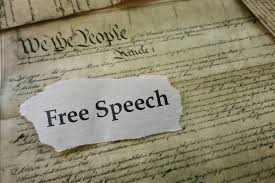
  • The Foundation of American Democracy: Why Free Speech Matters

    Blue Press Journal – The First Amendment to the United States Constitution enshrines one of the most fundamental rights of American citizens: the freedom of speech. This cornerstone of American democracy guarantees that individuals have the right to express their thoughts, opinions, and beliefs without fear of censorship or retribution. As the Supreme Court Justice Louis Brandeis once said, “Freedom of speech is the great bulwark against the tyranny…” In recent months, however, the Trump Administration has attempted to limit this essential right, posing a threat to the very fabric of American democracy.

    The importance of free speech cannot be overstated. It allows citizens to hold their elected officials accountable, to critique government policies, and to engage in open and honest discussions about the issues that matter most. As the renowned author and intellectual, Noam Chomsky, noted, “If we don’t believe in freedom of expression for people we despise, we don’t believe in it at all.” By attempting to restrict free speech, the Trump Administration undermines the ability of citizens to participate in the democratic process, to shape public opinion, and to bring about meaningful change.

    The Trump Administration’s efforts to limit free speech have taken many forms, from attacks on the media and journalists to attempts to restrict protests and demonstrations. These actions have been widely condemned by civil liberties groups, constitutional scholars, and citizens from across the political spectrum. As the American Civil Liberties Union (ACLU) has stated, “The First Amendment is a cornerstone of our democracy, and any attempt to undermine it is a threat to the very foundations of our society.”

    The implications of restricting free speech are far-reaching and have serious consequences for both liberals and conservatives. When the government is allowed to dictate what can and cannot be said, it creates a chilling effect on speech, causing individuals to self-censor and refrain from expressing their opinions. This can lead to a lack of diversity in thought, a stifling of innovation, and a weakening of the democratic process. As the former President Barack Obama once said, “The free flow of information is essential to a functioning democracy.”

    Free speech is the lifeblood of American democracy, and any attempts to restrict it are a threat to the rights and freedoms of all citizens. As the Supreme Court Justice William O. Douglas once said, “Restriction of free thought and free speech is the most dangerous of all subversions. It is the one un-American act that could most easily defeat us.”