In an effort to continue his campaign of banning mainstream news sources, President Trump announced on Truth Social that he would ban CNN, MS NOW, and Politico from the White House. According to Trump, these news outlets were spreading “FAKE NEWS” for criticizing him, and he warned that more news organizations would be banned for speaking “critical” of his administration.
At his daily press conference on Friday, Trump complained about the outlets being “very one-sided” and accused them of writing negatively about him and his administration. He also claimed that they do not reflect the opinion of the American people, who, according to him, have suffered due to his military actions against Iran. However, when Reuters reminded him that freedom of the press was a protected right and that the White House could not prevent them from asking questions, Trump reacted with disdain, stating, “Oh, thank you for reminding me.” When asked whether he was trying to intimidate the press, Trump responded, “No, I don’t like dishonest press. I think you are all horrible people.”
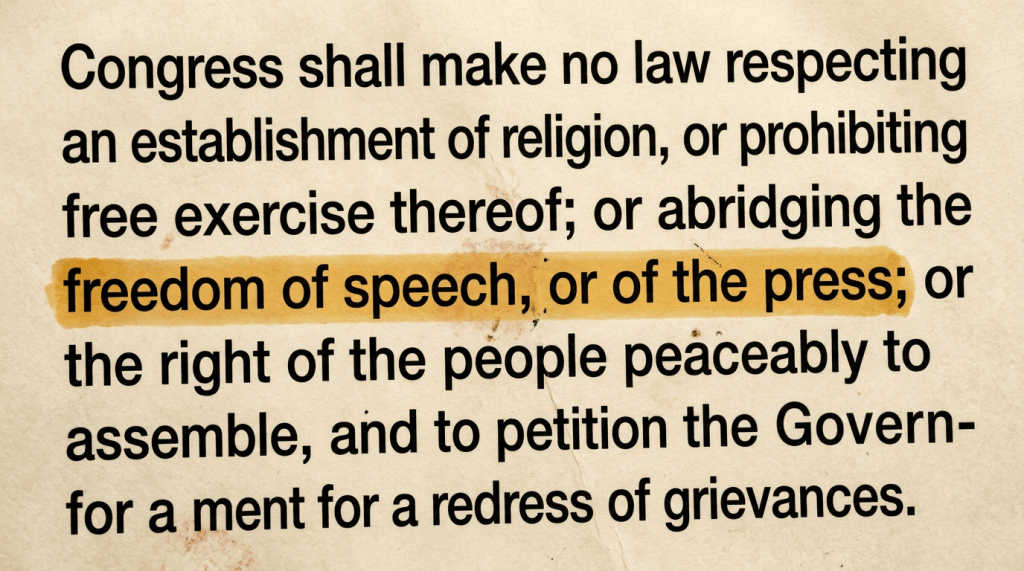
In effect, what Trump was trying to do is interfere with the right of the American people to obtain reliable information about their president and his actions, which is a direct threat to the First Amendment.
CNN strongly pushed back, claiming that “we have a right under the U.S. Constitution to do that reporting without hindrance or interference from the government.” Mark Schoeff, Jr., president of the National Press Club, expressed similar sentiments, stating that “[b]anning news organizations from the White House based on the administration’s disapproval of their coverage is a clear attempt to control which voices are allowed to witness and report on the exercise of presidential power.”
A free press is one of the pillars of any democratic society, and by threatening it, Donald Trump is threatening the very foundation of the US political system.
Watching election security evolve has been a strange ride, especially when high-profile politicians start making claims that shake people’s confidence in the whole system. Lately, Donald Trump has been all over the idea that America’s electronic voting machines are just waiting to be hacked. That’s got a lot of election officials and cybersecurity pros on edge. But if you really dig into what he’s saying, his claims do more damage than they highlight any real problem.
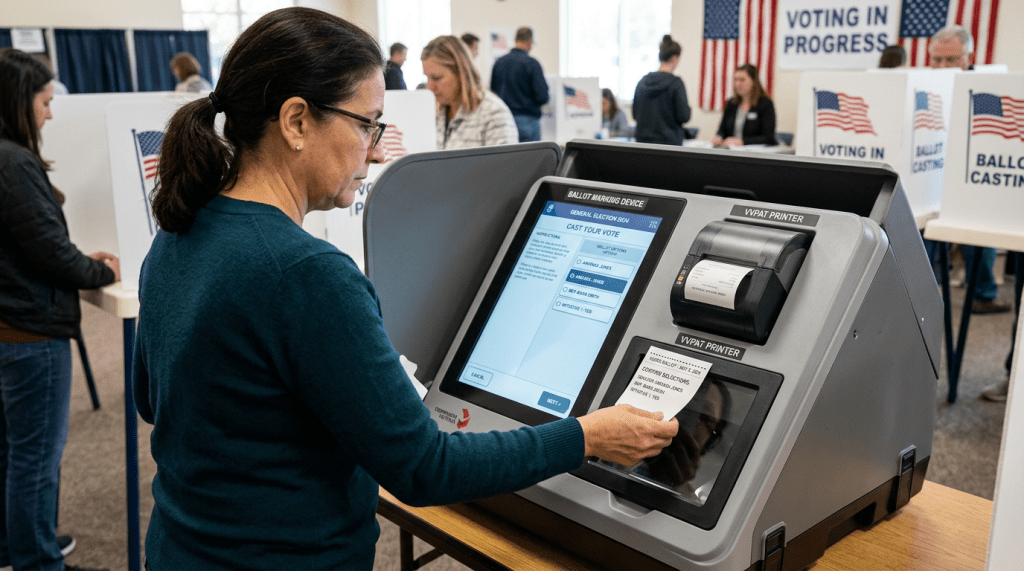
Trump went on TV and basically told Americans that everything they’ve heard about secure elections is a lie, and that electronic machines are easy targets for anyone wanting to mess with results. It’s true, researchers have found weak spots—DEFCON’s Voting Village loves demonstrating just that. But here’s the part everyone keeps missing: nobody’s shown real evidence of these flaws getting used to change an election’s outcome. That’s what matters.
Remember when Russian hackers went after our elections in 2016? That was a wake-up call. Now, we’re seeing way more states using paper ballots or machines that spit out a paper record. Most voters today leave behind something you can physically check. Plus, elections aren’t managed from a single office—they’re split across every state and county. That makes a giant, coordinated hack pretty far-fetched.
Election experts keep saying that these kinds of claims just eat away at trust. Colorado Secretary of State Jena Griswold put it simply: Trump’s story isn’t new, and it’s not about some overlooked threat. Yeah, there’s probably an audience for this stuff, but spinning these tales just pushes people away from voting or sets them up to question any results they don’t like.
Government records released Thursday didn’t back up Trump’s claims of widespread voting machine hacking. The National Intelligence Council checked for proof of foreign tampering as recently as 2020 and came up empty. Cybersecurity and Infrastructure Security Agency—CISA—admitted there are always risks, but said they haven’t seen any evidence of actual votes being changed.
That doesn’t mean the job’s done. Local officials are still squeezed for cash and can’t always upgrade equipment or boost cybersecurity training. Congress has dropped about $1 billion since 2018, but just $45 million was set aside last year—barely enough to keep things running.
Benjamin Hovland, former commissioner at the Election Assistance Commission, keeps calling for more funding. He’s not shy about it: if we’re serious about protecting elections, we need to pay for better tools and train the people who use them. States hear a lot of talk, but the actual resources just aren’t reaching them.
So where does that leave us? Election security is messy, but it’s getting better, not worse. The people running our elections and the experts backing them up are working on real fixes, not just trading in outrage.
Instead of fanning the flames, it’s time for everyone—politicians, tech companies, and regular voters—to sit down and talk about how to keep improving things. That’s going to mean real investment, honesty, and showing our work so everyone can see the system doing its job.
The future of our democracy depends on facts and clear policy-making, not scare tactics. Let’s argue about solutions, not sow distrust.
I watched the Thomas Massie primary unfold with a growing sense of dread. Here was a sitting congressman, one who’d actually voted against Trump on occasion, finding himself on the receiving end of something entirely new in American politics. A pro-Trump super PAC dropped an AI-generated video depicting Massie in a fake, scandalous romance with members of the progressive “Squad.” Massie called it out for what it was, a sleazy, desperate lie. It didn’t matter. He lost anyway. Welcome to the future of American democracy, where fabricated, synthetic disinformation can take down a sitting congressman and barely raise an eyebrow.
The Weaponization of Synthetic Reality
Living through the Trump era means living in a constant state of reality vertigo. You see AI-generated images of Trump playing savior, then viciously doctored shots of his opponents and frankly, the ridiculousness never lets up. Psychiatrist Robert Jay Lifton has a name for this: “malignant normality,” where people become numb to ceaseless distortion because there’s simply too much of it to process. I feel this numbness creep in sometimes, and I think many Americans do too.
Philosophers have started calling these synthetic attacks “slopaganda,” and the term fits perfectly. Slopaganda doesn’t need to be true. It doesn’t even need to be convincing. It just needs to get under your skin and stir up emotions like paranoia or tribal rage. The goal isn’t persuasion, it’s chaos. When nothing can be proven, these games don’t just spread misinformation; they systematically undermine society’s trust in anything at all.
Democratized Destruction
The Republican Party has become remarkably efficient at deploying these tools. The RNC pumps out AI-generated scare ads depicting American collapse under Democratic leadership. Trump himself shares bogus clips showing journalists in fictional scenarios. The bar for political discourse has dropped so far it’s practically subterranean.
What terrifies me most is the accessibility of this technology. Researchers at places like Brookings have been warning us: these tools let anyone do what used to require professional troll farms and significant resources. Deepfakes are cheap, fast, and everywhere now. Spreading dangerous fake information barely costs a thing, while the resources needed to combat it, fact-checking, verification, education struggle to keep pace.
State attempts to regulate this, like California’s new laws, run into the familiar obstacles: free speech debates, technology racing far ahead of lawmakers, and plain political inertia. I keep waiting for a comprehensive response, but Washington moves while AI moves faster.
The Death of Shared Truth
This digital arms race isn’t just messy, it’s potentially devastating. When people can’t agree on basic facts, participation in civic life collapses. We slide toward “hypernormalization,” a term borrowed from Soviet-era analysis: official stories and reality drift so far apart that nobody believes anything anymore.
I see this happening in real-time. Voters get lost in the fog, so they cling to strongmen and simple answers for complicated problems. As AI continues pouring into our political system, the collapse of our shared truth feels less like slow decay and more like an active demolition. The real question isn’t whether individual citizens can tell what’s real, it’s whether democracy can survive at all once the distinction between real and fake dissolves entirely.
At what point do we stop being citizens and start being passengers in a simulation we didn’t choose? I’m not sure we’re far from that line.
When I think about why this country even has a Supreme Court, the idea was always pretty simple: it was supposed to be shielded from political chaos, a steady hand making sure the Constitution actually means something for everyone. But look at the Court now. It’s hard to pretend it’s still neutral or above the fray. Honestly, it feels like the Court has become just another powerful political tool, a super-legislature pushing its own narrow agenda and ignoring what most Americans actually want.
The root of the problem, in my eyes, starts with how the Senate works. The way our system’s set up gives a handful of small states way too much sway, letting a group of senators who only speak for a small slice of Americans pack the Court with justices who mostly seem chosen for their loyalty to right-wing causes. That’s not what justice is supposed to look like. It’s politics, plain and simple.
There’s no real mystery about what’s happening anymore, the facts are right there for anyone who cares to look. I find it shocking that some justices still hold their seats while serious accusations swirl around them: secret gifts, obvious conflicts of interest, all swept under the rug. If a judge pulled stunts like that in any other American court, they’d be out or forced to step aside in a heartbeat. But these justices keep making decisions that shape the lives of millions, leaving people to wonder if “equal justice under law” means anything at all.
The clearest sign to me that things have gone off the rails is how the Court keeps chipping away at voting rights. Just look at Louisiana v. Callais. That decision isn’t some technical fix, t’s the biggest attack on Black political power since Reconstruction. By gutting what’s left of the Voting Rights Act, the Court is opening the door for states to erase Black-majority districts. We’re watching a whole new wave of voter suppression sweep across the South from Alabama to Georgia, that threatens to wipe out decades of progress.
I’ve also seen the justices twist the law to fit whatever side they’re on. They’ll lean hard on something like the “independent state legislature theory” whenever it advances the conservative cause but then drop it once it becomes a problem. When the law’s just another tool for one side to win, the court stops being a check on power and just become another weapon in the political fight.
A democracy can’t survive if the last line of defense has already been captured. I still think there’s a way back. When the political moment arrives, we’ve got to put real Supreme Court reform on the table, expanding and setting term limits to fix this imbalance. The law has to reflect the full diversity of America, not just enshrine one group’s vision at everyone else’s expense.
People deserve a Supreme Court that stands apart from politics, not one leading the charge into the partisan trenches. Right now, we’re at a breaking point; either we rebuild trust in the Court, or we watch the roots of our democracy keep crumbling. This moment calls for real urgency.
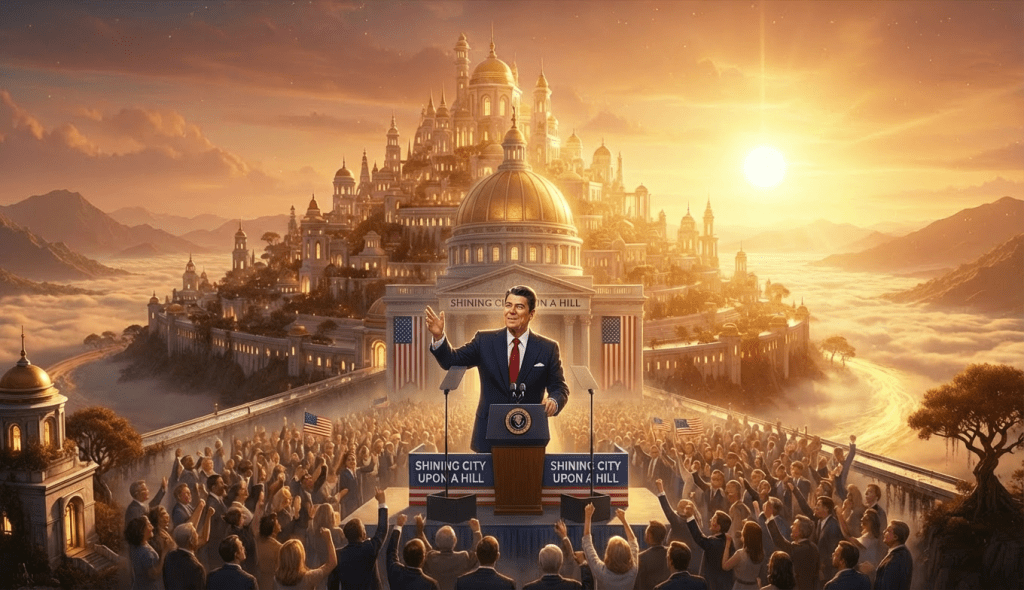
Blue Press Journal – There was a time when American presidents spoke of the nation as Ronald Reagan did: a “shining city on a hill,” a beacon of democracy and prosperity visible to the entire world. That imagery suggested permanence—a promise that no matter the challenges, the United States would remain the moral and economic anchor of the free world. Today, that light is flickering. Under President Donald Trump’s leadership, we are witnessing not the preservation of American greatness, but the deliberate dismantling of the very foundations that made it possible.
The economic architecture of global cooperation has been shattered by a trade policy that treats allies as adversaries. Trump’s aggressive tariff regime has strained relations with virtually every major trading partner, transforming decades of diplomatic capital into resentment and retaliation. These are not the calculated negotiations of a nation securing its interests; they are the erratic maneuvers of an isolationist agenda that makes America poorer while promising prosperity. When the world’s largest economy retreats behind protectionist walls, the cost is borne not by abstract institutions, but by American consumers facing inflated prices and disrupted supply chains.
Equally troubling is the administration’s incoherent approach to foreign policy, particularly regarding Ukraine and Russia. Trump’s hot-and-cold support for Kyiv—alternating between gestures of solidarity and open contempt—has left allies uncertain of American commitment. More alarming is his refusal to demand accountability from Moscow for its aggression, effectively absolving Russia of consequences while undermining Ukrainian sovereignty. This is not diplomacy; it is capitulation dressed in nationalist rhetoric, and it signals to the world that American security guarantees are negotiable commodities rather than sacred obligations.
The recent escalation against Iran represents perhaps the most dangerous departure from presidential norms. Launching military actions without notifying allied democracies, only to later demand their support for a conflict that “makes no sense,” treats international partnerships as transactional burdens rather than strategic assets. The immediate consequence—rising gas prices—is already extracting pain from American households, translating geopolitical chaos into economic hardship at the pump. This is governance by impulse, not strategy, and the cost is measured in both dollars and diminishing American influence.
Beneath these policy failures lies a more fundamental threat: the president’s apparent disregard for constitutional norms and his evident desire to function as a King rather than a servant of the republic. The separation of powers, the rule of law, and the peaceful transfer of authority—these are not inconveniences to be circumvented by executive fiat, but the essential guardrails of democratic governance. When a leader rejects these constraints, he does not merely damage his administration; he corrodes the public’s faith in the institutions that define American liberty.
We are told we are entering a new golden age, but the reality is the end of the great American era that Trump and his MAGA movement have brought upon us. We are no longer the Reagan-esque “shining city on the hill”—that symbol of hope and ordered liberty. Instead, we have become an erratic power, rich in military might but increasingly impoverished in moral authority and economic stability. The policies of this administration are making America not greater, but smaller; not freer, but more constrained by the whims of authoritarian instinct.
The city is still there, but the light is dimming. Whether it can be rekindled depends on whether we remember that true American greatness was never found in tariffs, isolationism, or the concentration of power in a single hand, but in our willingness to lead the world through principle rather than abandon it through pride
Blue Press Journal – The Republican‑backed “Secure American Voter Eligibility (SAVE) Act,” championed by President Donald Trump’s allies, proposes that every voter present a passport or an original birth certificate to cast a ballot. While the bill is marketed as a safeguard against fraud, the reality is far more troubling: it would impose prohibitive costs, undermine constitutional authority, and disproportionately disenfranchise women, low‑income workers, and minority communities.
A Financial Burden No Voter Can Afford
A standard U.S. passport now costs $165 for an adult, plus an additional $35 for expedited service (U.S. Department of State, 2024). For many Americans, especially those earning the federal minimum wage of $7.25 per hour, this fee represents a full day’s wages. The SAVE Act’s requirement for a passport would also force voters to navigate a complex application process that can take weeks—time many cannot spare from multiple jobs or childcare duties.
Equally daunting is the demand for an original birth certificate. In many states, obtaining a certified copy costs $10‑$30 and can take up to six weeks, according to the National Center for Health Statistics. For a single mother working two jobs, the combined expense and delay could effectively strip her of the right to vote in a single‑day election.
Constitutional Overreach
The U.S. Constitution explicitly reserves the conduct of elections to the states (Art. I, § 4). By imposing a uniform federal identification requirement, the SAVE Act usurps state authority and creates a single, nationwide voting rule that many states have already deemed unnecessary. Legal scholars from Harvard Law School have warned that “federal ID mandates risk violating the Elections Clause by overriding state‑crafted eligibility standards” (Harvard Law Review, 2023).
Targeting Women and Married‑Status Voters
Women, especially those who are married, are uniquely vulnerable. Many married couples share a single birth‑certificate file, and some states issue a “marriage certificate” rather than an individual birth record for privacy reasons. Requiring an original birth certificate therefore forces women to navigate a bureaucratic maze that can delay or prevent voting.
Dr. Maria Lopez, a political scientist at the University of California, Berkeley, told The New York Times: “The SAVE Act would create a gendered barrier. Women who are caretakers often lack the time and resources to procure these documents, effectively silencing a significant portion of the electorate.” (NYT, April 2024).
Voices From the Ground
Local activists echo these concerns. Johnathan Reed, director of the voter‑rights group Fair Elections Now, testified before the Senate Judiciary Committee: “Our data shows that 23 % of low‑income voters have never held a passport, and 15 % cannot readily obtain a certified birth certificate. This bill would lock them out of democracy.” (Senate Hearing Transcript, June 2024).
Similarly, Emily Watkins, a single mother of three from Ohio, told ABC News: “I work nights at a factory and mornings at a daycare. Paying $165 for a passport just to vote is impossible. The SAVE Act would tell me my voice doesn’t matter.” (ABC News, May 2024).
A Trump‑Era Power Play
Critics argue the legislation is less about fraud and more about political power. Donald Trump’s 2022 campaign rally in Iowa featured the slogan “Secure the Vote, Save the Nation,” a thinly veiled appeal to a voter‑suppression strategy that has haunted his administration. Political analysts from The Washington Postnote that “the SAVE Act aligns with Trump’s broader effort to reshape the electorate in favor of the GOP, regardless of constitutional limits.” (Washington Post, July 2024).
The SAVE Act is an expensive, unconstitutional, and discriminatory roadblock that threatens to silence millions of Americans—particularly women, low‑income workers, and minority voters. Rather than protecting elections, it weaponizes bureaucratic hurdles to tilt the democratic process in favor of a single party. As the nation heads toward the 2026 elections, safeguarding universal suffrage must remain a priority, not a political pawn.
The bedrock of American democracy—free and fair elections—is under persistent assault from debunked claims of election fraud, notably propagated by Donald Trump. This ongoing narrative, termed the “big lie,” recently escalated in Fulton County, Georgia, where officials are taking extraordinary legal action against the FBI.
Fulton County Challenges FBI Over Seized Ballots
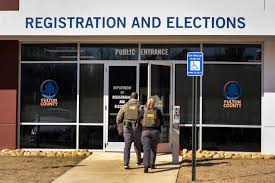
Blue Press Journal – Fulton County has requested a federal court to compel the FBI to return ballots and election documents from the 2020 election, seized during a warehouse search near Atlanta. This move responds to Trump’s “persistent demands for retribution over claims, without evidence, that fraud cost him victory in Georgia,” which have been “debunked” by numerous audits and investigations.
Fulton County’s legal filing directly challenges the FBI’s actions, asserting that the federal government breached the Fourth Amendment, which protects individuals against “unreasonable searches and seizures.” The filing argues the affidavit for the search lacked “probable cause,” instead describing “types of human errors that its own sources confirm occur in almost every election — without any intentional wrongdoing whatsoever.” As the filing succinctly states, “The Fourth Amendment demands ‘probable cause’ — not ‘possible cause.’” Fulton County Chairman Robb Pitts emphasized the gravity, stating, “This case is not only about Fulton County. This is about elections across Georgia and across the nation.”
Trump’s Rhetoric: A Threat to Democratic Norms
This incident is not isolated; it aligns with Trump’s stated desire to “take over” elections in Democratic-run areas, referencing “15 places” for targeting. Critics fear this rhetoric could lead to actions “beyond the Constitution,” a concern echoed by U.S. Sen. Mark Warner (D-Va.). Trump’s infamous 2020 call pressuring Georgia’s Secretary of State Brad Raffensperger to “find” 11,780 ballots remains a stark reminder of his willingness to undermine election results.
Despite a White House spokesperson trying to frame Trump’s remarks as supporting the SAVE Act, Trump claimed that cities like Atlanta face “horrible corruption on elections,” insisting “the federal government should not allow that.” This position directly contradicts the Constitution, which grants states authority over election administration, leading even Republican Senator Thom Tillis (R-N.C.) to state, “Nationalizing elections and picking 15 states seems a little off strategy.” The involvement of figures like Tulsi Gabbard—mentioned as Trump’s Director of National Intelligence—at the Fulton search raises concerns about the boundaries between intelligence and law enforcement.
Ultimately, the actions in Fulton County and Trump’s rhetoric embody the “big lie,” seeking to erode faith in democratic institutions and undermine elections. As Chairman Pitts said about the seized ballots, “What they’re doing with the ballots now, we don’t know, but if counted fairly, the results will be the same.” Vigilance against those undermining election integrity is crucial.
Blue Press Journal – The integrity of our democratic elections is a cornerstone of American society. Yet, alarming patterns of federal interference, particularly from U.S. Immigration and Customs Enforcement (ICE), threaten to undermine this fundamental right. It is unequivocally illegal for ICE or any federal agents to be present at polling sites, actively interfering with the electoral process. This isn’t just about preserving norms; it’s about upholding federal and state law against a dangerous trend of voter intimidation.
The Illegality of Federal Presence at Polling Sites
Multiple federal statutes explicitly prohibit the presence of armed federal agents at or near polling locations. The bedrock of these protections includes:
18 U.S. Code § 592 – Troops at polls: This critical federal law makes it a crime for any officer or member of the Armed Forces, or “any officer or employee of the United States,” to “bring troops or armed men to the place where a general or special election is held, unless it be necessary to repel armed enemies of the United States.” This clearly applies to federal agents like ICE, whose presence, particularly if armed or uniformed, is designed to intimidate, not to repel foreign enemies. Source: Cornell Law – 18 U.S. Code § 592
The Voting Rights Act of 1965, Section 11(b): This landmark civil rights legislation prohibits any person from intimidating, threatening, or coercing any other person for voting or attempting to vote. The presence of federal agents, especially those known for aggressive enforcement, inherently creates an intimidating environment, directly violating the spirit and letter of this act. Source: U.S. Department of Justice – The Voting Rights Act of 1965
Beyond federal statutes, numerous state laws reinforce these protections, often prohibiting armed personnel, electioneering, or interference within a specified distance of polling places. These state-level mandates underscore a bipartisan commitment to ensuring unfettered access to the ballot box, free from overt or implied coercion.
Trump’s Dangerous Playbook: Suppressing the Vote Through Fear
As leading investigative journalists have meticulously documented, Donald Trump has consistently demonstrated an unconcealed disdain for democratic elections that could undermine his pursuit of total power, his 2020 Big Lie is a prime example. Concerns about ICE’s role in this authoritarian agenda first emerged with alarming clarity in 2025. Trump launched aggressive immigration enforcement operations in major cities like Los Angeles and Chicago, then threatened to deploy National Guard troops to back them up.
Figures like California Governor Gavin Newsom and Illinois Governor J.B. Pritzker, both Democrats, immediately recognized these operations for what they were: not merely about deporting undocumented immigrants, but a preview for leveraging armed federal agents to seize control of elections and suppress dissent. Congressional Democrats have increasingly voiced alarm, especially as chaos related to these tactics escalated in communities like Minnesota. This experience shows that even absent ICE directly surrounding polls, Trump’s immigration enforcement operations spread enough fear and chaos to terrorize minority communities and significantly transform how campaigns are run.
Targeting Democracy’s Pillars
This tactic is no accident. Black, Latino, and Asian communities are major components of the Democratic Party coalition. Instilling fear and creating a climate of uncertainty within these communities serves a clear purpose: to suppress their votes and unfairly aid the Republican Party. The GOP’s historical reliance on voter suppression, whether through restrictive ID laws or purges of voter rolls, finds a new and profoundly dangerous iteration in the weaponization of federal law enforcement.
Yet, despite these brazen attempts to tear apart communities and suppress the vote, there’s a powerful counter-narrative emerging. In places like Minnesota, Trump’s actions have, ironically, spurred a rise in dispersed community networks. These grassroots efforts document ICE activities, challenge arrests, and provide mutual aid to those too afraid to leave their homes. This resilience demonstrates that while the threat to our democracy is real, so is the will of the people to protect it.
The presence of ICE at polling sites is not merely an act of intimidation; it is an assault on American democracy, a flagrant violation of federal and state laws designed to protect the sanctity of the ballot. We must remain vigilant, hold leaders accountable, and ensure that our elections remain free, fair, and accessible to every eligible voter, without fear of federal interference.
TAGS: ICE, polling sites, voter suppression, election integrity, federal law, state law, Donald Trump, GOP, democracy, civil rights, voting rights, voter intimidation, election interference, 18 U.S. Code 592, Voting Rights Act, political weaponization
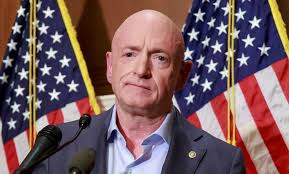
Blue Press Journal – In a pivotal decision safeguarding constitutional liberties, a federal judge has decisively blocked attempts by Defense Secretary Pete Hegseth to censure and demote Senator Mark Kelly. This ruling underscores the critical importance of free speech, especially for those who have dedicated their lives to defending our nation.
The controversy arose after Senator Kelly, a distinguished retired combat veteran, appeared in a video advocating that service members should not follow unlawful orders. This action drew the ire of President Donald Trump, who accused the participating lawmakers of “seditious behavior,” leading to aggressive attempts by the administration to punish them.
A Victory for Constitutional Principles
District Judge Richard Leon, appointed by President George W. Bush, issued a scathing opinion rejecting the Defense Department’s efforts. (read the fill option here) While acknowledging the well-established doctrine that active-duty military personnel have less vigorous First Amendment protections, Judge Leon firmly declared that these principles do not extend to retired servicemembers, “much less a retired servicemember serving in Congress and exercising oversight responsibility over the military.” See: ACLU on Military Free Speech Rights for context on speech limitations for active military personnel and the historical precedent.
Judge Leon condemned the administration’s argument that military decisions are exempt from judicial review, stating, “Defendants have trampled on Senator Kelly’s First Amendment freedoms and threatened the constitutional liberties of millions of military retirees.” His ruling is a powerful affirmation that constitutional checks and balances remain vital, even when challenged by executive power.
The Indispensable Role of the First Amendment
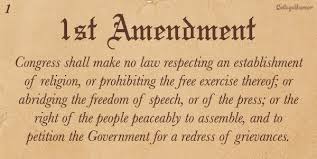
This case highlights why the First Amendment is not merely a legal clause but the bedrock of American democracy. It guarantees the freedom of speech, religion, press, assembly, and petition, empowering citizens – including retired military personnel – to hold their government accountable and engage in public discourse without fear of reprisal. For veterans like Senator Kelly, who have sacrificed to protect these very freedoms, the ability to speak out on matters of national importance is paramount. As Judge Leon eloquently stated, the administration should “reflect and be grateful for the wisdom and expertise that retired servicemembers have brought to public discussions and debate on military matters.” Further reading on the importance of free speech in a democratic society can be found via the National Constitution Center.
Senator Kelly rightly asserted that this fight was never just about him, but about sending a message to millions of veterans that their constitutional rights are not diminished upon retirement. This ruling ensures that the voices of experience and integrity, crucial for robust public debate, continue to enrich our nation’s dialogue.
Why a Free Press is Essential for Democracy—and Why We Must Defend It…the Arrest of Don Lemon
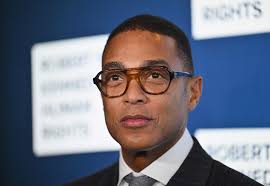
Blue Press Journal – In recent months, the integrity of the First Amendment has come under unprecedented scrutiny, raising alarms about press freedom in America. The alarming arrest of independent journalist Don Lemon, along with fellow reporters Georgia Fort, Trahern Jeen Crews, and Jamael Lydell Lundy, while covering protests in Minnesota, exemplifies the growing hostility toward the press under the Trump administration. This troubling trend is further exacerbated by Attorney General Pam Bondi’s vocal support for measures that actively undermine journalistic freedoms.
The First Amendment is a cornerstone of American democracy, safeguarding the freedoms of speech, press, assembly, and the right to petition the government. As Thomas Jefferson famously stated, “Our liberty depends on the freedom of the press, and that cannot be limited without being lost.” Jefferson’s insightful words highlight the critical role of a free press in holding those in power accountable and ensuring that citizens have access to the truth.
The circumstances surrounding Lemon’s arrest in Los Angeles during the Grammy Awards underscore a worrisome trend. His attorney, Abbe Lowell, described the incident as a direct assault on the First Amendment. “Don has been a journalist for 30 years,” Lowell emphasized, underscoring the constitutional protections surrounding Lemon’s work. “There is no more important time for people like Don to be doing this work.”
Instead of focusing on accountability for federal agents responsible for the deaths of peaceful protesters, the Trump Justice Department appears more intent on silencing journalists. This alarming pattern points to a broader trend of authoritarianism, aiming to suppress dissent and manipulate narratives. The Trump administration’s approach to the press has shifted dramatically, and Bondi’s characterization of protests as a “coordinated attack” further illustrates this troubling rhetoric. By labeling journalists as threats, the administration undermines the very principles that uphold democracy, sending a chilling message to those striving to report the truth.
Georgia Fort’s poignant remark, “I don’t feel like I have my First Amendment right as a member of the press,” resonates deeply. Such sentiments reflect the broader implications of these actions, which represent a direct assault on the freedoms that define American society. This incident is not an isolated event; it fits into a disturbing pattern of hostility towards the press, including previous raids on journalists’ homes and ongoing lawsuits against news organizations. House Minority Leader Hakeem Jeffries has aptly condemned the Trump Justice Department as “illegitimate,” echoing widespread concerns about the violation of constitutional rights.
The significance of a free press is beyond measure, yet it’s often taken for granted. The American public demands unfiltered access to the truth, especially when it pertains to the powerful elite. The egregious acts of Donald Trump and Pam Bondi starkly highlight the urgent need for relentless vigilance in safeguarding the liberties guaranteed by the First Amendment.
The recent arrests of journalists like Don Lemon signify more than isolated incidents; they reflect a broader, more troubling trend that threatens our democracy. It is imperative for all Americans to stand up for the First Amendment, ensuring the press remains a vital component of our society—one that can freely report, investigate, and hold power accountable. As we navigate these challenging times, let us heed Jefferson’s words and strive to protect the freedoms that are the bedrock of our nation.