Tag: DOJ

  • The Epstein Files Transparency Act: How Pam Bondi and Donald Trump Continue to Defy the Law

    Trump, Pam Bondi, and the Epstein Files: Ignoring Congressional Law and Justice for Survivors

    Blue Press Journal – More than a month has passed since the December 19 deadline for the Department of Justice (DOJ) to release all files related to investigations into convicted sex offender Jeffrey Epstein. Under the Epstein Files Transparency Act, passed by Congress and signed into law by then‑President Donald Trump, the DOJ was legally required to make every document public by that date. 

    Yet here we are — with less than 1% of the materials released, and millions of pages still hidden from public view. This is not just bureaucratic delay. It is a blatant violation of federal law and a betrayal of survivors, the public, and the principle of transparency. 

    Trump’s Broken Promise on Epstein Files

    Donald Trump signed the Epstein Files Transparency Act in November, making a public show of supporting accountability. But by December 19, his administration openly admitted it would not comply with the law. The excuse? That “extensive redactions” were needed to protect victims’ identities. 

    Protecting victims is essential — but this rationale rings hollow when weeks pass without new releases, and when heavily‑redacted documents obscure far more than is necessary. Survivors themselves have demanded full disclosure, arguing that secrecy only protects powerful individuals connected to Epstein. 

    The Trump DOJ has held back over two million documents, as reported by The Guardian and Politico. In doing so, it has effectively shielded the network of elites Epstein associated with from public scrutiny. 

    Pam Bondi’s Silence and Complicity

    Former Florida Attorney General Pam Bondi, a close Trump ally, has been conspicuously silent about the DOJ’s illegal noncompliance. Bondi’s tenure in Florida was marked by controversial decisions involving powerful figures, and her unwillingness to call for transparency here adds to her record of protecting political allies over public interest. 

    Bondi has repeatedly positioned herself as a defender of “law and order,” yet she stands by as the Trump administration ignores a law passed by Congress. Her silence is not neutrality — it is complicity. 

    Public Outcry and Congressional Frustration

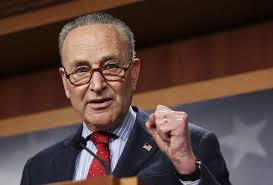
    Senate Majority Leader Chuck Schumer has condemned the DOJ’s failure, noting: 

    “It’s been 33 DAYS since Trump DOJ broke the law and failed to release all the Epstein files. The DOJ admits it has released less than 1% of the total files. The silence from congressional Republicans is deafening.” 

    Survivors and advocacy groups have also voiced outrage, pointing out that the longer the delay, the greater the risk that crucial evidence will be buried forever. 

    Why This Matters

    The Epstein case is not just about one man’s crimes. It is about a system that protects the wealthy and politically connected at the expense of justice. Every day these files remain hidden is another day the public is denied the truth about how Epstein operated, who enabled him, and who may still be in positions of power. 

    Pam Bondi and Donald Trump cannot claim to stand for justice while ignoring the law. The American people deserve the full release of the Epstein files now — not next month, not next year.

  • Bipartisan Firestorm Erupts Over DOJ’s Withholding of Jeffrey Epstein Files


    BLUE PRESS JOURNAL – A rare bipartisan alliance in Congress is turning up the heat on the Department of Justice (DOJ), after the agency failed to hand over all documents tied to the late convicted sex offender Jeffrey Epstein — despite a legal requirement to do so. The controversy has sparked an unusual push for “inherent contempt” proceedings against Attorney General Pam Bondi, including the threat of daily fines until the full cache of files is released.

    The Dispute Over Epstein Records

    Earlier this year, lawmakers passed legislation mandating the DOJ to make public all federal documents related to Epstein, whose death in federal custody in 2019 continues to fuel questions about his network of associates and possible enablers. The bill — backed across party lines — was seen as a step toward transparency in one of the most notorious criminal cases in recent memory.

    However, reports emerged last week that the DOJ had only delivered a portion of the mandated files, withholding several categories of records. According to congressional aides cited by Politico and The Hill, these missing documents include internal communications, investigative notes, and certain sealed grand jury materials that lawmakers say should have been reviewed for public release under the new law.

    Massie and Khanna’s Bipartisan Push

    Reps. Thomas Massie (R-Ky.) and Ro Khanna (D-Calif.) — an unlikely pairing from opposite ends of the political spectrum — co-led the original transparency bill and are now spearheading the enforcement effort. In a joint statement, they accused the DOJ of “flouting the clear will of Congress” and undermining public trust.

    Their solution: invoking Congress’s inherent contempt powers, a rarely used tool that allows lawmakers to directly penalize executive branch officials without going through the courts. Historically, this power has been employed to compel testimony or document production, though its use in the modern era is virtually unheard of.

    Under their proposal, Attorney General Bondi could face monetary fines until the DOJ hands over the full tranche of Epstein-related records.

    What Is “Inherent Contempt”?

    The inherent contempt process dates back to the 19th century, when Congress asserted its authority to enforce subpoenas by detaining or fining noncompliant witnesses. While the Supreme Court has upheld the power in principle, it has fallen out of favor in the last century, replaced by criminal contempt referrals to the DOJ itself — an awkward arrangement when the DOJ is the target.

    Massie and Khanna argue that the exceptional nature of the Epstein case warrants reviving the old enforcement mechanism. “When the agency breaking the law is the one that normally prosecutes contempt, Congress has to act for itself,” Massie said in recent interviews.

    Why It Matters

    The DOJ’s partial release has reignited public suspicion over Epstein’s connections to prominent figures in politics, finance, and entertainment. Transparency advocates say withholding the documents fuels conspiracy theories and undermines accountability for potential crimes beyond Epstein’s own convictions.

    Bondi, a former Florida attorney general appointed to lead the DOJ last year, has defended the department’s approach, saying certain materials are too sensitive to release for reasons ranging from ongoing investigations to privacy concerns for individuals not charged with wrongdoing.

    Still, with both Republicans and Democrats pressing for full disclosure — and willing to test the boundaries of congressional enforcement — the standoff could set a precedent for how lawmakers respond when executive agencies defy statutory mandates.

    What’s Next

    The Massie-Khanna resolution for inherent contempt is expected to be formally introduced in the coming weeks. If adopted, it could trigger a high-profile constitutional clash between Congress and the DOJ, potentially landing before the courts if Bondi challenges the fines.

    Political analysts note that while bipartisan cooperation on transparency is rare, the Epstein case has cut across partisan lines due to its disturbing subject matter and unanswered questions. Whether this unity holds through a drawn-out enforcement battle remains to be seen.


    Bottom line: The fight over the Epstein files is more than just a dispute over documents — it’s a test of Congress’s ability to compel compliance from the executive branch in the face of resistance. If Massie and Khanna succeed, they could revive an enforcement power unused for decades, reshaping the balance between the legislative and executive branches.

  • Trump Administration Defies Deadline to Release Epstein Files, DOJ Suggests Non-Compliance

    BLUE PRESS JOURNAL – WASHINGTON — The Department of Justice, under the Trump administration, is poised to violate federal law by failing to meet a congressionally mandated deadline to release records related to the Jeffrey Epstein investigation, drawing sharp condemnation from lawmakers and accusations of a cover-up.

    Congress passed legislation last month, co-sponsored by an unusual bipartisan duo of Rep. Thomas Massie (R-Ky.) and Rep. Ro Khanna (D-Calif.), giving the administration 30 days to create a public, searchable, and downloadable database of documents concerning Epstein’s international sex trafficking ring. After initially fighting the bill for months, President Trump signed it into law once its passage became inevitable.

    The president has publicly dismissed demands for the files’ release as a Democratic “hoax.” His administration’s reluctance to comply with the law he signed aligns with this rhetoric, despite the bill’s specific provisions.

    The legislation begrudgingly permits a few redactions to shield ongoing federal investigations or prosecutions. Yet, it bluntly declares that “no record shall be withheld, delayed, or redacted on the basis of embarrassment, reputational harm, or political sensitivity, including to any government official, public figure, or foreign dignitary.” In other words, no one gets a free pass to hide behind their status or feelings!

    This blatant non-compliance is a powder keg ready to explode into a major legal showdown. The administration’s refusal to release the records by the deadline fuels speculation about hidden motives and the explosive information regarding high-profile individuals linked to the late financier. Lawmakers are preparing for an imminent court battle to hold the administration accountable and uphold the law.

  • Trump DOJ’s Attempt to Block Testimony in Contempt Inquiry Signals Deepening Crisis

    Blue Press Journal – In yet another troubling chapter of the Trump-era Justice Department’s record, lawyers representing Donald Trump’s DOJ are reportedly scrambling to block their own officials from testifying in a contempt of court inquiry. The case, which stems from Judge James Boasberg’s investigation into potential contempt in the original Alien Enemies Act litigation, has now reached the D.C. Circuit Court of Appeals — a sign of the high stakes involved.

    The extraordinary lengths to which the Trump DOJ is going to shield its attorneys from questioning underscores a familiar pattern: obstruction, delay, and a disregard for judicial oversight. Rather than cooperating in a straightforward inquiry meant to uphold the rule of law, the department under Trump appears intent on keeping potentially damaging information from ever surfacing in court.

    Such stonewalling corrodes public trust in government institutions. The judiciary’s contempt power exists precisely to hold officials to account when they defy lawful orders. By fighting to muzzle its own lawyers, the Trump DOJ is sending a clear message — loyalty to the president and his political agenda takes precedence over adherence to the law. 

    This behavior is not an aberration, but part of a consistent ethos that defined the Trump administration: an executive branch unwilling to submit to checks and balances, willing to claim sweeping immunity, and quick to cry political persecution when pressed for transparency. That the issue here arises under the Alien Enemies Act case — a law with its own fraught history — only heightens the stakes for civil liberties and constitutional governance.

    As the D.C. Circuit weighs the DOJ’s appeal, it faces a choice that will reverberate beyond this single case. Siding with secrecy would embolden future administrations to defy court oversight; insisting on testimony would reaffirm that no president, and no government lawyer, is above the law.

  • Judge Orders DOJ to Hand Over Grand Jury Materials to James Comey, Citing ‘Disturbing Pattern’

    Blue Press Journal – Political Correspondent

    In an extraordinary and rare move, a federal judge has ordered the Department of Justice to turn over grand jury materials to former FBI Director James Comey, citing serious concerns about the integrity of the investigation that led to the secret proceedings. 

    U.S. District Judge William Fitzpatrick ruled on Monday that Comey’s right to due process outweighs the longstanding secrecy afforded to grand jury proceedings. Prosecutors have been directed to deliver the specified materials to Comey’s legal team by the end of the day. 

    The Court recognizes that the relief sought by the defense is rarely granted,” Fitzpatrick wrote in his order. “However, the record points to a disturbing pattern of profound investigative missteps, missteps that led an FBI agent and a prosecutor to potentially undermine the integrity of the grand jury proceeding.” 

    The decision is highly unusual, as grand jury materials are almost never released to defendants or their attorneys. Secrecy is considered a cornerstone of the process, designed to protect the identities of witnesses, encourage candid testimony, and safeguard ongoing investigations. To pierce that protection, courts typically require a clear showing of prosecutorial misconduct or a significant threat to a defendant’s constitutional rights. 

    Here, Fitzpatrick’s order suggests the court has found compelling indications that such misconduct may have occurred. While the judge’s statement did not elaborate on the exact nature of the “profound investigative missteps,” the language leaves little doubt about the seriousness of the concerns. 

    Legal analysts say the ruling could have far-reaching implications, both for Comey’s case and for the Justice Department itself. “When a judge uses phrases like ‘disturbing pattern’ in reference to law enforcement conduct, that’s a strong signal of judicial distrust,” said one former federal prosecutor. “It suggests the court believes the misconduct wasn’t isolated or accidental.” 

    Comey, who was FBI director from 2013 to 2017, remains a polarizing figure in national politics due to his high-profile investigations into Hillary Clinton’s email use and Russian interference in the 2016 election. The current grand jury proceedings’ specifics are undisclosed, but Monday’s ruling is likely to reignite debate about Comey’s actions and the DOJ.

    The Department of Justice declined to comment on the order or the nature of the investigative missteps. It remains unclear whether prosecutors will comply immediately or attempt to challenge the ruling through an emergency appeal. 

    For now, this decision savagely slaps down federal investigative conduct, exposing the dark, murky underbelly of a process that’s typically cloaked in secrecy from the lens of public scrutiny.

  • The Shadow Over the Ballot Box: How the Justice Department Is Engineering an Assault on Democracy

    Blue Press Journal

    In the quiet corridors of the Department of Justice, an institution once revered as the impartial enforcer of our nation’s laws, a disturbing campaign is escalating. It doesn’t involve sweeping arrests or public spectacles, but something far more insidious: a systematic effort to undermine the very foundation of American democracy. With a series of aggressive lawsuits and politically motivated actions, the DOJ under the Trump administration is no longer a guardian of civil rights but a weapon wielded to secure partisan power and dismantle the integrity of our elections.

    The latest salvo in this war on voting rights was fired last Thursday evening. While the news cycle fixated on the unprecedented indictment of former FBI Director James Comey—a move widely seen as political retaliation—the DOJ’s Civil Rights Division quietly sued six more states: California, Michigan, Minnesota, New York, New Hampshire, and Pennsylvania. Their demand? The wholesale handover of full, unredacted voter registration lists. These lawsuits, following similar actions against Maine and Oregon, represent a dangerous escalation of an agenda that seeks to control, challenge, and ultimately suppress the American voter.

    This is not a new tactic, but a revival of a failed and deeply unpopular strategy. We saw a similar push during Trump’s first term with his sham “election integrity” commission, which collapsed under a wave of bipartisan outrage and state resistance. This time, the administration is cloaking its data-mining operation in the authority of the DOJ, hoping the public’s response will be more muted. But the goal remains the same: to acquire sensitive voter data that can be used to purge voter rolls, challenge eligibility, and create a chilling effect that discourages participation, particularly in communities that tend to vote against the MAGA agenda.

    States across the political spectrum have rightfully resisted these demands. They understand that handing over unredacted lists containing citizens’ private information is not only a privacy violation but an invitation for misuse. As the Brennan Center for Justice has noted, the resistance is widespread: “few states have sent the DOJ their voter files, and those that did—at least 11—seem to have provided only the publicly available versions of their voter files.” This defiance from both red and blue states underscores just how extreme and illegitimate the DOJ’s demands truly are.

    But the assault extends beyond data grabs. In a cynical inversion of its mission, the administration is weaponizing the landmark Voting Rights Act (VRA) to achieve the very discrimination it was enacted to prevent. Look no further than Texas, where the DOJ sent a letter in July alleging that four congressional districts—all represented by Black or Hispanic Democrats—were “unconstitutional racial gerrymanders.” This provided the perfect political cover for Governor Greg Abbott, who promptly cited the letter as justification for redrawing the state’s map, on Trump’s orders, to manufacture five additional Republican seats in the U.S. House.

    Let the gravity of that sink in. The Civil Rights Division of the United States Department of Justice is actively aiding a partisan gerrymandering scheme designed to dilute the power of minority voters. A law forged in the fire of the Civil Rights Movement to protect the vulnerable is being twisted into a sword to attack them. This isn’t just partisan legal advocacy; it is a profound betrayal of the department’s purpose and a direct attack on the communities it is sworn to protect.

    These actions—the lawsuits for voter data, the perversion of the VRA in Texas, and the politically charged indictment of James Comey—are not isolated events. They are pieces of a coherent and terrifying puzzle. They reveal a Justice Department that has been fundamentally compromised, transformed from a pillar of the rule of law into a political cudgel for the executive branch. Its purpose is no longer to pursue justice, but to punish enemies, reward allies, and rig the system to ensure a predetermined outcome.

    This is a five-alarm fire for our democracy. The administration is not just challenging an election result; it is systematically dismantling the infrastructure of fair elections. By demanding private voter data and aiding partisan gerrymanders, the DOJ is laying the groundwork to contest, control, and corrupt the electoral process from the inside out. When the institution entrusted with protecting our most sacred rights becomes the primary instrument of their destruction, we are on a perilous path. The alarm bells are ringing, and we cannot afford to ignore them.

  • Senate Democrats Push for Transparency in Epstein Case

    Blue Press Journal (DC) – In a surprise move, Senate Democratic Leader Chuck Schumer (N.Y.) filed an amendment to the National Defense Authorization Act (NDAA) on Wednesday, seeking to direct Attorney General Pam Bondi to release all unclassified records related to convicted sex offender Jeffrey Epstein. The amendment, which was added to the annual defense authorization bill, aims to shed light on the Epstein case and bring transparency to the Justice Department’s handling of the matter.

    Schumer’s amendment is identical to a bill being pushed by Reps. Thomas Massie (R-Ky.) and Ro Khanna (D-Calif.) in the House, which would force the Justice Department to release all Epstein-related documents in its possession. The move comes as Senate Republicans, including Majority Leader John Thune (R-S.D.), have expressed support for transparency in the Epstein case, but have stopped short of committing to a vote on legislation directing the Trump administration to release the documents.

    Thune told reporters on Tuesday that he supports “transparency” in the Epstein case, but did not say whether the Senate would vote on a measure to release the documents if it passes the House. Schumer’s amendment puts pressure on Senate Republicans to take action on the issue, which has garnered significant public attention and outrage.

    The amendment was filed as the Senate Armed Services Committee prepares to vote on the NDAA, which is a key piece of legislation that authorizes funding for the nation’s defense programs. Schumer’s move is seen as a way to force the issue of Epstein transparency onto the Senate’s agenda, and to hold the Trump administration accountable for its handling of the case.

  • New Revelations Spark Renewed Scrutiny of Epstein’s Death

    Blue Press Journal – In a shocking twist, newly surfaced testimony from Ghislaine Maxwell, the disgraced socialite and former associate of convicted sex offender Jeffrey Epstein, has reignited concerns about the circumstances surrounding Epstein’s death. During a July testimony, Maxwell explicitly stated that she does not believe Epstein died by suicide, fueling speculation about a potential murder-for-hire plot.

    The testimony that took place at a Florida prison where Maxwell was being held after receiving a 20-year sentence for her role in procuring victims for Epstein. Maxwell’s statements were made in response to Blanche’s inquiry about her thoughts on Epstein’s death. “I do not believe he died by suicide, no,” Maxwell replied, sparking renewed debate about the official narrative surrounding Epstein’s demise.

    Epstein’s death in 2019, while in jail during Donald Trump’s presidency, was initially ruled a suicide. However, many have questioned the official account, citing suspicious circumstances and inconsistencies in the investigation. Early this year it was noted there was almost 3 minutes missing in the security camera footage of his death.

    Mark Epstein, Jeffrey’s brother, has also cast doubt on the suicide ruling, citing a pathologist who claimed that the marks on Epstein’s body were more consistent with homicide than suicide.

    The transfer of Maxwell to a minimum-security prison camp in Texas after her testimony has also raised eyebrows, as sex offenders like Maxwell are typically not eligible for such facilities without a waiver from the Department of Justice.

    With many questions still unanswered, it remains to be seen whether the truth about Epstein’s death will ever be fully revealed. One thing is certain, however: the public deserves a more comprehensive and transparent accounting of the events surrounding this high-profile case.

  • Epstein Victims’ Lawyer Slams Trump DOJ’s Handling of Ghislaine Maxwell Case as “Appalling”

    Blue Press Journal (NYC) – In a scathing critique, Arick Fudali, an attorney representing seven accusers of convicted sex offender Jeffrey Epstein, has condemned the Trump Department of Justice’s (DOJ) handling of Ghislaine Maxwell’s case as “reeking of suspicion.” Maxwell, a longtime associate of Epstein, has been accused of playing a crucial role in his sex trafficking ring.

    Fudali expressed outrage over the “special treatment” being afforded to Maxwell, stating that she should be facing the most severe possible punishment for her alleged crimes. “The fact that she has gotten anything but the most severe possible punishment is an absolute travesty of justice,” he said. “She should be in the maximum security prison where child sex traffickers belong.” Fudali’s comments come as many of Epstein’s victims and their advocates continue to demand justice and transparency in the case.

    The attorney also called on the Trump administration to release all files related to the Epstein case, with the names of the victims redacted, to ensure transparency and accountability. “The easiest step for the Trump administration would be to just release the files, redact the names of the victims, release the entire files to the public,” he said. “Anything short of that is suspicious. Anything short of that is not enough.”

    Fudali’s criticisms reflect the growing frustration and mistrust among Epstein’s victims and their supporters, who feel that the DOJ’s handling of the case has been inadequate and overly secretive. The Trump administration’s response to the Epstein scandal has been widely criticized, with many accusing the government of prioritizing the interests of the wealthy and powerful over those of the victims.

  • 4th Circuit Court of Appeals Rules Against Trump DOJ on Garcia

    UPDATE: John Roberts Pauses Ruling Requiring Trump Administration To Return Man Mistakenly Deported To El Salvador

    In a resounding decision on Monday, the court unequivocally rejected President Donald Trump’s administration’s attempts to evade the return of Kilmar Abrego Garcia to the United States by the midnight deadline. J. Harvie Wilkinson III, a nominee of former President Ronald Reagan, was particularly scathing in his response to the government’s arguments.

    The government has admitted that it was a grave error to disregard this process,” Wilkinson wrote. “If indeed it was a mistake, one would expect the government to take steps to correct it. Most of us strive to rectify our mistakes. However, to my knowledge, the government has made no effort to do so in this case. The circumstances of this case raise the alarming possibility of a dangerous loophole: the government could whisk individuals away to foreign prisons in defiance of court orders and then claim, under the guise of its Article II powers, that it is no longer responsible for them, leaving no recourse. It requires a great deal of imagination to grasp the extent of this lawlessness, a path that the courts cannot tolerate.

    Let us not forget the warning: first they came for your neighbor, and then they came for you.”

    Our fundamental protections demand that every individual is granted their day in court, and they stand innocent until proven guilty—a powerful affirmation of justice that we must fiercely uphold!