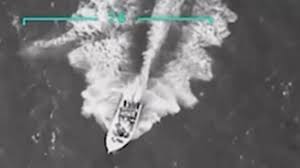
The U.S. military’s intensified campaign against alleged drug smuggling vessels in international waters near Venezuela is now facing rigorous congressional demand for transparency and legal justification. While touted as a crucial counter-narcotics effort, new information revealed to lawmakers this week concerning a specific boat strikes incident—and the broader rules of engagement—has pushed the controversy into urgent national security discussions.
Lawmakers on key oversight committees learned chilling new operational details about the highly scrutinized September 2 strikes, particularly surrounding the fates of the victims.
The Revelation: Firing on Survivors
The military campaign, which began as the first time the U.S. military actively sought to destroy vessels allegedly carrying drugs, but no evidence give, has so far resulted in the destruction of over 20 boats and the deaths of more than 80 people. However, the September 2 incident stands out because of the alarming confirmation that the U.S. military opened fire on individuals who had already survived the initial assault.

Members of Congress were briefed that after the first strike disabled the vessel, the U.S. military conducted a follow-up action, firing upon two individuals who were reportedly clinging to the wreckage. This revelation immediately complicates the narrative of operational necessity and raises severe questions regarding the standing rules of engagement in non-declared conflict environments.
The legal underpinnings of President Donald Trump’s military campaign in international waters are now under intense scrutiny and the international community. Democratic lawmakers argue that the lack of clear legal precedent for escalating force in areas where the U.S. has no official combat mandate demands a thorough accounting of the rationale and authorization chain. Clearly congress is the only authority that can declare war, not the president.
The Admiral’s Testimony
The key figure in the initial decision-making process, Navy Adm. Frank “Mitch” Bradley, who ordered the controversial strikes, testified this past week before national security committees. His testimony was central to understanding the operational intelligence that underpinned the decision to use deadly force.
Crucially, lawmakers were provided with details about the alleged destination and purpose of the targeted vessel. According to sources familiar with the classified briefings, the naval forces believed the boat was not merely carrying narcotics, but was:
“Heading toward a scheduled link-up with another vessel bound for Suriname.”
Other reports suggested simply that the vessel was heading south when it was engaged. Regardless of the slight variation in the directional details, these briefings attempted to confirm the high-value nature of the target and the intelligence driving the escalation.
Seeking Legal Clarity and Accountability
Lawmakers overseeing the national security apparatus are demanding answers on several fronts: the proportionality of force used, the legal authority governing operations in international drug interdiction, and the adherence to conventions regarding the treatment of survivors and non-combatants.
The fundamental legal debate centers on whether the expansive counter-narcotics campaign, which involves destroying vessels and resulting in high casualty rates, operates within or beyond accepted maritime enforcement limits.
The campaign’s destruction of over two dozen vessels and loss of lives heightens the inquiry’s seriousness. The congressional investigation targets not just the tactical error of the September 2 strike but questions the military’s entire posture in this region’s legality and morality.
 Blue Press Journal