Tag: economic growth

  • The Fiscal Legacy of the Trump Era: A Study in Mounting Debt

    by Winston Wendell

    I have been watching America’s debt situation, and it is worrying to observe the scale. According to the latest data the national debt has officially surpassed an unprecedented $40 trillion. A significant part of its growth can be attributed to the policies implemented by President Donald Trump.

    Public debt sculpture with money bags labeled NATIONAL DEBT, TAXES, GDP, NATIONAL REVENUE, and a £2,573,145,678,901 counter.

    The increased debt can be explained by the direct intervention of Trump and the GOP in the economy through corporate tax reductions. In particular, the enactment of the Tax Cuts and Jobs Act (TCJA) of 2017 resulted in a significant decrease of the corporate tax rate by 14% (from 35 to 21%). The TCJA introduced substantial changes in the taxation of pass-through income, allowing businesses to deduct up to 20% of their profit. In addition, the lawmakers doubled the exemption threshold of the estate tax. The Trump administration’s fiscal policy was built on neoclassical supply-side ideas, claiming that the changes to the corporate tax would lead to economic growth and prosperity. Well it didn’t.

    According to the estimates conducted by the Congressional Budget Office and the bipartisan Joint Committee on Taxation, the initial design of the TCJA led to a $1.5 trillion reduction in revenues over the decade. The administration’s actions in Congress failed to recognize the limitations of the supply-side economics, which promised to deliver the significant growth of the economy, in other words it failed. As the federal budget was starved of revenue, it complicated the situation with the COVID-19 pandemic response.

    The pro-business and billionaire policies of the administration, which decreased the overall revenues of the federal budget, resulted in the inability to finance the pandemic response adequately. Thus, the federal debt is forecasted to exceed 100% of the GDP, which makes the U.S. economy extremely vulnerable. Trump’s interference in the economy resulted in the growing budget deficit, which has a detrimental effect on the federal budget.

    Trump’s approach to fiscal policy promised to deliver economic growth, but it actually reduced revenues of the federal budget making the debt issue skyrocket. The Republican party needs to stop pretending Trump’s policies did’t increase the federal debt. Trump keeps blaming others when the blame for over 30 percent of the debt is squarely on this tax the middle class and give to the rich. These consequences will be pasted to future generations. Maybe it’s time to reform the taxation system to make sure that everyone, including billionaires and millionaires, contribute to country proportionally to their incomes.
    Fediverse Reactions
  • The Dark Reality Behind Trump’s “Booming” Economy: A Closer Look at the Job Market

    The Disconnect Between Rhetoric and Reality

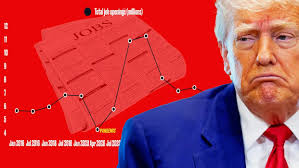
    Blue Press Journal – As the Trump administration continues to tout the supposed success of its economic policies, a starkly different narrative emerges when examining the latest data on the job market. Despite the White House’s claims of a new “Golden Age,” the reality is that job openings have plummeted to their lowest level since the height of the Covid-19 pandemic in mid-2020.

    According to the Labor Department’s latest report, job openings in December dropped unexpectedly, signaling a significant slowdown in hiring across various industries. This downturn is further underscored by data from the research firm Challenger, Gray and Christmas, which revealed that companies announced plans to cut over 108,000 positions in January, more than double the number of layoffs recorded in January 2025. The payroll processing firm ADP also reported a meager addition of just 22,000 private sector jobs in January, a clear indication of tepid payroll growth.

    The numbers paint a concerning picture, particularly when considered in the context of the Trump administration’s boasts about the economy. While official measurements of productivity and output have been strong, polls and consumer confidence surveys have consistently shown negative sentiments among the public. A recent poll from The Economist/YouGov found that Trump trails by 14 percentage points on his handling of jobs and the economy, while a survey by the Federal Reserve Bank of New York revealed deteriorating consumer expectations regarding wage growth and finding new employment.

    The disconnect between the administration’s rhetoric and the reality on the ground is striking. As RSM US Chief Economist Joe Brusuelas noted, “On the margin, firms are able to do more with less…That’s fine when you’re talking to an economist or capital markets professional; that’s hell if you’re talking to a politician or the public.” The implications for Trump are significant, as his approval ratings on the economy have already been battered by concerns over affordability, inflation, and labor market anxieties.

    The Labor Department’s report also highlighted substantial declines in job opportunities across professional and business services, retail trade, and finance and insurance. As companies increasingly adopt artificial intelligence, there are growing concerns that future growth may leave workers behind. The quits rate, which reflects workers’ willingness or ability to leave their job, remains below pre-pandemic levels, suggesting a lack of confidence in the job market.

    The labor market outlook is uncertain, with Wells Fargo economists warning that “the low hiring environment and subdued rate of voluntary job departures risks pushing layoffs higher.” It remains to be seen if the Trump administration’s policies will address the job market’s underlying issues.

    Key Statistics:

    • Job openings in December dropped to their lowest level since mid-2020 (Labor Department)
    • Companies announced plans to cut over 108,000 positions in January (Challenger, Gray and Christmas)
    • Private sector firms added just 22,000 jobs in January (ADP)
    • Trump’s approval rating on jobs and the economy trails by 14 percentage points (The Economist/YouGov)
    • Consumer expectations regarding wage growth and finding new employment have deteriorated (Federal Reserve Bank of New York)

    By examining the latest data and research, it becomes clear that the Trump administration’s economic policies have not delivered the promised benefits to the job market.