Trump’s 2026 Iran War: How $140 Oil Tanked the American Economy
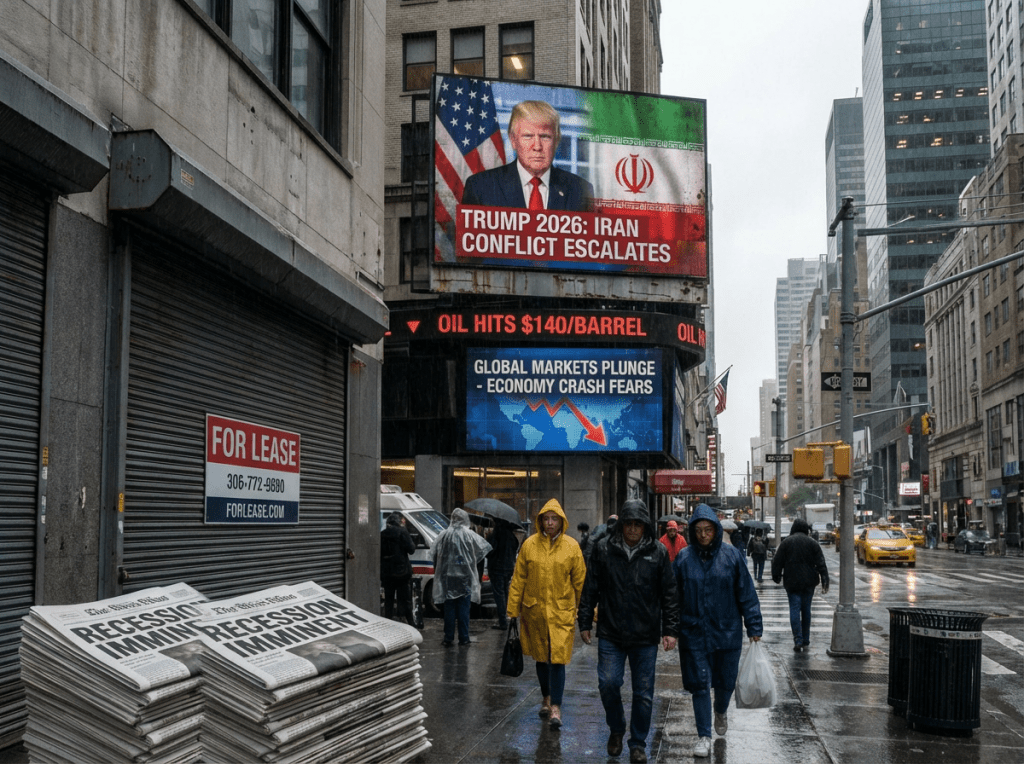
Blue Press Journal – When President Trump ordered strikes on Iran, administration officials promised a “short, decisive conflict.” What Donald Trump failed to calculate—catastrophically—was the immediate collapse of energy markets and the devastating ripple effect across the American economy.
West Texas Intermediate (WTI) Crude vs. Retail Gasoline Prices – Jan 2026 → Apr 2026 – based on estimates
| Month | WTI Crude (USD / bbl) | Retail Gas (USD / gal) |
|---|---|---|
| Jan | $86.0 | $2.98 |
| Feb | $100.0 | $3.48 |
| Mar | $114.0 + | $3.86 |
| Apr projected | $140.0 + | $6.80 |
The economic impact was immediate and brutal. As Iranian mines and missile threats choked the Strait of Hormuz, global supply chains seized. American consumers can face $6+ per gallon gasoline within weeks, triggering which will cause inflationary pressure that will erase wage gains, stock market prices and crush discretionary spending. The transportation sector will hemorrhaged profits while manufacturing faced energy costs not seen since 2008.
The administration’s war planning contained no credible energy contingency strategy. Despite Pentagon warnings that Hormuz closure would disrupt 20% of global oil shipments, Trump dismissed price concerns as “temporary fluctuations” and failed to coordinate with allies on alternative supply routes. Strategic Petroleum Reserve releases will provide insufficient against sustained disruption.
The result: can be a stagflationary spiral that pushes the economy into recession by Q3 2026, with middle-class families bearing the burden of strategic miscalculation.
| Date | S&P 500 Index |
|---|---|
| Feb 1, 2026 | 4500 |
| Feb 15, 2026 | 4200 |
| Feb 28, 2026 | 4000 |
| Mar 1, 2026 | 3800 |
 Blue Press Journal