Tag: economic security

  • The Delusion of Democratic Socialism: A Betrayal of the American Middle Class

    by Winston Wendell

    I’ve watched the Democratic Party twist itself in knots for years, but lately, it feels like it’s finally unraveled. All of a sudden, “democratic socialists” have found their way to the center stage, and honestly, the party seems to be forgetting what most people need—folks who just want life to make sense, not another uphill battle. Democratic socialism isn’t a fresh spin on old values—it runs straight into the wall of what middle-class Americans care about.

    Anyone I know isn’t hoping for higher taxes or a government takeover in the middle of the night. They’re busy paying the mortgage, keeping the fridge stocked, checking if their kids’ schools are safe, and crossing their fingers there’s enough left over for a rainy day. Ask them about fairness, and they’ll tell you it’s about working hard and earning what you get. Nobody’s asking for the government to hand everything out or bog down the economy with wild experiments.

    Take the Green New Deal. Climate change matters—a lot. But come on, does anyone believe the middle class can foot a trillion-dollar bill and pay more for energy without breaking a sweat? We’re the ones stuck paying the price. They’re shaky ideas that pile even more pressure onto teachers, nurses, business owners, and workers—the same people already feeling squeezed by shrinking paychecks and pricier groceries.

    Party leaders keep saying there’s space for everyone, banking on far-left proposals to keep younger voters hopeful and the donation machine humming. But all this does is turn radical ideas into “normal,” and most families don’t buy it. Look at Darializa Avila Chevalier’s win in NYC’s 15th district—she ran on a 70% wealth tax and a federal jobs guarantee for everyone. Activists might celebrate, but regular folks aiming to buy a house, start a business, or pick a school for their kids look at that and think, “No thanks.” Her win doesn’t mean America wants to go far left. It’s a red flag that the party is veering toward policies that hike costs, kill investment, and stick even more power in the government’s hands—the last thing the middle class needs.

    What I wish is for the Democratic Party to stick to common sense, back up small businesses, and deliver real help: affordable childcare, decent job training, safer streets. Democratic socialism misses all that. If we’re being real, it’s just an idealistic, top-down plan that swaps practical answers for risky promises—and guts what makes the Democratic Party strong. If this direction keeps up, it’s the middle class left holding the mess. We know the Republican Party and Trump clearly not for the American middle Class. Let’s be honest: this isn’t some bold new path for Democrats. It’s just a turn away from what built and keeps the American middle class alive.
    Fediverse Reactions
  • Beyond Generosity: Why Robust U.S. Support for Ukraine is Critical for American National & Economic Security

    The security of Kyiv directly impacts the security of Main Street.

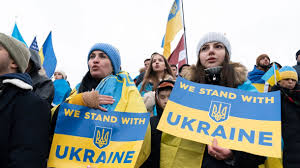
    Blue Press Journal – Ukraine’s ongoing struggle for sovereignty is often framed as a moral imperative or an act of generosity from its allies. However, a closer look reveals that sustained U.S. support for Ukraine is not just altruistic; it is a strategic investment in American national and economic security. This pivotal moment demands that U.S. policymakers and the public understand the profound implications for their own prosperity and global stability.

    Ukraine’s Unwavering European Path & Enduring American Partnership

    At its core, Ukraine is irrevocably committed to a future intertwined with Europe. This profound aspiration, coupled with a deep appreciation for American partnership, shapes their daily decisions, from energy infrastructure to military planning and economic recovery. Despite fluctuating political signals from Washington (Donald Trump), Ukrainians continue to view the United States with remarkable gratitude. Their primary concern isn’t outright abandonment, but rather the destabilizing inconsistency that could undermine long-term planning and deterrence.

    American Support: A Nuanced Reality

    A persistent misconception in Washington suggests a waning of public support for Ukraine. Yet, the data tells a more reassuring story. Polling from organizations like the Atlantic Council, utilizing data from HarrisX, consistently demonstrates that a majority of Americans – approximately six in ten – continue to support U.S. assistance to Ukraine, including vital military aid. [Source: Atlantic Council via HarrisX polling data, often cited in their analyses of public opinion, e.g., “The Resilience of American Support for Ukraine”]. Americans largely view Russia as the aggressor, express deep distrust of the Russian government, and oppose territorial concessions that would reward aggression.

    The challenge isn’t public opposition, but rather a lack of sustained attention. Domestic concerns like inflation, housing costs, and electoral politics understandably dominate daily discourse. Ukraine often doesn’t top these lists, not because Americans oppose assistance, but because they assume the issue is being competently managed. The public is distracted, not hostile, highlighting a crucial communication gap that U.S. advocates must bridge.

    The Economic Stakes: Why Global Stability Benefits Every American

    The most critical aspect often overlooked is how Ukraine’s fight directly safeguards the foundational principles of the international order that underpin American prosperity. For decades, the U.S. economy has thrived within a predictable global framework: secure trade routes, stable borders, enforceable rules, and alliances that deter major conflicts. This stability reduces risk, lowers costs, stimulates investment, creates American jobs, and allows the U.S. to shape global standards for trade, technology, and finance.

    The immediate aftermath of Russia’s full-scale invasion in 2022 offered a stark preview of these economic vulnerabilities. Energy prices surged globally, food costs climbed due to disrupted grain and fertilizer markets, and shipping and insurance rates increased, fueling inflation across the economy. [Source: International Monetary Fund (IMF) analysis on the economic impact of the war in Ukraine, e.g., “Global Economic Outlook: A Rocky Road Ahead” – specific chapter on Ukraine impacts]. These ripple effects led to higher interest rates, impacting mortgages, auto loans, credit cards, and small businesses – hitting American pocketbooks directly.

    If Russian aggression goes unchecked, the economic consequences will only deepen. A world where aggression is rewarded leads to structural risk, higher costs for everything, and diminished confidence for investment. This means slower growth, fragile supply chains, and greater volatility in retirement savings. Governments would spend more reacting to crises and less investing in domestic priorities. As the Council on Foreign Relations notes, “allowing Russia to dictate terms… would set a dangerous precedent for revisionist powers globally, destabilizing key trade routes and investment climates.” [Source: Council on Foreign Relations, e.g., “The Global Economic Impact of the War in Ukraine”].

    A Clear-Eyed National Security Imperative

    Beyond economics, supporting Ukraine is vital for U.S. national security. Ukraine is not asking the United States to fight its war, but to recognize that American security and prosperity are inextricably linked to its outcome. A failure to deter Russian aggression in Ukraine would signal weakness, inviting further challenges to the post-World War II international order. This would directly impact the credibility of NATO, the cornerstone of European security and a vital alliance for the U.S. [Source: NATO Official Statements, e.g., “NATO’s Response to Russia’s War in Ukraine”].

    If the United States desires a world governed by rules, predictability, and sovereign choice rather than coercion and chaos, it cannot afford to waver now. The cost of inaction – both economic and strategic – will far outweigh the investment required to ensure Ukraine’s success and uphold a stable global environment. Supporting Ukraine isn’t just about Ukraine; it’s about safeguarding America’s own power, prosperity, and the principles upon which its security rests.