Tag: economy

  • Trump’s Self‑Inflicted Economic Spiral Undermines GOP Prospects

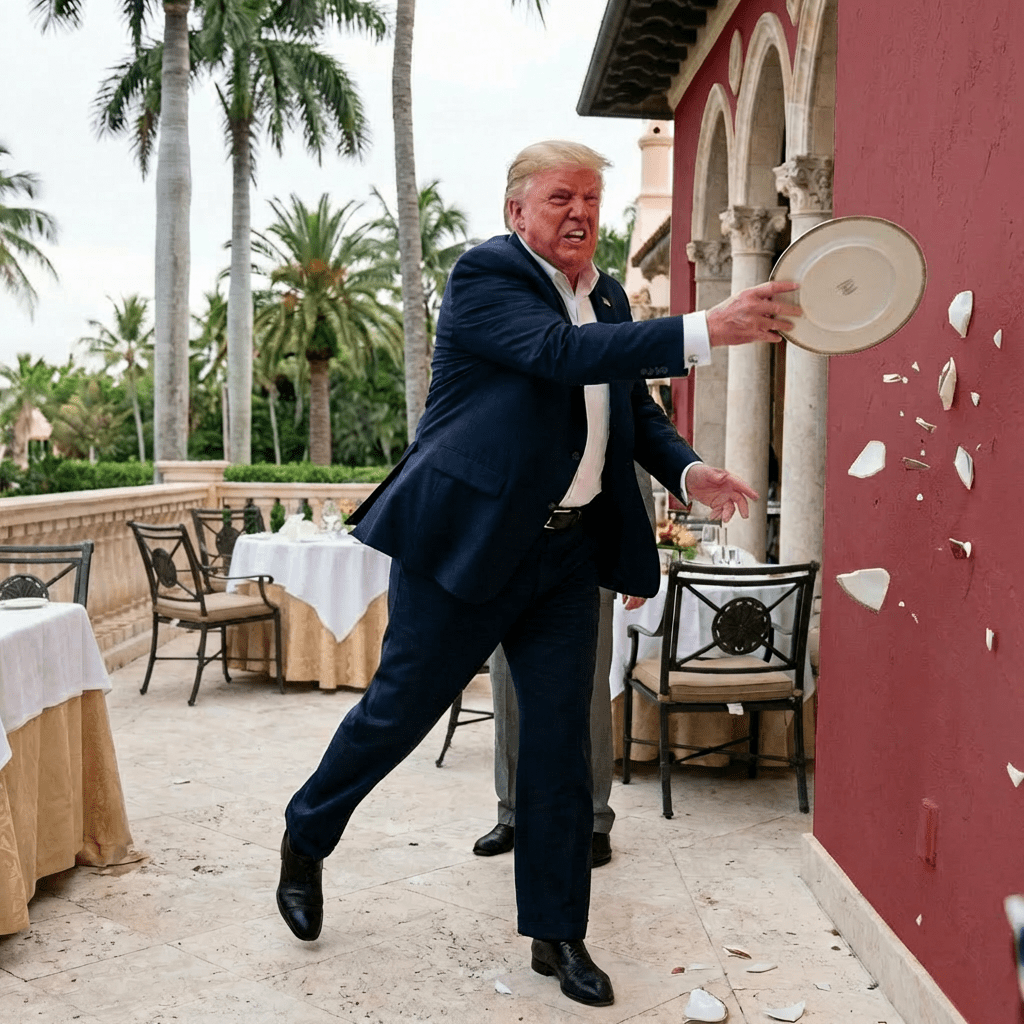
    Figure resembling Donald Trump throwing a plate against a wall as shocked onlookers watch.

    Blue Press Journal – The past week has laid bare the consequences of President Trump’s overreach—a mix of policy missteps and self‑inflicted damage that is tanking his poll numbers and eroding congressional support. A stagnant labor market, combined with skyrocketing gas prices tied to the Iran‑U.S. conflict, is pushing the U.S. economy toward stagflation, a scenario Wall Street analysts now warn could become a reality (Reuters, March 5).

    Trump’s immigration agenda, already unpopular, hit a new low with the abrupt removal of DHS Secretary Kristi Noem. Critics argue the move was less about policy competence and more about political retaliation, exposing the administration’s chaotic leadership style  (The New York Times, March 4). The fallout has amplified voter frustration, as households grapple with higher gasoline costs that directly counter the president’s “America First” promises to ease living expenses.

    Meanwhile, the labor market shows little sign of recovery. The Bureau of Labor Statistics reported a flat employment growth rate for the second consecutive month, while wages remain stagnant  (BLS, March 2). This paradox of weak job creation and rising inflation undermines the administration’s narrative that its tax cuts and deregulation are revitalizing the economy.

    Polls reflect the shifting tide. A recent Quinnipiac survey placed Trump’s approval at a historic low, with many Republicans citing “economic anxiety” as the primary concern  (Quinnipiac, March 3). As the GOP struggles to keep voters focused on its agenda, the cascade of bad news threatens to derail any attempt to regain momentum before the midterm elections.

  • Trump’s Iran War Triggers Gas Price Spike, Threatening GOP Midterm Strategy Just Days After ‘$1.99’ Boast

    BLUE PRESS JOURNAL – In a striking reversal that threatens to undermine Republican economic messaging ahead of the 2026 midterms, President Donald Trump’s military strikes against Iran have sent domestic fuel costs climbing—barely one week after the administration heralded falling gas prices as a signature achievement.

    During his recent State of the Union address, Trump claimed victory over fuel costs, declaring that gasoline had fallen “below $2.30 a gallon in most states, and in some places, $1.99 a gallon”—a characterization that already strained credulity compared to national averages tracked by AAA and the Energy Information Administration. According to Bloomberg energy analysts, those rosy figures collapsed almost immediately following U.S. military intervention in the Middle East, with the average price per gallon jumping 16 cents to nearly $3.11 in just seven days.

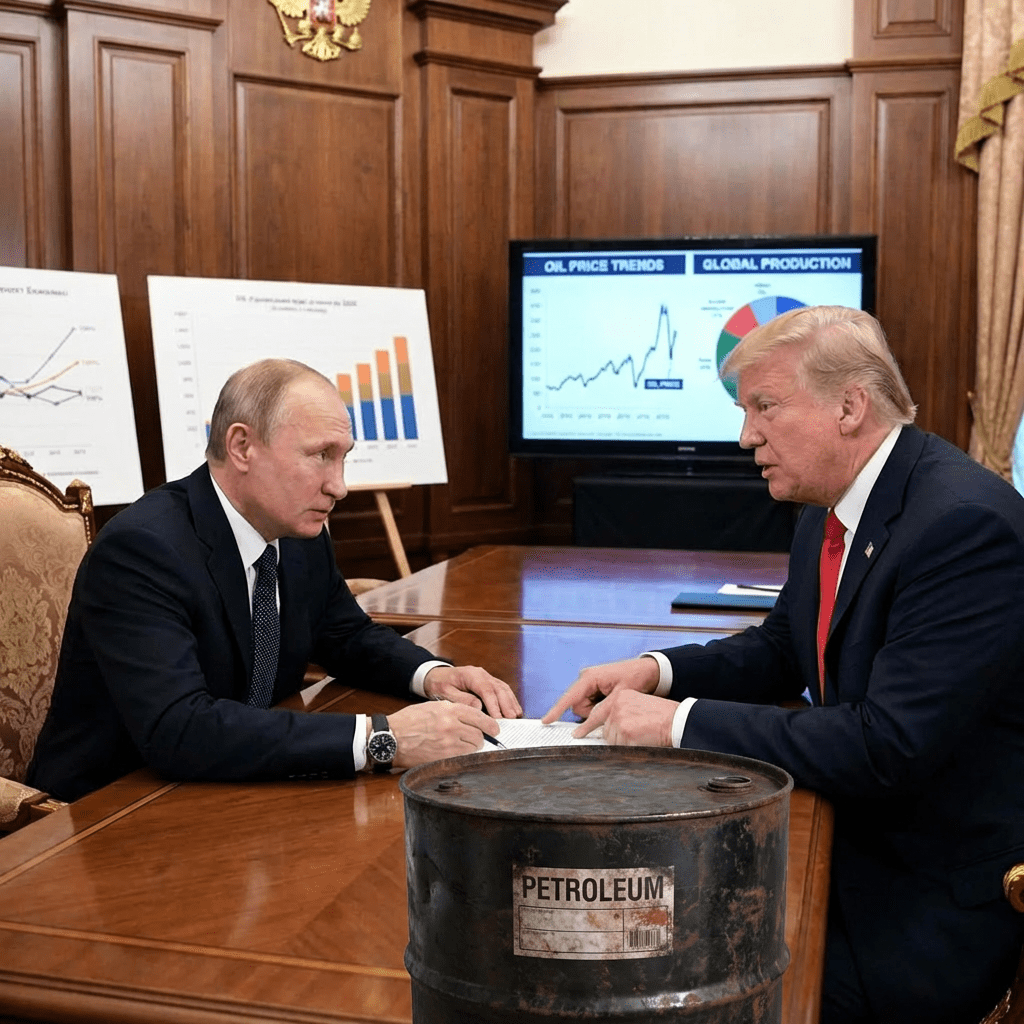
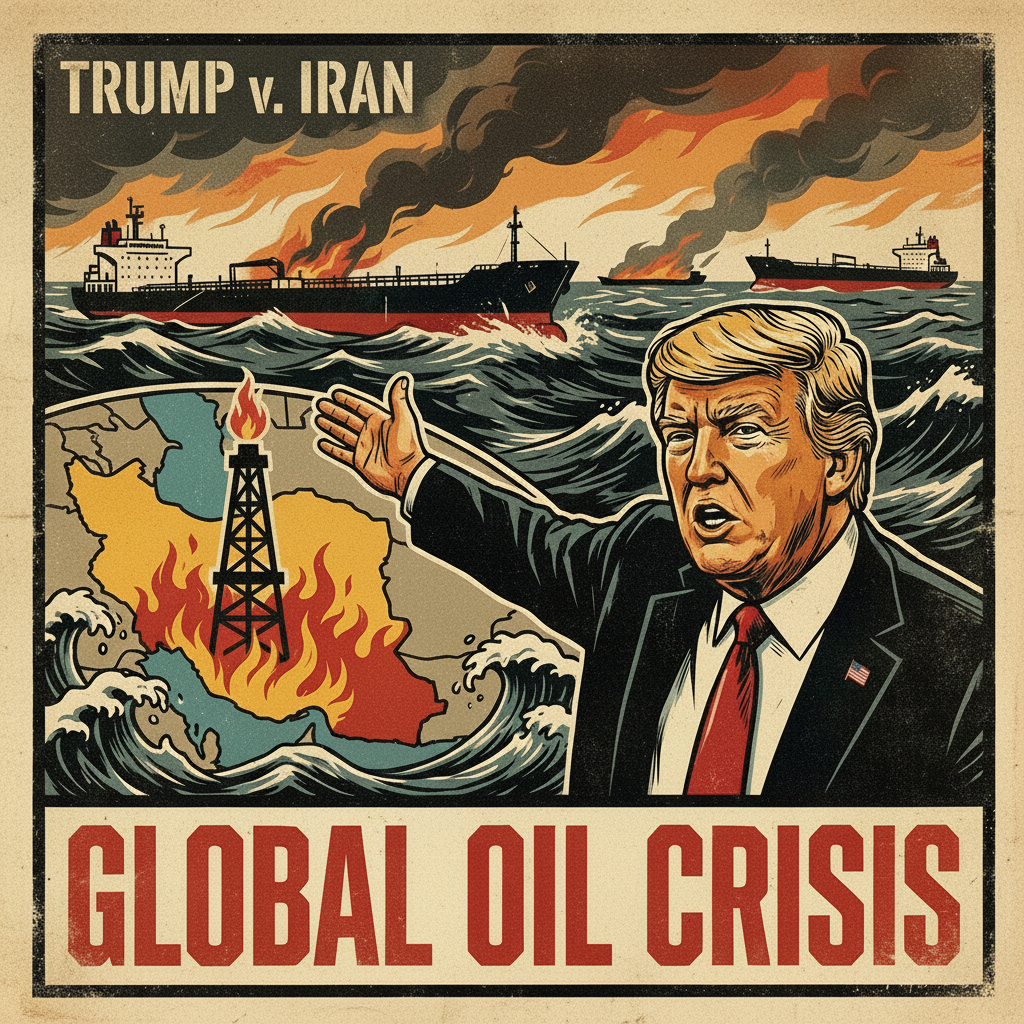
    The volatility stems from Trump’s decision to launch strikes against Iranian targets, a move that has destabilized a region responsible for more than 25% of global oil production. As Reuters reports, renewed conflict near the Strait of Hormuz—where nearly one-fifth of the world’s petroleum shipments pass—has triggered immediate risk premiums in futures markets. Secretary of State Marco Rubio acknowledged the economic trade-off Tuesday, admitting the administration “knew that going in would be a factor” when asked about the surge.

    The political calculus grows increasingly precarious for Republican strategists heading into November’s congressional elections. One veteran GOP operative, speaking anonymously to avoid White House retaliation, warned The Hill that sustained increases could prove “devastating” for candidates already struggling with voter dissatisfaction over persistent inflation in housing and groceries. “If it sustains at all, it’s really bad,” the strategist noted. “Where does that end?”

    Democratic critics have seized on the disconnect between Trump’s “America First” branding and the economic fallout. Representative Ro Khanna (D-Calif.), a potential 2028 presidential contender, wrote in a Tuesday op-ed that Americans “don’t want higher gas prices, which will spike at the pump because of this stupid conflict.” Senator Chris Murphy (D-Conn.) echoed these concerns to NBC News, emphasizing that “nobody in America is asking for their gas prices, their grocery prices, their construction prices to go through the roof.”

    Price Outlook: If hostilities continue through the summer driving season, industry analysts project national averages could climb to $3.40–$3.65 per gallon by late July, potentially erasing the administration’s limited inflation gains and complicating GOP efforts to maintain congressional majorities.

    Trump administration officials insist the spike represents “short-term” turbulence, with the President claiming Tuesday that prices will drop “lower than even before” once conflict ceases. However, with Pentagon officials offering conflicting timelines for operations and Iran vowing continued retaliation against American assets, energy markets remain jittery—leaving American consumers to bear the cost of a war few voters requested.

  • Trump’s Iran War Triggers Global Market Crash: Dow Plunges 1,000 Points as Gas Prices Soar and Oil Nears Crisis Levels

    The Cost of Forever War: Trump’s Iran Escalation Triggers Global Market Meltdown and Gas Price Shock

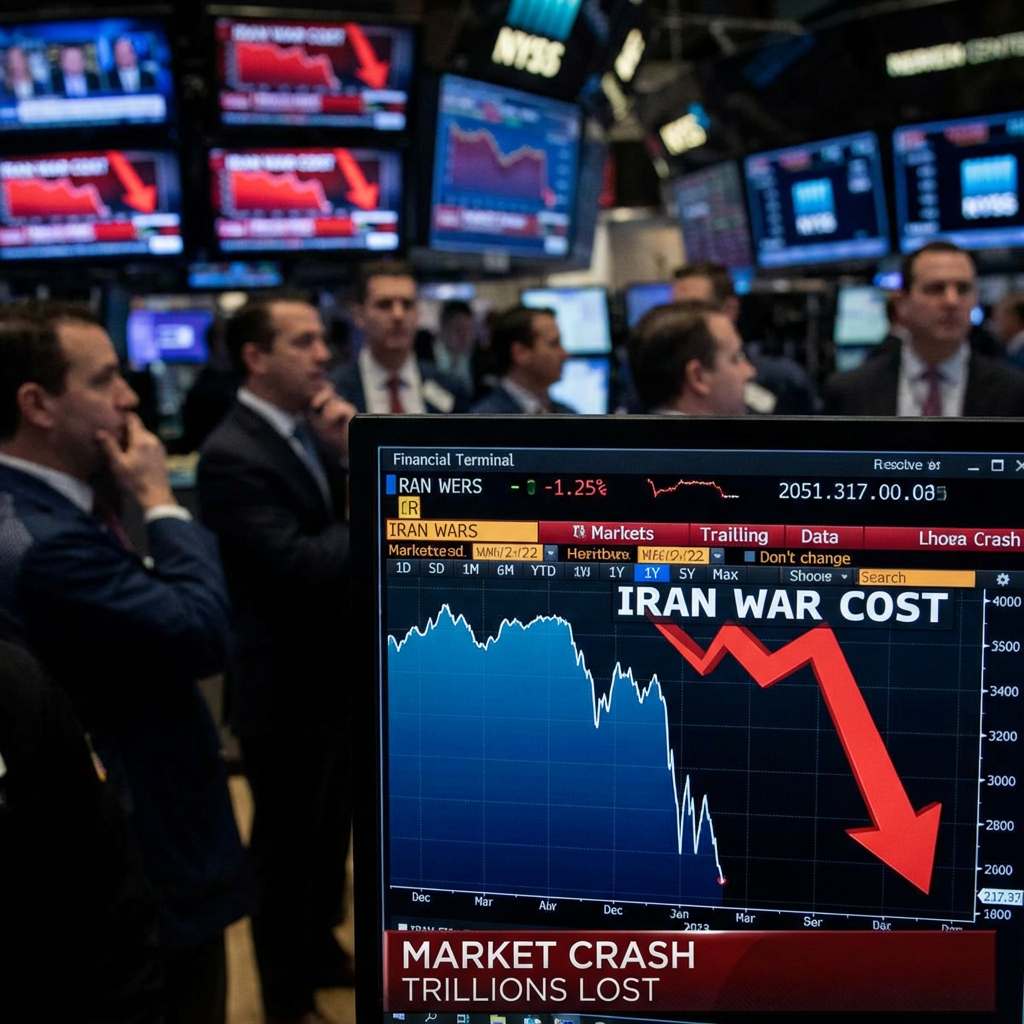
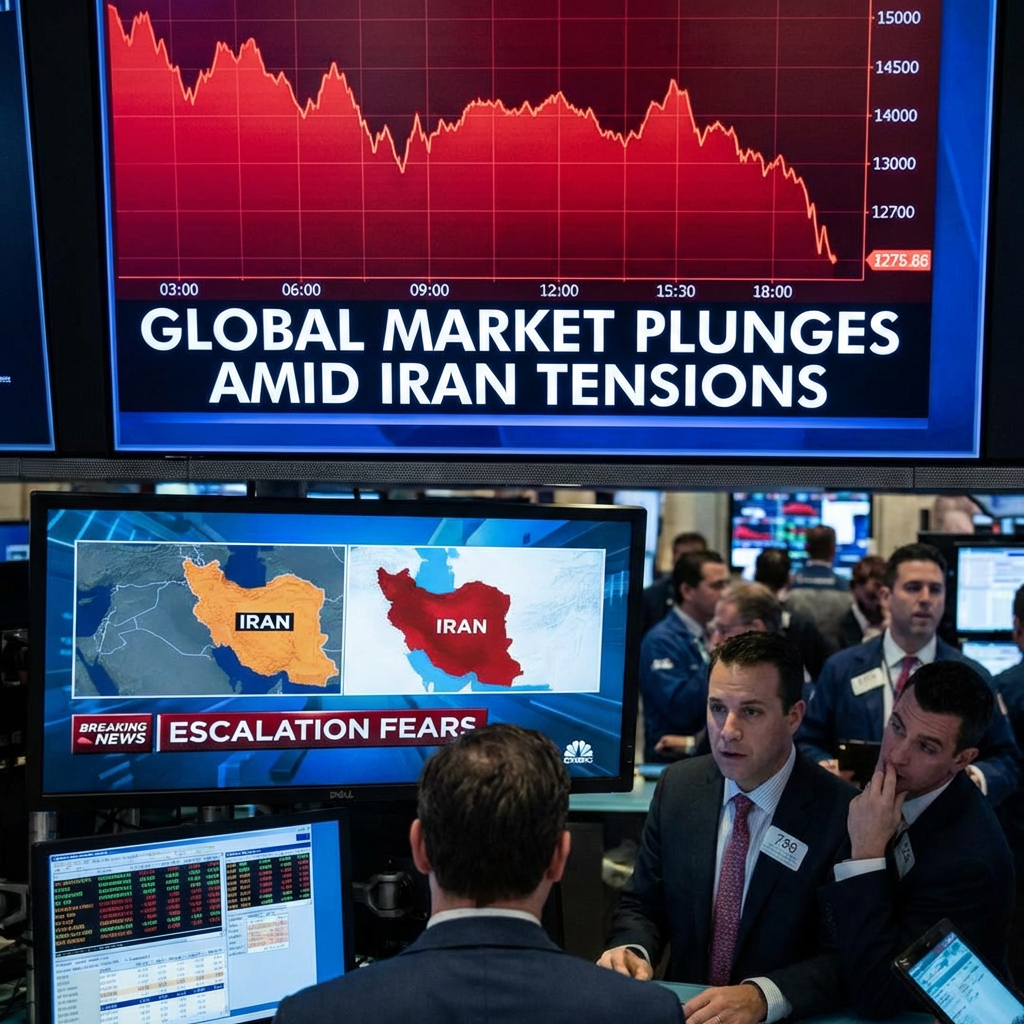
    BLUE PRESS JOURNAL ( 3/3/2026) – Global financial markets plunged into chaos Tuesday as the economic realities of President Donald Trump’s widening war with Iran came crashing down on Wall Street, sending the Dow Jones Industrial Average plummeting over 1,000 points and driving crude oil prices toward the psychologically devastating $100-per-barrel threshold.

    The sell-off—echoing across trading floors from Seoul to Frankfurt—reflects growing panic that the administration’s decision to assassinate Iranian Supreme Leader Ayatollah Ali Khamenei and subsequent strikes on the U.S. Embassy in Riyadh have triggered a conflict with no clear exit strategy, one that threatens to choke global energy supplies just as inflation-weary consumers were hoping for financial relief.

    By 10 a.m. Eastern Time, the Dow had collapsed 1,048 points (2.1%), while the S&P 500 and Nasdaq Composite each shed 2% of their value. The rout extended far beyond American borders. South Korea’s Kospi index cratered 7.2%—its worst single-day decline since 2022—as the energy-import-dependent nation confronted the vulnerability of its supply chains. Germany’s DAX dropped 3.8%, hammered by soaring natural gas prices reminiscent of the energy crisis following Russia’s invasion of Ukraine.

    The Pump Price Punishment

    For American households, the war’s immediate sting is appearing at the gas station. The national average for regular unleaded jumped 11 cents overnight to $3.11 per gallon, according to data from motor club AAA, with analysts warning that prices could spiral toward $4.00 if hostilities disrupt traffic through the Strait of Hormuz—the narrow maritime chokepoint through which roughly 20% of global oil shipments pass daily.

    Brent crude, the international benchmark, surged another 7.5% to $83.58 per barrel, while U.S. West Texas Intermediate climbed 7.6% to $76.64. To put this in context, Brent was trading near $70 less than a week ago—a volatility spike that signals markets pricing in sustained supply risk.

    “This isn’t just a geopolitical crisis; it’s an economic assault on working families,” said economic analysts at the Roosevelt Institute, noting that every $10 increase in oil prices historically translates to roughly 25-30 cents added to the average gallon of gasoline. The timing could scarcely be worse for the Federal Reserve, which has been attempting to guide inflation toward its 2% target after years of price instability.

    Trump’s “Forever War” Doctrine

    The market collapse accelerated late Monday after Trump took to his social media platform to declare that “wars can be fought ‘forever,’ and very successfully” given America’s munitions stockpiles—a statement that extinguished hopes for a swift diplomatic resolution and suggested a prolonged, open-ended military commitment with incalculable economic costs.

    This rhetoric marks a dangerous escalation from the administration’s initial justification for strikes against Iranian leadership. Where officials initially framed the killing of Khamenei as a precision response to specific threats, Trump’s latest comments reveal a strategic framework that could commit the United States to years of asymmetric warfare, mirroring the quagmires of Iraq and Afghanistan but with significantly higher economic stakes for domestic consumers.

    Historical context underscores the risk. During Trump’s first term, the 2020 assassination of Iranian General Qassem Soleimani triggered immediate spikes in oil prices and temporary market instability, though de-escalation followed within days. The current scenario—involving the death of Iran’s supreme leader and attacks on diplomatic facilities in Saudi Arabia—represents a qualitatively superior level of conflict that threatens regional energy infrastructure directly.

    The Fed’s Impossible Position

    The economic fallout extends beyond the pump. Treasury yields spiked Tuesday, with the 10-year note climbing to 4.09% from 4.05% as bond markets priced in “warflation”—the toxic combination of supply shock-driven price increases and stagnating growth. Higher yields translate directly to more expensive mortgages, auto loans, and business financing, potentially choking off the soft landing the Federal Reserve has been carefully engineering.

    Critically, the inflationary pressure from oil shocks severely constrains the Fed’s ability to respond to slowing economic growth. While Trump has aggressively demanded rate cuts in increasingly personal terms targeting Fed Chair Jerome Powell, traders at CME Group are now pushing expectations for monetary easing deeper into the summer, recognizing that cutting rates while energy prices surge would risk unleashing runaway inflation.

    Aviation and Industry in the Crosshairs

    The transportation sector is bearing the immediate brunt. United Airlines cratered 5%, American Airlines dropped 4.4%, and Delta shed 4% as investors recalculated profit margins against jet fuel costs that rise in lockstep with crude prices. The industry, still recovering from pandemic-era disruptions, now faces the dual threat of canceled routes through Middle Eastern airspace and structurally higher operating costs that will inevitably pass to consumers in the form of expensive tickets.

    Gold, which had briefly touched $5,300 during the initial flight to safety, retreated 4.9% to $5,053 as rising yields made the non-interest-bearing asset less attractive, while Bitcoin fell below $67,000—demonstrating that even digital “safe havens” provide little shelter when war drives dollar-denominated borrowing costs upward.

    With inflation expectations unanchoring and global supply chains facing their most severe test since 2022, the economic verdict on Trump’s Iran strategy is becoming clear: this is a war that American households cannot afford, and one that global markets will not tolerate indefinitely.
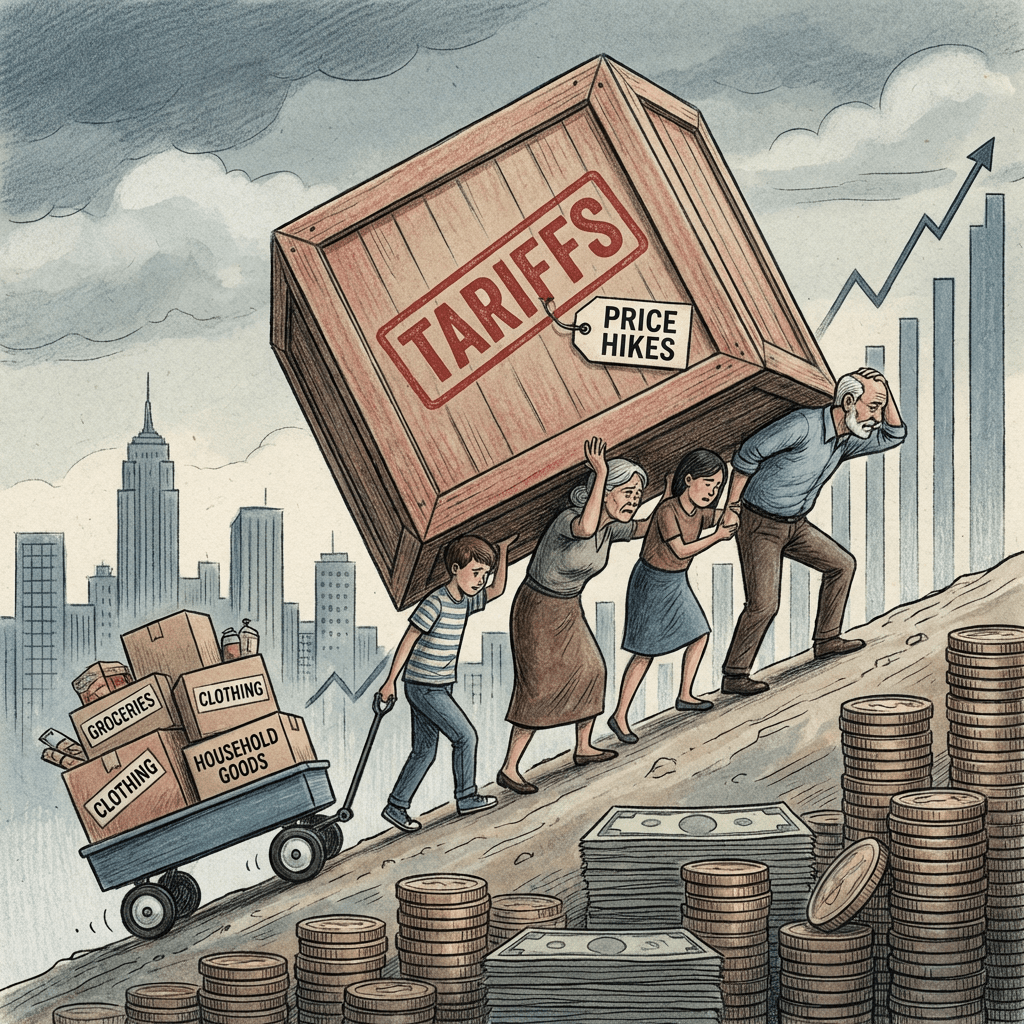
  • Trump’s New Tariffs: Another Costly Tax on American Families

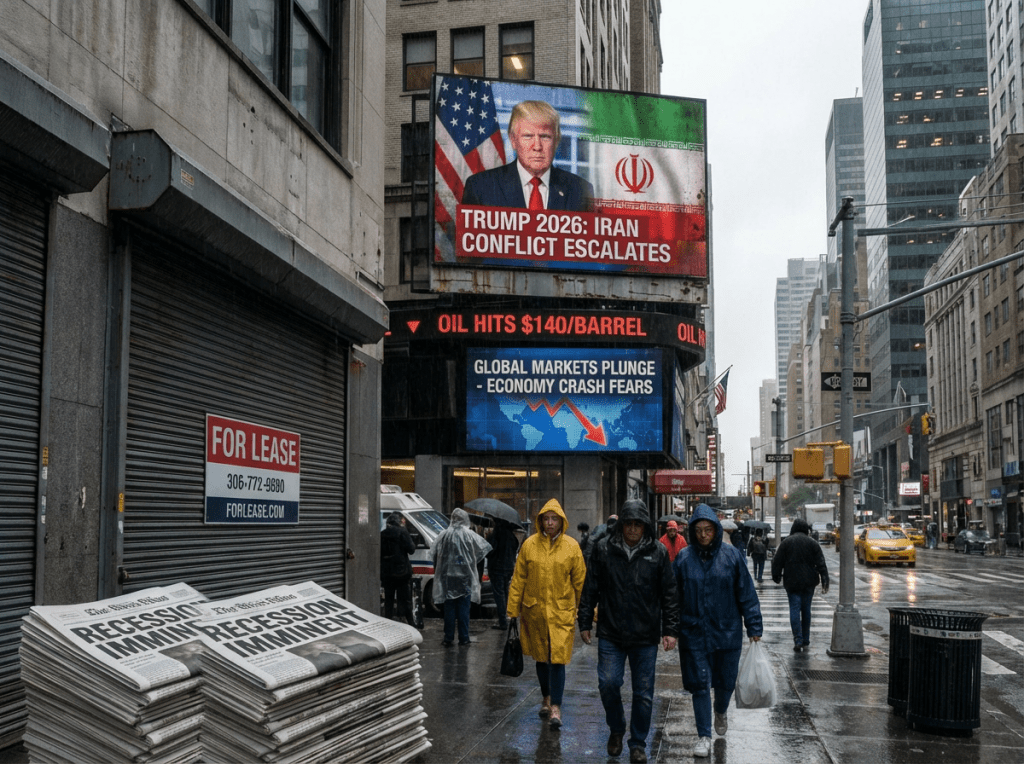
    Blue Press Journal – In a move that has once again ignited concerns across the economic landscape, the Trump administration has announced a sweeping 10% tariff on goods imported to the U.S. from across the globe. This comes hot on the heels of a Supreme Court ruling on Friday, which deemed the administration’s previous use of the International Emergency Economic Powers Act (IEEPA) for issuing tariffs as unjustified. Despite this judicial setback, the President quickly pivoted, citing Section 122 of the 1974 Trade Act to impose these new levies, which are set to take effect on February 24th.

    While the administration touts these “import taxes” as a strategy to address “large and serious” trade deficits, the overwhelming consensus among economists and trade experts is clear: tariffs are not paid by foreign producers; they are a tax paid by American consumers and businesses.

    The Illusion of Protection: Who Really Pays?

    The notion that tariffs are a punitive measure exclusively against foreign nations is a dangerous misconception that has plagued Trump’s economic policy. In reality, when a tariff is imposed, it’s the American importer—a company, large or small, that brings goods into the country—who pays that tax to the U.S. Treasury. To recoup these costs, importers typically do one of two things:

    1. Raise Prices: They pass the increased cost directly onto consumers through higher retail prices.
    2. Absorb Costs: They absorb the cost, leading to reduced profits, which can translate into lower wages for employees, less investment in their businesses, or even job cuts.

    A comprehensive analysis by the National Bureau of Economic Research (NBER), for instance, found that “U.S. tariffs were almost entirely borne by U.S. domestic consumers and importers.” This sentiment is echoed by the Peterson Institute for International Economics (PIIE), which concluded that the burden of previous Trump administration tariffs fell “almost entirely on American consumers and firms.” These aren’t abstract economic theories; they are concrete realities felt in every American household.The Hidden Costs of Tariffs for American Households

    Impact CategoryDescription
    **Higher Consumer Prices**Increased costs for everyday goods, from clothing and electronics to household appliances, directly reducing purchasing power.
    **Reduced Business Investment**Companies face uncertainty and higher input costs, leading to less investment in expansion, innovation, and job creation.
    **Slower Wage Growth**As profits are squeezed, businesses have less capacity to offer competitive wages or bonuses.
    **Supply Chain Disruptions**Forced reshuffling of global supply chains can lead to inefficiencies, product shortages, and further price hikes.
    **Retaliatory Tariffs**Other countries often impose their own tariffs on U.S. exports, harming American farmers and manufacturers who rely on international markets.

    A Familiar, Flawed Playbook

    This latest round of tariffs, while excluding agricultural products, pharmaceuticals, electronics, certain vital minerals and metals, and goods from Canada and Mexico (due to a 2020 trade agreement), still casts a wide net over the global economy. It’s a return to the same protectionist policies that characterized the administration’s first term, often leading to costly “trade wars” that hurt American industries and consumers alike.

    The economic consequences of such policies are often multifaceted:

    • Inflationary Pressures: Tariffs contribute to rising prices across the board, fueling inflation and eroding the value of American wages.
    • Supply Chain Instability: Businesses struggle to plan and maintain efficient supply chains, leading to higher operational costs and potential product shortages.
    • Reduced Competitiveness: American companies that rely on imported components become less competitive globally.

    Facing Domestic Opposition

    Even within his own party, the President’s tariff strategy is facing significant pushback. Rep. Don Bacon (R-Neb.) was quick to signal that these tariffs will likely “be defeated” in Congress. As he told CNN in an interview, “It may not have a veto-proof majority, but it will have a majority that will go against that 10 percent global tariff, so I think the president is making a mistake here.”

    This confidence stems from the foundational principle that under the 16th Amendment, lawmakers hold broad authority over federal taxes, including tariffs. The legislative branch has the power to reject what many view as an economically damaging policy being unilaterally imposed.

    The True Cost of Protectionism

    The evidence is overwhelming: tariffs are a self-inflicted wound. They masquerade as a solution to trade imbalances but function as a regressive tax on hardworking American families and a burden on businesses. Instead of fostering economic growth, they invite retaliatory measures, disrupt supply chains, and ultimately make everyday life more expensive for millions.

    It’s time to move past the misleading rhetoric and embrace policies that truly strengthen the American economy through open markets, fair trade, and genuine competitiveness, rather than punishing our own citizens with higher taxes disguised as patriotism.


  • Trump’s Economic Reality Check: Self-Inflicted Wounds and False Narratives Hamper US Growth

    Economic Reality Bites: Trump’s Policies Undermine U.S. Growth Amidst Q4 Slump

    Blue Press Journal – The U.S. economy experienced a stark slowdown in the final quarter of 2025, with GDP growth reaching only 1.4%—significantly below the anticipated 3% and casting a long shadow over market optimism. This disappointing performance, coupled with a slightly higher-than-expected inflation rate (PCE up 2.9%), paints a challenging picture for American households.

    Economic analysts widely agree, including Heather Long, chief economist at Navy Federal Credit Union, that the prolonged 43-day government shutdown was a major culprit, significantly eroding year-end growth and impacting federal workers’ incomes. Leading financial publications like The Wall Street Journal and Bloomberg similarly highlighted the shutdown’s disruptive effect on economic indicators, validating the Bureau of Economic Analysis’s findings.

    Curiously, President Donald Trump took to Truth Social to declare the “Democrat Shutdown” cost the U.S. “at least two points in GDP,” while also attacking Federal Reserve Chair Powell. Such statements are not only legally problematic—federal law prohibits executive branch officials from discussing sensitive economic data pre-release—but are fundamentally false. His administration’s own political brinkmanship and demands often precipitated these very shutdowns, making his blame on Democrats a misleading deflection from policies that directly contribute to economic instability. His repeated calls for “LOWER INTEREST RATES,” while appealing, often disregard the complex factors the Federal Reserve must balance, and could exacerbate inflationary pressures.

    The economic headwinds of Q4 2025, therefore, are less an external conspiracy and more a consequence of Trump’s erratic governance and political tactics that undermine economic predictability and consumer confidence.

  • Supreme Court Strikes Down Trump’s Unilateral Tariffs, Upholds Congressional Taxing Power

    BREAKING NEWS

    BLUE PRESS JOURNAL (D.C) – In a landmark decision, the Supreme Court delivered a significant blow to President Donald Trump’s trade policies, ruling 6-3 on Friday to invalidate certain “emergency” tariffs imposed during his administration. The high court’s verdict decisively reasserts Congress’s constitutional authority over taxation, curtailing unchecked executive power in international trade.

    The ruling centered on the International Emergency Economic Powers Act (IEEPA), which the Court determined did not authorize the President to unilaterally impose tariffs. Chief Justice John Roberts, writing for the majority, critically observed that the expansive interpretation of IEEPA by the administration to levy broad tariffs was unsustainable. “Those words cannot bear such weight,” Roberts stated, referring to the Act’s language.

    This decision marks a rebuke of Trump’s trade war tactics, which often bypassed congressional oversight, and suggests a costly reckoning. A U.S. appeals court had previously ruled many “reciprocal” tariffs unlawful, pausing refund processes until the Supreme Court weighed in [Source: Reuters, “U.S. appeals court says Trump’s China tariffs unlawful,” e.g., August 2023 report]. While small businesses that sued stand to gain refunds, the path ahead for others seeking redress is still being clarified. This ruling underscores the critical importance of democratic checks and balances against executive overreach in economic policy, potentially paving the way for substantial financial implications for the government.


    Tags: Trump tariffs, Supreme Court, IEEPA, trade policy, executive power, congressional oversight, separation of powers, import duties, unlawful tariffs, economic impact, business refunds

  • GOP Tariff Shield Crumbles: What This Means for Your Wallet

    Trump’s Tariff Gambit Backfires: GOP Revolt Exposes Rising Consumer Costs

    Blue Press Journal D.C. — A significant political maneuver on Capitol Hill this week has thrown President Trump’s favored trade weapon, tariffs, back into the spotlight, exposing deep divisions within the Republican Party and rekindling critical debate about their economic impact on American consumers. House Speaker Mike Johnson’s attempt to block future votes on Trump-era tariffs failed dramatically on Tuesday, signaling a growing bipartisan unease with protectionist trade policies.

    In a rare display of internal dissent, three Republican lawmakers – Thomas Massie of Kentucky, Kevin Kiley of California, and Don Bacon of Nebraska – joined forces with Democrats to defeat a crucial procedural measure by a slim 217-214 margin. This unexpected revolt clears the path for the House to consider resolutions disapproving of President Trump’s 25% duties on Canadian goods, and potentially others.

    For nearly a year, House Republican leadership had shielded its members from politically difficult votes on these tariffs, a strategy that crumbled on Tuesday. The procedural block, last extended in September, allowed members to avoid taking a stand on duties that have fomented uncertainty and drawn criticism from various economic sectors. Rep. Kiley, speaking after his “no” vote, emphasized the importance of institutional integrity, stating, “I don’t think that the House should be limiting the authority of members and enlarging the power of leadership at the expense of our members.”

    The Hidden Cost: Tariffs and Your Pocketbook

    While often framed as tools to protect domestic industries, economic analyses, including those from organizations like the Tax Foundation and reports cited by outlets such as The Wall Street Journal, have consistently demonstrated that tariffs act as a direct tax on American consumers and businesses. These import duties inevitably drive up costs for manufacturers and retailers, ultimately leading to higher prices on store shelves for everything from imported components to finished goods. Consumers, often unknowingly, bear the burden of these added expenses, seeing their purchasing power eroded.

    Indeed, the long-term imposition of Trump’s “reciprocal” tariffs on a multitude of countries has generated economic headwinds, stifling competition and adding significant overhead for companies across various sectors.

    With the shield now gone, Democrats are poised to force votes, even if largely symbolic given potential presidential vetoes. Their goal is clear: to put House Republicans on record regarding their support for these controversial duties. As the Supreme Court weighs the legality of the President’s authority to impose such sweeping tariffs, the renewed congressional focus underscores a critical question: At what cost do these protectionist policies come, and who ultimately pays the price?

  • The Dark Reality Behind Trump’s “Booming” Economy: A Closer Look at the Job Market

    The Disconnect Between Rhetoric and Reality

    Blue Press Journal – As the Trump administration continues to tout the supposed success of its economic policies, a starkly different narrative emerges when examining the latest data on the job market. Despite the White House’s claims of a new “Golden Age,” the reality is that job openings have plummeted to their lowest level since the height of the Covid-19 pandemic in mid-2020.

    According to the Labor Department’s latest report, job openings in December dropped unexpectedly, signaling a significant slowdown in hiring across various industries. This downturn is further underscored by data from the research firm Challenger, Gray and Christmas, which revealed that companies announced plans to cut over 108,000 positions in January, more than double the number of layoffs recorded in January 2025. The payroll processing firm ADP also reported a meager addition of just 22,000 private sector jobs in January, a clear indication of tepid payroll growth.

    The numbers paint a concerning picture, particularly when considered in the context of the Trump administration’s boasts about the economy. While official measurements of productivity and output have been strong, polls and consumer confidence surveys have consistently shown negative sentiments among the public. A recent poll from The Economist/YouGov found that Trump trails by 14 percentage points on his handling of jobs and the economy, while a survey by the Federal Reserve Bank of New York revealed deteriorating consumer expectations regarding wage growth and finding new employment.

    The disconnect between the administration’s rhetoric and the reality on the ground is striking. As RSM US Chief Economist Joe Brusuelas noted, “On the margin, firms are able to do more with less…That’s fine when you’re talking to an economist or capital markets professional; that’s hell if you’re talking to a politician or the public.” The implications for Trump are significant, as his approval ratings on the economy have already been battered by concerns over affordability, inflation, and labor market anxieties.

    The Labor Department’s report also highlighted substantial declines in job opportunities across professional and business services, retail trade, and finance and insurance. As companies increasingly adopt artificial intelligence, there are growing concerns that future growth may leave workers behind. The quits rate, which reflects workers’ willingness or ability to leave their job, remains below pre-pandemic levels, suggesting a lack of confidence in the job market.

    The labor market outlook is uncertain, with Wells Fargo economists warning that “the low hiring environment and subdued rate of voluntary job departures risks pushing layoffs higher.” It remains to be seen if the Trump administration’s policies will address the job market’s underlying issues.

    Key Statistics:

    • Job openings in December dropped to their lowest level since mid-2020 (Labor Department)
    • Companies announced plans to cut over 108,000 positions in January (Challenger, Gray and Christmas)
    • Private sector firms added just 22,000 jobs in January (ADP)
    • Trump’s approval rating on jobs and the economy trails by 14 percentage points (The Economist/YouGov)
    • Consumer expectations regarding wage growth and finding new employment have deteriorated (Federal Reserve Bank of New York)

    By examining the latest data and research, it becomes clear that the Trump administration’s economic policies have not delivered the promised benefits to the job market.

  • Trump’s Tariff Threat Against Canada: Bad Economics, Worse for American Consumers

    President Trump’s latest 100% tariff threat against Canada will hurt American consumers, damage U.S. industries, and strain vital trade relationships. Learn why Trump’s trade war is bad economics and worse policy.


    Blue Press Journal – President Donald Trump’s recent threat Satruday to impose a 100% tariff on Canadian imports has sent shockwaves through North American trade circles. The move, aimed at punishing Canada for its newly negotiated trade concessions with China, reflects the same protectionist instincts that have defined Trump’s economic agenda since his first term. But beyond the political theater, tariffs like these come with a steep price — one paid directly by American consumers, businesses, and workers.


    The Canada-China Trade Context

    Earlier this month, Canadian Prime Minister Mark Carney announced a deal with China to lower tariffs on Chinese electric vehicles in exchange for reduced import taxes on Canadian agricultural products. While Canada maintains no free-trade agreement with China, the arrangement was crafted to support Canadian farmers and diversify trade relationships amid global tensions.

    Trump initially praised the deal, but quickly reversed course, accusing Canada of becoming a “drop-off port” for Chinese goods destined for the U.S. His retaliation? Threatening a 100% import tax on Canadian goods if Ottawa proceeds — a move that would affect everything from steel to agricultural products to critical minerals.


    Why Tariffs Hurt Americans More Than They Help

    Tariffs are often sold to voters as a way to protect domestic industries, but the reality is that tariffs operate as a hidden tax on U.S. consumers. When the U.S. imposes tariffs, importers pay higher costs, which are then passed along to businesses and consumers in the form of higher prices.

    According to a 2019 study by the Federal Reserve Bank of New York, U.S. tariffs during the Trump administration’s first trade war with China led to $1.4 billion in additional costs per month for American consumers. Similarly, research from the Peterson Institute for International Economics found that the average U.S. household paid $800 more per year due to tariff-driven price increases.

    For context:

    • Canada is the largest export destination for 36 U.S. states.
    • Nearly $2.7 billion USD in goods and services cross the Canada-U.S. border daily.
    • Canada supplies 60% of U.S. crude oil imports and 85% of U.S. electricity imports.
    • It is also a key supplier of steel, aluminum, uranium, and critical minerals essential for the auto industry, defense and technology.

    Imposing a 100% tariff on these imports would cause instant price spikes in energy, manufacturing, and consumer goods — directly hitting U.S. households and industries.


    Economic Fallout of Trump’s Tariff Threat

    If enacted, Trump’s proposed tariffs would:

    1. Raise Costs for Energy and Manufacturing – U.S. industries dependent on Canadian oil, electricity, and metals would face supply shortages and higher costs.
    2. Damage Cross-Border Supply Chains – The deeply integrated Canada-U.S. manufacturing sector, especially in automotive and aerospace, would be disrupted.
    3. Invite Retaliation from Canada – Ottawa could respond with its own tariffs on U.S. exports, hurting American farmers, particularly in states that rely on agricultural trade with Canada.
    4. Undermine NATO and Western Alliances – Trump’s antagonistic stance toward Canada, paired with his push to acquire Greenland and social media provocations, risks alienating a key ally.

    Political Theater vs. Economic Reality

    Trump’s rhetoric — including calling Carney “Governor Carney” and posting altered maps showing Canada as part of U.S. territory — may play well to a certain political base. But such antics undermine serious diplomatic relationships and erode trust among allies.

    Carney’s speech at the World Economic Forum in Davos, urging “middle powers” to unite against coercive tactics by great powers, clearly struck a nerve with Trump. As Carney’s popularity rises on the world stage, Trump’s trade threats appear less about protecting American workers and more about retaliating against political rivals.


    The Consumer’s Perspective

    For the average American, tariffs mean:

    • Higher grocery bills (due to increased costs on Canadian agricultural imports).
    • More expensive cars and electronics (Canadian manufacturing is a key part of U.S. supply chains).
    • Higher energy costs (Canadian oil, electricity, and uranium are essential to U.S. energy security).

    In short: Tariffs punish consumers first, industries second, and political rivals last.


    So What Does it Mean

    President Trump’s threat of a 100% tariff on Canadian goods is more than a diplomatic provocation — it’s an economic self-inflicted wound. Canada is one of America’s most important trading partners, and disrupting that relationship will raise prices, strain industries, and weaken alliances. 

    If history is any guide, Trump’s tariffs will not force Canada to change course with China. Instead, they will drive up costs for American families, hurt U.S. competitiveness, and isolate the United States in a world where cooperation — not coercion — is the key to economic success.


  • Trump’s Economic Policies Are Costing American Families Thousands – The Numbers Don’t Lie

    In Response to todays Trump News Conference

    Blue Press Journal – While former President Donald Trump made headlines with bizarre distractions like his public musings about buying Greenland, the real story for American households was happening in their wallets. A new congressional analysis reveals that under Trump’s leadership, U.S. families faced sharp increases in the cost of living, directly tied to his economic agenda and trade strategies. 

    According to a recent report from the Joint Economic Committee (JEC), the average U.S. household paid $1,625 more in 2025 for everyday essentials. These rising costs were not random — they were the result of Trump’s tariffs, housing market pressures, and broader economic mismanagement (Joint Economic Committee, 2025). 

    The Real Impact: Higher Prices for Housing, Transportation, and Groceries

    Breaking down the numbers, the JEC found that housing expenses rose by an average of $323 per family, transportation costs climbed by $241, and grocery bills surged across the country. For residents of states like Alaska, Connecticut, Massachusetts, and New York, the hit was even harder — more than $2,000 in additional annual costs. 

    The cause? Trump’s tariff-heavy trade policy, which he claimed would punish foreign exporters but in practice acted as a hidden tax on American consumers. Independent economic analyses, including research from the Center for American Progress, confirm that U.S. businesses and families bore nearly the entire cost of these tariffs (CAP, 2025). 

    The Inflation Reality Check

    Trump has repeatedly boasted that he “ended inflation” and claimed prices are falling. The data tells a different story. In December 2025, inflation was still running at 2.7% year-over-year, with prices continuing to climb month to month (CNN Fact Check). For working families, this meant that paychecks stretched less, and basic necessities became more expensive — despite the White House’s rosy rhetoric. 

    Economic Uncertainty Hurts Families

    Economists warn that tariffs not only raise consumer prices but also create uncertainty for businesses, slowing investment and job growth. This uncertainty compounds the financial strain on households, particularly in industries reliant on global supply chains. 

    Senator Maggie Hassan (D-NH) criticized the administration’s “reckless” economic approach, pointing out that tariffs, higher healthcare costs, and policy unpredictability have all contributed to the squeeze on American families. 

    The Takeaway: The “Greatest Economy” Myth

    Trump’s claims of delivering “the greatest first year in history” simply don’t match the lived reality of American families. The hard truth is that his economic policies functioned as a tax on the middle class, without delivering the promised benefits.