Tag: economy

  • “Who is giving and who is receiving federal dollars?

    As Trump and the GOP continue to cut federal programs, residents in red states will soon confront the implications of their voting choices, or perhaps more accurately, their lack of action.

    “Who is giving and who is receiving federal dollars? Well, it turns out that close to 50% of West Virginia’s nearly $19.9 billion aggregate spending budget comes from federal dollars, such as IGTs and various transfers. Despite this, West Virginians voted for Trump at a whopping 70-28 margin. You would think that the people of the Mountain State, more than anyone, would champion the ethos of self-reliance and pulling themselves up by their bootstraps.

    But alas, 50% of West Virginia’s budget is actually subsidized by the rest of the country, particularly by blue states like California, Massachusetts, New Jersey, and Washington. So, if West Virginians want federal help, maybe they should consider voting for Democrats again. Otherwise, they can enjoy economic ruin in exchange for Trump and the GOP’s “only two genders” propaganda.

    Louisianans also voted for Trump at a 60-38 margin, clearly in agreement with his plan to cut trillions from the federal budget. Shockingly, while 20% of Americans are on Medicaid, that number jumps to 40% in Louisiana. A whopping 63% of all deliveries in the Pelican State are paid for by Medicaid, so much for those “pro-life” advocates. Louisiana is even ranked as the seventh most federally dependent state in the country, according to a WalletHub analysis. (West Virginia is ranked fourth.) And according to Pew, in 2022, Louisiana had the highest percentage of revenue from the federal government at 50.5%.

    So, to all the MAGA/Trump voters in these red states, maybe it’s time to start thinking about how your votes are actually affecting your own pocketbooks. Just a thought.
  • Setting the Record Straight on Tariffs

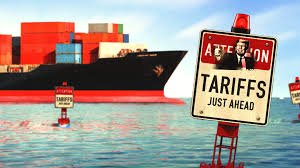
    The Trump administration is gearing up to slap some hefty tariffs on U.S. imports, taking us back to the good ol’ days before World War II.  Trump plans to flex his emergency executive authority muscles by imposing a 25 percent tariff on Canada and Mexico, and a 10 percent tariff on Chinese goods. Because nothing says “Let’s make America great again” like starting a trade war with our closest trading partners, right?

    But hey, who needs a fair economy, prosperity for working people, environmental protection, or climate sustainability anyway? Certainly not Trump, because his tariff ideas aren’t about any of that. Nope, they’re just designed to make things more expensive for American consumers and screw over working folks. But hey, at least we’ll all be paying more for stuff, right?

    And let’s not forget the potential for retaliation from other countries. Foreign governments and consumers are already sharpening their knives, ready to hit American goods and companies where it hurts. Canadian Prime Minister Justin Trudeau is all fired up, ready to respond in a “purposeful, forceful but reasonable, immediate” manner if Trump goes through with his threats. Because nothing says “friendly neighbor” like starting a trade war, right?

    But hey, who cares about potential consequences, right? A recent study suggests that a trade war with Canada could totally backfire on us. I mean, we export more stuff to Canada than anywhere else, and without all that sweet Canadian energy coming our way, we’d actually have a trade surplus with them. So yeah, let’s just keep poking the bear and see how that works out for us. Sounds like a great plan, right?

    Seems our president must have failed Economics 101 in college!

  • Trump’s first week major decision … Golf or the Economy?

    Trump’s presidential campaign incessantly complained about inflation and rising food costs, pointing the finger at former President Joe Biden for the soaring grocery prices. The majority of voters made it clear that the economy was a key factor in the 2024 election, if not the most important one. “First and foremost, we need to provide economic relief to our citizens,” Trump declared at the Republican National Convention in July. “From Day 1, we will work to lower prices and make America affordable again. Because let’s face it, it’s not affordable right now. People can’t survive like this.”

    However, it seems like none of his initial orders actually address food prices or inflation. So, what exactly is he doing?

    Oh, just playing golf.

    President Donald Trump decided to hit the golf course on Monday, despite telling reporters on Air Force One that he would be too busy to play at the beginning of the week. Images of the president enjoying a round at his Doral golf club in Miami were shared by Fox News correspondent Aishah Hasnie. This leisurely outing may just help Trump surpass the number of rounds he played during his first term – a whopping 289 rounds that cost taxpayers at least $150 million for travel and security. But hey, who needs to worry about the economy when there’s golf to be played, right?

  • Trump Tariffs on the US Economy … Eggs, Groceries, Cars and lots of things will increase!

    The Impact of Tariffs on the US Economy 

    In today’s interconnected global economy, trade plays a crucial role in driving economic growth. However, the use of tariffs – taxes imposed on imported goods – has sparked ongoing debates. While advocates of tariffs argue that they protect domestic industries and jobs, a closer examination reveals that they can actually have detrimental effects on the US economy.

    The Trumps Illusion of Protectionism:

    Proponents of tariffs often argue that they shield American businesses from foreign competition, enabling them to flourish and create jobs. While this argument may seem logical at first glance, it fails to consider several key factors. When tariffs are implemented, the immediate consequence is an increase in the prices of imported goods. While this may benefit certain domestic producers, it also results in higher costs for consumers.

    For instance, let’s consider a scenario where a tariff is imposed on imported steel. While US steel manufacturers may experience a surge in demand, industries that rely on steel – such as car manufacturers, construction companies, and appliance makers – are now faced with elevated costs. These increased costs are typically passed on to consumers in the form of higher prices for cars, homes, and everyday goods.

    The Domino Effect: Retaliation and Trade Wars

    One of the major drawbacks of tariffs is the potential for retaliation. When the United States imposes tariffs on goods from other countries, such as Cannda, those countries often respond by imposing tariffs on US exports. This retaliation can escalate into a trade war, creating barriers for businesses involved in both imports and exports. For instance, American farmers may bear the brunt of the impact when other nations target agricultural products with retaliatory tariffs.

    These trade wars disrupt supply chains, increase uncertainty, and ultimately harm businesses across various sectors, not just those directly affected by tariffs. Instead of fostering growth, such conflicts often result in job losses and economic stagnation.

    The Cost of Choice and Innovation

    Tariffs also restrict consumer choice by raising the prices of imports, limiting the variety of products available to American consumers. This restriction stifles competition and can hinder innovation. Businesses shielded from global market competition may become complacent and less inclined to enhance their products or reduce prices.

    Moreover, tariffs can reduce overall economic efficiency. When companies are compelled to purchase more expensive domestic goods instead of cheaper, higher-quality imports, their productivity suffers. This decline in productivity can have a ripple effect on the entire economy, making the United States less competitive on the global stage.

    The key takeaway is this: although the idea of safeguarding domestic industries may seem appealing, the truth is that tariffs mostly have negative consequences. They result in higher prices for consumers, provoke retaliatory trade conflicts, stifle innovation, and ultimately harm the US economy. It is imperative to transition beyond the superficial allure of tariffs and adopt a more sophisticated and successful strategy towards global trade.

  • Trump should be cautious about making big changes in the economy

    Biden achieved an unprecedented milestone during his presidency, with American jobs growing for forty-eight consecutive months from January 2021 to December 2024. This remarkable accomplishment sets him apart as the only president since at least 1939 to achieve such sustained job growth.

    As Trump prepares to take office, there is a temptation to disrupt the progress made under Biden’s administration. Trump campaigned on the notion that the economy under Biden was in shambles, a claim that was proven false. Despite this, 68% of voters believed the economy was struggling. I guess you can fool some people all the time. 

    The truth is, the Biden administration had numerous successes to celebrate:
    – The unemployment rate started at 6.4% in January 2021 and remained at or below 4% for 30 of the 48 months.

    – Manufacturing jobs surpassed pre-pandemic levels before stabilizing.
    – Household net worth reached a record high of $169 trillion in the third quarter of 2024.
    – In 2023, the annual trade deficit with China was the lowest since 2009

    As Trump considers implementing his tariff agenda, he should proceed with caution. His previous promises to lower prices for essentials like eggs and gas fell short, and the consequences of hasty decisions could be detrimental. 

  • Empty promises and flashy rhetoric. They start on January 20th.

    Trump made a grandiose promise to lower grocery prices during his campaign, but surprise, surprise, it seems like it was all just a bunch of lies to win votes. I mean, who would have thought? It’s not like he was saying this when the economy was booming or anything. People just love to vote based on their feelings rather than facts. Reading is hard, apparently.

    “From the day I take the oath of office, we’ll rapidly drive prices down and make America affordable again,” Trump declared confidently to his supporters in North Carolina. “Prices will come down. You just watch. They’ll come down fast.” Spoiler alert: they didn’t and Trump now says they will not. .

    After winning the election, TIME magazine had the audacity to ask Trump if his presidency would be a failure if grocery prices didn’t decrease. “I don’t think so,” Trump responded, before awkwardly backtracking on his promise. “I’d like to bring them down. It’s hard to bring things down once they’re up. You know, it’s very hard.”

    Just days after the election, the Associated Press reported that many economists believed Trump’s plans, like tariffs on imported foods and deporting undocumented workers, could actually cause food prices to rise. Shocking, right? 

    Only about 2 in 10 Americans are confident that Trump will actually make progress on lowering grocery prices, housing costs, or healthcare expenses. But hey, who needs affordable groceries when you have a reality TV star as president, right?

    It’s disappointing to see how easily some people can be swayed by empty promises and flashy rhetoric. It’s a reminder of the importance of critical thinking and doing thorough research before putting our trust in any political figure. Hopefully, this serves as a lesson for future elections, and voters will be more discerning in their choices. As citizens, we have the power to hold our leaders accountable and demand transparency and honesty in their actions.

  • The Effects of Tariffs on Imported Goods…the Trump Promise

    Understanding Tariffs

    Tariffs come in two primary forms: specific tariffs, which are a fixed fee per unit of imported goods, and ad valorem tariffs, which are a percentage of the value of the imported goods. These taxes can be levied for various reasons including protecting domestic industries, generating government revenue, and responding to unfair trade practices.

    Direct Effects on Prices

    One of the most immediate consequences of tariffs is the increase in prices for imported goods. When a government imposes a tariff, it raises the cost of these goods for importers. These costs are usually passed on to consumers, resulting in higher retail prices. For example, if a country imposes a 25% tariff on imported steel, the price of products using that steel—like cars and appliances—will also rise. This leads to inflationary pressures in the economy, affecting not just goods that are directly subject to tariffs, but potentially many related products as well.

    Impact on Domestic Markets

    Tariffs are often implemented to protect domestic industries from foreign competition. In the short term, this can benefit local producers, allowing them to maintain or increase their market share as consumers seek alternatives to more expensive imported goods. However, this protection can also lead to complacency among domestic producers, reducing their incentive to innovate or improve efficiency. Over time, failing to compete with foreign manufacturers can hinder the growth of a country’s industry.

    Additionally, while some sectors may thrive due to tariffs, others may suffer. Industries that rely on imported raw materials may see their costs rise, leading to higher production costs and reduced competitiveness. This creates a complex dance of winners and losers in the domestic market.

    In summary, Trump’s proposed tariffs will increase costs for the very people he vowed to help by lowering prices.

    Read more in the below article:

    We’re Economists. Here’s What We Really Think Of Trump’s Plan To ‘Lower’ Grocery Prices.