Tag: economy

  • Red State’s take hit in GOP and Trump 2025 Budget plan

    The Republican party’s ambitious plan to cut taxes, fund border security and defense spending, and advance President Donald Trump’s domestic agenda hinges on significant cuts to Medicaid. This decision, however, comes with the risk of a substantial political backlash as many constituents, red state MAGA voters, rely on this crucial program.

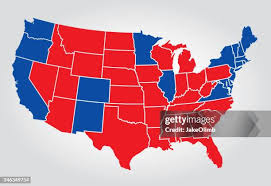
    Medicaid currently provides health insurance coverage to 72 million Americans, including millions of children, serving as a vital safety net in states where Trump enjoys strong support. States such as Louisiana, Kentucky, Mississippi, West Virginia, and Arkansas are among those with the highest percentage of Medicaid recipients.

    The driving force behind this budget is a bold vision to slash mandatory spending by at least $1.5 trillion over the next decade, energizing the effort to finance an extension of President Donald Trump’s tax cuts. Yet, these tax cuts have alarmingly favored the wealthy, a fact underscored by the Center on Budget and Policy Priorities, which highlights how they have disproportionately enriched those at the top while leaving many behind.

    The debate surrounding the future of Medicaid and other safety net programs has caused turmoil within the GOP as they search for ways to fund the $4.5 trillion in tax cuts demanded by President Trump, primarily benefiting billionaires. Previous attempts to repeal Obamacare, which would have significantly reduced Medicaid coverage and removed protections for individuals with preexisting conditions, resulted in Trump’s lowest approval ratings and contributed to Democratic victories in the 2018 midterm elections.

    Republicans have made it clear that cutting Medicaid is a key strategy for financing their tax cuts for the rich. The House Republican budget plan, endorsed by Trump, proposes slashing up to $880 billion from Medicaid to offset the cost of tax cuts. It is important to note that half of Medicaid spending benefits individuals eligible due to old age or disability.

    The Republican party’s plan to cut taxes and fund key initiatives relies heavily on reducing Medicaid funding, a decision that could have far-reaching consequences for millions of Americans and mostly in red states. 

  • Trump tariffs sink Stock Market

    Wall Street took a hit on Thursday, with Walmart leading the charge in pulling the market off its record highs.

    The S&P 500 experienced a 0.4% decline, marking its first drop after reaching all-time highs over the past two days. The Dow Jones Industrial Average saw a loss of 450 points, or 1%, while the Nasdaq composite dropped 0.5%.

    Walmart was the main driver behind the market’s downturn, plummeting 6.5% despite reporting stronger profits for the latest quarter than analysts had anticipated. The Bentonville, Arkansas-based retail giant provided a profit forecast for the upcoming period that fell short of analysts’ expectations, as consumers nationwide grapple with persistent inflation and the looming threat of tariffs imposed by President Donald Trump.

  • Tariffs – a history lesson and how they increase prices for Americans

    Nearly a century ago, a disastrous law played a significant role in triggering the Wall Street crash of 1929 and plunging the world into a devastating depression. The Smoot-Hawley Tariff, which covered approximately one-quarter of all imports, ignited tensions with U.S. trading partners and led to a drastic reduction in American imports and exports. This painful lesson taught Americans the high cost of trade wars, and serves as a stark reminder that we must carefully consider our trade relationships.

    Former Senate Republican Leader Mitch McConnell (Ky.) recently expressed serious reservations about President Trump’s tariff plan, highlighting the detrimental effects of tariffs. As Sen. Rand Paul aptly stated, “Tariffs are simply taxes… Taxing trade leads to reduced trade and higher prices.” It is crucial for Republicans to fully understand the negative impact of tariffs as we strive to establish sound fiscal policies in our government.

    During the previous Trump administration, retaliatory tariffs from trade partners sparked a widespread trade war that negatively impacted various sectors of American industry, including agriculture, manufacturing, aerospace, motor vehicles, and distilled spirits. Canada has already announced retaliatory measures targeting Kentucky products such as peanut butter and whiskey, which will ultimately result in increased costs for American consumers. Senate McConnell emphasized the importance of maintaining strong alliances with our trading partners to ensure the long-term prosperity of American industry and workers, stating that trade wars with allies disproportionately harm working people.

    It is imperative that we approach trade policies with caution and foresight, prioritizing collaboration with our allies rather than engaging in harmful disputes. Let us learn from the mistakes of the past and work towards fostering mutually beneficial trade relationships for the benefit of all.

  • Trump Tariffs will raise the average price of a car $1,000 to $1,500

    President Donald Trump has implemented a 25% tax on foreign steel and aluminum, which has had significant implications. In the past, tariffs have strained U.S. relations with key allies and led to increased costs for downstream industries.

    The steel and aluminum tariffs are particularly impactful on U.S. allies, with Canada being the largest supplier of foreign steel and aluminum to the United States. Research conducted in 2020 by Harvard University and the University of California, Davis, revealed that while the tariffs did create 1,000 jobs, they also resulted in a loss of 75,000 jobs in other sectors.

    A study conducted by the U.S. International Trade Commission in 2023 found that in 2021, production at downstream companies decreased by nearly $3.5 billion due to the tariffs. This offset the $2.3 billion increase in production by aluminum producers and steelmakers that year.

    To put this into perspective, a typical car contains approximately 1,000 pounds of steel, costing around $6,000 to $7,000 per vehicle. Therefore, a 25% tariff will raise the cost of a car by $1,000 to $1,500. These tariffs have far-reaching consequences that impact various industries and the economy as a whole.

  • How to save $4 Billion without raising one dollar from average Americans!

    Exciting new polling data released this morning by Navigator Research reveals that a whopping 57 percent of Americans are worried that Trump will go overboard in cutting the federal government and axing crucial programs. On the flip side, 30 percent are more concerned about Trump’s efforts being thwarted and taxpayer dollars going down the drain.

    Interestingly, a staggering 66 percent of people are not on board with Trump’s executive order that makes it tougher for Medicare to haggle for lower prescription drug prices. Even 43 percent of Republicans are giving it a thumbs down.

    If the GOP wants to show they mean business about slashing the deficit by a cool $4 billion, they could throw down the gauntlet and challenge the Trump administration to back a 1 percent surtax on billionaires. Just imagine, a 1 percent tax on Elon Musk alone could rake in $4 billion deficit reduction goal.

    Perhaps being the party that stands up for government actions benefiting all Americans isn’t such a bad move politically after all.

    Now, let’s talk about the elephant in the room – the massive budget deficit. Sure, it’s a real issue. But guess what? The deficit is actually being driven by increased entitlement spending, not discretionary spending, which has been on a downward trend as a percentage of the federal budget and GDP.

  • Stock markets react negatively today to Trump’s trade war

    As Trump prepared to impose tariffs on Canada, Mexico, and China, U.S. stock markets plummeted at the opening on Monday.

    The S&P 500 fell by 1.7% in early trading, while The Dow Jones Industrial Average dropped 557 points, according to AP. The Nasdaq composite was down by 2.1% at the opening bell.

    This sharp decline indicates that the markets are skeptical of the president’s plan to implement a series of import taxes starting tomorrow.

    Tariffs of 25% will be imposed on Mexico and Canada, while Chinese products will face duties of 10%.

    Trump acknowledged over the weekend that his trade war could result in “a little pain” for American families.  It seems the markets don’t agree!

    The uncertainty surrounding these tariffs has clearly rattled investors, leading to a significant downturn in the stock markets. It remains to be seen how this trade war will impact the economy in the long run.

  • TRUMPS TRADE WAR ON !

    The White House announced on Saturday that the imposition of tariffs was deemed necessary in order to hold China, Mexico, and Canada accountable for their commitments to stop the influx of harmful drugs into the United States.

    Trump slapped tariffs on our friendly neighbors to the north and south, Canada and Mexico, at a whopping 25 percent. However, he was feeling a bit more generous towards Canadian energy, only hitting them with a 10 percent tariff.  That’s still going to raise the price of gas at your pump!

    However, Prime Minister Trudeau refuted the notion that the shared border posed a security threat, stating that less than 1% of fentanyl entering the US originates from Canada. He also pointed out that less than 1% of illegal migrants cross the border into the US, emphasizing that tariffs are not the most effective means of collaboration to protect lives.

    Economists are expressing considerable concern regarding the potential disruptions these tariffs may create for the U.S. economy. President Trump’s request for the Federal Reserve to reduce interest rates may be complicated by the turmoil induced by these tariffs. Financial markets are expected to be unstable, akin to a house of cards in a windstorm, despite the administration’s assertions of being fundamentally pro-business.

    American business groups are not thrilled about these tariffs, with the U.S. Chamber of Commerce calling them a “recipe for decline.” Canada wasted no time in retaliating, slapping their own tariffs on American goods. Prime Minister Justin Trudeau is playing hardball, hitting American beer, wine, bourbon, and even household appliances with a 25% tariff. Looks like the trade war has officially begun between these two friendly neighbors.

    In a move that is sure to make everyone’s lives more complicated, Canada is also considering levies on lumber, plastics, and even non-tariff measures related to critical minerals and procurement. Because who doesn’t love a good trade war, right?

  • “Who is giving and who is receiving federal dollars?

    As Trump and the GOP continue to cut federal programs, residents in red states will soon confront the implications of their voting choices, or perhaps more accurately, their lack of action.

    “Who is giving and who is receiving federal dollars? Well, it turns out that close to 50% of West Virginia’s nearly $19.9 billion aggregate spending budget comes from federal dollars, such as IGTs and various transfers. Despite this, West Virginians voted for Trump at a whopping 70-28 margin. You would think that the people of the Mountain State, more than anyone, would champion the ethos of self-reliance and pulling themselves up by their bootstraps.

    But alas, 50% of West Virginia’s budget is actually subsidized by the rest of the country, particularly by blue states like California, Massachusetts, New Jersey, and Washington. So, if West Virginians want federal help, maybe they should consider voting for Democrats again. Otherwise, they can enjoy economic ruin in exchange for Trump and the GOP’s “only two genders” propaganda.

    Louisianans also voted for Trump at a 60-38 margin, clearly in agreement with his plan to cut trillions from the federal budget. Shockingly, while 20% of Americans are on Medicaid, that number jumps to 40% in Louisiana. A whopping 63% of all deliveries in the Pelican State are paid for by Medicaid, so much for those “pro-life” advocates. Louisiana is even ranked as the seventh most federally dependent state in the country, according to a WalletHub analysis. (West Virginia is ranked fourth.) And according to Pew, in 2022, Louisiana had the highest percentage of revenue from the federal government at 50.5%.

    So, to all the MAGA/Trump voters in these red states, maybe it’s time to start thinking about how your votes are actually affecting your own pocketbooks. Just a thought.

  • Setting the Record Straight on Tariffs

    The Trump administration is gearing up to slap some hefty tariffs on U.S. imports, taking us back to the good ol’ days before World War II.  Trump plans to flex his emergency executive authority muscles by imposing a 25 percent tariff on Canada and Mexico, and a 10 percent tariff on Chinese goods. Because nothing says “Let’s make America great again” like starting a trade war with our closest trading partners, right?

    But hey, who needs a fair economy, prosperity for working people, environmental protection, or climate sustainability anyway? Certainly not Trump, because his tariff ideas aren’t about any of that. Nope, they’re just designed to make things more expensive for American consumers and screw over working folks. But hey, at least we’ll all be paying more for stuff, right?

    And let’s not forget the potential for retaliation from other countries. Foreign governments and consumers are already sharpening their knives, ready to hit American goods and companies where it hurts. Canadian Prime Minister Justin Trudeau is all fired up, ready to respond in a “purposeful, forceful but reasonable, immediate” manner if Trump goes through with his threats. Because nothing says “friendly neighbor” like starting a trade war, right?

    But hey, who cares about potential consequences, right? A recent study suggests that a trade war with Canada could totally backfire on us. I mean, we export more stuff to Canada than anywhere else, and without all that sweet Canadian energy coming our way, we’d actually have a trade surplus with them. So yeah, let’s just keep poking the bear and see how that works out for us. Sounds like a great plan, right?

    Seems our president must have failed Economics 101 in college!

  • Trump’s first week major decision … Golf or the Economy?

    Trump’s presidential campaign incessantly complained about inflation and rising food costs, pointing the finger at former President Joe Biden for the soaring grocery prices. The majority of voters made it clear that the economy was a key factor in the 2024 election, if not the most important one. “First and foremost, we need to provide economic relief to our citizens,” Trump declared at the Republican National Convention in July. “From Day 1, we will work to lower prices and make America affordable again. Because let’s face it, it’s not affordable right now. People can’t survive like this.”

    However, it seems like none of his initial orders actually address food prices or inflation. So, what exactly is he doing?

    Oh, just playing golf.

    President Donald Trump decided to hit the golf course on Monday, despite telling reporters on Air Force One that he would be too busy to play at the beginning of the week. Images of the president enjoying a round at his Doral golf club in Miami were shared by Fox News correspondent Aishah Hasnie. This leisurely outing may just help Trump surpass the number of rounds he played during his first term – a whopping 289 rounds that cost taxpayers at least $150 million for travel and security. But hey, who needs to worry about the economy when there’s golf to be played, right?