Blue Press Journal – The government shutdown has entered its second week, and the American public is growing increasingly frustrated with the lack of progress in resolving the crisis. While the effects of the shutdown become more apparent, President Donald Trump and most House Republicans are noticeably absent from the negotiations.
Trump, who has touted himself as a great deal maker, is currently in Asia, leaving many to wonder if he has any concerns for the American public. Meanwhile, House Speaker Mike Johnson (R-La.) has opted to keep the lower chamber out of session this week, earning criticism for leading a “do nothing” Republican Congress.
The absence of Trump and House Republicans from the negotiations has drawn growing scrutiny. Senator Ruben Gallego (D-Ariz.) expressed his frustration during a CNBC interview on Monday, “How can I negotiate? The president is in Asia for five days. Johnson is basically keeping… the House of Representatives out until January to stop and protect pedophiles. So who am I negotiating with right now?”
Even some Republicans are criticizing Trump’s lack of engagement. Senator Lisa Murkowski (R-Alaska) told CNN’s Manu Raju, “I don’t know that we’ve ever had a shutdown… where the president was not engaged at the end. And so I think that that would certainly help.”
The shutdown has already started to take its toll on the economy, with hundreds of thousands of federal workers furloughed or working without pay. The longer the shutdown continues, the more severe the consequences will be. It is clear that the Republicans have no interest in governing, and their absence from the negotiations is a stark reminder of their priorities.
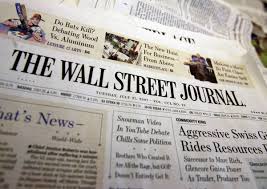
In a scathing editorial on Sunday, The Wall Street Journal criticized President Donald Trumpfor his reaction to an Ontario government ad that pushed back against his tariffs. The newspaper’s conservative editorial board declared that Trump was “wrong” on two counts and “shouldn’t get away” with his actions.
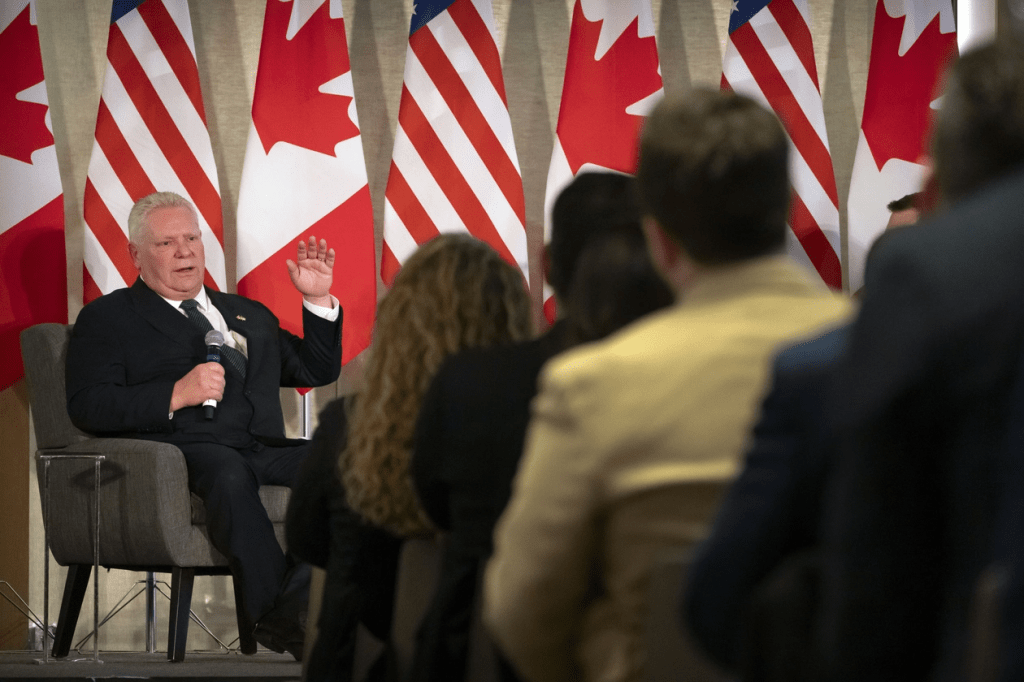
The controversy began when the Ontario government released an ad featuring a 1987 speech by Ronald Reagan, in which the former president warned about the dangers of tariffs. Trump responded by falsely calling the ad “fake,” declaring trade talks with Canada over, and slapping an extra 10% tariff on Canadian goods.
The Wall Street Journal’s editorial board argued that Trump’s tariffs are doing economic damage by raising costs for consumers and businesses, and by dampening economic growth. “He has been fortunate that his tariffs haven’t triggered much retaliation, which has spared us from a global trade war,” the board wrote. “But the tariffs are doing economic damage… and by dampening animal spirits that should be soaring with his tax bill and deregulation.”
The editorial also took aim at Trump’s attempt to co-opt Reagan’s legacy on trade. “He can boast about tariffs all he wants,” the board concluded, “but he shouldn’t get away with taking Reagan’s trade beliefs in vain.” The Journal’s criticism is significant, given its conservative leaning and usual support for Republican policies.
The spat between Trump and Canada is the latest escalation in a trade dispute that has been simmering for months. Trump’s tariffs on Canadian goods, including steel and aluminum, have been met with retaliatory measures from Canada, which has imposed its own tariffs on American goods.
The Wall Street Journal’s criticism of Trump’s tariff policy is not isolated. Economists and business leaders warn that the tariffs will harm the US economy and raise consumer prices. As the trade dispute escalates, it remains to be seen if Trump will reconsider his trade policy. One thing is certain: The Wall Street Journal will hold him accountable.
The latest consumer price index (CPI) report from the Bureau of Labor Statistics (BLS) paints a grim picture for working families in the United States. Prices rose at a 3% annual rate in September, the highest pace since the beginning of the year, with gas prices increasing by 4.1% last month. This surge in prices is having a devastating impact on consumer sentiment, which has fallen to a five-month low in October.
According to experts, the Trump administration’s tariff policies and the GOP’s inflationary budget law are responsible for the rising cost of living. Economic expert Dutta-Gupta stated, “This administration and Congress prioritize massive tax cuts for billionaires while making it harder for regular people to afford necessities.” The refusal to fund vital food assistance programs will only worsen the situation for struggling families.
The effects of the administration’s policies are far-reaching. As economist Heather Boushey noted, “High tariffs and ICE rounding up employees push prices upwards, while the lack of a coherent economic agenda threatens to push the economy into reverse.” These policies are impacting working families, who struggle to make ends meet as living costs rise.
The rising cost of food and gas is particularly concerning, as these are essential expenses that families cannot avoid. With food prices increasing by 0.2% in September, families are being forced to make difficult choices about how to allocate their limited budgets. The impact of these price increases will be felt disproportionately by low-income families, who already struggle to afford basic necessities.
The Trump administration’s policies are impacting working families, who face higher prices and difficulty making ends meet. By prioritizing billionaire donors over ordinary Americans, it’s clear they have no intention of addressing the issue. A change in economic policy is needed, one that focuses on the needs of working families and ensures access to basic necessities.
In a shocking departure from his “America First” trade agenda, President Trump has ignited a fierce battle with some of his most ardent supporters over U.S. beef prices. The controversy centers on Trump’s decision to quadruple the quota for tariff-free Argentinian beef, a move that has infuriated American cattle ranchers and certain GOP lawmakers.
Rep. Marjorie Taylor Greene (R-Ga.), a staunch Trump ally, slammed the decision on “The Tucker Carlson” show, stating, “I have no idea who is telling our great president… that this is a good idea. Because, honestly, it’s a punch in the gut to all of our American cattle ranchers, and they are furious and rightfully so.”
Trump’s rationale for importing Argentinian beef is to reduce prices in the U.S. while providing a financial lifeline to the struggling South American nation. The president has approved billions of dollars in aid for Argentina, aiming to bolster his ally, President Javier Milei, as he faces elections amidst an economic crisis.
However, this decision has sparked bipartisan criticism, particularly in light of the ongoing government shutdown, which has left thousands of military and federal workforce members without pay. The move has also drawn ire from American farmers and ranchers, who are already struggling with the consequences of Trump’s tariffs and immigration agenda.
Meriwether Farms, a Wyoming-based ranch, expressed its discontent on social media platform X, stating, “We love you and support you — but your suggestion to buy beef from Argentina to stabilize beef prices would be an absolute betrayal to the American cattle rancher.”
The American agriculture sector is facing rising material costs, including tariffs on fertilizers, and labor shortages due to Trump’s immigration policies. Trade partners have retaliated with their own taxes on American goods, worsening the challenges for U.S. farmers and ranchers.
As Trump’s decision sparks outrage, it remains to be seen how he will reconcile his “America First” agenda with the interests of loyal supporters and the agriculture sector. The feud over U.S. beef prices has exposed a deepening rift within the Trump administration’s trade policies.
Ford stated that the goal of the campaign was to “initiate a conversation about the kind of economy that Americans want to build and the impact of tariffs on workers and businesses.” He claimed that this goal had been achieved, as the ad had reached high levels of the US government. The decision to pull the ad was made after a discussion with the Prime Minister, with the aim of restarting trade negotiations.
It’s evident that Donald Trump isn’t driven by facts or what’s best for America when it comes to trade decisions; instead, he operates on the whims of his own inflated ego. In short, he comes across as nothing more than a petulant man-child.
Blue Press Journal – Since the second half of 2025, the U.S. economy has been teetering under the weight of President Donald Trump’s aggressive trade and fiscal policies—policies that were once hailed as pillars of a booming economy but now stand as key drivers of inflation, stagnating job growth, and mounting public discontent.
Despite repeated denials from the White House, data paints a troubling picture. Prices have risen steadily over the past several months, fueled in large part by the sweeping tariffs reimposed by the Trump administration. These tariffs, intended to protect domestic industries, have backfired—increasing the cost of imported goods and materials, which businesses are passing on to consumers. The result? A surge in inflation that is hitting American households where it hurts most.
“Tariffs are taxes—paid by consumers,” said Dr. Elsie Peng, research economist at Goldman Sachs. “The recent wave of import restrictions has created ripple effects across supply chains, contributing directly to climbing food and energy prices—two categories that disproportionately affect lower- and middle-income families.”
The upcoming consumer price index (CPI) report for September is expected to reflect this reality, with economists anticipating a notable uptick in inflation. Food prices alone have increased by 5.6% year-over-year, while energy costs have jumped nearly 12%, according to preliminary data from the Bureau of Labor Statistics. For many Americans, these are non-negotiable expenses, leaving families with fewer options to adjust spending and maintain financial stability.
At the same time, the labor market is cooling at an alarming rate. Job growth, which averaged 150,000 new positions per month at the beginning of 2025, has plummeted to just 25,000 by August. Businesses, facing higher input costs and uncertain trade conditions, are scaling back hiring and freezing expansions.
“This slowdown isn’t random—it’s policy-driven,” Peng noted. “When uncertainty rises and costs climb, companies don’t invest, and they don’t hire. The private sector is responding rationally to an increasingly unstable economic environment.”
The consequences are tangible. Millions of Americans are now grappling with tighter budgets, stagnant wages, and shrinking opportunities. The unemployment rate, though not yet in crisis territory, has begun to climb, especially in manufacturing and export-dependent sectors.
Public sentiment has followed the same downward trajectory. A recent Quinnipiac University poll reveals that only 38% of voters approve of President Trump’s handling of the economy—the lowest approval rating since February 2017. That marks a nearly 20-point gap between approval and disapproval, a rare low for a president who staked his legacy on delivering an “unprecedented economic boom.”
“President Trump promised a vibrant and muscular economy,” said political analyst Maria Thompson. “But what voters are seeing now is a contraction of opportunity, not expansion. His policies are no longer delivering on their promises.”
While tax cuts and deregulation may have boosted corporate profits in the short term, the long-term toll of protectionist trade measures and erratic fiscal policy is becoming clear. Inflation is eroding purchasing power, job creation is stalling, and confidence in economic leadership is waning.
The American economy was once seen as resilient and adaptive. But when core economic policies prioritize political rhetoric over measurable results, the foundation cracks. Right now, that foundation is under serious strain.
As the nation faces economic turbulence, one fact is clear: sustainable growth cannot rely on tariffs, denial, and dwindling public trust. Ignoring this truth is already affecting grocery stores, job fairs, and households nationwide.
Blue Press Journal – As the government shutdown drags on, Democrats are unwavering in their commitment to reject any budget bill that fails to incorporate an extension of the Affordable Care Act’s (ACA) enhanced premium tax credits. The stakes couldn’t be higher: denying this funding would spell disaster for millions of Americans who rely on it for their health and well-being. It’s incomprehensible that, in a time of such critical need, lawmakers would fail to prioritize the financing of this essential healthcare program. We must not lose sight of the fact that it’s the Republicans’ enormous tax breaks for the wealthy that have led to the erosion of ACA tax credits, putting our most vulnerable citizens at risk.
According to the Congressional Budget Office, extending the enhanced premium tax credits for 10 years would cost $350 billion. While this may seem like a significant expense, the alternative is far more dire. As Senator Chuck Schumer (D-NY) noted, “The cost of inaction far outweighs the cost of extending these credits. We’re talking about people’s lives, their health, and their financial security.”
The numbers are staggering. If the credits are not extended, an individual making $45,000 would see their healthcare costs increase by over $1,800, according to an analysis by the Bipartisan Policy Center. For a family of four with a household income of $90,000, the increase would be a whopping $3,700, representing over 4% of their entire annual income. As Representative Nancy Pelosi (D-CA) said, “These families are not just statistics; they’re our neighbors, our friends, and our community members who are struggling to make ends meet.”
The human impact of withholding this funding cannot be overstated. Dr. Zeke Emanuel, a healthcare expert, noted, “The ACA’s enhanced premium tax credits have been a game-changer for millions of Americans. Without them, people will choose between paying rent, putting food on the table, or accessing healthcare. This is a moral imperative, not just a budgetary issue.”
The decision to withhold funding for the ACA’s enhanced premium tax credits is short-sighted and harmful. Lawmakers should prioritize funding this vital healthcare program. As Senator Bernie Sanders (I-VT) stated, “We need to prioritize the health and well-being of the American people, not just the special interests.” The consequences of inaction will be dire, and lawmakers must act swiftly to extend these critical credits.
Blue Press Journal – As the government shutdown continues, the Trump administration’s latest move to cut off transportation funding to Democratic-leaning states such as New York and Massachusetts has sparked a wave of criticism from Republican senators. The decision, seen as an apparent act of political retaliation, has been met with opposition from members of the Appropriations Committee, who argue that funding decisions should be based on merit, not politics.
“I think it’s a bad idea to quash projects to extract political vengeance, even during a partisan shutdown fight,” said Sen. Lisa Murkowski (R-Alaska). She warned that targeting blue states, such as New York, by threatening to cut off funding for projects like the Gateway tunnel, will hurt people in those states regardless of their political views. “It’s not appropriate to use funding as a way to punish states or communities,” Murkowski added.
The Gateway tunnel project, which aims to construct a new rail tunnel beneath the Hudson River, is a critical infrastructure project that has been approved and funded. However, White House budget director Russell Vought announced that the administration will be “immediately pausing over $11 billion” in projects in New York, San Francisco, Boston, Baltimore, and other Democratic enclaves.
Senate Appropriations Committee Chair Susan Collins (R-Maine) was asked if Trump’s threat to “terminate” funding for projects like Gateway in blue states is appropriate, and she replied: “No.” Collins’ response reflects the growing concern among Republican lawmakers that the administration’s decision is motivated by politics rather than a genuine attempt to manage funding.
It’s worth noting that blue states contribute more in federal taxes than red states. Perhaps it’s time for blue states to consider holding back their federal taxes and see if the red states can survive without the financial support of their Democratic counterparts. As the shutdown continues, it’s clear that the politics of retaliation will only exacerbate the situation, hurting innocent people and undermining the country’s infrastructure.
The Trump administration’s decision to cut off transportation funding to Democratic-leaning states is a misguided attempt at political retaliation. As Sen. Murkowski and Chair Collins have emphasized, funding decisions should be based on merit, not politics. It’s time for lawmakers to put aside their differences and work towards finding a solution that benefits the country as a whole, rather than perpetuating a cycle of partisan revenge.
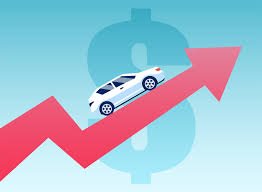
Blue Press Journal – The American dream of owning a new car has become increasingly elusive, particularly for modest-income buyers. According to Kelley Blue Book, the average transaction price of a new car has surpassed $50,000 for the first time in history, marking a 4% increase from the same period last year. This staggering rise is largely attributed to the Trump administration’s tariffs and economic policies, which have priced out lower-income families from the market.
CNN analyst Matt Egan succinctly captured the gravity of the situation, stating, “Prepare yourself because it’s literally never been more expensive to buy a new car.” The demise of affordable cars, particularly those priced around $20,000, has been accelerated by the Republican economy. Egan noted, “The $20,000 cars have basically gone extinct.” Car manufacturers have shifted their focus towards producing higher-margin, more expensive vehicles, catering to affluent buyers who are still able to purchase new cars.
The primary factor driving this trend is the demographics of car buyers. Wealthier individuals are increasing the demand for luxury vehicles, while lower-income families are compelled to opt for used cars or forgo their plans to purchase a vehicle. This disparity stems from the Trump administration’s economic policies, which have disproportionately impacted modest-income households. As Egan noted, “Lower-income families are not buying cars right now because they’re struggling to get by with the Trump and Republican economy.”
The consequences of these policies are far-reaching, pricing many Americans out of the new car market. The lack of affordable options impacts individual consumers and the broader economy. As the wealth gap widens, it’s essential to reevaluate the economic policies behind this crisis. Record-high new car prices highlight the need for a more inclusive economic approach that prioritizes all Americans, not just the affluent few.
Blue Press Journal – In a blistering rebuke, former President Barack Obama lambasted institutions and businesses for caving to the demands of the Trump administration, urging them to stand firm in their principles. Obama’s message was clear: “ride this out” and refuse to compromise on values and integrity.
“For example, if you’re a university president, you should say, ‘We’re not going to compromise our academic independence, no matter what,’” Obama said. “And if you’re a business, you should say, ‘We’re committed to hiring people from diverse backgrounds, and we won’t be bullied into doing otherwise.’”
Obama’s words come as some of Trump’s notable “deals” appear to be unraveling. Several law firms that had signed agreements with Trump have since realized that these deals are unenforceable and have refused to comply with his demands. This development is a significant blow to Trump’s efforts to exert control over businesses and institutions.
Obama’s critique is a timely reminder that institutions and businesses have a responsibility to uphold their values and principles, even in the face of pressure from those in power. By standing firm, they can help to protect the integrity of their organizations and promote a more just and equitable society.
As the Trump administration pushes its agenda, Obama’s message calls on businesses and institutions to remain committed to their values. Will they heed his warning and “ride this out,” or continue to cave to pressure? Only time will tell. One thing is certain: Obama’s words will resonate with those concerned about the erosion of values in the face of political pressure.





 Blue Press Journal