Tag: election integrity

  • Trump’s Electronic Voting Machine Claims: The Real Security Risks Explained

    by Winston Wendell

    Voting Machines and Election Security

    Watching election security evolve has been a strange ride, especially when high-profile politicians start making claims that shake people’s confidence in the whole system. Lately, Donald Trump has been all over the idea that America’s electronic voting machines are just waiting to be hacked. That’s got a lot of election officials and cybersecurity pros on edge. But if you really dig into what he’s saying, his claims do more damage than they highlight any real problem.

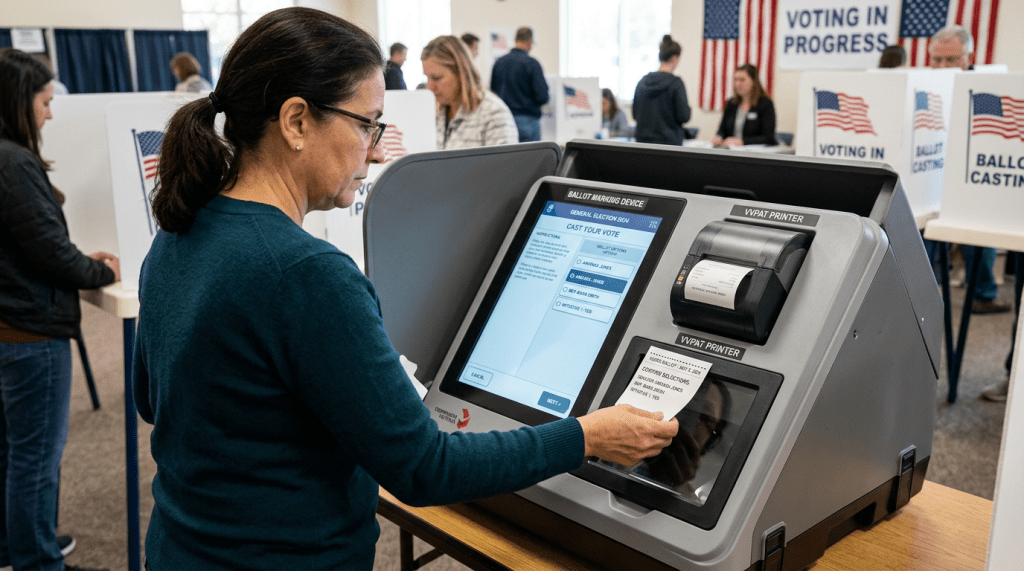
    Woman printing a ballot with a ballot marking device at a voting station

    Trump went on TV and basically told Americans that everything they’ve heard about secure elections is a lie, and that electronic machines are easy targets for anyone wanting to mess with results. It’s true, researchers have found weak spots—DEFCON’s Voting Village loves demonstrating just that. But here’s the part everyone keeps missing: nobody’s shown real evidence of these flaws getting used to change an election’s outcome. That’s what matters.

    Remember when Russian hackers went after our elections in 2016? That was a wake-up call. Now, we’re seeing way more states using paper ballots or machines that spit out a paper record. Most voters today leave behind something you can physically check. Plus, elections aren’t managed from a single office—they’re split across every state and county. That makes a giant, coordinated hack pretty far-fetched.

    Election experts keep saying that these kinds of claims just eat away at trust. Colorado Secretary of State Jena Griswold put it simply: Trump’s story isn’t new, and it’s not about some overlooked threat. Yeah, there’s probably an audience for this stuff, but spinning these tales just pushes people away from voting or sets them up to question any results they don’t like.

    Government records released Thursday didn’t back up Trump’s claims of widespread voting machine hacking. The National Intelligence Council checked for proof of foreign tampering as recently as 2020 and came up empty. Cybersecurity and Infrastructure Security Agency—CISA—admitted there are always risks, but said they haven’t seen any evidence of actual votes being changed.

    That doesn’t mean the job’s done. Local officials are still squeezed for cash and can’t always upgrade equipment or boost cybersecurity training. Congress has dropped about $1 billion since 2018, but just $45 million was set aside last year—barely enough to keep things running.

    Benjamin Hovland, former commissioner at the Election Assistance Commission, keeps calling for more funding. He’s not shy about it: if we’re serious about protecting elections, we need to pay for better tools and train the people who use them. States hear a lot of talk, but the actual resources just aren’t reaching them.

    So where does that leave us? Election security is messy, but it’s getting better, not worse. The people running our elections and the experts backing them up are working on real fixes, not just trading in outrage.

    Instead of fanning the flames, it’s time for everyone—politicians, tech companies, and regular voters—to sit down and talk about how to keep improving things. That’s going to mean real investment, honesty, and showing our work so everyone can see the system doing its job.

    The future of our democracy depends on facts and clear policy-making, not scare tactics. Let’s argue about solutions, not sow distrust.

    Fediverse Reactions
  • An Analysis of Trump’s Address on the 2020 Election

    JUL 17, 2026

    by Winston Wendell

    Trump’s 2020 Election Address: A First‑Person Dissection of Foreign‑Interference Claims, the SAVE America Act, and the “Deep State” Narrative

    When I watched President Donald Trump’s thirty-minute televised address on the 2020 election, I immediately recognized the pattern: a mix of familiar grievances, framing the world in geopolitical terms, and pushing for policy change. Trump wasn’t so much recounting votes as trying to reshape the story, blaming outside forces like the People’s Republic of China and pointing at vague, shadowy bureaucracy here at home. I want to break down what he argued, see how that stacks up to the facts, and get into the main solution he pitched, the “SAVE America Act.”

    Foreign Interference Claims vs. Intelligence Reality

    Trump kicked things off with a scary number: “220 million voter records stolen by Chinese actors,” framing this as a national-security crisis. But when you look closer at what intelligence agencies actually found, most of those records came from public state-level voter files or commercial databases, it wasn’t some shadowy hack into federal voting systems. Experts such as Ryan Macias, who works on cybersecurity, point out that buying voter rolls is legal in many states. Sure, that’s a privacy problem, but it’s not the same as messing with ballots or vote counts.

    Go deeper into the intelligence reports, and the story gets clearer. A declassified report from March 2021 says Beijing used influence tactics like turning up the volume on social media or applying diplomatic heat, but they didn’t actually mess with counting votes. One small part of the assessment did mention China trying to damage the Trump campaign, but even then, it stopped short of saying anyone pulled off real technical sabotage. So, where Trump talks about a “deep-state cover-up,” the reality is a jumble of bureaucratic debate and normal government back-and-forth, not some coordinated plot.

    The “SAVE America Act” – Safeguard or Suppression?

    A major piece of Trump’s address was pitching the SAVE America Act. This bill would require everyone to have a government-issued photo ID and proof of citizenship just to register to vote. Fans of the idea say it’ll make elections trustworthy again. Critics say it puts up roadblocks, especially for minorities, seniors, and low-income people, groups that already face obstacles. The law’s language claims it’s all about “integrity,” but in practice, it comes off as code for making it harder to vote. And this glosses over the safeguards already in place in the U.S., pre-election checks, secure handling of equipment, and paper ballots you can actually count if there’s a problem.

    Election-Integrity Experts Weigh In

    Pamela Smith from Verified Voting pointed out that American elections have multiple security layers set up specifically to catch the sort of problems Trump mentions. Physical ballots, audits after the vote, and bipartisan oversight have all shown that our system stands up well against both hacking from abroad and attempts to cheat from the inside. The fear of a “stolen” election is a strong political weapon, but it doesn’t match up with what solid audits and evidence tell us about 2020, it was, by any fair look, secure.

    Geopolitical Context

    Trump insisted China “actively sought his defeat” because of things like trade fights or military standoffs. He’s not wrong that Beijing saw his administration as a problem. But those same intelligence reports also found China wasn’t reckless; they realized trying to mess with a hotly contested U.S. election could backfire on them, no matter which party won. Also he did mention the Russian state’s attempt to put their thumb on the scale for him. You all remember his call for Hilary’s emails, then like magic Russia released them from their hacks on her campaign. 

    What I think

    When I step back, I see the address less as a stripped-down briefing and more as a call to arms. It mixes up privacy breaches with tampering at the ballot box, makes standard bureaucratic debate look like a unified “deep state,” and pitches stricter voting laws as the answer to threats that don’t match the evidence. There’s an important line here: one thing is trying to sway what people think; another is meddling with the vote itself. We have to see that difference if we want to protect public trust and keep American democracy as open as it’s supposed to be.

  • Trump Abruptly Ends ‘Meet the Press’ Interview After Clashing with Host Kristen Welker

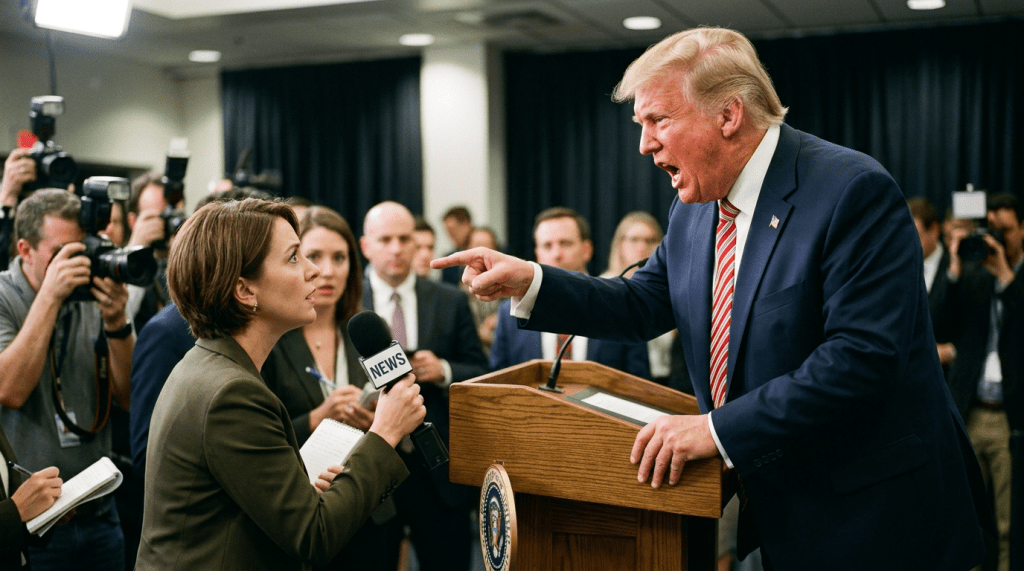
    Politician angrily pointing and speaking at a journalist holding a microphone labeled news

    President Donald Trump suddenly walked out of an interview with NBC News’ Meet the Press host Kristen Welker on Sunday, upset by her fact-based questions and accusing the press of being “dishonest.” The whole thing played out on a rainy afternoon at a farm in Wisconsin, where Trump didn’t hold back—he kept pushing back on Welker’s questions about a range of topics.

    Welker stood her ground and challenged Trump’s false claims, like his suggestion that FBI agents somehow helped Capitol rioters. Even with investigations still in the works, Trump denied any responsibility for possible payouts to January 6 rioters.

    Then the conversation shifted to California’s primary election process. Trump started insisting—again without evidence—that there was “cheating” in the election. Welker asked him to show real proof. All Trump said was, “It’s — all I have to do is look. All I have to do is look,” making it clear he had nothing solid to offer.

    Things got even tenser when Trump started hurling insults, calling the media “crooked” and telling Welker she was “either crooked or stupid.” Before storming off, he tossed out a final jab, saying a great country shouldn’t have a dishonest press, then yanked off his mic and left.

    Welker tried to keep the conversation going, mentioning the long travel and the rough weather they’d both dealt with for the interview. Trump didn’t budge—he just left.

    All in all, this explosive clash underscores the relentless divide between Trump and the media, with Meet the Press unwavering in its commitment to fact-checked reporting.

    He behaves like a petulant child when things don’t go his way, resorting to lies in a desperate bid for control.

  • The Unrelenting Shadow of the Big Lie: Trump’s Assault on Election Integrity

    The bedrock of American democracy—free and fair elections—is under persistent assault from debunked claims of election fraud, notably propagated by Donald Trump. This ongoing narrative, termed the “big lie,” recently escalated in Fulton County, Georgia, where officials are taking extraordinary legal action against the FBI.

    Fulton County Challenges FBI Over Seized Ballots

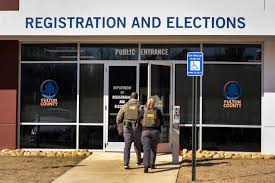
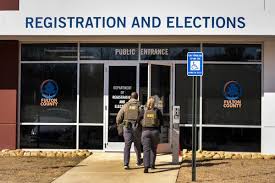
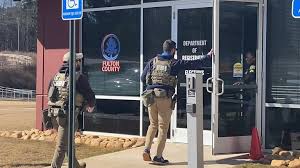
    Blue Press Journal – Fulton County has requested a federal court to compel the FBI to return ballots and election documents from the 2020 election, seized during a warehouse search near Atlanta. This move responds to Trump’s “persistent demands for retribution over claims, without evidence, that fraud cost him victory in Georgia,” which have been “debunked” by numerous audits and investigations.

    Fulton County’s legal filing directly challenges the FBI’s actions, asserting that the federal government breached the Fourth Amendment, which protects individuals against “unreasonable searches and seizures.” The filing argues the affidavit for the search lacked “probable cause,” instead describing “types of human errors that its own sources confirm occur in almost every election — without any intentional wrongdoing whatsoever.” As the filing succinctly states, “The Fourth Amendment demands ‘probable cause’ — not ‘possible cause.’” Fulton County Chairman Robb Pitts emphasized the gravity, stating, “This case is not only about Fulton County. This is about elections across Georgia and across the nation.”

    Trump’s Rhetoric: A Threat to Democratic Norms

    This incident is not isolated; it aligns with Trump’s stated desire to “take over” elections in Democratic-run areas, referencing “15 places” for targeting. Critics fear this rhetoric could lead to actions “beyond the Constitution,” a concern echoed by U.S. Sen. Mark Warner (D-Va.). Trump’s infamous 2020 call pressuring Georgia’s Secretary of State Brad Raffensperger to “find” 11,780 ballots remains a stark reminder of his willingness to undermine election results.

    Despite a White House spokesperson trying to frame Trump’s remarks as supporting the SAVE Act, Trump claimed that cities like Atlanta face “horrible corruption on elections,” insisting “the federal government should not allow that.” This position directly contradicts the Constitution, which grants states authority over election administration, leading even Republican Senator Thom Tillis (R-N.C.) to state, “Nationalizing elections and picking 15 states seems a little off strategy.” The involvement of figures like Tulsi Gabbard—mentioned as Trump’s Director of National Intelligence—at the Fulton search raises concerns about the boundaries between intelligence and law enforcement.

    Ultimately, the actions in Fulton County and Trump’s rhetoric embody the “big lie,” seeking to erode faith in democratic institutions and undermine elections. As Chairman Pitts said about the seized ballots, “What they’re doing with the ballots now, we don’t know, but if counted fairly, the results will be the same.” Vigilance against those undermining election integrity is crucial.

  • The SAVE Act: A “Show Your Papers” Bill Designed to Disenfranchise Millions of American Voters

    VOTER ALERT

    Blue Press Journal – Last week, Republican lawmakers reignited a deeply troubling campaign to pass the SAVE Act, introducing new bills in both the House and Senate. This renewed push, following the widespread rejection of last year’s attempt, represents a blatant effort to undermine the fundamental right to vote for millions of American citizens. Far from securing elections, these proposals, particularly the House’s “Make Elections Great Again Act,” are poised to create chaos, impose significant burdens on voters and election officials, and disproportionately silence marginalized communities.

    At its core, the SAVE Act mandates a “show your papers” requirement for voter registration, demanding documents like passports or birth certificates. This seemingly straightforward requirement masks a harsh reality: over 21 million American citizens lack ready access to these specified documents. As analyses from organizations like the Brennan Center for Justice consistently show, millions of Americans, nearly half the population, don’t possess a passport, and many more lack easy access to a physical copy of their birth certificate. This policy would erect formidable barriers, particularly for younger voters, voters of color, and rural communities who often face greater logistical and financial hurdles in obtaining these documents. Moreover, millions of women whose married names may not align with their birth certificates or passports would be forced to navigate additional, costly bureaucratic hoops simply to exercise their constitutional right.

    The financial burden on voters is undeniable. Obtaining a birth certificate or passport incurs fees, which, for many, represent an unnecessary and prohibitive cost to participate in democracy. This effectively imposes a poll tax, placing the responsibility on individual citizens to pay for documentation that, in most cases, is entirely unneeded to confirm their eligibility.

    Beyond the immediate impact on voters, the SAVE Act proposals threaten to inject unprecedented chaos into election administration. The bills would place unfunded mandates on already stretched state and local election officials, compelling them to manage complex new verification processes. Officials making honest mistakes could face severe civil and even criminal penalties, risking punishment for allowing an eligible citizen to vote if the “papers” aren’t deemed sufficient. A rushed implementation, set to take effect within a year or two, would inevitably lead to widespread confusion, further hindering citizens’ ability to cast ballots.

    The House’s “Make Elections Great Again Act” introduces an alarming array of additional obstacles. It demands not only proof of citizenship but also proof of residence at registration, potentially disenfranchising millions who have recently moved but haven’t updated their driver’s licenses. The bill also proposes a restrictive photo ID requirement at the polls, a standard more stringent than nearly every current state law. Student IDs, even from state universities, would be prohibited, and many tribal IDs would be rendered invalid due to the lack of an expiration date. Furthermore, it mandates voter roll purges every 30 days, disrupting the vital 90-day quiet period before elections and increasing the risk of eligible voters being mistakenly removed. The legislation also aims to eliminate universal mail voting, forcing all mail voters to apply for a ballot – a move that would upend the primary voting method in eight states and Washington, D.C.

    Even the Senate’s “SAVE America Act” presents its own set of challenges, requiring voters to present documents twice – at registration and again when casting a ballot – unless states agree to routinely share their voter rolls with the Department of Homeland Security’s (DHS) SAVE program. This raises serious privacy concerns, especially given the Trump administration’s history of requesting state voter files under questionable pretenses. As reported by news outlets like The Washington Post, the administration faced significant pushback from dozens of states unwilling to provide sensitive voter data due to concerns about misuse, even admitting that Social Security Administration team members had turned over voter rolls to an advocacy group seeking to “find evidence of voter fraud and to overturn election results.”

    Crucially, the SAVE Act offers no solution to a non-existent problem. All available evidence, including findings from the Trump administration’s own inquiries, consistently demonstrates that instances of non-citizens voting are vanishingly rare. States that have meticulously investigated their voter rolls, such as Louisiana and Utah, have repeatedly confirmed this fact. These bills are not about “election integrity”; they are about suppressing votes and sowing distrust in our democratic processes.

    The League of Women Voters of the United States rightly shares “grave concerns and strong opposition” to the Make American Elections Great Again Act, stating it is “not an attempt to secure our elections, but rather an attempt to make it harder for eligible Americans to register and vote.” This legislation, in any form, is a dangerous and undemocratic proposal. Congress must reject the SAVE Act once again and protect the freedom to vote for all American citizens.

  • Federal Agents at the Polls: Trump’s Brazen Threat to Democracy and a Violation of Law

    Blue Press Journal – The integrity of our democratic elections is a cornerstone of American society. Yet, alarming patterns of federal interference, particularly from U.S. Immigration and Customs Enforcement (ICE), threaten to undermine this fundamental right. It is unequivocally illegal for ICE or any federal agents to be present at polling sites, actively interfering with the electoral process. This isn’t just about preserving norms; it’s about upholding federal and state law against a dangerous trend of voter intimidation.

    The Illegality of Federal Presence at Polling Sites

    Multiple federal statutes explicitly prohibit the presence of armed federal agents at or near polling locations. The bedrock of these protections includes:

    • 18 U.S. Code § 592 – Troops at polls: This critical federal law makes it a crime for any officer or member of the Armed Forces, or “any officer or employee of the United States,” to “bring troops or armed men to the place where a general or special election is held, unless it be necessary to repel armed enemies of the United States.” This clearly applies to federal agents like ICE, whose presence, particularly if armed or uniformed, is designed to intimidate, not to repel foreign enemies. Source: Cornell Law – 18 U.S. Code § 592
    • The Voting Rights Act of 1965, Section 11(b): This landmark civil rights legislation prohibits any person from intimidating, threatening, or coercing any other person for voting or attempting to vote. The presence of federal agents, especially those known for aggressive enforcement, inherently creates an intimidating environment, directly violating the spirit and letter of this act. Source: U.S. Department of Justice – The Voting Rights Act of 1965

    Beyond federal statutes, numerous state laws reinforce these protections, often prohibiting armed personnel, electioneering, or interference within a specified distance of polling places. These state-level mandates underscore a bipartisan commitment to ensuring unfettered access to the ballot box, free from overt or implied coercion.

    Trump’s Dangerous Playbook: Suppressing the Vote Through Fear

    As leading investigative journalists have meticulously documented, Donald Trump has consistently demonstrated an unconcealed disdain for democratic elections that could undermine his pursuit of total power, his 2020 Big Lie is a prime example. Concerns about ICE’s role in this authoritarian agenda first emerged with alarming clarity in 2025. Trump launched aggressive immigration enforcement operations in major cities like Los Angeles and Chicago, then threatened to deploy National Guard troops to back them up.

    Figures like California Governor Gavin Newsom and Illinois Governor J.B. Pritzker, both Democrats, immediately recognized these operations for what they were: not merely about deporting undocumented immigrants, but a preview for leveraging armed federal agents to seize control of elections and suppress dissent. Congressional Democrats have increasingly voiced alarm, especially as chaos related to these tactics escalated in communities like Minnesota. This experience shows that even absent ICE directly surrounding polls, Trump’s immigration enforcement operations spread enough fear and chaos to terrorize minority communities and significantly transform how campaigns are run.

    Targeting Democracy’s Pillars

    This tactic is no accident. Black, Latino, and Asian communities are major components of the Democratic Party coalition. Instilling fear and creating a climate of uncertainty within these communities serves a clear purpose: to suppress their votes and unfairly aid the Republican Party. The GOP’s historical reliance on voter suppression, whether through restrictive ID laws or purges of voter rolls, finds a new and profoundly dangerous iteration in the weaponization of federal law enforcement.

    Yet, despite these brazen attempts to tear apart communities and suppress the vote, there’s a powerful counter-narrative emerging. In places like Minnesota, Trump’s actions have, ironically, spurred a rise in dispersed community networks. These grassroots efforts document ICE activities, challenge arrests, and provide mutual aid to those too afraid to leave their homes. This resilience demonstrates that while the threat to our democracy is real, so is the will of the people to protect it.

    The presence of ICE at polling sites is not merely an act of intimidation; it is an assault on American democracy, a flagrant violation of federal and state laws designed to protect the sanctity of the ballot. We must remain vigilant, hold leaders accountable, and ensure that our elections remain free, fair, and accessible to every eligible voter, without fear of federal interference.

    TAGS: ICE, polling sites, voter suppression, election integrity, federal law, state law, Donald Trump, GOP, democracy, civil rights, voting rights, voter intimidation, election interference, 18 U.S. Code 592, Voting Rights Act, political weaponization

  • Weaponizing Fiction: How Debunked 2020 Election Lies Threaten American Democracy

    Exposed: The Perilous Playbook of Debunked Election Lies and Trump’s Weaponization of the FBI

    Blue Press Journal – The recent FBI raid on Fulton County, Georgia, seizing nearly 700 boxes of 2020 election ballots and records, has unveiled a deeply disturbing pattern: the aggressive recycling of thoroughly debunked election lies. Far from uncovering new evidence, the court-ordered affidavit supporting the raid reads like a greatest hits compilation of conspiracy theories, long-ago disproven in countless courts and by exhaustive audits. This alarming development signals a dangerous escalation in the campaign to undermine American democracy, leveraging law enforcement agencies for overtly political ends.

    The Return of Baseless Allegations

    The FBI’s affidavit, intended to establish probable cause for a criminal offense, relies heavily on claims that have been exhaustively investigated and widely discredited. Georgia’s Republican Secretary of State Brad Raffensperger, who famously resisted pressure to “find” votes in 2020, aptly dismissed these assertions as “baseless and repackaged.” [Source: The Atlanta Journal-Constitution] Even Fulton County Board of Commissioners Chair Robb Pitts described the affidavit as based on “recycled rumors, lies, untruths and unproven conspiracy theories.” [Source: CNN]

    Consider the affidavit’s core arguments:

    • Missing Scanned Images: The FBI highlighted that Fulton County “does not have scanned images of all the 528,777 ballots.” Yet, this was not a violation of Georgia law at the time of the 2020 election. The requirement was added by the GOP-led state legislature months later, in March 2021. To present this as evidence of wrongdoing is deliberately misleading.
    • Multiple Ballot Scans: The affidavit also pointed to instances of ballots being scanned multiple times. Independent investigations into this issue, including those in Fulton County, found no evidence of fraud. Ballots can be rescanned due to tabulation errors, with initial erroneous scans deleted. Crucially, multiple audits—the initial count, a hand-counted audit, and a machine recount—consistently affirmed Joe Biden’s victory margin of 11,779 votes in Georgia. [Source: Associated Press] The affidavit offers no evidence to suggest these procedural issues were the result of intentional criminal action.

    As Stanford Law professor Orin Kerr succinctly stated, “In drafting a search warrant affidavit, the Fourth Amendment requires the inclusion of facts that would negate probable cause, if they exist. The government can’t pick facts that, if true, could support a finding a probable cause, but omit the facts that cancel that.” [Source: X / @OrinKerr] The Fulton County affidavit appears to be a stark example of such crucial omissions, presenting a one-sided narrative divorced from established facts and legal precedents.

    The Legal System’s Resounding Rejection of Election Lies

    These recycled theories have not just been debunked by election officials and independent journalists; they have been definitively rejected by virtually every level of the American judiciary. Following the 2020 election, Donald Trump and his allies filed over 60 lawsuits alleging widespread fraud, from state courts to the Supreme Court.

    • Pennsylvania: In Trump v. Boockvar, federal courts found no evidence of fraud sufficient to overturn the election, a decision upheld on appeal.
    • Georgia: Cases like Pearson v. Kemp, which challenged the state’s election procedures, were dismissed for lack of standing or merit.
    • Supreme Court: The most significant rebuke came when the U.S. Supreme Court, in Texas v. Pennsylvania, et al., unequivocally rejected a lawsuit seeking to overturn results in four key states, citing Texas’s lack of standing. This unanimous decision underscored the absence of credible evidence for systemic fraud.

    These judicial pronouncements, delivered by judges across the ideological spectrum, consistently affirmed the integrity of the 2020 election. The attempt to resurrect these thoroughly discredited claims through an FBI investigation represents an appalling disregard for legal due process and factual accuracy.

    The Insidious Role of Kurt Olsen and the Weaponization of the FBI

    Perhaps the most alarming revelation from the affidavit is that the FBI’s “criminal investigation originated from a referral sent by Kurt Olsen,” a temporary White House employee and a figure central to the “Stop the Steal” movement. Olsen is a notorious election denier who lobbied the Department of Justice to intervene in 2020 and was intimately involved in efforts to overturn the election. His record of promoting unsubstantiated allegations is so extensive that he was sanctioned by a federal court for making “false, misleading and unsupported factual assertions” in a 2022 Arizona election challenge. [Source: Arizona Republic]

    Olsen’s involvement in initiating an FBI investigation he has used as a political weapon poses a serious threat to American democracy. This is not a legitimate inquiry but a blatant political weaponization of federal agencies. Allowing a known purveyor of debunked conspiracies, who has faced legal penalties for dishonesty, to trigger an FBI raid sets a troubling precedent. It signifies a dangerous erosion of federal law enforcement’s impartiality and its vulnerability to partisan manipulation.

    The unusual involvement of the Office of the Director of National Intelligence (ODNI) in a domestic law enforcement operation further amplified concerns, prompting Senators Alex Padilla (D-Calif.) and Mark Warner (D-Va.) to demand immediate briefings. [Source: The Washington Post] This intermingling of intelligence and domestic law enforcement, particularly when driven by demonstrably false premises, poses an existential threat to the rule of law.

    A Clear and Present Danger to Democracy

    This episode is more than just a rehash of old lies; it is a calculated effort to “dramatically remake our elections to curtail who is able to vote and whose votes are counted,” as Lauren Groh-Wargo, CEO of Fair Fight Action, warned. [Source: NPR] The willingness of federal agencies to act on such flimsy, politically motivated referrals—rooted in the discredited narratives of figures like Kurt Olsen—sets a perilous precedent. It undermines public faith in democratic institutions, emboldens those who seek to disenfranchise voters, and paves the way for further partisan interference in our electoral processes. The deliberate recycling of debunked election lies, now amplified by the power of the federal government, is an undeniable assault on the foundations of American democracy.

  • The Danger of “Nationalizing” U.S. Elections: A Constitutional Breakdown

     Donald Trump’s call to “nationalize the voting” is a direct assault on America’s state-run election system


    Blue Press Journal

    In a recent interview, President Donald Trump escalated his long-standing assault on U.S. election integrity by urging allies (Republicans) to “take over” the voting process in key states. His call for Republicans to “nationalize the voting” is not just inflammatory rhetoric; it is a direct challenge to the constitutional framework that has safeguarded American democracy for centuries.

    This proposition is fundamentally at odds with the U.S. Constitution and represents a dangerous path toward the partisan manipulation of elections.

    The Foundational Principle: State Control of Elections

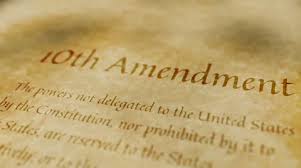
    The U.S. electoral system is intentionally decentralized. The Constitution, through the Tenth Amendment, reserves all powers not explicitly granted to the federal government to the states. This includes the administration of elections.

    This state-level control is a feature, not a bug. It creates a robust system where a single point of failure or federal overreach cannot easily compromise a national election. As the Brennan Center for Justice, a non-partisan law and policy institute, notes, this diffusion of power is a critical bulwark against centralized election manipulation.

    Trump’s idea to “nationalize” this process would dismantle this structure, consolidating power in a way the Founders explicitly sought to avoid. It is an overt push for one political party to seize the machinery of democracy itself.

    Debunked Claims Undermining Public Trust

    This call to action is predicated on the repeatedly debunked “Big Lie” that the 2020 election was stolen. The facts are clear and overwhelming:

    • Election officials from both parties certified the results.
    • Dozens of judges, including many appointed by Trump, dismissed over 60 lawsuits due to a lack of evidence.
    • Trump’s own Attorney General, William Barr, stated the Justice Department found no evidence of widespread fraud that could have altered the outcome.

    Continuing to promote these falsehoods, as Trump does, severely erodes public trust. When a leader insists a system is rigged only when they lose, they lay the groundwork to justify seizing control of that system for their own benefit.

    A Chilling Precedent for Federal Overreach

    This is not a theoretical concern. The Trump administration previously tested the limits of federal power over state elections. In 2017, his Presidential Advisory Commission on Election Integrity attempted to compel states to turn over sensitive voter data. As reported by The New York Times, numerous states from both parties refused, citing significant privacy and federal overreach concerns.

    This history reveals a consistent pattern: an attempt to centralize election control under a partisan banner, justified by baseless claims of fraud.

    Why This is Bad for America

    A move to nationalize or partisanly “take over” election administration would have devastating consequences:

    1. Constitutional Crisis: It would ignite a legal battle between states and the federal government, destabilizing the very rule of law.
    2. Loss of Legitimacy: Elections perceived as controlled by one party lose their legitimacy in the eyes of the losing side, leading to increased political instability.
    3. Voter Suppression: Centralized, partisan control could lead to the systematic manipulation of voter rolls, polling place locations, and ballot counting to favor one party.

    The integrity of U.S. elections depends on their impartial administration. Abandoning this principle for partisan gain doesn’t just risk losing an election—it risks losing the democratic system itself. Defending the decentralized, state-run model is essential to preserving a government of, by, and for the people.

  • Unanswered Questions: Why Did the FBI Seize Georgia’s 2020 Ballots?

    The FBI’s unprecedented seizure of Georgia’s 2020 ballots raises critical questions about federal overreach, Trump’s lingering influence, and the fragile chain of custody that underpins American democracy. 


    Blue Press Journal – When news broke of an FBI raid at Fulton County’s central election facility in Georgia, it barely registered in the national conversation. Yet, for many observers, the January 28 operation—reportedly involving the seizure of more than 700 boxes of 2020 election materials—raises troubling questions about federal overreach and political motives behind revisiting an election that courts and recounts have already settled.

    According to The New York Times and Reuters, the raid was conducted under the pretext of “protecting election integrity.” But the optics are hard to ignore. Why would federal agents intervene in a state-controlled election process nearly four years after Donald Trump lost Georgia, a defeat confirmed by multiple recounts and upheld in more than 60 court cases nationwide?

    A Chain of Custody—or a Chain of Command?

    Legal experts and state officials have voiced concern about the lack of transparency surrounding the operation. Fulton County election staff say they were given little explanation for the seizure, and no clear chain of custody documentation has been made public. Election law analysts note that such actions could undermine faith in the very institutions charged with safeguarding democracy.

    Maine’s Secretary of State, Shenna Bellows, summed up the unease in a statement to The Associated Press

    “We maintain strict control over our ballots. If the federal government can simply seize them without explanation, it sets a dangerous precedent.”

    Trump’s Shadow Over the Investigation

    Trump’s continued insistence that the 2020 election was “rigged”—despite bipartisan certification and judicial rejection of fraud claims—looms over this latest development. His public comments following the raid, amplified on Truth Social, again alleged wrongdoing in Fulton County, echoing disproven narratives from his post-election campaign.

    CNN and FactCheck.org have repeatedly debunked these claims, noting that Georgia conducted both a hand recount and an audit, confirming Joe Biden’s victory. Still, the former president has expressed regret that he “didn’t order the National Guard to seize voting machines,” a statement that blurs the line between political rhetoric and authoritarian impulse.

    Election Integrity or Political Intimidation?

    The presence of senior intelligence officials, reportedly including the Director of National Intelligence, raises another question: is this truly about election security—or about sending a message to local election workers? As one Fulton County official anonymously told The Washington Post

    “This feels like intimidation. It’s meant to make officials think twice before standing up to federal power.”

    Critics argue that actions like this risk chilling effect on election staff and voters alike, particularly in diverse, high-turnout counties such as Fulton—where turnout was key to Biden’s 2020 win.

    Democracy Under Scrutiny

    While Trump’s allies claim the raid is part of a legitimate transparency effort, the broader context suggests a deeper pattern: using federal agencies to re-litigate political defeats. The FBI, the Department of Justice, and intelligence agencies now find themselves caught between protecting electoral systems and appearing complicit in partisan agendas.


  • The Troubling Intersection of Election Denial and Federal Overreach in Minnesota

    The Dangerous Intersection of Election Denial and Federal Overreach: A Critical Look at Trump’s Actions in Minnesota

    Blue Press Journal – In an alarming display of federal overreach, former President Donald Trump has leveraged the power of Immigration and Customs Enforcement (ICE) to pursue his unfounded claims of election fraud in Minnesota. Critics argue that his obsession with the state stems from a desperate need to validate his belief that he won Minnesota in 2016, 2020, and 2024—claims that have been thoroughly dismissed by the courts and factual evidence.

    Norm Eisen, a former White House lawyer under Barack Obama, bluntly captures the chaos: “It’s almost unbelievable to think that election denial wasn’t a key factor driving his reckless animus, which in turn led to the ICE surge and the horrific fallout. This entire debacle reeks of a concoction built on nothing but lies.”

    The Trump administration’s recent tactics in Minnesota include a demand from Attorney General Pam Bondi for extensive voter data. This request arrives amid a backdrop of tragic incidents related to ICE operations, including the recent shooting of protester Alex Pretti. Bondi’s assertion that obtaining this data is essential for “free and fair elections” is seen by many as a thinly veiled attempt to intimidate voters and suppress legitimate electoral participation.

    In 2020, courts across the nation refuted Trump’s baseless allegations of widespread voter fraud, yet he continues to propagate these falsehoods. During a gathering in St. Paul in May 2024, Trump proclaimed, “I thought we won in 2016. I know we won it in 2020.” This starkly contrasts with the reality that he lost Minnesota in all three elections, including a 7.1-point defeat to Joe Biden in 2020—one of many losses that continue to fuel his unfounded claims.

    Democratic National Committee Chair Ken Martin, a Minnesota native, emphasized the absurdity of Trump’s fixation: “Minnesota voters rejected Donald Trump three times, a fact that he either willingly ignores or his addled, aging brain can’t remember.” Martin further noted that Trump’s obsession with Minnesota is intertwined with his administration’s unlawful ICE tactics aimed at instilling fear among voters.

    Marc Elias, a prominent election lawyer, pointed out that Bondi’s request for voter data is part of a broader strategy to suppress Democratic votes in upcoming elections. “He is punishing those states by sending in federal officers, federal officials to terrorize the population,” Elias stated. This alarming strategy underscores how Trump is willing to weaponize federal agencies to support his false narrative of election fraud.

    The troubling reality is that Trump’s historical pattern of claiming electoral theft dates back to his first political run. After losing the Iowa caucuses in 2016 to Ted Cruz, he immediately accused Cruz of cheating. Following his electoral victory, Trump continued to claim that he lost the popular vote to Hillary Clinton due to illegal immigrant voting—a conspiracy theory he later abandoned after a task force found no evidence to substantiate it.

    As recently as his speech in Davos, Switzerland, Trump reiterated his false claims, stating, “It was a rigged election. Everybody now knows that they found out. People will soon be prosecuted for what they did.” This rhetoric not only undermines democracy but also threatens the integrity of federal institutions, as Trump continues to blur the lines between political ambition and lawful governance.

    The situation in Minnesota serves as a critical reminder of the potential dangers posed by the abuse of federal power in the pursuit of unfounded claims. As federal agencies like ICE become entangled in Trump’s political vendettas, the safety and rights of citizens hang in the balance, raising urgent questions about the future of democracy in America.