President Trump’s push to acquire Greenland threatens to fracture NATO. Here is why the U.S. military presence is already secure, and why upsetting the world order over the Arctic is a geopolitical error.
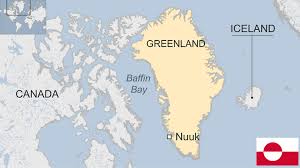
Blue Press Journal – In recent weeks, the geopolitical chatter has shifted drastically toward the Arctic, with President Donald Trump reviving a controversial ambition: the acquisition of Greenland. From floating the idea of a purchase to alluding to the use of military force, the rhetoric has escalated quickly.
However, a closer look at the geopolitical landscape, existing military infrastructure, and the unwavering will of the Greenlandic people reveals that upsetting the current world order to seize this territory is not just diplomatically volatile—it is strategically unnecessary.
A Sovereign Nation, Not a Commodity
The most glaring flaw in the proposal to “take” Greenland is the dismissal of its sovereignty. Greenland is not uninhabited real estate; it is a self-governing nation within the Kingdom of Denmark.
In a unified and emphatic statement, European leaders—including French President Emmanuel Macron, German Chancellor Friedrich Merz, and UK Prime Minister Keir Starmer—declared that “Greenland belongs to its people.” They made it clear that decisions regarding the island are for Denmark and Greenland alone.
This sentiment is echoed on the ground. In a rare show of political unity, Greenland’s party leaders issued a joint statement firmly rejecting Trump’s overtures. “We don’t want to be Americans, we don’t want to be Danes, we want to be Greenlanders,” the statement read. This aligns with public sentiment; a poll conducted last January found that 85 percent of the population opposes joining the United States.
Furthermore, the claim that the U.S. needs to seize the island for “national security” ignores the fact that Washington already maintains a significant military footprint there. The Pituffik Space Base (formerly Thule Air Base) provides critical early warning and space surveillance capabilities. The U.S. does not need to own Greenland to secure it; the current alliance structure guarantees access.
The Cost to NATO and the West
Beyond the question of necessity lies the question of cost. Attempting to force the acquisition of Greenland would likely shatter the Western alliance system.
Denmark asserts control over Greenland in the same legal framework the United States uses to govern Alaska or Vermont. If Washington were to use military force against Copenhagen—a NATO ally—it would trigger a constitutional crisis within the alliance. It would mark the first time in history that a NATO member has threatened military action against another.
Such a move would validate the narratives of adversaries like Russia and China by fracturing the unity of the West. As Danish Prime Minister Mette Frederiksen noted in her joint statement with European leaders, security in the Arctic must be achieved collectively. Unilateral aggression undermines the very principles of sovereignty and territorial integrity that the U.S. and its allies are sworn to protect.
Climate Integrity vs. Resource Extraction
Finally, there is the matter of values. Trump’s vision for Greenland often implies resource extraction, yet the island has charted its own course regarding the climate crisis. In 2021, Greenland passed legislation banning all new oil exploration and drilling. The government described this as a “natural step,” signaling that the nation prioritizes climate integrity over economic exploitation.
Ignoring this local governance to pursue resource interests highlights a fundamental misunderstanding of the territory’s priorities.
The rhetoric of acquiring Greenland makes for sensational headlines, but the reality is a diplomatic minefield. The United States already possesses the military access it needs, the indigenous population is vehemently opposed to the idea, and the move would alienate America’s closest allies in Europe.
In the Arctic, security is best maintained through cooperation and respect for sovereignty, not through the upending of the post-World War II order.


 Blue Press Journal