Tag: FBI investigation

  • The Seashell Conspiracy: Inside James Comey’s Bizarre Legal Battle Over a Two-Digit Photo

    by Winston Wendell

    When I first saw that strange Instagram post—a line of seashells spelling out “86‑47”—I just figured it was some quirky ad for a beach café. Fast forward to May 2025, and somehow that simple picture blew up. Conspiracy theorists latched onto it. Rudy Giuliani wouldn’t stop talking about it on his podcast. And even wilder, it ended up at the center of a federal case against former FBI Director James Comey.
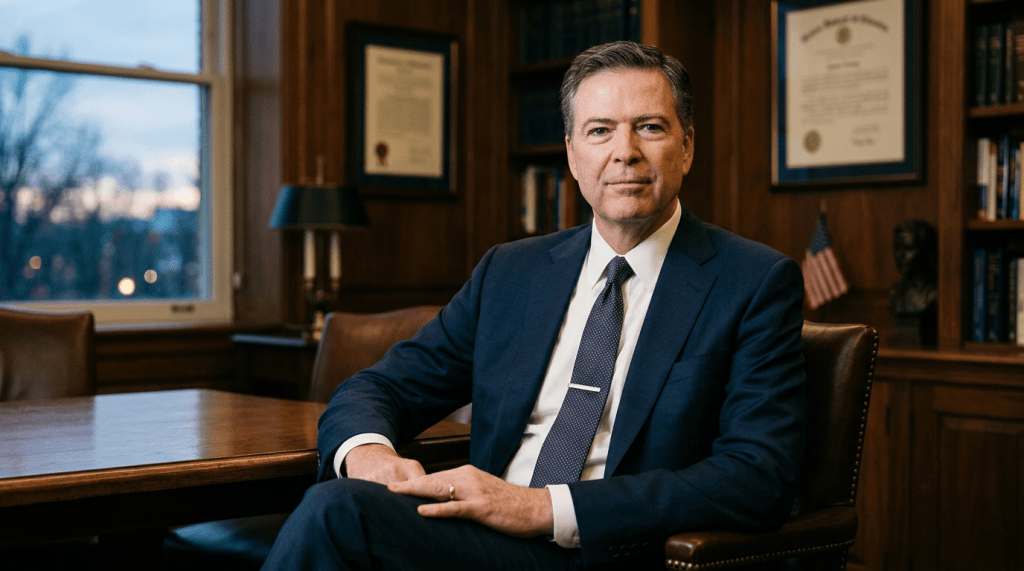
    Man in dark suit sitting at a wooden table in a law office

    I’ve spent the last two weeks digging through the mountain of urgent court documents that popped up Tuesday, trying to sort out what’s legit legal concern and what’s just loud theater. The indictment says Comey threatened President Donald Trump’s life by posting those shells, twisting “86” into mafia slang for “kill.” Prosecutors say all those years spent fighting organized crime gave Comey “special knowledge” about that kind of code, which—by Supreme Court standards—could turn an innocent beach photo into a genuine threat.

    What really got me was how much extra stuff the government threw together to back this up. Comey’s lawyers got their hands on a Secret Service memo showing agents immediately started high-alert tracking of his phone the second the post went up, tailing him as he drove from North Carolina to Northern Virginia. The memo even says agents “did not believe that anyone’s life was in immediate danger” but carried out the surveillance anyway—something the Fourth Amendment only allows in real emergencies.

    The same memo points out that Comey at first didn’t reveal exactly where he was, but then quickly agreed to meet agents in Washington, D.C. the next day. The New York Times wrote about this extreme tracking last year, but the new filings I reviewed actually include the search warrants the FBI used to dig into his Google and Apple accounts. One warrant, signed March 23, 2026, came barely days after former Attorney General Pam Bondi got ousted for refusing to go after Trump’s political enemies. Another, issued in May, is signed by a judge who’s kept anonymous on the public record.

    Even crazier, the whole government case leans on a single tipster—just called “Person 1.” This person angrily texted Comey’s wife, Patrice, after seeing the post and instantly phoned the Secret Service. The tipster’s idea that Comey “must have known the violent meaning of ‘86’” actually came straight from Giuliani’s May 20, 2025, podcast, where he claimed that any career mob-buster would get the reference. The FBI went back and interviewed this guy in April 2026, building their affidavit around his statements.

    But Comey’s defense isn’t just sitting around—his lawyers filed a six-page affidavit from John Gleeson, a longtime prosecutor-turned-lawyer who was a judge for a decade. Gleeson flat-out says “86” isn’t mob code for murder. He writes: “If ‘86’ were used to denote a killing, it would be laughable outside the context of depriving a man of liberty.” Even infamous mobster Salvatore “Sammy the Bull” Gravano testified that some outsiders might tie the word to violence, but real mobsters “never use it; it’s corny.”

    Honestly, to me, this case stands on a pile of cherry-picked pop-culture claims—a Slate interview with actress Darby Stanchfield about late-night show prep, a Giuliani podcast, and an Instagram post that could just as easily be a mellow beach vibe. Now Comey’s filed a motion asking Judge Louise Flanagan to toss the indictment on First Amendment grounds, arguing that posting “86‑47” doesn’t legally count as an actual threat.

    If the court agrees, Comey goes free, and we get a vital ruling that stops prosecutors from turning every bit of slang into a crime. Until then, this whole seashell conspiracy just proves how quickly a harmless photo can set off a political storm.

    Fediverse Reactions
  • Unprecedented Federal Raids and Election Conspiracy Theories Undermine Democratic Trust

    A new federal raid on Georgia’s Fulton County offices, linked to debunked election fraud claims, has intensified concerns about political interference and the erosion of democratic norms.

    Blue Press Journal – In January 2026, a controversial report by the Election Oversight Group (EOG) reignited baseless allegations of fraud in Georgia’s 2020 presidential election, claiming “irregularities” in Fulton County’s ballot counts. Just weeks later, FBI agents executed a high-profile raid, seizing 700 boxes of election records from the county’s offices. This unprecedented action has sparked a firestorm of speculation about broader attempts to destabilize U.S. electoral processes, with critics warning of a dangerous pattern of executive overreach. 

    The EOG, a self-proclaimed watchdog group, has a history of peddling conspiracy theories that were previously cited in former President Trump’s legal battles. According to The Political Machine (TPM), the group’s 2026 report, released on January 6th—symbolically mirroring the Capitol attack—was shared with Trump’s legal team. The report’s findings, which include debunked claims about “unsigned ballots,” were amplified by Trump allies, including 2024 campaign spokesperson Liz Harrington, who promoted the allegations on social media platforms. 

    The raid aligns with a growing strategy within the Trump administration to challenge state election outcomes, despite overwhelming legal and electoral confirmations of Georgia’s 2020 results. Independent recounts, overseen by Republican officials, and judicial rulings have consistently dismissed fraud claims due to a lack of credible evidence. Yet, figures like EOG associate Kevin Moncla, who reportedly discussed the report with U.S. Attorney Thomas Albus, continue to push the narrative, framing their efforts as a mission to “protect election integrity.” 

    The Department of Justice (DOJ), now led by Attorney General Pam Bondi, has embraced this agenda, with Albus overseeing the Fulton County operation. This has raised alarms among constitutional scholars and civil liberties groups, who argue that such actions risk politicizing federal agencies and eroding public trust in democratic institutions. “When law enforcement tools are weaponized to service a partisan agenda, the very foundations of democracy are threatened,” warned Dr. Maria Delgado, a political scientist at Harvard University. 

    White House officials, including Director of National Intelligence Tulsi Gabbard, have defended the raids as necessary to “secure America’s elections.” However, critics highlight the absence of transparency and the disproportionate focus on blue states. Former attorney general Eric Holder, in an op-ed for The Washington Post, condemned the move as an “attack on legitimate election procedures” that could normalize authoritarian tactics. 

    Notably, far-right figures like Alex Jones and Stewart Rhodes have celebrated the raid, further entrenching a climate of distrust. Rhodes, founder of the Oath Keepers, praised Gabbard’s involvement during a recent InfoWars broadcast, framing the operation as a “battle for America’s soul.” Such rhetoric, absent factual grounding, risks polarizing the electorate and legitimizing fringe theories. 

    As the administration intensifies its fervent campaign for “election reform,” experts passionately implore vigilance against the insidious creep of anti-democratic practices. “History is littered with regimes that have wielded such pretexts to stifle dissent and manipulate outcomes,” passionately cautioned political commentator David Cole in The New York Times. The upcoming months will be a crucible that tests whether the U.S. will staunchly defend the integrity of its democratic process—or fall prey to the seductive, yet treacherous, allure of conspiracy-laden governance.