Tag: Federal Reserve

  • Trump’s Iran War Triggers Global Market Crash: Dow Plunges 1,000 Points as Gas Prices Soar and Oil Nears Crisis Levels

    The Cost of Forever War: Trump’s Iran Escalation Triggers Global Market Meltdown and Gas Price Shock
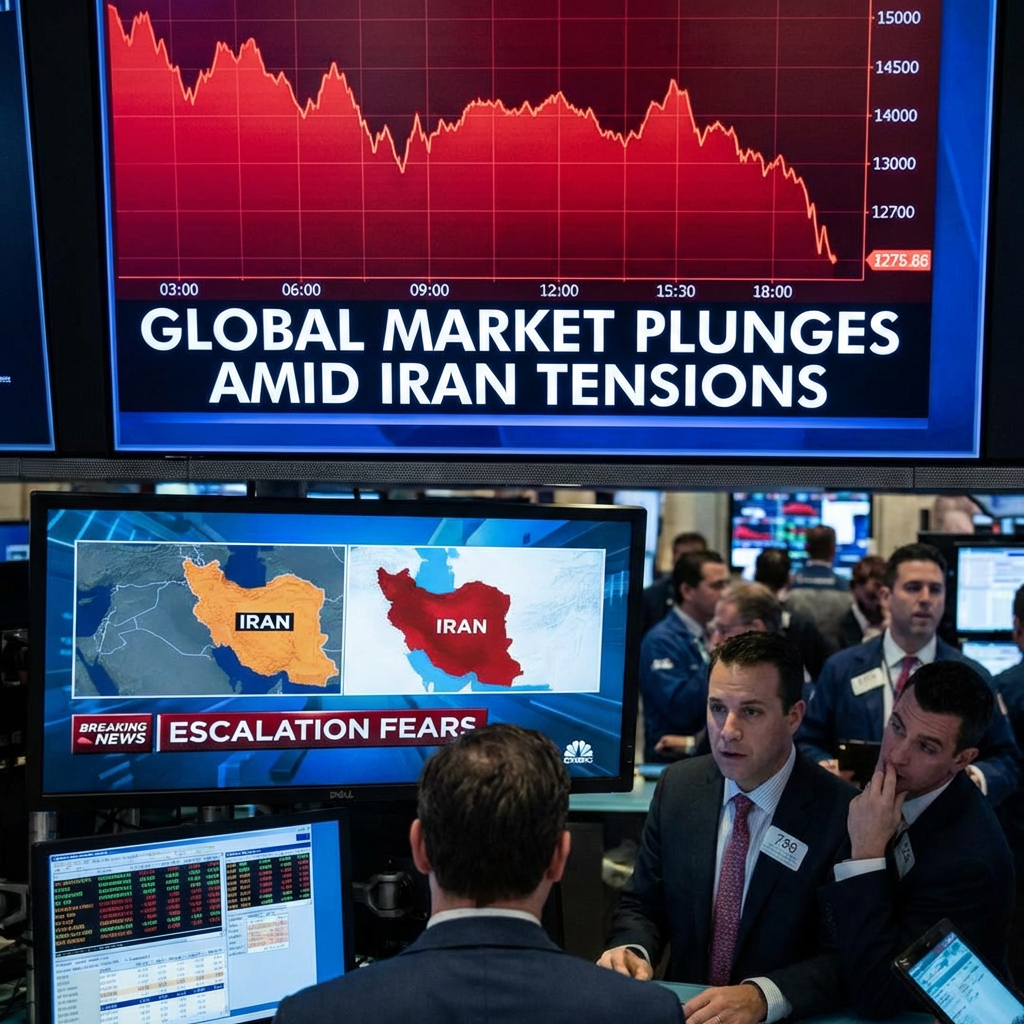
    BLUE PRESS JOURNAL ( 3/3/2026) – Global financial markets plunged into chaos Tuesday as the economic realities of President Donald Trump’s widening war with Iran came crashing down on Wall Street, sending the Dow Jones Industrial Average plummeting over 1,000 points and driving crude oil prices toward the psychologically devastating $100-per-barrel threshold.

    The sell-off—echoing across trading floors from Seoul to Frankfurt—reflects growing panic that the administration’s decision to assassinate Iranian Supreme Leader Ayatollah Ali Khamenei and subsequent strikes on the U.S. Embassy in Riyadh have triggered a conflict with no clear exit strategy, one that threatens to choke global energy supplies just as inflation-weary consumers were hoping for financial relief.

    By 10 a.m. Eastern Time, the Dow had collapsed 1,048 points (2.1%), while the S&P 500 and Nasdaq Composite each shed 2% of their value. The rout extended far beyond American borders. South Korea’s Kospi index cratered 7.2%—its worst single-day decline since 2022—as the energy-import-dependent nation confronted the vulnerability of its supply chains. Germany’s DAX dropped 3.8%, hammered by soaring natural gas prices reminiscent of the energy crisis following Russia’s invasion of Ukraine.

    The Pump Price Punishment

    For American households, the war’s immediate sting is appearing at the gas station. The national average for regular unleaded jumped 11 cents overnight to $3.11 per gallon, according to data from motor club AAA, with analysts warning that prices could spiral toward $4.00 if hostilities disrupt traffic through the Strait of Hormuz—the narrow maritime chokepoint through which roughly 20% of global oil shipments pass daily.

    Brent crude, the international benchmark, surged another 7.5% to $83.58 per barrel, while U.S. West Texas Intermediate climbed 7.6% to $76.64. To put this in context, Brent was trading near $70 less than a week ago—a volatility spike that signals markets pricing in sustained supply risk.

    “This isn’t just a geopolitical crisis; it’s an economic assault on working families,” said economic analysts at the Roosevelt Institute, noting that every $10 increase in oil prices historically translates to roughly 25-30 cents added to the average gallon of gasoline. The timing could scarcely be worse for the Federal Reserve, which has been attempting to guide inflation toward its 2% target after years of price instability.

    Trump’s “Forever War” Doctrine

    The market collapse accelerated late Monday after Trump took to his social media platform to declare that “wars can be fought ‘forever,’ and very successfully” given America’s munitions stockpiles—a statement that extinguished hopes for a swift diplomatic resolution and suggested a prolonged, open-ended military commitment with incalculable economic costs.

    This rhetoric marks a dangerous escalation from the administration’s initial justification for strikes against Iranian leadership. Where officials initially framed the killing of Khamenei as a precision response to specific threats, Trump’s latest comments reveal a strategic framework that could commit the United States to years of asymmetric warfare, mirroring the quagmires of Iraq and Afghanistan but with significantly higher economic stakes for domestic consumers.

    Historical context underscores the risk. During Trump’s first term, the 2020 assassination of Iranian General Qassem Soleimani triggered immediate spikes in oil prices and temporary market instability, though de-escalation followed within days. The current scenario—involving the death of Iran’s supreme leader and attacks on diplomatic facilities in Saudi Arabia—represents a qualitatively superior level of conflict that threatens regional energy infrastructure directly.

    The Fed’s Impossible Position

    The economic fallout extends beyond the pump. Treasury yields spiked Tuesday, with the 10-year note climbing to 4.09% from 4.05% as bond markets priced in “warflation”—the toxic combination of supply shock-driven price increases and stagnating growth. Higher yields translate directly to more expensive mortgages, auto loans, and business financing, potentially choking off the soft landing the Federal Reserve has been carefully engineering.

    Critically, the inflationary pressure from oil shocks severely constrains the Fed’s ability to respond to slowing economic growth. While Trump has aggressively demanded rate cuts in increasingly personal terms targeting Fed Chair Jerome Powell, traders at CME Group are now pushing expectations for monetary easing deeper into the summer, recognizing that cutting rates while energy prices surge would risk unleashing runaway inflation.

    Aviation and Industry in the Crosshairs

    The transportation sector is bearing the immediate brunt. United Airlines cratered 5%, American Airlines dropped 4.4%, and Delta shed 4% as investors recalculated profit margins against jet fuel costs that rise in lockstep with crude prices. The industry, still recovering from pandemic-era disruptions, now faces the dual threat of canceled routes through Middle Eastern airspace and structurally higher operating costs that will inevitably pass to consumers in the form of expensive tickets.

    Gold, which had briefly touched $5,300 during the initial flight to safety, retreated 4.9% to $5,053 as rising yields made the non-interest-bearing asset less attractive, while Bitcoin fell below $67,000—demonstrating that even digital “safe havens” provide little shelter when war drives dollar-denominated borrowing costs upward.

    With inflation expectations unanchoring and global supply chains facing their most severe test since 2022, the economic verdict on Trump’s Iran strategy is becoming clear: this is a war that American households cannot afford, and one that global markets will not tolerate indefinitely.
  • Trump’s Economic Reality Check: Self-Inflicted Wounds and False Narratives Hamper US Growth

    Economic Reality Bites: Trump’s Policies Undermine U.S. Growth Amidst Q4 Slump

    Blue Press Journal – The U.S. economy experienced a stark slowdown in the final quarter of 2025, with GDP growth reaching only 1.4%—significantly below the anticipated 3% and casting a long shadow over market optimism. This disappointing performance, coupled with a slightly higher-than-expected inflation rate (PCE up 2.9%), paints a challenging picture for American households.

    Economic analysts widely agree, including Heather Long, chief economist at Navy Federal Credit Union, that the prolonged 43-day government shutdown was a major culprit, significantly eroding year-end growth and impacting federal workers’ incomes. Leading financial publications like The Wall Street Journal and Bloomberg similarly highlighted the shutdown’s disruptive effect on economic indicators, validating the Bureau of Economic Analysis’s findings.

    Curiously, President Donald Trump took to Truth Social to declare the “Democrat Shutdown” cost the U.S. “at least two points in GDP,” while also attacking Federal Reserve Chair Powell. Such statements are not only legally problematic—federal law prohibits executive branch officials from discussing sensitive economic data pre-release—but are fundamentally false. His administration’s own political brinkmanship and demands often precipitated these very shutdowns, making his blame on Democrats a misleading deflection from policies that directly contribute to economic instability. His repeated calls for “LOWER INTEREST RATES,” while appealing, often disregard the complex factors the Federal Reserve must balance, and could exacerbate inflationary pressures.

    The economic headwinds of Q4 2025, therefore, are less an external conspiracy and more a consequence of Trump’s erratic governance and political tactics that undermine economic predictability and consumer confidence.

  • Trump’s Sudden Announcement to Fire Federal Reserve Governor Sparks Widespread Backlash and Legal Questions

    Blue Press Journal (DC) – In a shocking move, President Donald Trump announced late Monday that he would be firing Federal Reserve Governor Lisa Cook, effective immediately. The unexpected decision has sent shockwaves throughout the economic and political spheres, with many critics denouncing the move as a potentially disastrous blow to the US economy.

    The reasoning behind Trump’s decision is alleged mortgage fraud committed by Cook, claims that have yet to be substantiated or proven in a court of law. Despite the lack of evidence, Trump has seen fit to publicly declare his intention to remove Cook from her position, sparking a heated debate about the limits of presidential power and the potential consequences of such an unprecedented action.

    Cook, however, has refused to back down, stating her intention to remain on the Federal Reserve despite Trump’s announcement. The standoff has raised questions about the stability of the US financial system and the potential repercussions of a president interfering with the independence of the Federal Reserve.

    Critics, including prominent social media personality Brian Krassenstein, have been swift to condemn Trump’s move, accusing him of attempting to remove Cook without credible evidence. Krassenstein argue that Trump’s actions are a clear case of “phony projection and slander” against a distinguished public servant. Many have pointed out that Trump’s own history of questionable business dealings, his conventions of thirty five felonies and alleged misconduct make him unfit to dictate the fate of others.

    The implications of Trump’s actions are far-reaching and potentially devastating. As the first president to attempt to fire a member of the Federal Reserve Board, he sets a dangerous precedent that could undermine the independence of the central bank and destabilize the economy. With significant economic challenges already facing the US, the last thing needed is a president willing to disregard decades of rules governing the Federal Reserve.

    As the situation unfolds, Trump’s decision to fire Lisa Cook has ignited controversy that could significantly impact the US economy. Regardless of Cook’s fate at the Federal Reserve, the damage is done, and the American people will watch closely.

  • Inflation Rises More Than Expected in June Due to Trump Tariffs

    The latest inflation data from the Federal Reserve’s preferred gauge showed a surprising uptick in June, with the annual increase rising to 2.6 percent from 2.3 percent in the previous month. The increase was largely driven by the effects of President Trump’s tariffs, which have begun to make their way into the economy.

    The core personal consumption expenditures (PCE) index, which excludes the more volatile categories of food and energy, also saw a significant increase, rising to a 2.8 percent annual growth rate. This was above consensus estimates of 2.7 percent, indicating that the impact of tariffs on prices is more substantial than anticipated.

    Economists had been expecting some price growth as a result of the tariffs, but the extent of the increase has been notable. Certain categories, such as household furnishings and equipment, recreational goods, apparel, and motor vehicle parts, have been particularly affected, with prices rising sharply due to the tariffs.

    The Federal Reserve opted to hold short-term interest rates steady at a range of 4.25 percent to 4.5 percent after its meeting this week. The decision reflects the fact that while tariffs are driving up prices.

    The rise in inflation is likely to be closely watched by policymakers and economists, as it could have implications for future interest rate decisions. However, for now, the Fed appears to be taking a wait-and-see approach, monitoring the impact of the tariffs and other economic factors before making any further moves.

    The increase in inflation is also likely to have implications for consumers, who may see higher prices for a range of goods and services.