Tag: First Amendment

  • The Chilling Effect: Is Corporate Capitulation Ceding the Future of American Democracy?

    BLUE PRESS JOURNAL – The cornerstone of a functioning democracy is a free and adversarial press. However, recent events surrounding CBS and its parent company, Paramount Global, suggest that the “Fourth Estate” may be bucking under the weight of regulatory threats and corporate consolidation. When the gatekeepers of information begin to self-censor out of fear of government retribution, the democratic process itself enters a state of emergency.

    The Colbert Confrontation: A Preemptive Surrender

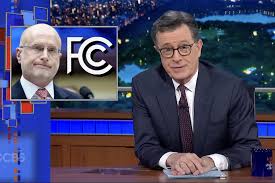
    The tension between journalistic independence and corporate interests reached a boiling point recently when Stephen Colbert, host of CBS’s The Late Show, revealed that network lawyers blocked him from airing an interview with Texas Democratic Senate candidate James Talarico. 

    According to Colbert, the decision was a direct response to threats from Federal Communications Commission (FCC) Chairman Brendan Carr. Carr has signaled his intent to repeal the “news exemption” for talk shows, which currently allows them to interview political candidates without being forced to provide “equal time” to every opposing candidate. While the rule has not yet changed, Colbert noted that CBS is “unilaterally enforcing it as if he had.”

    This “preemptive surrender” highlights a dangerous trend: the use of regulatory “jaw-boning” to silence dissent. By threatening the licenses or the bottom lines of major broadcasters, the executive branch can effectively dictate content without ever passing a law.

    Mergers, Margins, and Media Silence

    The motivations behind this censorship appear to be more financial than legal. Paramount Global, recently acquired by Skydance Media—led by David Ellison and backed by Trump megadonor Larry Ellison—is currently pursuing a massive merger with Warner Bros. Discovery. Because the FCC, led by Carr, must approve such media consolidations, the network has every incentive to remain in the administration’s good graces.

    Evidence of this shift is mounting. The installation of conservative figure Bari Weiss into a leadership role at CBS, despite a lack of broadcast experience, has coincided with the suppression of critical reporting. Most notably, a 60 Minutes segment exposing human rights abuses in an administration-backed El Salvadoran prison was pulled hours before airing, only to be buried later during a low-traffic time slot. 

    Furthermore, the abrupt cancellation of Colbert’s top-rated show—scheduled for 2026—and the resignation of veteran journalist Anderson Cooper from 60 Minutes point to a network prioritizing political alignment over editorial integrity.

    The “Orbanization” of American Media

    Critics argue these tactics mirror those of illiberal regimes, such as Viktor Orban’s Hungary, where the state avoids direct censorship by encouraging “regime-allied” corporations to buy up and neutralize independent outlets. When the FCC investigates programs like ABC’s The View or threatens the licenses of networks that host “uncivil” comedy, it creates a “chilling effect” where media companies become their own censors.

    If the administration’s aim is to limit how critics, comedians, and opposition politicians access the airwaves, the result is a narrowed marketplace of ideas. This raises a fundamental question for the American voter: If the media is too afraid to hold power to account for fear of losing its merger approvals, who is left to protect the truth?

    Sovereignty of the Script

    In a defiant segment, Colbert disposed of a CBS corporate statement in a dog waste bag, asserting that the network’s lawyers approve every script in advance. His frustration underscores a grim reality: when corporate lawyers replace investigative editors as the final arbiters of truth, democracy is the first casualty. 

    As corporate consolidation continues to hand the keys of the media landscape to a few politically connected billionaires, the line between public discourse and state-sanctioned narrative continues to blur.
  • Protecting Our Freedoms: A Landmark Ruling Upholds Senator Kelly’s First Amendment Rights

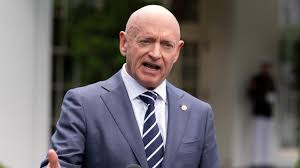
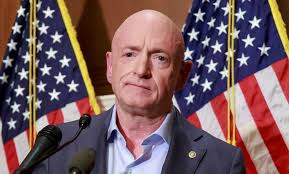
    Blue Press Journal – In a pivotal decision safeguarding constitutional liberties, a federal judge has decisively blocked attempts by Defense Secretary Pete Hegseth to censure and demote Senator Mark Kelly. This ruling underscores the critical importance of free speech, especially for those who have dedicated their lives to defending our nation.

    The controversy arose after Senator Kelly, a distinguished retired combat veteran, appeared in a video advocating that service members should not follow unlawful orders. This action drew the ire of President Donald Trump, who accused the participating lawmakers of “seditious behavior,” leading to aggressive attempts by the administration to punish them.

    A Victory for Constitutional Principles

    District Judge Richard Leon, appointed by President George W. Bush, issued a scathing opinion rejecting the Defense Department’s efforts. (read the fill option here) While acknowledging the well-established doctrine that active-duty military personnel have less vigorous First Amendment protections, Judge Leon firmly declared that these principles do not extend to retired servicemembers, “much less a retired servicemember serving in Congress and exercising oversight responsibility over the military.” See: ACLU on Military Free Speech Rights for context on speech limitations for active military personnel and the historical precedent.

    Judge Leon condemned the administration’s argument that military decisions are exempt from judicial review, stating, “Defendants have trampled on Senator Kelly’s First Amendment freedoms and threatened the constitutional liberties of millions of military retirees.” His ruling is a powerful affirmation that constitutional checks and balances remain vital, even when challenged by executive power.

    The Indispensable Role of the First Amendment

    This case highlights why the First Amendment is not merely a legal clause but the bedrock of American democracy. It guarantees the freedom of speech, religion, press, assembly, and petition, empowering citizens – including retired military personnel – to hold their government accountable and engage in public discourse without fear of reprisal. For veterans like Senator Kelly, who have sacrificed to protect these very freedoms, the ability to speak out on matters of national importance is paramount. As Judge Leon eloquently stated, the administration should “reflect and be grateful for the wisdom and expertise that retired servicemembers have brought to public discussions and debate on military matters.” Further reading on the importance of free speech in a democratic society can be found via the National Constitution Center.

    Senator Kelly rightly asserted that this fight was never just about him, but about sending a message to millions of veterans that their constitutional rights are not diminished upon retirement. This ruling ensures that the voices of experience and integrity, crucial for robust public debate, continue to enrich our nation’s dialogue.

  • The Silent Collapse: Why the Washington Post Layoffs Are a Crisis for the First Amendment


    Blue Press Journal

    Washington Post layoffs and Jeff Bezos’s role in dismantling the newsroom, and how this aligns with the erosion of the First Amendment and appeasement of Donald Trump

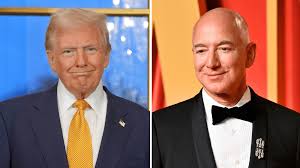
    The news industry this week witnessed a seismic shift that threatens the very foundation of American democracy. The Washington Post, a nearly 150-year-old institution and a pillar of the democratic system, began a fresh wave of mass layoffs. Under the ownership of billionaire Jeff Bezos and the stewardship of publisher Will Lewis, the paper is closing its Sports department, gutting its International and Metro desks, and ending its signature podcast.

    While management frames these cuts as a necessary business realignment, a closer examination reveals a more troubling narrative. These layoffs represent a systematic dismantling of the Fourth Estate’s ability to hold power accountable. When viewed alongside Bezos’s history of appeasing Donald Trump and his interference in editorial independence, it becomes clear that these cuts are not just financial—they are a direct threat to the First Amendment.

    The Erosion of Institutional Integrity

    The Washington Post has long been synonymous with investigative journalism, most famously exposing the Watergate scandal. However, under Jeff Bezos’s ownership, the paper has pivoted away from its role as a public watchdog toward a model that prioritizes business interests over journalistic missions.

    According to a statement released by the Washington Post Guild, “Continuing to eliminate workers only stands to weaken the newspaper, drive away readers and undercut The Post’s mission.” This is not hyperbole; it is a factual assessment of the current trajectory. By decimating the Metro desk and closing the Books section, the Post is severing its connection to the local community and intellectual discourse—areas essential for a well-informed citizenry.

    The human cost of these decisions is staggering. As reported by The Guardian, laid-off journalists took to social media to voice their anger. The former Cairo bureau chief revealed she was laid off alongside the “entire roster” of Middle East correspondents, while a Ukraine-based correspondent lamented losing her job “in the middle of a warzone.” When a major news outlet abandons on-the-ground reporting in conflict zones, it creates an information vacuum that authoritarianism thrives in.

    Bezos, Trump, and the Politics of Appeasement

    To understand the First Amendment implications of these layoffs, one must look at the broader context of Jeff Bezos’s behavior over the last two years. There is a growing trend in American media, as identified by media critics, where “media companies and other key institutions of civil society responding to Donald Trump’s efforts to bully and intimidate them by knuckling under, sucking up, and appeasing him.”

    Jeff Bezos has emerged as a chief practitioner of this appeasement.

    In a move that broke with decades of tradition, the Post announced it would not endorse a presidential candidate for the 2024 election—a decision made directly by Bezos. As noted by NPR, this decision resulted in the swift loss of tens of thousands of subscribers. This was not a neutral act; it was a strategic maneuver to protect Bezos’s vast business empire, including Amazon and Blue Origin, from potential retribution should Donald Trump return to power.

    Furthermore, Bezos’s interference extends to the editorial pages. He previously forced the opinion section to pivot toward “personal liberties and free markets,” a move that prompted the section’s editor to resign. This editorial meddling signals to readers that the paper’s content is subject to the whims of a billionaire rather than the principles of journalistic integrity.

    The Financial Fallacy and the “Puff Piece” Paradox

    Critics argue that the layoffs are a response to financial struggles, yet the Post’s decline in subscribers correlates directly with Bezos’s political decisions, not a lack of demand for news. In fact, competitors like The New York Times have thrived. As reported by The New York Times itself, the paper added approximately 450,000 digital-only subscribers in the last quarter of 2025 alone. The difference? The Times continues to invest in its newsroom while the Post is slashing it.

    The contradiction in Bezos’s strategy is glaring. While he cuts essential reporting staff, reports have surfaced regarding massive spending on non-journalistic projects. Critics point to the investment of tens of millions in a documentary about the First Lady—a project that serves as a “puff piece” rather than hard news. This allocation of resources suggests that Bezos is more interested in curating a favorable public image than in funding the investigative reporting that defines the Washington Post.

    The First Amendment in Peril

    The First Amendment guarantees freedom of the press, but that freedom is meaningless without the infrastructure to support it. A free press requires funding, staff, and the independence to report without fear of billionaire reprisal.

    By gutting the International and Metro departments, Bezos is effectively shrinking the scope of information available to the American public. A democracy relies on a press that can cover local city hall meetings just as much as it covers international conflicts. When those layers of coverage are stripped away, the public is left with a superficial understanding of the world, making them more susceptible to disinformation and authoritarian rhetoric.

    As former Washington Post executive editor Marcus Brauchli once noted, the paper’s value lies in its ability to provide “indispensable” coverage. If Bezos continues to view the Post solely as a financial asset to be liquidated for parts rather than a civic institution, the paper may not survive the decade.

    A Call for Responsible Stewardship

    The layoffs at The Washington Post are not merely a business restructuring; they are a symptom of a larger disease in American media—the consolidation of power in the hands of billionaires who prioritize self-preservation over public service.

    Jeff Bezos has the wealth to sustain the Washington Post for decades, investing in the next generation of reporters and expanding coverage. Instead, he has chosen a path of austerity that weakens the paper’s ability to function as a check on power. By silencing foreign correspondents and dismantling local desks, he is aiding the efforts of those who wish to diminish the free press.

    If Bezos is unwilling to be a steward of this beloved institution, he should heed the advice of critics and consider selling the Washington Post to owners who value the First Amendment over personal gain. Until then, the slow death of the Washington Post serves as a chilling warning: the freedom of the press is only as strong as the will of those who own it.

  • Pulitzer Board Challenges Trump Lawsuit, Demands Full Mueller Report in Discovery

    The Pulitzer Prize Board pushes back against Donald Trump’s defamation lawsuit, demanding an unredacted Mueller Report and full documentation of Trump’s Russia-related communications. 

    Blue Press Journal – In a striking legal development, the Pulitzer Prize Board has demanded that President Donald Trump turn over a complete and unredacted copy of Special Counsel Robert Mueller’s report as part of discovery in his ongoing defamation lawsuit. The request—filed in Okeechobee County, Florida—seeks to test Trump’s claims that the Board’s defense of its 2018 journalism awards for The New York Times and The Washington Post caused reputational harm. 

    The lawsuit, initiated by Trump in 2022, accuses individual Pulitzer Board members of defamation after they reaffirmed the awards given for coverage of Russian interference and Trump campaign connections during the 2016 election. Trump contends that the Board’s statement “endorsed false reporting” and implied criminal wrongdoing on his part. 

    However, the Board’s latest filing signals a willingness to confront those allegations head-on. It asks Trump’s team to produce not only the full Mueller Report but also all communications between Trump and Mueller’s investigators, including exchanges about campaign contacts with Russian officials and the Trump Tower Moscow project. 

    According to the Mueller Report (U.S. Department of Justice, 2019), investigators found “numerous links between the Russian government and the Trump campaign,” even though the evidence did not establish a formal conspiracy. Outlets such as Reuters and The Guardian have since documented how Trump’s public narrative of “no collusion” often contradicted the nuanced findings of the investigation. 

    Legal experts note that the Board’s discovery demand mirrors earlier court battles over the Justice Department’s redactions of the Mueller findings during Trump’s first term—redactions that federal judges later criticized as politically motivated (see The Washington Post, March 2021). 

    The Board’s filing further requests Trump’s communications about his accusations against filmmaker Rob Reiner, his tax and business records, and any materials related to Trump Jr.’s 2016 Trump Tower meeting. Board members—including prominent journalists such as Anne Applebaum, David Remnick, and Gail Collins—have also been scheduled for depositions in the coming weeks. 

    A Board spokesperson told The Associated Press, “Just like any other plaintiff, the President must articulate and prove his claims with evidence. The Pulitzer Board will not be cowed by attempts to intimidate journalists or undermine the First Amendment.” 

    Trump’s lawsuit stands in contrast to his previous pattern of avoiding discovery in similar media cases. As Politico reported, earlier threats of litigation resulted in settlements with CBS and ABC, but those cases never reached the evidence phase. 

    Why Is Trump Suing the Pulitzer Board?

    By demanding transparency through discovery, the Board’s counteraction not only defends the integrity of investigative reporting but also reasserts the importance of accountability in public life—something Trump himself has long resisted. 


  • The Erosion of the First Amendment: A Critical Examination of Trump’s and Bondi’s Attack on Press Freedom

    Why a Free Press is Essential for Democracy—and Why We Must Defend It…the Arrest of Don Lemon

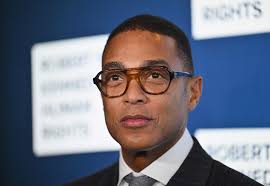
    Blue Press Journal – In recent months, the integrity of the First Amendment has come under unprecedented scrutiny, raising alarms about press freedom in America. The alarming arrest of independent journalist Don Lemon, along with fellow reporters Georgia Fort, Trahern Jeen Crews, and Jamael Lydell Lundy, while covering protests in Minnesota, exemplifies the growing hostility toward the press under the Trump administration. This troubling trend is further exacerbated by Attorney General Pam Bondi’s vocal support for measures that actively undermine journalistic freedoms.

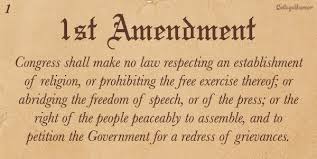
    The First Amendment is a cornerstone of American democracy, safeguarding the freedoms of speech, press, assembly, and the right to petition the government. As Thomas Jefferson famously stated, “Our liberty depends on the freedom of the press, and that cannot be limited without being lost.” Jefferson’s insightful words highlight the critical role of a free press in holding those in power accountable and ensuring that citizens have access to the truth.

    The circumstances surrounding Lemon’s arrest in Los Angeles during the Grammy Awards underscore a worrisome trend. His attorney, Abbe Lowell, described the incident as a direct assault on the First Amendment. “Don has been a journalist for 30 years,” Lowell emphasized, underscoring the constitutional protections surrounding Lemon’s work. “There is no more important time for people like Don to be doing this work.”

    Instead of focusing on accountability for federal agents responsible for the deaths of peaceful protesters, the Trump Justice Department appears more intent on silencing journalists. This alarming pattern points to a broader trend of authoritarianism, aiming to suppress dissent and manipulate narratives. The Trump administration’s approach to the press has shifted dramatically, and Bondi’s characterization of protests as a “coordinated attack” further illustrates this troubling rhetoric. By labeling journalists as threats, the administration undermines the very principles that uphold democracy, sending a chilling message to those striving to report the truth.

    Georgia Fort’s poignant remark, “I don’t feel like I have my First Amendment right as a member of the press,” resonates deeply. Such sentiments reflect the broader implications of these actions, which represent a direct assault on the freedoms that define American society. This incident is not an isolated event; it fits into a disturbing pattern of hostility towards the press, including previous raids on journalists’ homes and ongoing lawsuits against news organizations. House Minority Leader Hakeem Jeffries has aptly condemned the Trump Justice Department as “illegitimate,” echoing widespread concerns about the violation of constitutional rights.

    The significance of a free press is beyond measure, yet it’s often taken for granted. The American public demands unfiltered access to the truth, especially when it pertains to the powerful elite. The egregious acts of Donald Trump and Pam Bondi starkly highlight the urgent need for relentless vigilance in safeguarding the liberties guaranteed by the First Amendment.

    The recent arrests of journalists like Don Lemon signify more than isolated incidents; they reflect a broader, more troubling trend that threatens our democracy. It is imperative for all Americans to stand up for the First Amendment, ensuring the press remains a vital component of our society—one that can freely report, investigate, and hold power accountable. As we navigate these challenging times, let us heed Jefferson’s words and strive to protect the freedoms that are the bedrock of our nation.

  • Sen. Mark Kelly Takes Stand Against Pentagon Over Alleged First Amendment Violations

    Sen. Mark Kelly’s Lawsuit Against Pentagon Marks Historic Defense of First Amendment and Legislative Independence

    Blue Press Journal – In a bold move underscoring the importance of constitutional protections for lawmakers, Senator Mark Kelly (D-AZ) filed a federal civil lawsuit Monday against the Pentagon, Secretary of Defense Pete Hegseth, the U.S. Navy Department, and Navy Secretary John Phelan. The suit alleges that the Trump administration’s decision to cut Kelly’s military retirement pay—following his participation in a video message to U.S. troops—constitutes an unprecedented attack on legislative independence and the First Amendment. 

    Kelly’s complaint, filed in U.S. District Court in Washington, argues that the government’s actions “trample on protections the Constitution singles out as essential to legislative independence.” His legal team points out that never in American history has the Executive Branch sought to impose military sanctions on a sitting Member of Congress for engaging in political speech disfavored by those in power. 

    “The First Amendment forbids the government and its officials from punishing disfavored expression or retaliating against protected speech,” the lawsuit asserts. “That prohibition applies with particular force to legislators speaking on matters of public policy.” 

    Historical Precedent and Constitutional Stakes

    Kelly’s case touches a nerve in the ongoing debate over separation of powers and free speech. The framers of the Constitution designed the Speech or Debate Clause in Article I, Section 6 to ensure legislative independence, shielding lawmakers from intimidation or retaliation by the executive branch. Past disputes—such as United States v. Johnson (1966), where the Supreme Court protected a congressman’s speeches from executive interference—have reaffirmed that principle. 

    Similarly, cases involving retaliation against political expression—like the landmark New York Times Co. v. United States (1971), which defended the right to publish the Pentagon Papers—reinforce that government actors cannot suppress speech simply because it is inconvenient or critical. Kelly’s lawsuit echoes these foundational rulings, framing the Pentagon’s move as not only punitive but corrosive to the core democratic values of checks and balances. 

    Why This Matters

    Kelly, a former Navy combat pilot and astronaut, has dedicated his career to public service. His military retirement pay is not merely a personal benefit—it symbolizes the nation’s recognition of that service. Punishing him for participating in a video for troops sets a dangerous precedent, risking a chilling effect on lawmakers who speak out on military or national security issues. 

    At a time when political polarization threatens institutional trust, Kelly’s stand represents more than a personal legal battle—it’s a defense of constitutional freedoms that protect all Americans. If the executive branch can wield military benefits as a political weapon against sitting senators, the independence of Congress itself is at stake. 

    Kelly’s lawsuit is not just about his pay—it’s about preserving the voice of legislators in matters of public concern. In standing up to the Pentagon, he’s standing up for the principles that have kept American democracy resilient for over two centuries.