Tag: geopolitical risk

  • Geopolitical Turbulence: How the Iran Conflict, Ignited Under Trump, Threatens Global Economic Stability

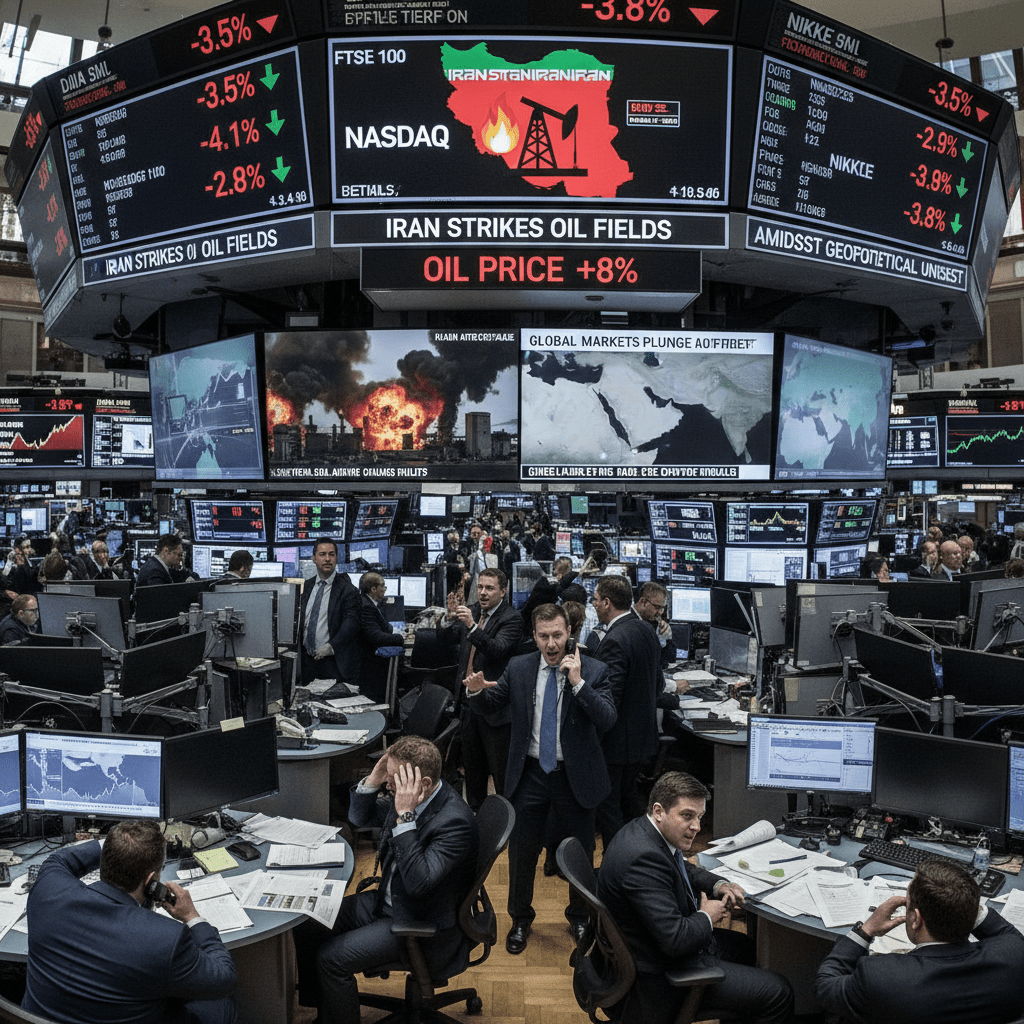
    Trading floor with screens showing IRAN STRIKES OIL FIELDS and falling stock indices.

    The Economic Fallout of Trump’s Iran Conflict

    Blue Press Journal – The global energy landscape is currently facing a catastrophic destabilization. Following targeted Iranian strikes on critical energy infrastructure in the Gulf—specifically two major refineries in Kuwait and Qatar’s vital Ras Laffan natural gas terminal—Brent crude has surged toward the $115 mark. As Tehran’s offensive disrupts the flow of approximately 20% of the world’s liquefied natural gas (LNG), the specter of a “macro wrecking ball” hanging over the global economy has become a grim reality.

    A Manufactured Crisis and the Trump Administration

    While the physical damage to the Strait of Hormuz and surrounding facilities is undeniable, financial analysts and geopolitical experts are increasingly pointing the finger at the White House. Critics argue that the Trump administration’s decision to initiate this conflict was a strategic blunder of historic proportions. According to reports from The New York Times, high-level security officials previously indicated there was no immediate or imminent security threat from Iran that warranted a full-scale kinetic engagement. 

    By prioritizing a hawkish foreign policy over regional stability, the administration has arguably invited the very energy crisis it claimed to prevent. This “war of choice” has now pushed the national average price of gas to a staggering $3.88 per gallon as of March 19, 2026, placing an immense burden on American households.

    Global Market Contagion

    The economic repercussions are being felt far beyond U.S. borders. On Thursday, Brent crude jumped 6% to $113.77 per barrel, a massive leap from the sub-$73 levels seen prior to the commencement of hostilities. The Financial Times reports that European natural gas benchmarks have doubled in just thirty days, threatening a wave of “debilitating inflation” across the continent.

    Global indices are reflecting this instability:

    • Japan’s Nikkei 225 plummeted 3.4% as the Bank of Japan froze interest rates.
    • Germany’s DAX and London’s FTSE 100 both saw losses exceeding 2%.
    • Wall Street futures remain in the red as the Federal Reserve warns that persistent inflation, fueled by the war, limits their ability to provide further interest rate relief.

    As the Strait of Hormuz remains effectively shuttered to tanker traffic, the question remains: was the pursuit of this conflict worth the systematic dismantling of global economic stability? For now, the world pays the price at the pump and in the markets for a war that many intelligence experts claim was entirely avoidable.
  • Trump’s Iran Attack: Economic Fallout Threatens US Recovery and Global Trade Stability

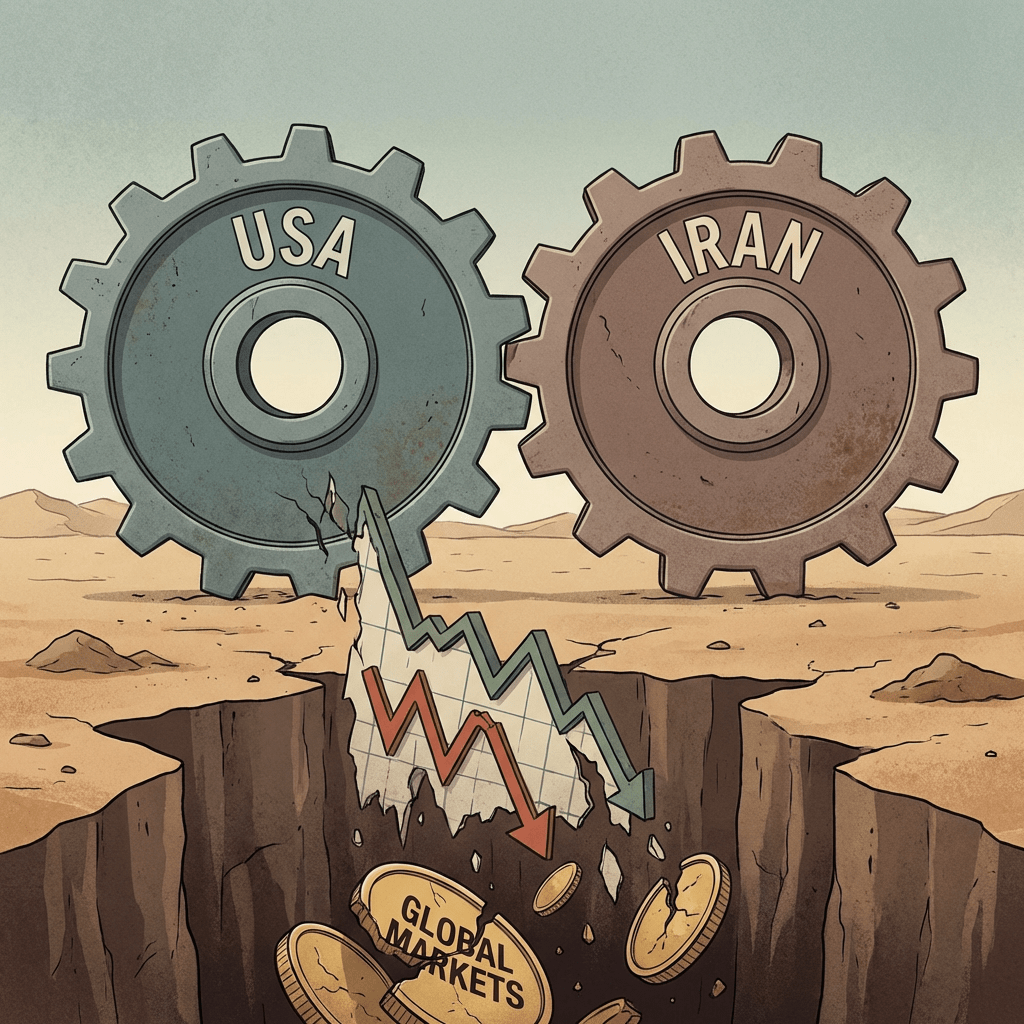
    Gears labeled USA and IRAN over a chasm swallowing falling charts and GLOBAL MARKETS coins.

    BLUE PRESS JOURNAL – Trump’s reckless military escalation against Iran today poses an existential threat to American economic stability and global commerce. Far from projecting strength, these strikes risk catalyzing a catastrophic financial crisis that will burden working families while destabilizing international markets.

    The immediate consequence centers on energy markets. Iran’s geographic dominance over the Strait of Hormuz—a chokepoint handling roughly 20% of global oil shipments—means even limited conflict triggers catastrophic price spikes. Analysts predict Brent crude could surge past $130 per barrel, translating to $5+ gasoline for American consumers already battered by persistent inflation. This shockwave ripples through every sector, from transportation to agriculture, effectively imposing a regressive tax on households least equipped to absorb it.

    Global trade faces imminent paralysis. Military activity in the Persian Gulf threatens container shipping routes vital for Asian-European commerce, potentially replicating the supply chain disruptions that fueled 2021’s inflationary spiral. Insurance premiums for maritime freight have already spiked 40%, costs ultimately borne by American consumers through higher retail prices.

    Financial markets reflect this anxiety, with defense stocks soaring while broad indices plummet. The dollar’s safe-haven status offers minimal protection against the stagflationary pressures of simultaneous energy shortages and slowing growth. Moreover, diverting billions toward military operations steals resources from infrastructure and domestic manufacturing initiatives essential for long-term competitiveness.

    This economic warfare against American pocketbooks serves no strategic purpose beyond political theater. Diplomatic alternatives remain unexplored while the administration gambles with global recession. History demonstrates that Middle East military adventures consistently deliver economic devastation—higher deficits, volatile currencies, and diminished purchasing power—while failing to achieve sustainable security outcomes.