Tag: geopolitical risks

  • Beyond Generosity: Why Robust U.S. Support for Ukraine is Critical for American National & Economic Security

    The security of Kyiv directly impacts the security of Main Street.

    Blue Press Journal – Ukraine’s ongoing struggle for sovereignty is often framed as a moral imperative or an act of generosity from its allies. However, a closer look reveals that sustained U.S. support for Ukraine is not just altruistic; it is a strategic investment in American national and economic security. This pivotal moment demands that U.S. policymakers and the public understand the profound implications for their own prosperity and global stability.

    Ukraine’s Unwavering European Path & Enduring American Partnership

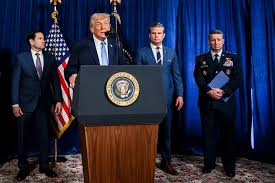
    At its core, Ukraine is irrevocably committed to a future intertwined with Europe. This profound aspiration, coupled with a deep appreciation for American partnership, shapes their daily decisions, from energy infrastructure to military planning and economic recovery. Despite fluctuating political signals from Washington (Donald Trump), Ukrainians continue to view the United States with remarkable gratitude. Their primary concern isn’t outright abandonment, but rather the destabilizing inconsistency that could undermine long-term planning and deterrence.

    American Support: A Nuanced Reality

    A persistent misconception in Washington suggests a waning of public support for Ukraine. Yet, the data tells a more reassuring story. Polling from organizations like the Atlantic Council, utilizing data from HarrisX, consistently demonstrates that a majority of Americans – approximately six in ten – continue to support U.S. assistance to Ukraine, including vital military aid. [Source: Atlantic Council via HarrisX polling data, often cited in their analyses of public opinion, e.g., “The Resilience of American Support for Ukraine”]. Americans largely view Russia as the aggressor, express deep distrust of the Russian government, and oppose territorial concessions that would reward aggression.

    The challenge isn’t public opposition, but rather a lack of sustained attention. Domestic concerns like inflation, housing costs, and electoral politics understandably dominate daily discourse. Ukraine often doesn’t top these lists, not because Americans oppose assistance, but because they assume the issue is being competently managed. The public is distracted, not hostile, highlighting a crucial communication gap that U.S. advocates must bridge.

    The Economic Stakes: Why Global Stability Benefits Every American

    The most critical aspect often overlooked is how Ukraine’s fight directly safeguards the foundational principles of the international order that underpin American prosperity. For decades, the U.S. economy has thrived within a predictable global framework: secure trade routes, stable borders, enforceable rules, and alliances that deter major conflicts. This stability reduces risk, lowers costs, stimulates investment, creates American jobs, and allows the U.S. to shape global standards for trade, technology, and finance.

    The immediate aftermath of Russia’s full-scale invasion in 2022 offered a stark preview of these economic vulnerabilities. Energy prices surged globally, food costs climbed due to disrupted grain and fertilizer markets, and shipping and insurance rates increased, fueling inflation across the economy. [Source: International Monetary Fund (IMF) analysis on the economic impact of the war in Ukraine, e.g., “Global Economic Outlook: A Rocky Road Ahead” – specific chapter on Ukraine impacts]. These ripple effects led to higher interest rates, impacting mortgages, auto loans, credit cards, and small businesses – hitting American pocketbooks directly.

    If Russian aggression goes unchecked, the economic consequences will only deepen. A world where aggression is rewarded leads to structural risk, higher costs for everything, and diminished confidence for investment. This means slower growth, fragile supply chains, and greater volatility in retirement savings. Governments would spend more reacting to crises and less investing in domestic priorities. As the Council on Foreign Relations notes, “allowing Russia to dictate terms… would set a dangerous precedent for revisionist powers globally, destabilizing key trade routes and investment climates.” [Source: Council on Foreign Relations, e.g., “The Global Economic Impact of the War in Ukraine”].

    A Clear-Eyed National Security Imperative

    Beyond economics, supporting Ukraine is vital for U.S. national security. Ukraine is not asking the United States to fight its war, but to recognize that American security and prosperity are inextricably linked to its outcome. A failure to deter Russian aggression in Ukraine would signal weakness, inviting further challenges to the post-World War II international order. This would directly impact the credibility of NATO, the cornerstone of European security and a vital alliance for the U.S. [Source: NATO Official Statements, e.g., “NATO’s Response to Russia’s War in Ukraine”].

    If the United States desires a world governed by rules, predictability, and sovereign choice rather than coercion and chaos, it cannot afford to waver now. The cost of inaction – both economic and strategic – will far outweigh the investment required to ensure Ukraine’s success and uphold a stable global environment. Supporting Ukraine isn’t just about Ukraine; it’s about safeguarding America’s own power, prosperity, and the principles upon which its security rests.
  • Trump Wants Venezuela’s Oil. Getting It Won’t Be So Simple

    Blue Press Journal: President Trump’s vision for Venezuela’s oil faces a labyrinth of geopolitical, economic, and operational challenges. We examine why extracting the country’s vast reserves may not be a boon for U.S. interests. 


    Trump out of step with reality

    President Donald Trump’s recent assurances about U.S. oil companies seizing control of Venezuela’s underutilized oil reserves sound ambitious—and possibly out of step with reality. While Venezuela boasts the world’s largest proven oil reserves, the path to unlocking them under Trump’s plan is riddled with economic, technical, and political hurdles that even the most powerful corporations may struggle to navigate. 


    Venezuela’s Oil Legacy and Its Rocky Decline

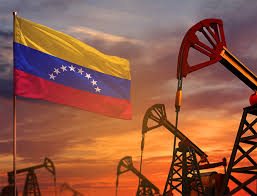
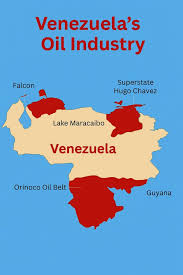
    Venezuela’s oil industry was once a global powerhouse, producing over 3 million barrels per day in the late 1990s. However, the nationalization of oil infrastructure under Hugo Chávez in the mid-1990s marked the beginning of a steep decline. By 2018, production had plummeted to just 1.3 million barrels per day, according to U.S. Energy Information Administration data. Decades of mismanagement, lack of foreign investment, and U.S. sanctions have further crippled the struggling sector, which now produces less than 7% of the United States’ own output (21.7 million barrels daily in 2023). 

    While the reserves remain vast, the ability to extract and refine them has eroded. Infrastructure decay, from aging pipelines to dilapidated drilling rigs, has turned Venezuela’s oil fields into a patchwork of unreliable assets. Even if U.S. firms could access these reserves, they would face the monumental task of rebuilding an industry that has fallen into disrepair. 


    The Market Realities: A Global Oil Oversupply and Volatility

    Trump’s plan assumes that increased Venezuelan oil production would benefit U.S. companies, but global market conditions tell a different story. In 2025—amid Trump’s renewed push—global oil prices dropped by 20%, the steepest decline since 2020. Analysts attribute this to an oversupplied market, with increased output from U.S. shale producers, OPEC+, and alternative energy transitions. 

    James Stockman, a leading energy economist, notes, “Right now the oil market’s somewhat oversupplied. That’s hurting American companies. The last thing they want is for a massive oil reserve to suddenly be opened up.” A surge in Venezuelan oil could oversaturate an already struggling market, further depressing prices and eroding profit margins for U.S. firms. At a time when energy companies are grappling with tariffs and market volatility, the prospect of pouring billions into a risky, long-term project in Venezuela is unappealing. 


    Operational Challenges: Heavy Oil and Infrastructure Collapse

    Even if U.S. companies were willing to invest, Venezuela’s oil is not a quick win. The country’s reserves are predominantly extra-heavy crude, which requires extensive and costly upgradation to transform it into lighter, transportable oil. This process—a multi-billion-dollar undertaking—demands not only capital but also stable political and economic conditions Venezuela has not seen in decades. 

    Moreover, the infrastructure required to extract and process this oil is in critical disrepair. Decades of neglect have left Venezuela’s oil fields reliant on outdated equipment, while key refineries like the 520,000-barrel-per-day Amuay facility have largely fallen into obscurity. Rebuilding this infrastructure could take a decade or more, with no guarantee of returns in a market that may shift toward renewable energy by then. 


    Political Quagmire: Who Controls Venezuela?

    The very foundation of Trump’s plan hinges on U.S. recognition of Venezuela’s new leadership, but political instability remains a wildcard. Following the contentious capture of President Nicolás Maduro, ally-turned-claimant Juan Guaidó (or another figure, as per the context) was sworn in as an interim leader. Yet, U.S. officials, including Senator Marco Rubio, have quickly backtracked, calling Guaidó’s legitimacy into question and advocating for “real elections” instead. 

    This inconsistency raises critical concerns for foreign investors. Venezuela’s oil contracts are often shrouded in legal ambiguity, and a lack of clear governance could deter companies wary of entanglement in a political showdown. “Legitimacy for their system of government will come about through a period of transition and real elections, which they have not had,” Rubio stated on This Week, underscoring the uncertain footing on which any U.S. oil venture would stand. 


    A Cautionary Tale: Why Trump’s Plan Fails the Feasibility Test

    While Trump’s rhetoric echoes the 2003 Iraq invasion—where oil was a central motive—the economic landscape is worlds apart. In 2003, oil prices were rising, and technical advancements made extraction more viable. Today, declining prices, aging infrastructure, and geopolitical uncertainty form a far more complex web. 

    For U.S. oil companies, the risks outweigh potential rewards. The required investment would run into tens of billions, with returns stretching over decades in a market that may not justify the expenditure. Additionally, the environmental and moral implications of reviving a resource-extraction economy in a country ravaged by sanctions and authoritarianism could invite corporate reputational damage. 


    President Trump’s grand vision for Venezuela’s oil is less about economics and more of a political stunt. The harsh truth of a stagnant market, decaying infrastructure, and erratic leadership proves that tapping into Venezuela’s immense reserves will likely remain an elusive fantasy for U.S. companies. Forget quick profits; the real blow may come in the form of wasted investments. The takeaway for investors is stark: even the richest resources can’t be unleashed merely through lofty ambitions—they require the right timing, genuine stability, and a market primed for opportunity.