Tag: Geopolitics

  • The Cost of No Endgame: Why Donald Trump’s Iran War Strategy is a Foreign Policy Failure

    by Winston Wendell

    The ancient art of diplomacy teaches a simple but an extremely important lesson, which is that one should never start a war unless they have an exit strategy. The Trump administration ignored that particular wisdom, dooming the United States to yet another hopeless conflict. The war with Iran is doomed to happen, and that is entirely down to Donald Trump and his ill-considered decision to engage in it without any thought to an exit strategy.
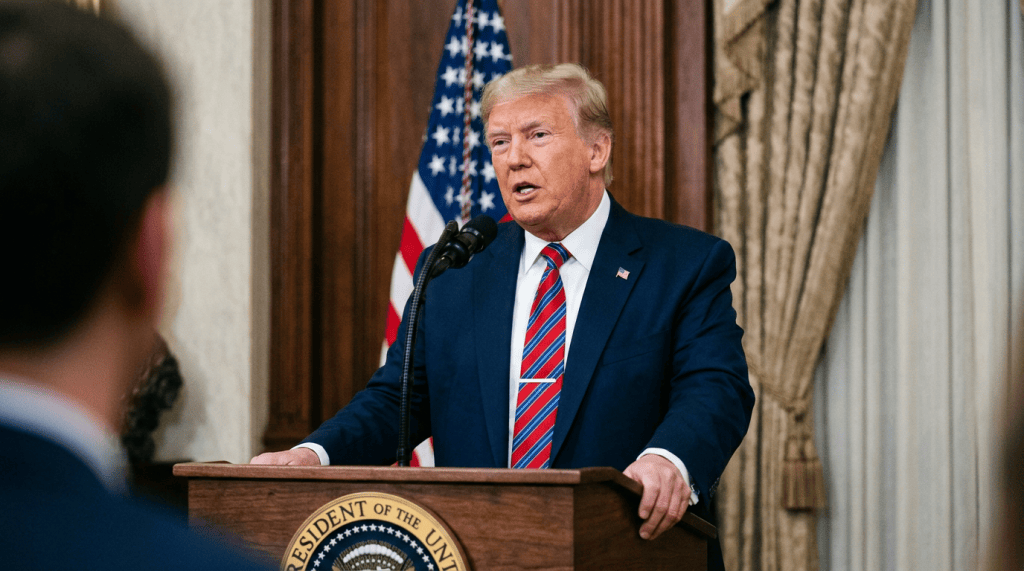
    Donald Trump speaking at a podium with the American flag behind him

    War is not an end in itself but a means to achieve political goals through military action. By initiating a war with Iran, the Trump administration thought it through as far as wanting to demonstrate America’s military might, but they did not have a viable plan as to what to do after the initial display of force. In fact, the famous military theorist Carl von Clausewitz warned that war is the continuation of politics by other means. But in the case of Trump and Iran, it appears that there was no particular political goal beyond the point of making a show of strength.

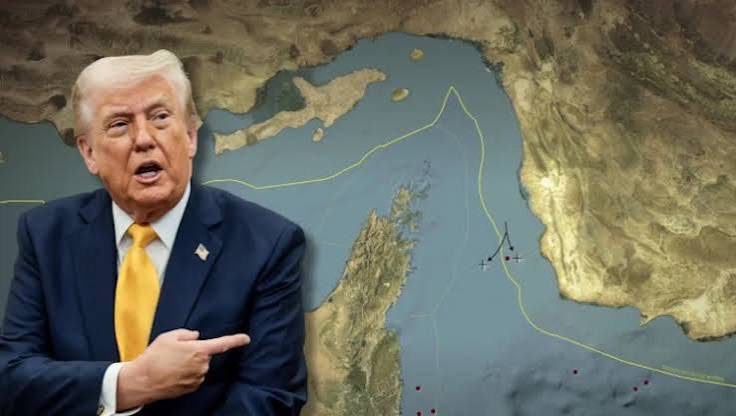
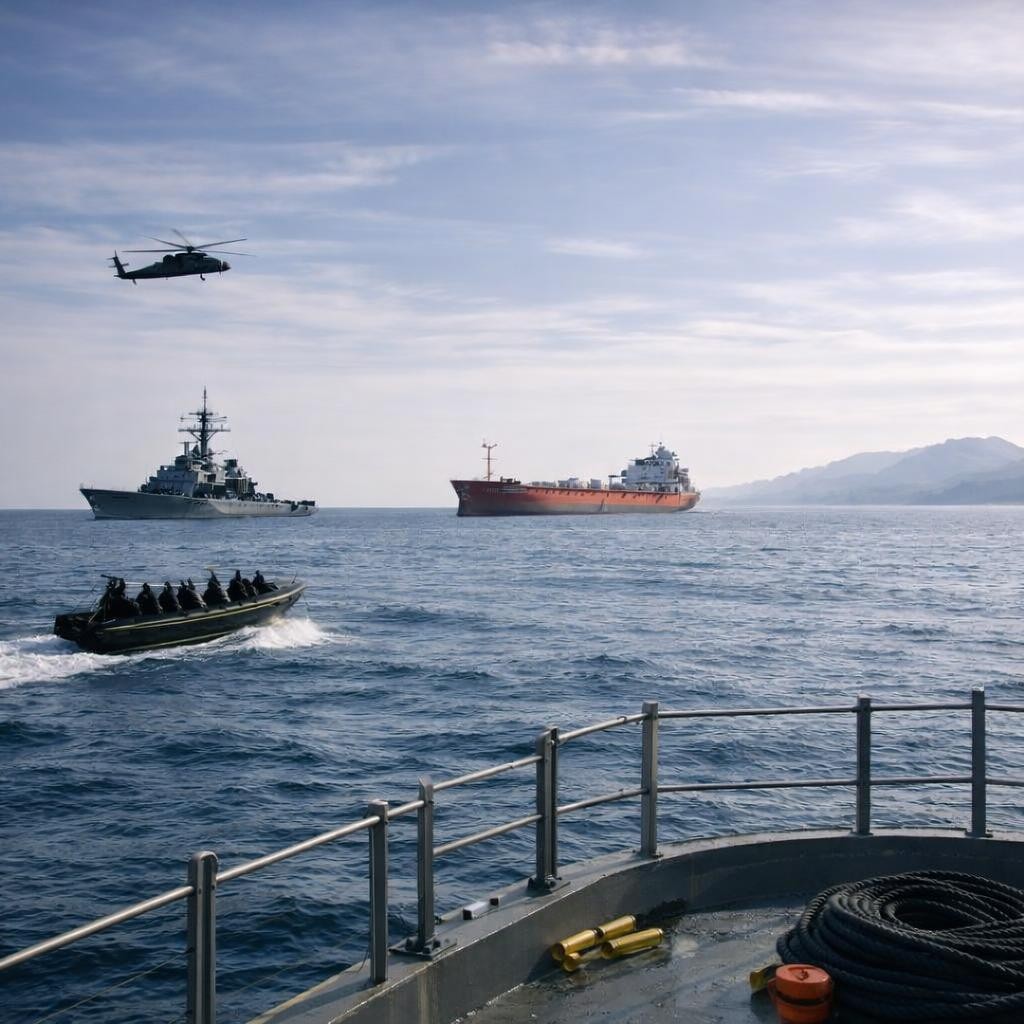
    Without a well-defined plan and an exit strategy, the White House has failed to achieve any concrete result in the case of Iranian military involvement. While it makes for a great show to target and kill high-profile terrorist leaders or even the foreign leadership, such actions have serious and dire consequences for years to come. With the war against Iran, those consequences are to be found in an exacerbated opposition to the US in the form of hundreds of proxy groups ready to fight America’s soldiers. Moreover, Iran has effortlessly shut down the critical world trade routes in the Persian Gulf and the Strait of Hormuz, as well as accelerate their nuclear program.

    By failing to formulate a plan and an exit strategy, the White House has placed the United States on a collision course with another unpopular and long war. As the history of the USA teaches us, it is much easier to get into a war than to get out of it with honor and minimal losses. A famous analyst Richard Haass put it succinctly when he stated that the problem is not starting a war, it is ending one.

    A nation’s leadership is not supposed to make rash decisions and waste its soldiers’ lives. The ability to plan a proper political campaign and follow through until the very end is what sets a leader apart from an opportunist. By rushing into a military conflict with Iran, the United States have demonstrated that it does not have the calibre of leadership under Donald Trump that is required to handle such matters with care and precision.
    Fediverse Reactions
  • The Illusion of a “Golden Age”: How the Iran War Impacts the Economy and the Nation’s Security

    by Winston Wendell

    President Donald Trump has asserted that America has entered upon a new “Golden Age.” This is a far cry from the reality we see on the ground today, where over one hundred thousand jobs have been lost in just the past two months. Gas prices are skyrocketing, and groceries are costing a record amount.

    Yet another consequence of the Trump administration’s disastrous war with Iran is that we are facing unprecedented deficits and soaring gas prices. More concerning still, the military’s most vital missiles for the defense of America’s allies and military installations in the Middle East are nearly depleted.

    The Washington Post recently reported that the Pentagon’s stores of precision guided missiles and large diameter rockets needed for its most sophisticated missile-defense systems are nearly depleted after more than five months of relentless strikes on Iran. This leaves the president with only limited options regarding renewed attacks on the Islamic Republic.

    At the same time, however, Reuters looked at this issue from a different angle, citing security analysts for the statement that the U.S. would be unable to respond adequately to a Chinese attack on Taiwan or other regional provocations if they were to occur, given the current levels of defense readiness. This development is exceptionally concerning given the heightened tensions with China at the moment, and it is not reassuring that the U.S. has so few options available in the event of a large-scale attack on any of its allies.

    If Trump decides to continue with his campaign of airstrikes against Iran, the limited number of precision-guided weapons in the Pentagon’s inventory poses a potentially dangerous dilemma for the President. Reuters added that the U.S. is already down to just eight THAAD missiles and thirteen Patriot missiles, having burned through nearly 80% of THAAD and 50% of Patriot since the beginning of hostilities with Iran.

    Despite the urgent need, defense officials estimate it will take several years before America’s missile inventory will be back to where it was before the war with Iran began, even if the defense-contracting companies ramp up their production rates to maximum.

    It all boils down to the President himself, who, with his unilateral declaration of war on Iran, has placed the U.S. in an exceptionally perilous position both at home and abroad. Neither the American public nor our allies wanted this, and it is clear that Trump thought through the economic impact of his decision much too little. By launching this kind of reckless campaign, he has undermined both the economic and national security of the United States.

    Fediverse Reactions
  • The High Cost of Chaos: Questioning the Trump Administration’s Iran Strategy

    Naval combat scene with burning ships, missiles, helicopters, and a soldier operating a gun on a boat

    Blue Press Journal – The escalation of conflict between the United States and Iran has pushed the global economy to the brink, fostering an environment of instability that many experts argue was entirely preventable. By initiating a campaign of military aggression without congressional authorization, the Trump administration has by passed legislative oversight, leaving the American public to bear the brunt of surging inflation and a precarious geopolitical landscape.

    Current negotiations center on a fragile two-week ceasefire, yet this “peace” effort remains deeply troubling. Critics argue that using the threat of mass civilian casualties as a bargaining chip to reopen the Strait of Hormuz is not only reprehensible but strategically bankrupt. Data from Lloyd’s List Intelligence confirms that shipping volumes plummeted 90% at the height of the conflict, while reports from the Financial Times indicate that Iran intends to levy hefty cryptocurrency tolls on vessels—effectively turning a vital international waterway into a proprietary toll road.

    The administration’s shifting narrative and erratic policy goals have created what many characterize as a “credibility gap.” While the White House touts progress, the Associated Press notes that claims of regional stability are contradicted by continued missile fire reported across Kuwait, the UAE, and Qatar. Furthermore, as the New York Times reports, the imposition of $2 million fees per ship suggests a significant concession that threatens the status of the Strait as an international waterway.

    Many military analysts have a scathing assessment of the presidents war describing his current posture as a “total fold.” After weeks of reckless bluster, the U.S. now finds itself negotiating on terms dictated by an Iranian 10-point proposal. We are left asking: What has actually been gained? With Iranian nuclear capabilities degraded, by how much? Now we face the potential for Russian or Chinese rearmament of Iran looming, the administration’s strategy appears to be a reactive, uncoordinated mess.

    If an American president cannot maintain a coherent policy, ignores the potential for long-term strategic catastrophe, and accelerates the financial hardship of working families, we must critically evaluate their fitness for office. This unnecessary war, characterized by its lack of transparency and disregard for international norms, remains a defining failure of the Trump administration.


  • Trump’s Reckless Rhetoric: Provoking War Crimes in Iran?

    Blue Press Journal – Donald Trump’s recent threats to obliterate Iran’s energy infrastructure and desalination plants have ignited a firestorm of criticism, drawing widespread condemnation from international legal experts and human rights organizations. Such declarations, made on his Truth Social platform, are not merely bombastic; they represent a dangerous escalation that eminent figures warn could constitute war crimes under international law.

    Trump’s explicit warning of striking “all of their Electric Generating Plants, Oil Wells, and Kharg Island (and possibly all desalinization plants!)” has been met with urgent concern. Former Swedish Prime Minister Carl Bildt unequivocally stated that “attacking civilian infrastructure, and acutely desalination plants, is a war crime.” Brian Finucane, a senior adviser at the International Crisis Group, echoed this sentiment, calling the categorical framing of these threats a clear indication of a “threat to commit war crimes.”

    The humanitarian implications are catastrophic. Erika Guevara-Rosas of Amnesty International highlighted that such actions would “plunge an entire country into darkness,” potentially depriving millions of their fundamental human rights to water, food, healthcare, and an adequate standard of living. As Kenneth Roth, former executive director of Human Rights Watch, told The New York Times, there’s “no difference between what Trump is threatening to do in Iran and what the International Criminal Court charged four Russian commanders for doing in Ukraine,” referencing recent ICC arrest warrants for targeting civilian objects.

    Iran, a water-stressed nation, faces suffering despite the aid of desalination plants. Grist’s Frida Garza noted that attacks on power plants could cripple water treatment, causing scarcity and disease. Iran’s refusal for direct diplomatic talks threatens Middle East stability and adherence to international law. Trump’s reckless policies invite further instability and humanitarian disaster.

  • Geopolitical Turbulence: How the Iran Conflict, Ignited Under Trump, Threatens Global Economic Stability

    Trading floor with screens showing IRAN STRIKES OIL FIELDS and falling stock indices.

    The Economic Fallout of Trump’s Iran Conflict

    Blue Press Journal – The global energy landscape is currently facing a catastrophic destabilization. Following targeted Iranian strikes on critical energy infrastructure in the Gulf—specifically two major refineries in Kuwait and Qatar’s vital Ras Laffan natural gas terminal—Brent crude has surged toward the $115 mark. As Tehran’s offensive disrupts the flow of approximately 20% of the world’s liquefied natural gas (LNG), the specter of a “macro wrecking ball” hanging over the global economy has become a grim reality.

    A Manufactured Crisis and the Trump Administration

    While the physical damage to the Strait of Hormuz and surrounding facilities is undeniable, financial analysts and geopolitical experts are increasingly pointing the finger at the White House. Critics argue that the Trump administration’s decision to initiate this conflict was a strategic blunder of historic proportions. According to reports from The New York Times, high-level security officials previously indicated there was no immediate or imminent security threat from Iran that warranted a full-scale kinetic engagement. 

    By prioritizing a hawkish foreign policy over regional stability, the administration has arguably invited the very energy crisis it claimed to prevent. This “war of choice” has now pushed the national average price of gas to a staggering $3.88 per gallon as of March 19, 2026, placing an immense burden on American households.

    Global Market Contagion

    The economic repercussions are being felt far beyond U.S. borders. On Thursday, Brent crude jumped 6% to $113.77 per barrel, a massive leap from the sub-$73 levels seen prior to the commencement of hostilities. The Financial Times reports that European natural gas benchmarks have doubled in just thirty days, threatening a wave of “debilitating inflation” across the continent.

    Global indices are reflecting this instability:

    • Japan’s Nikkei 225 plummeted 3.4% as the Bank of Japan froze interest rates.
    • Germany’s DAX and London’s FTSE 100 both saw losses exceeding 2%.
    • Wall Street futures remain in the red as the Federal Reserve warns that persistent inflation, fueled by the war, limits their ability to provide further interest rate relief.

    As the Strait of Hormuz remains effectively shuttered to tanker traffic, the question remains: was the pursuit of this conflict worth the systematic dismantling of global economic stability? For now, the world pays the price at the pump and in the markets for a war that many intelligence experts claim was entirely avoidable.