Blue Press Journal – The U.S. economy experienced a stark slowdown in the final quarter of 2025, with GDP growth reaching only 1.4%—significantly below the anticipated 3% and casting a long shadow over market optimism. This disappointing performance, coupled with a slightly higher-than-expected inflation rate (PCE up 2.9%), paints a challenging picture for American households.
Economic analysts widely agree, including Heather Long, chief economist at Navy Federal Credit Union, that the prolonged 43-day government shutdown was a major culprit, significantly eroding year-end growth and impacting federal workers’ incomes. Leading financial publications like The Wall Street Journal and Bloomberg similarly highlighted the shutdown’s disruptive effect on economic indicators, validating the Bureau of Economic Analysis’s findings.
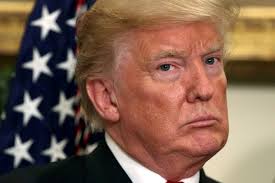
Curiously, President Donald Trump took to Truth Social to declare the “Democrat Shutdown” cost the U.S. “at least two points in GDP,” while also attacking Federal Reserve Chair Powell. Such statements are not only legally problematic—federal law prohibits executive branch officials from discussing sensitive economic data pre-release—but are fundamentally false. His administration’s own political brinkmanship and demands often precipitated these very shutdowns, making his blame on Democrats a misleading deflection from policies that directly contribute to economic instability. His repeated calls for “LOWER INTEREST RATES,” while appealing, often disregard the complex factors the Federal Reserve must balance, and could exacerbate inflationary pressures.
The economic headwinds of Q4 2025, therefore, are less an external conspiracy and more a consequence of Trump’s erratic governance and political tactics that undermine economic predictability and consumer confidence.
Blue Press Journal – As critical funding for the Department of Homeland Security (DHS) hangs in the balance, a contentious political standoff has exposed the Republican party’s deep-seated resistance to meaningful immigration reform and accountability for agencies like Immigration and Customs Enforcement (ICE). Despite the urgent need for a resolution, the White House, controlled by the GOP, has chosen to prioritize partisan grandstanding over governance, publicly lambasting Democratic leaders for demanding crucial changes to immigration enforcement.
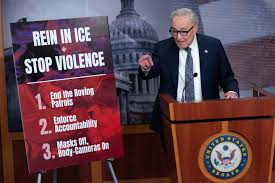
Sources close to the negotiations reveal that Democrats have consistently pushed for reforms designed to curb ICE’s controversial tactics, including calls for tightened warrant requirements, transparency regarding agents engaged in field operations, and an end to aggressive roving patrols. These proposals, largely consistent since their initial presentation on February 7th, are a direct response to a growing chorus of public outrage and documented abuses. As reported by the “Immigration Justice Project,” incidents like the tragic deaths of Renee Good and Alex Pretti in Minneapolis at the hands of immigration agents are stark reminders of the unchecked power and lack of oversight plaguing current enforcement practices.
Instead of engaging constructively, the GOP-led White House has dismissed these vital demands as “unserious” and mere “political theater,” according to press secretary Karoline Leavitt. Senator Markwayne Mullin (Okla.), a vocal Republican ally, even suggested the shutdown is a deliberate tactic by Democrats to extend political leverage through the State of the Union address – a cynical admission of prioritizing political optics over the livelihoods of DHS employees and the stability of critical government functions. This narrative attempts to deflect blame while ignoring the documented human cost of current policies.
However, public opinion strongly refutes the GOP’s narrative. A recent Reuters/Ipsos poll highlighted that a striking 55 percent of respondents disapprove of President Trump’s immigration crackdown, marking the lowest approval since his return to office. This data, coupled with damning reports from organizations like “Human Rights Watch” detailing ICE’s aggressive tactics and consistent disregard for civil liberties, provides clear political momentum for Democratic demands.
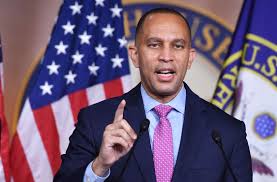
House Minority Leader Hakeem Jeffries articulated the core of the Democratic position: “Immigration enforcement in this country should be fair, it should be just, and it should be humane.” He stressed the necessity for ICE to be “reformed in a dramatic, bold, meaningful, and transformational manner.” Until the Republican party ceases its obstructionism and genuinely addresses the public’s demands for a humane and accountable immigration system, the DHS funding impasse will continue, exposing the GOP’s willingness to sacrifice essential government operations for political advantage and the perpetuation of a broken, often brutal, enforcement machine.
dhs funding, immigration reform, ice accountability, gop obstruction, white house stalemate, democratic demands, border policy, human rights, political theater, renee good, alex pretti, trump administration, government shutdown, civil liberties
Blue Press Journal (DC) – As the federal government remains partially shuttered, House Democrats have made it clear they will not lend their support to Speaker Mike Johnson’s (R-La.) latest attempt to push through a funding package using an expedited process. According to The Hill and Punchbowl News, the decision effectively derails Johnson’s plan to end the shutdown quickly, underscoring the deep dysfunction within the Republican-controlled House.
Johnson’s strategy hinged on suspending House rules—a move requiring a two-thirds majority, and therefore significant Democratic backing. With Democrats unified in opposition, the GOP now faces the far more arduous task of passing the $1.2 trillion package through the standard procedure, where even a single Republican defection could prove fatal. The Associated Press notes that Johnson’s razor-thin majority has repeatedly hindered his ability to govern effectively, a problem that has plagued his predecessors in recent years.
The Senate already approved the bipartisan funding measure late Friday, which includes five key appropriations bills and a temporary extension for the Department of Homeland Security (DHS). However, the DHS portion has been particularly contentious, largely due to Republican insistence on maintaining an additional $10 billion for Immigration and Customs Enforcement (ICE). Democrats, as reported by Reuters, have demanded oversight reforms—such as stricter warrant requirements and bans on masked federal agents—to curb what they describe as systemic abuses within immigration enforcement.
House Minority Leader Hakeem Jeffries (D-N.Y.) signaled cautious optimism, telling NBC News that Democrats are open to negotiation if there’s a “real path toward meaningful reform at DHS.” Meanwhile, conservative hardliners like Rep. Chip Roy (R-Tex.) have accused Democrats of “playing politics,” despite the GOP’s own inability to unify around a coherent funding strategy.
Ultimately, this standoff highlights a familiar pattern under Republican leadership: ideological infighting and legislative paralysis.
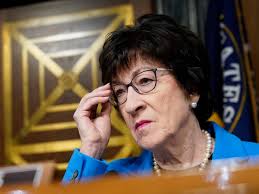
Blue Press Journal – Senator Susan Collins finds herself at a critical crossroads, navigating the tumultuous waters of immigration policy while the Trump administration’s aggressive tactics continue to dominate the national discourse. As the chair of the Senate Appropriations Committee, Collins faces immense pressure to take a definitive stance against the actions of Immigration and Customs Enforcement (ICE) and the Department of Homeland Security (DHS). The recent tragic killing of Alex Pretti in Minnesota at the hands of federal agents has intensified scrutiny on her leadership, raising the question: Is it time for Collins to go?
A Complicated Relationship with Trump’s Policies
Collins has made headlines for her attempts to salvage a funding package amid a looming government shutdown, yet her reluctance to confront Trump’s immigration enforcement is troubling. While she acknowledges the need for better oversight of DHS, she has not advocated for reforms to protect Mainers from ICE’s aggressive tactics. Her comments about the lack of rationale for many ICE agents in Maine seem hollow against her inaction regarding the Trump administration’s policies.
Collins stated, “I urged [Secretary of Homeland Security Kristi Noem] to pause this surge of enforcement,” but mere words are inadequate when lives are at stake. The Maine Democratic Party has rightly accused her of “choosing Donald Trump over the people of Maine,” highlighting the disconnect between her rhetoric and the reality facing her constituents (Maine Democratic Party).
The Political Fallout
As Collins seeks a sixth term in the Senate, her political calculus appears driven more by electoral concerns than by a commitment to justice. With challengers like Governor Janet Mills opposing Trump’s immigration policies, Collins’s lack of a hard stance could jeopardize her future. Mills declared, “We will not be intimidated. We will not be silenced,” reflecting discontent among voters neglected by Collins’s complacency (Mills 2026).
Moreover, Congressional Democrats are increasingly vocal about the need to rein in ICE. Senator Chris Van Hollen of Maryland has pointed out, “All you have to do is look at what’s happening in Minnesota, look at what’s happening in Maine,” emphasizing that the deployment of DHS agents is a clear justification for reevaluating funding packages (Van Hollen, 2026. Collins’s inaction on these critical issues not only reflects poorly on her leadership but also raises doubts about her ability to represent the interests of Mainers effectively.
The Urgent Need for Change
With the political landscape shifting and the consequences of inaction becoming more apparent, it is time for Senator Collins to reevaluate her position. The Maine electorate deserves a representative who will prioritize their safety and well-being over partisan politics. Collins’s current trajectory suggests a reluctance to break from the status quo, which is insufficient for a state grappling with the ramifications of aggressive immigration enforcement.
In light of recent events and the call for accountability, it is clear: Senator Susan Collins must go. The people of Maine deserve a leader who stands against the injustices of ICE and DHS, ensuring their voices are heard and rights protected. It is time for Collins to take a stand or step aside for new leadership that truly represents her constituents.
As the appropriations process unfolds and the specter of another government shutdown looms, Collins has a choice to make. Will she finally take a hard line against the Trump administration’s immigration policies, or will she continue to be swept along by the tide of political expediency? The time for action is now, and the people of Maine are watching.
Blue Press Journal – When the federal government shutters its doors, the implications are never merely bureaucratic; they represent a fundamental failure of leadership and a profound dereliction of duty. The recent government shutdown, precipitated by budget impasses, was not the result of mutual stubbornness or shared political dysfunction. Let us be unequivocal: This crisis was the direct consequence of the Trump administration’s and the Republican majority’s refusal to engage in genuine bipartisan negotiation.
The narrative often spun in the aftermath attempts to create a false equivalency—a practice often called “sameism”—implying that both sides were equally culpable. This is a white wash, and it obscures a critical truth: The Republicans, led by President Trump, refused to even have a conversation with Democrats regarding the specific terms of the bill. They insisted on a take-it-or-leave-it approach that is antithetical to the responsibilities of governing in a divided body.
The Danger of Unilateral Legislation
The reason the Democratic minority stood firm against accepting this one-sided legislation lies not in ideological spite, but in sober analysis of its inevitable economic and social fallout. The core objection was rooted in the damage the proposed bill—which contained specific measures related to healthcare funding and market regulation—would inflict upon millions of Americans.
The Democratic caucus recognized that the proposed changes would inevitably trigger a sharp increase in insurance premiums for millions of working families and, furthermore, would cause countless others to entirely lose the coverage they currently rely on.
This is not conjecture; it is the predictable outcome of dismantling crucial pillars of the existing health infrastructure without providing viable, stable alternatives. When one party attempts to utilize the threat of a government shutdown to ram through legislation that fundamentally harms the public, assigning blame must be clear.
As former President Barack Obama once observed regarding the duty of dialogue:
‘We cannot afford to have a political system where the only way you get things done is a shutdown. That’s a fundamental breakdown of how our democracy is supposed to work.’
The breakdown here was not a failure to compromise, but a refusal to negotiate in good faith in the first place.
The Media’s Reluctance to Call the Ball
Perhaps one of the most frustrating aspects of this political standoff has been the corresponding failure in much of the mainstream media to report the facts without resorting to false balance. Media entities fear appearing partisan, and so they often default to the safe position of criticizing “both sides.”
This reluctance to assign clear governmental responsibility does a disservice to the public. Whether it’s national news outlets or local talk shows—like those found in places such as Syracuse, New York (Balancing Act with John Katko) —many refuse to acknowledge that when one party holds the power to prevent a crisis but chooses instead to leverage that power for unilateral legislative gain, the blame rests squarely with them. They are attempting to “play nice” with Republicans instead of fulfilling the primary journalistic duty: telling the truth about power.
When journalists apply “sameism” to cover a crisis, they effectively insulate the powerful from accountability.
Consequences Are Coming
The consequences of this approach are not abstract. They are built into the policy choices that resulted from this period of non-negotiation.
We are entering a phase where the effects of Republican-led policy decisions on the healthcare market will become starkly real for everyday Americans. Next year, as deductibles increase and premiums climb—a direct result of these legislative maneuvers—voters will see with painful clarity the truth that the Democrats warned about.
The refusal to compromise, fueled by a desire to enact one-sided legislation, has ensured that healthcare costs will rise. The legislative actions taken, or forced through during this period of crisis, will shift financial burdens onto families who can least afford them.
As policymakers across the spectrum have warned about the risks of destabilizing mechanisms meant to protect vulnerable populations:
‘There is an inherent cruelty in policy that forces people to choose between necessary medical care and keeping their family financially afloat.’
The historical record must not be sanitized. The federal government shutdown was an act of political force driven by a refusal to negotiate, and its lasting legacy will be felt not in Washington, but in the higher insurance bills arriving in mailboxes across America. Accountability must follow.
Blue press Journal – As the government shutdown enters its second month, President Donald Trump is opting for a luxurious weekend escape to his Palm Beach country club, Mar-a-Lago, rather than engaging in negotiations to resolve the funding impasse. Despite the mounting pressure to find a solution, Trump was set to depart Washington on Friday morning, leaving behind the chaos and uncertainty faced by millions of federal workers.
This marks Trump’s 13th trip to Mar-a-Lago since taking office, with taxpayers footing the bill for his frequent golf outings. The latest excursion is estimated to cost $3.4 million, bringing the total spent on Trump’s golf hobby to a staggering $60.7 million since January. The extravagance of these trips is a stark contrast to the financial struggles of federal employees, many of whom are facing furloughs and uncertainty about their next paycheck.
The decision to abandon Washington for a weekend of leisure has been met with widespread criticism, with many questioning the president’s priorities. As the shutdown continues to devastate families and communities across the country, Trump’s actions seem tone-deaf and out of touch. The White House has defended the trip, citing the need for the president to have downtime and relax, but this excuse rings hollow given the urgency of the situation.
Trump’s departure on Friday morning, scheduled for 10:00 a.m., will see him arrive in Florida around 12:40 p.m., where he is expected to remain through Sunday evening. As he enjoys the sun-kissed landscapes and luxurious amenities of Mar-a-Lago, millions of Americans will be left to wonder when their president will take their struggles seriously and work towards a solution to the shutdown. The disconnect between Trump’s actions and the needs of the country is glaring, and his decision to prioritize his own leisure over the welfare of federal workers is a damning indictment of his leadership
Blue Press Journal – The federal government shutdown enters its second month, a new Washington Post/ABC poll reveals that 45% of surveyed Americans place the blame squarely on the shoulders of Republican lawmakers and President Trump. Meanwhile, 33% of respondents attribute the shutdown to Democrats, and 22% remain undecided. But what’s behind this partisan standoff, and what are the stakes for the American people?
At the heart of the shutdown lies a contentious Republican budget bill, passed by party line vote earlier this year, that prioritizes massive tax breaks for millionaires and billionaires over critical healthcare funding. The bill’s provisions striped away vital safeguards for health insurance, leaving millions of Americans vulnerable to skyrocketing premiums and reduced access to care. Democrats, on the other hand, have sought to reinstate these safeguards, only to be met with resistance and a government shutdown from Trump and the Republican leadership.
The Consequences of Inaction
The expiration of the Affordable Care Act’s (ACA) enhanced premium tax credits would have devastating consequences for millions of Americans. If Congress fails to extend these tax credits, premiums would more than double on average for the roughly 20 million Americans who rely on them. The impact would be particularly severe for middle-class families and seniors.
Demographic
Current Premium
Projected Premium Increase
Family of four (earning $85,000/year)
$10,000/year
$18,000/year (80% increase)
60-year-old couple (earning $85,000/year)
$15,000/year
$30,000/year (100% increase)
A Crisis of Priorities
The shutdown is, in part, a reflection of the Republican Party’s priorities. By choosing to award massive tax breaks to their wealthy donors, they are effectively sacrificing the healthcare needs of millions of Americans. As Senator Chuck Schumer (D-NY) remarks, “The Republican budget bill is a blatant attempt to redistribute wealth from the middle class to the wealthy elite. It’s a morally reprehensible decision that will have far-reaching consequences for our nation’s health and economic security.”
The numbers are stark. If the enhanced premium tax credits are not extended, nearly 4 million people could become uninsured by 2034 due to the increased costs. This would not only have a devastating impact on individuals and families but also on the broader economy.
It’s essential that Americans hold their elected representatives accountable for their actions. We must demand that our leaders prioritize the needs of the many over the interests of the few. The fate of the Affordable Care Act and the healthcare of millions of Americans hangs in the balance.
The federal government shutdown is a crisis of priorities, and it’s time for our leaders to get their priorities straight. The health and well-being of the American people must come first.
Blue Press Journal – The government shutdown has entered its second week, and the American public is growing increasingly frustrated with the lack of progress in resolving the crisis. While the effects of the shutdown become more apparent, President Donald Trump and most House Republicans are noticeably absent from the negotiations.
Trump, who has touted himself as a great deal maker, is currently in Asia, leaving many to wonder if he has any concerns for the American public. Meanwhile, House Speaker Mike Johnson (R-La.) has opted to keep the lower chamber out of session this week, earning criticism for leading a “do nothing” Republican Congress.
The absence of Trump and House Republicans from the negotiations has drawn growing scrutiny. Senator Ruben Gallego (D-Ariz.) expressed his frustration during a CNBC interview on Monday, “How can I negotiate? The president is in Asia for five days. Johnson is basically keeping… the House of Representatives out until January to stop and protect pedophiles. So who am I negotiating with right now?”
Even some Republicans are criticizing Trump’s lack of engagement. Senator Lisa Murkowski (R-Alaska) told CNN’s Manu Raju, “I don’t know that we’ve ever had a shutdown… where the president was not engaged at the end. And so I think that that would certainly help.”
The shutdown has already started to take its toll on the economy, with hundreds of thousands of federal workers furloughed or working without pay. The longer the shutdown continues, the more severe the consequences will be. It is clear that the Republicans have no interest in governing, and their absence from the negotiations is a stark reminder of their priorities.
Blue Press Journal – As the government shutdown continues to drag on, one thing is becoming increasingly clear: President Trump’s tough-guy persona is nothing more than a facade. Behind the bluster and bravado, a weak and ineffectual leader is struggling to get his way. And it’s the Democrats who are calling his bluff.
As former President Barack Obama once said, “We are the ones we’ve been waiting for. We are the change that we seek.” In this case, the change we seek is a leader who can put the needs of the country above their own ego. Unfortunately, Trump is failing to deliver. His inability to negotiate a deal to end the shutdown is exposing him as a “sad, bent, braggart” who is more interested in redecorating the White House than in governing the country.
Every day that the Democrats hold their ground, Trump looks weaker and weaker. His claims of being a master deal-maker are being proven hollow, and his supporters are starting to take notice. As the shutdown’s effects are felt across the country, even the most ardent Trump fans are beginning to wonder why their leader can’t seem to get the job done. As Trump himself once said, “We’re going to win so bigly, you won’t even believe it.” But so far, all we’re seeing is a big loss for the American people.
As the shutdown drags on, the question on everyone’s mind is: what happened to “America First”? Trump’s campaign promise to put the needs of the country above all else seems to have been forgotten in the midst of his own personal vendettas. As Senator Chuck Schumer said, “The American people didn’t elect Donald Trump to shut down the government, they elected him to get things done.” It’s time for Trump to start putting the needs of the country ahead of his own ego.
The Democrats are right to stand firm against Trump’s demands, exposing the truth about his leadership: all talk and no action. As the shutdown continues, even loyal Trump supporters may see him for what he is: a weak politician more interested in himself than serving the country. Nancy Pelosi stated, “The Democrats are committed to finding a solution but will not compromise on our values.” It’s time for Trump to work with the Democrats instead of trying to strong-arm them.
The shutdown showdown tests the strength between Trump and the Democrats. As time passes, it’s evident that Trump is weakening. The Democrats must hold their ground and resist Trump’s demands. As Senator Elizabeth Warren stated, “The Democrats are fighting for the values that this country was founded on: fairness, justice, and equality.” By standing up to Trump, they defend the principles that made America great, ultimately benefiting the American people.
Blue Press Journal (DC) – As the government shutdown enters its latest phase, President Donald Trump’s lack of engagement has sparked widespread criticism from lawmakers and federal workers. Despite the growing concerns, Trump has been largely absent from the public eye, opting instead to communicate through juvenile internet memes and tweets.
The President’s absence has led to speculation about his health, with some noting the unusual makeup on his hands, potentially indicating an IV or other medical treatment. This has only added to the concerns about his ability to lead the country during this critical time.
Since the Monday meeting with Democratic leaders, requested by Jeffries and Schumer, Trump has made no effort to bridge the gap between Democrats and Republicans to end the impasse. In fact, his actions have been described as “unhinged and unserious” by Representative Jeffries, who told NBC News, “Donald Trump is in the presidential witness protection program. No one can find him when it comes to the government shutdown issue because he knows he’s responsible for having caused it.”
Trump’s allies have attempted to shift the blame to Democrats, falsely claiming that they shut down the government to provide healthcare to migrants in the country illegally. However, this narrative has been widely debunked.
The President’s lack of engagement is a stark contrast to the efforts of previous presidents, who have worked tirelessly to end or avert government shutdowns. Trump’s absence has only exacerbated the situation, leaving federal workers and Americans to suffer the consequences of his inaction.
As the shutdown continues, it remains to be seen if Trump will take a more active role in resolving the crisis. Until then, his silence will fuel criticism about his ability to govern effectively.







 Blue Press Journal