Blue Press Journal – The national conversation is dominated by breaking news—President Trump’s proposed ICE raids on blue cities, speculation over a Greenland purchase, escalating tariffs on Canada, and his stance on Venezuela. While these stories grab attention, they risk overshadowing a critical matter: the Epstein files release.
These files contain potentially explosive information about networks of abuse and accountability at the highest levels. Public focus must stay fixed on ensuring full disclosure, rather than shifting to every new political headline. Diversions—whether through immigration crackdowns, trade disputes, or international real estate ambitions—should not derail efforts to demand transparency.
The Epstein case is not just another news cycle—it’s a test of the public’s will to hold power accountable. Stay informed, speak out, and keep the pressure on for the release of the Epstein files.
President Trump’s push to acquire Greenland threatens to fracture NATO. Here is why the U.S. military presence is already secure, and why upsetting the world order over the Arctic is a geopolitical error.
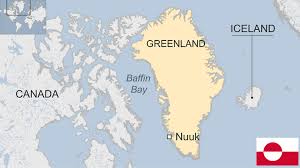
Blue Press Journal – In recent weeks, the geopolitical chatter has shifted drastically toward the Arctic, with President Donald Trump reviving a controversial ambition: the acquisition of Greenland. From floating the idea of a purchase to alluding to the use of military force, the rhetoric has escalated quickly.
However, a closer look at the geopolitical landscape, existing military infrastructure, and the unwavering will of the Greenlandic people reveals that upsetting the current world order to seize this territory is not just diplomatically volatile—it is strategically unnecessary.
A Sovereign Nation, Not a Commodity
The most glaring flaw in the proposal to “take” Greenland is the dismissal of its sovereignty. Greenland is not uninhabited real estate; it is a self-governing nation within the Kingdom of Denmark.
In a unified and emphatic statement, European leaders—including French President Emmanuel Macron, German Chancellor Friedrich Merz, and UK Prime Minister Keir Starmer—declared that “Greenland belongs to its people.” They made it clear that decisions regarding the island are for Denmark and Greenland alone.
This sentiment is echoed on the ground. In a rare show of political unity, Greenland’s party leaders issued a joint statement firmly rejecting Trump’s overtures. “We don’t want to be Americans, we don’t want to be Danes, we want to be Greenlanders,” the statement read. This aligns with public sentiment; a poll conducted last January found that 85 percent of the population opposes joining the United States.
Furthermore, the claim that the U.S. needs to seize the island for “national security” ignores the fact that Washington already maintains a significant military footprint there. The Pituffik Space Base (formerly Thule Air Base) provides critical early warning and space surveillance capabilities. The U.S. does not need to own Greenland to secure it; the current alliance structure guarantees access.
The Cost to NATO and the West
Beyond the question of necessity lies the question of cost. Attempting to force the acquisition of Greenland would likely shatter the Western alliance system.
Denmark asserts control over Greenland in the same legal framework the United States uses to govern Alaska or Vermont. If Washington were to use military force against Copenhagen—a NATO ally—it would trigger a constitutional crisis within the alliance. It would mark the first time in history that a NATO member has threatened military action against another.
Such a move would validate the narratives of adversaries like Russia and China by fracturing the unity of the West. As Danish Prime Minister Mette Frederiksen noted in her joint statement with European leaders, security in the Arctic must be achieved collectively. Unilateral aggression undermines the very principles of sovereignty and territorial integrity that the U.S. and its allies are sworn to protect.
Climate Integrity vs. Resource Extraction
Finally, there is the matter of values. Trump’s vision for Greenland often implies resource extraction, yet the island has charted its own course regarding the climate crisis. In 2021, Greenland passed legislation banning all new oil exploration and drilling. The government described this as a “natural step,” signaling that the nation prioritizes climate integrity over economic exploitation.
Ignoring this local governance to pursue resource interests highlights a fundamental misunderstanding of the territory’s priorities.
The rhetoric of acquiring Greenland makes for sensational headlines, but the reality is a diplomatic minefield. The United States already possesses the military access it needs, the indigenous population is vehemently opposed to the idea, and the move would alienate America’s closest allies in Europe.
In the Arctic, security is best maintained through cooperation and respect for sovereignty, not through the upending of the post-World War II order.
Blue Press Journal (DC) – When President Donald Trump floated the idea of the United States acquiring Greenland—by purchase or, as some reports suggested, by force—the world responded with disbelief and alarm. Though the concept of territorial expansion might have belonged to the 19th century, Trump’s fixation on the Danish-controlled island in the 21st century raised serious concerns about America’s foreign policy direction, its alliances, and its credibility on the world stage.
A Costly and Misguided Pursuit
Secretary of State Marco Rubio attempted to calm fears among lawmakers and news media, explaining that Trump’s plan was to use taxpayer dollars to buy Greenland, its mineral wealth, and its population of roughly 30,000. While the idea of purchasing land isn’t unprecedented—after all, the U.S. acquired Alaska from Russia in 1867—this modern proposal was widely seen as impractical and reckless. Greenland is not just a piece of real estate; it’s an autonomous territory of Denmark, a NATO ally. Any attempt to coerce or pressure Denmark would undermine the very principles of sovereignty that the U.S. has long defended.
Undermining Alliances and the Global Order
Critics, including political commentators like Joe Scarborough, emphasized that America’s true strength lies not in territorial expansion but in its alliances. As Scarborough noted, the combined GDP of the U.S. and Europe dwarfs that of rivals like Russia and China. Together, these democratic powers have historically defeated threats such as Nazism and communism. Turning against a NATO partner like Denmark would fracture this unity, sending a chilling message to friends and adversaries alike.
The suggestion that the U.S. might seize a NATO ally’s territory shattered confidence in the post-World War II order. International reaction was swift and negative. Danish Prime Minister Mette Frederiksen called the proposal “absurd,” while European leaders have expressed concerns about the stability of U.S. foreign policy. Even within Washington, lawmakers from both parties dismissed the idea as diplomatically disastrous.
Strategic Myopia in a Changing World
While Trump fixated on Greenland and Venezuela, China was making rapid advances in technology, artificial intelligence, and global influence. Experts warned that such outdated, 19th-century pursuits distracted from the real 21st-century challenges—economic competition, cybersecurity, and the rise of authoritarian influence. As Scarborough pointed out, “China is eating our lunch across the globe,” while the U.S. risked chasing symbolic victories that could isolate it from its allies.
America’s Power Lies in Partnership
Attempting to take Greenland—whether through purchase or force—would not strengthen America. It would fracture alliances, destabilize global order, and erode trust among nations that have long stood by the U.S. In today’s interconnected world, power is measured not by the land one controls but by the partnerships one maintains. For the United States to remain a global leader, it must invest in diplomacy, innovation, and unity—not in outdated dreams of territorial conquest.



 Blue Press Journal