Tag: health

  • Calls for Resignation Mount as Kennedy’s War on Science Intensifies … RFK Jr. Must Go!

    Blue Press Journal (DC) – The US Health and Human Services Department is reeling from a month of unprecedented turmoil, with critics calling for the resignation of Secretary John F. Kennedy Jr. The embattled secretary has faced mounting scrutiny over his handling of vaccine policy, and his history of promoting unproven medical treatments.

    The final straw came this week with the abrupt dismissal of CDC Chief Susan Monarez, sparking outrage from public health experts and lawmakers alike. Senate Minority Leader Chuck Schumer lambasted Kennedy’s attacks on established science as “stubborn, pigheaded, conspiracy-based,” while Sen. Bernie Sanders wrote a scathing editorial accusing Kennedy of “launching a full-blown war on science, on public health, and on truth itself.”

    The controversy surrounding Kennedy’s leadership has been building for months, with critics pointing to his history of sowing mistrust in vaccines. Despite overwhelming evidence to the contrary, Kennedy has vowed to investigate a possible connection between vaccines and autism, rewarding vaccine critics with high-level appointments and downplaying the role of immunizations in a recent measles outbreak.

    The situation took a dark turn when a vaccine conspiracy theorist opened fire on the CDC building in Atlanta, Georgia, prompting widespread condemnation. Kennedy’s slow response to the shooting only added to the criticism, with many questioning his commitment to public health and safety.

    As Kennedy prepares to assume personal authority over Medicaid, lawmakers and experts are sounding the alarm over the potential consequences of his policies. “The reality is that Secretary Kennedy has profited from and built a career on sowing mistrust in vaccines,” Sen. Sanders wrote. “Now, as head of HHS, he is using his authority to undermine the very foundations of public health.”

    With calls for resignation growing louder, it remains to be seen how long Kennedy can cling to power. The fate of the US Health and Human Services Department, and the health of the American people, hangs in the balance as the country waits with bated breath. One question echoes through the halls of power: how much longer can Kennedy’s war on science continue?
  • Bernie Sanders Calls for RFK Jr’s Resignation as Health Secretary

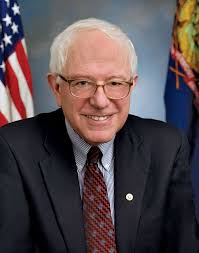
    Blue Press Journal – In a scathing op-ed published in the New York Times, Vermont Senator Bernie Sanders has demanded that Robert F. Kennedy Jr. step down as the US Health Secretary, citing his “dangerous” policies that are “endangering the health of the American people.” Sanders’ call for Kennedy’s resignation comes amid growing public outcry and chaos within US health agencies.

    According to Sanders, the Trump administration’s actions under Kennedy’s leadership have been detrimental to the nation’s health, despite their slogan of “Make America Healthy Again.” The senator pointed to the recent firing of Susan Monarez, the director of the Centers for Disease Control and Prevention (CDC), and the subsequent resignation of four other top CDC officials in protest. These officials reportedly refused to support Kennedy’s “dangerous policies,” which have been widely criticized by the medical community.

    Sanders criticized Kennedy’s long-standing crusade against vaccines and his advocacy of conspiracy theories that have been repeatedly rejected by scientific experts. The senator argued that Kennedy’s actions will make it more difficult for Americans to access lifesaving vaccines, exacerbating the nation’s already “broken healthcare system.”

    The controversy surrounding Kennedy’s leadership has raised concerns among healthcare professionals and the public. As the head of the US health department, his policies impact the nation’s health. Sanders’ call for his resignation underscores the urgency to ensure health agencies are led by those who prioritize science and public health.

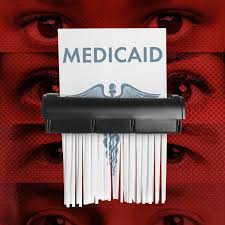
  • Medicaid Cuts in Republican Budget Law Inflict Financial Strain on Hospitals and State Governments

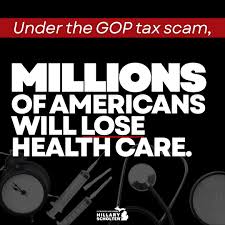
    The Result of the Republican Tax Break for Millionaires and Billionaires

    Blue Press Journal: The recently passed Republican budget law has introduced significant cuts to Medicaid, impacting millions of low-income individuals and families. These reductions are affecting multiple states, with local hospitals and state governments struggling to fill funding gaps. Healthcare providers warn they may have to stop accepting Medicaid patients due to the unsustainable nature of continued care.

    In North Carolina, the Department of Health and Human Services (NCDHHS) has announced plans to cut Medicaid spending by $319 million, effective October 1. This reduction will result in a 3% rate cut for all medical providers, as well as deeper cuts of 8-10% for inpatient and residential services and 10% for behavioral therapy and analysis for patients with autism. The NCDHHS spokesperson expressed concern about the potential consequences of these cuts, stating that “these reductions may cause some providers to stop accepting Medicaid patients, as the lowered rates could make it financially unsustainable to continue offering care.”

    The impact of these cuts will affect various healthcare services, including hospice care, behavioral health, long-term care, and nursing homes. Reimbursement cuts are expected to exceed 3%, placing a greater burden on providers already operating on thin margins. Consequently, many Medicaid patients may lose access to essential services, worsening health disparities and perpetuating a cycle of poverty and poor health outcomes.

    The situation in North Carolina is not unique, as other states are also grappling with the consequences of Medicaid cuts. Local hospitals, which often rely heavily on Medicaid funding, are facing significant financial strain as they struggle to absorb the reduced reimbursement rates. This could lead to a decrease in the quality of care, as hospitals are forced to cut costs and reduce staff to stay afloat.

    The Medicaid cuts in the Republican budget law exemplify the human cost of ideological politics. By prioritizing tax cuts over the well-being of vulnerable populations, lawmakers are jeopardizing the lives of millions of Americans. It is crucial for policymakers to act quickly to restore funding to Medicaid and ensure access to essential healthcare services for all individuals.

  • Trump Administration’s Move to Defund mRNA Vaccines Will Put Millions at Risk

    Trump is Making America Sick Again (MASA)

    Blue Press Journal: In a shocking move, the Trump Administration has announced its decision to end financial support for research into mRNA vaccines, a technology that has been credited with saving millions of lives during the COVID-19 pandemic. Health and Human Services Secretary Robert F. Kennedy Jr. made the announcement on Tuesday, revealing that the administration would be canceling $500 million worth of research aimed at using mRNA technology to develop new vaccines.

    The decision has been met with widespread criticism from medical professionals, who warn that it will have devastating consequences for public health. According to a 2022 study referenced on the National Institutes of Health’s website, COVID-19 vaccines prevented 14.4 million deaths in their first year of availability. By cutting off funding for mRNA vaccine research, the Trump Administration is putting the lives of millions of Americans at risk.

    “I don’t think I’ve seen a more dangerous decision in public health in my 50 years in the business,” said Mike Osterholm, an epidemiologist at the University of Minnesota, in an interview with The Associated Press. “mRNA vaccines allow for rapid production, which is a critical factor in combating pandemics. This decision will make America less safe and lead to more deaths.”

    Alastair McAlpine, a pediatric infectious diseases physician, described Kennedy’s actions as “insanity” given that “no other technology promises to provide as much protection against an array of diseases.” Writing on Bluesky, McAlpine warned that “never has America been more vulnerable” as a result of the Trump Administration’s decision.

    The move has also raised concerns about the administration’s commitment to science and public health. Critics argue that the decision is ideologically driven and will systematically turn the USA from a leader in science to an anti-scientific backwater of quackery and pseudoscience.

    Kennedy’s own history has also come under scrutiny, with many pointing to his past antics, including hiding a dead bear in New York City’s Central Park and his claim of having a brain worm eating his brain. The decision to defund mRNA vaccine research has led many to question Kennedy’s fitness to serve as Health and Human Services Secretary.

  • Rural Hospitals Face Uncertain Future and Closures After Trump Signs Budget Bill into Law

    Blue Press Journal: In a move that has left many in the healthcare community reeling, President Donald Trump signed a budget bill into law on July 4 that is expected to have devastating consequences for rural hospitals across the country. The legislation, which includes significant cuts to Medicaid, is estimated to put 380 independent rural hospitals “at serious risk of closure nationwide,” according to Families USA, a non-partisan consumer health care nonprofit.

    The impact of these cuts will be felt disproportionately in rural areas, where residents rely heavily on Medicaid for their healthcare needs. In an effort to mitigate the damage, GOP lawmakers included a $50 billion “Rural Health Transformation Fund” in the bill, ostensibly to support struggling rural health facilities. However, public health experts argue that this amount is woefully insufficient to offset the estimated $137 billion in losses that rural health facilities are expected to incur under the legislation.

    Furthermore, the distribution methods for the $50 billion fund have been criticized as opaque and seemingly partisan. This lack of transparency has raised concerns that the funds may not be allocated in a way that effectively addresses the needs of rural hospitals and the communities they serve.

    The situation is further complicated by the fact that rural hospitals will be forced to absorb the estimated 16 million uninsured patients that the Medicaid cuts are likely to create. This will put an unsustainable strain on already-overburdened healthcare systems, exacerbating existing shortages of health professionals in rural areas.

    The potential consequences of these cuts are dire, with many rural hospitals facing the very real possibility of closure. This would not only deprive communities of essential healthcare services but also have a devastating impact on local economies. As the full effects of the budget bill begin to unfold, it remains to be seen whether the $50 billion Rural Health Transformation Fund will be enough to stem the tide of hospital closures and ensure that rural communities continue to have access to quality healthcare.

  • 25 Million Americans Face Significant Health Care Cost Increases: Donald Trump and the Republicans could stop it

    A looming deadline threatens to upend the health care landscape for millions of Americans, with 25 million individuals facing potential premium hikes and 4 million at risk of losing their insurance altogether. The clock is ticking on a Biden-era program that has made Affordable Care Act (ACA) coverage more affordable for non-elderly people who purchase private insurance on their own.

    The program, which is set to expire on December 31, has provided significant financial assistance to individuals and families who buy insurance through the ACA’s online marketplaces, such as HealthCare.gov and state-run exchanges like Covered California. This assistance has resulted in hundreds, and sometimes thousands, of dollars in annual savings for these individuals.

    However, if the program is allowed to lapse, the consequences could be severe. The Congressional Budget Office (CBO) predicts that over 4 million people will become newly uninsured, while millions more will be forced to choose between paying higher premiums or opting for less comprehensive coverage that leaves them vulnerable to larger out-of-pocket medical bills.

    “This would be a huge premium shock for many people, and would mostly dwarf any gains they’re getting from tax cuts in the Republican plan that just passed,” said Larry Levitt, a health policy expert at the Kaiser Family Foundation (KFF).

    The affected individuals are a diverse group, including contractors, small business owners, part-time students, and early retirees. They are spread across the country, with varying income levels, but all rely on the ACA’s marketplaces for their health coverage.

    Despite the potential consequences, the Trump administration and Republicans have shown no indication that they will take action to extend the program. This inaction has sparked concerns among health care advocates and experts, who warn that the expiration of the program could undermine the progress made in reducing the number of uninsured Americans.

  • Rural America Bears the Brunt of Trump’s Medicaid Cuts, But Supporters Remain in Denial

    A health clinic in McCook, Nebraska, a small town with a population of 7,446, has become the latest casualty of President Donald Trump’s budget cuts to Medicaid. The clinic’s closure has sent shockwaves through the community, leaving many without access to vital healthcare services. However, despite the devastating impact on rural America, many of Trump’s fervent supporters continue to refuse to accept the reality of the situation.

    The Medicaid cuts, championed by Trump and the Republican Party, have been sold to rural white voters as a necessary measure to prevent benefits from being squandered on “undeserving” individuals, such as immigrants, city dwellers, and people of color. This narrative has been perpetuated despite being thoroughly debunked, and has proven to be a potent tool in rallying support for the cuts.

    However, the consequences of these cuts are now being felt in communities like McCook, where the health clinic’s closure will leave a significant gap in healthcare services. The clinic’s demise is a stark reminder that the Medicaid cuts are not just affecting “illegals” or “freeloaders,” as some right-wing message boards would have you believe, but are instead harming hard-working, rural Americans who are in dire need of healthcare services.

    Despite the evidence, many of Trump’s supporters remain in denial, insisting that the cuts are only affecting those who do not deserve healthcare. Social media platforms are filled with comments from individuals who claim that the cuts are necessary to prevent abuse of the system, and that the only people being hurt are those who are not truly in need.

    The stark reality on the ground unveils a grave predicament. Rural America, long besieged by a lack of adequate healthcare services, is facing a devastating blow from the recent Medicaid cuts. Alarmingly, experts predict that these drastic reductions to Medicaid will resonate throughout nearly every state, with the terrifying forecast showing that more than 25% of hospitals could face closure. In 11 states, the situation is even more dire, as up to 50% or more of hospitals stand on the brink of shutting down, leaving vulnerable communities in a perilous state.

    The shutdown of the health clinic in McCook serves as a stark reminder of the human cost of the Medicaid cuts, and the need for republicans to reconsider the impact of their decisions on rural America.

  • The Irony of Red Counties: How Rural America Relies on the Government They Love to Hate

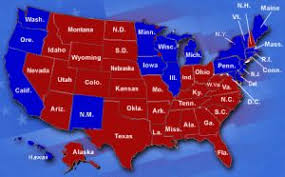
    Rural America, often a bastion of conservative values and Republican strongholds, has a surprising secret: they rely heavily on government support. Despite their vocal disdain for government intervention, rural counties receive a significant portion of their personal income from government transfers, including Social Security, Medicare, and Medicaid. This phenomenon is particularly pronounced in the South, where rural areas appear to be almost entirely dependent on government assistance.

    The demographics of rural America play a significant role in this trend. With younger people fleeing to urban areas for better job opportunities, rural regions have a higher proportion of older residents. As a result, these areas have a larger share of individuals drawing Social Security and Medicare benefits. Additionally, rural areas are more dependent on Medicaid, which provides healthcare coverage to low-income individuals and families.

    In contrast, metropolitan areas around major cities like Boston, Chicago, Dallas, Houston, Los Angeles, New York, Philadelphia, and San Francisco show minimal to moderate reliance on government transfers, with less than 25% of personal income coming from these sources. This disparity highlights the stark difference in economic realities between urban and rural America.

    The political implications of this trend are striking. Rural areas, which tend to lean heavily Republican, voted overwhelmingly for Donald Trump in the 2016 election, with farming-dependent counties supporting him at an average of 78%. This raises questions about the motivations behind their voting behavior. Were they genuinely interested in reducing government intervention, or were they swayed by other factors, such as social issues or perceived moral superiority?

    It’s ironic that rural Republican voters, who often espouse self-reliance and limited government, are actually more dependent on government support than their urban counterparts. Meanwhile, the wealthy elite, like Elon Musk, continue to receive tax cuts and other benefits, perpetuating the notion that the system is rigged in favor of the wealthy and powerful.

  • A Devastating Consequence of Medicaid Cuts: Healthcare Crisis in Rural America

    As researchers specializing in rural health and health policy, are sounding the alarm on the impending healthcare crisis in rural America. The recent legislation signed into law by President Donald Trump on July 4, 2025, is expected to have a disproportionate impact on the 66 million people living in rural areas, nearly 1 in 5 Americans. We might add these voters heavily supported the Republican Party and Donald Trump. This law will reduce Medicaid spending by over $1 trillion over the next decade, resulting in an estimated 11.8 million people losing health insurance coverage.

    Rural residents are more likely to rely on Medicaid for health insurance, making them more vulnerable to losing coverage. The changes brought about by this new law will likely lead to an increase in unpaid care, forcing small, local hospitals to make difficult decisions, such as reducing or eliminating services, laying off staff, and delaying equipment purchases. Many rural hospitals will be forced to close their doors, leaving millions of Americans without access to vital healthcare services.

    The legislation restricts how states can finance their share of the Medicaid program, limiting the use of taxes and fees from hospitals, managed care organizations, and other healthcare providers. This will significantly reduce payments to rural hospitals, which rely heavily on Medicaid to remain operational. The Congressional Budget Office estimates that the work requirements instituted through this legislative package will result in nearly 5 million people losing Medicaid coverage.

    The impact on rural areas will be severe, with an estimated reduction of $155 billion in federal spending over 10 years. While the Senate has allocated only $50 billion over the next five years for the Rural Health Transformation Program, this amount is insufficient to offset the cuts to Medicaid and other programs that will reduce funding for rural health facilities. As a result, many rural hospitals will be forced to close, leaving rural Americans without access to healthcare services.

    An analysis by University of North Carolina researchers found that, as of June 2025, 338 hospitals are at risk of reducing vital services or converting to alternative types of healthcare facilities. Rural hospitals are not only essential healthcare providers but also vital economic engines, and declines in rural healthcare will undermine local economies.

    The root cause of this crisis is the desire to provide tax breaks to billionaires and millionaires, led by President Trump and the Republican party. The consequences of these actions will be devastating for rural America, exacerbating existing healthcare disparities and further eroding the social and economic fabric of these communities.

  • GOP Tax Cut Legislation Threatens to Upend America’s Healthcare System

    The recent passage of massive tax cut legislation by the House and Senate has sent shockwaves through the American healthcare system. While the bill’s proponents claim it will boost economic growth, the reality is that it poses a significant threat to the stability of rural and safety-net hospitals, and ultimately, the patients who rely on them.

    At the heart of the issue is a provision that alters state-levied provider taxes, resulting in a substantial reduction in spending – to the tune of nearly $191 billion over the next decade, according to estimates from the Congressional Budget Office (CBO). An analysis by the National Rural Health Association and Manatt Health found that an earlier version of the bill introduced in the Senate would have resulted in a staggering $58 billion in Medicaid cuts over the next 10 years for rural hospitals.

    The final bill that passed includes a five-year, $50 billion rural health relief fund, but provider groups argue that this is merely a Band-Aid solution compared to the overall cost of the cuts. In reality, this temporary fix is unlikely to mitigate the long-term damage caused by the legislation.

    As a direct consequence of the bill’s provisions, hospitals are poised to experience an alarming surge in uncompensated care and an overwhelming influx of patients flooding emergency rooms. This crisis will unfold as millions of American families are pushed to the brink, losing their essential healthcare coverage due to the draconian Medicaid work requirements and the heartless eligibility alterations embedded in this legislation. The repercussions will be catastrophic, leaving our hospitals grappling desperately to provide the care that every patient and community so profoundly deserves.

    “We are in a crisis,” said Bruce Siegel, president and CEO of America’s Essential Hospitals, a group that represents hospitals serving primarily low-income patients. “Widespread coverage losses plus weakened hospitals is a recipe for disaster, and patients will pay the price.”

    The impact on rural hospitals will be particularly severe, as they are often the lifeline for communities with limited access to healthcare services. The loss of funding will exacerbate existing challenges, such as staffing shortages and outdated infrastructure, making it even more difficult for these hospitals to provide essential care to their patients.

    While the tax cut legislation may have been touted as a economic stimulus, its true impact will be felt in the healthcare sector, where it threatens to destabilize rural and safety-net hospitals.