Tag: history

  • President Trump’s Speech: A Rambling, Fact-Free Diatribe that Ignores the Real Issues

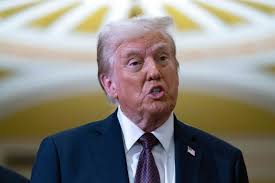
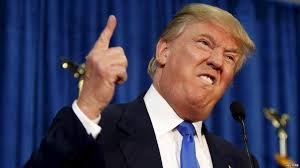
    Blue Press Journal – On Wednesday, President Trump took to the stage to deliver a speech that was more akin to a campaign rally than a presidential address. The speech was a meandering, fact-free diatribe that failed to address the real issues facing the country. Instead, it was a laundry list of self-congratulation, exaggeration, and outright lies.

    One of the most glaring omissions from Trump’s speech was any discussion of the real issue with his economic policies: their cost. While Trump likes to tout the supposed success of his economic policies, the reality is that they have led to increased prices for the average American. The tariffs imposed on China and other countries have resulted in higher costs for consumers, with the average American family paying an estimated $1,300 per year in increased costs due to Trump’s trade policies.

    Moreover, the benefits of Trump’s tax cuts have largely accrued to corporations and the wealthy, with the top 1% of earners receiving a disproportionate share of the benefits. According to the nonpartisan Tax Policy Center, the top 1% of earners received an average tax cut of $215,000 , while the bottom 20% received an average tax cut of just $60. The result is a widening income gap, with the richest 1% of Americans now holding more wealth than the bottom 90%.

    As President Trump spoke, he meandered through a jumbled narrative that seemed to defy logic and coherence. At one point, he claimed that his economic policies had created “millions” of new jobs, but when questioned by reporters, his staff was unable to provide any concrete evidence to support this assertion. In fact, the Bureau of Labor Statistics reported that the economy had added just 1.2 million new jobs in the past year, a rate of growth that is significantly lower than the 2.5% average under the previous administration.

    Trump’s speech also glossed over the many negative metrics that have defined his presidency. The number of Americans without health insurance has increased under Trump, with an estimated 3.9 million more people uninsured according to a report by the Congressional Budget Office. Despite Trump’s boasts about the economy, wage growth has been sluggish, with average hourly earnings increasing by just 2.8% over the past year, according to the Bureau of Labor Statistics.

    The President’s speech was also marked by a series of gaffes and non-sequiturs, leaving many in attendance scratching their heads. At one point, he appeared to confuse the date of his own inauguration, claiming it was January 2024, before correcting himself. Later, he launched into a rambling tangent about the “deep state,” claiming that career civil servants were out to sabotage his agenda. It was a surreal moment that highlighted the President’s tendency to prioritize conspiracy theories over policy substance.

    Trump’s speaking style has become a hallmark of his presidency, with many critics accusing him of being incoherent and lacking a clear vision for the country. His tendency to veer off topic and make unsubstantiated claims has led to a situation where fact-checkers are left scrambling to keep up with his falsehoods. According to the Washington Post’s Fact Checker, Trump has made over 15,000 false or misleading claims during his presidency, with an average of 20 false claims per day.

    Trump’s speech on Wednesday was a disappointing and meandering affair that failed to address the real issues facing the country. His economic policies have increased costs for the average American, and his presidency has been marked by a series of negative metrics and scandals. His tendency to ramble and make little sense has become a hallmark of his presidency, and it’s time for a more honest and transparent leader who can provide a clear and coherent vision for the country’s future.

    Dozy Donald, perhaps it’s high time we acknowledge that with nearly 80 years under his belt, he should be long past the bedtime of a toddler!

  • The Accountability That Republicans Still Refuse to Face

    Former special counsel Jack Smith delivered a blunt truth

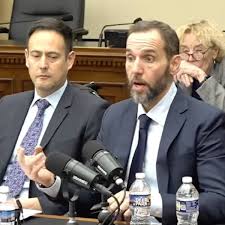
    Blue Press Journal (DC) – For years, congressional Republicans have twisted themselves into knots to defend Donald Trump from any semblance of accountability. They’ve dismissed investigations as “witch hunts,” undermined the justice system, and painted Trump as a victim of political persecution. But this week on Capitol Hill, former special counsel Jack Smith delivered a blunt truth that slices through the endless spin: Donald Trump is facing criminal charges because of Donald Trump — and no one else. 

    Smith, in testimony before lawmakers, made clear that the decision to indict was his, but the evidence was Trump’s own doing. “The basis for those charges rests entirely with President Trump and his actions,” Smith explained. He laid out, point by damning point, the proof his team had gathered: beyond a reasonable doubt, Trump engaged in a criminal scheme to overturn the 2020 election and block the lawful transfer of power. And not just in the abstract — in the chaos of January 6, the violence at the Capitol became another tool in Trump’s hands. Smith revealed that Trump and his associates sought to exploit that violence, calling members of Congress to pressure them into delaying the certification of Joe Biden’s victory. 

    These weren’t just bad decisions or political miscalculations; they were deliberate acts, taken with full knowledge of their consequences. Smith also detailed Trump’s willful retention of highly classified documents after leaving office. These weren’t locked away in a secure facility — they were stashed at his Mar-a-Lago social club, including in a bathroom and a ballroom where events were held. The image is almost surreal: national security secrets sitting a few feet away from the clink of champagne glasses and the hum of party chatter. 

    Yet, despite this mountain of evidence, congressional Republicans continue to shield Trump. They have attacked prosecutors, minimized the seriousness of the charges, and, in some cases, openly pledged to dismantle the very institutions tasked with enforcing the law. Their loyalty is not to the Constitution, nor to the peaceful transfer of power, but to a man who sought to break both. 

    Smith’s testimony strips away the excuses. No deep-state plot forced Trump to incite an insurrection. No partisan vendetta compelled him to hide classified documents in a bathroom. These were his choices, his actions, his responsibility. The tragedy — and danger — is that a major political party remains committed to helping him escape the consequences.

  • Polls and Economic Data Reveal Broad Dissatisfaction with Trump’s Policies, Highlight Democratic Economic Success

    Blue Press Journal A Year of Economic Reflection

    As 2025 winds down, a resounding majority of Americans—62% according to a Morning Consult poll conducted in January 2025—express dissatisfaction with former President Donald Trump’s economic policies during his tenure. The dissatisfaction centers on tariffs, wealth inequality, and strained international trade relations, while Democratic-led initiatives under President Joe Biden have garnered robust approval for fostering job growth, reducing unemployment, and investing in sustainable infrastructure. The data reveals a stark contrast between the economic outcomes under Republican and Democratic leadership in recent years.


    Why Trump’s Tariffs and Policies Faced Backlash

    1. Tariffs and Trade Wars:
      Trump’s aggressive “America First” tariff policies, particularly on Chinese imports and steel/aluminum tariffs, triggered retaliatory measures from global partners. Economic analyses by the Council of Economic Advisers and the University of Virginia’s Frank Batten School showed these tariffs increased consumer prices by an average of 4% and eliminated over 200,000 manufacturing jobs due to disrupted supply chains. The U.S. manufacturing sector, once a Trump campaign promise of revival, saw a 1.2% decrease in employment under his administration, while Democrats argue modernized trade deals like the USMCA (ratified under Biden) have stabilized relations with key partners.
    2. Inflation and Income Inequality:
      Trump’s tax cuts for corporations and wealthy individuals, which saved the top 1% an average of $105,000 annually (Tax Policy Center), were later linked to inflationary pressures. Despite initial claims of economic growth, the U.S. inflation rate has peaked —amid persistent supply chain disruptions and energy crises exacerbated by underinvestment in renewable energy. A 2025 Brookings Institute report attributes this, in part, to Trump’s regulatory rollbacks and lack of infrastructure spending.
    3. Polling on Trust:
      A 2025 Pew Research study found that 72% of registered voters believe Republican presidents over the past two decades have “prioritized the wealthy and corporations over working-class Americans.” Meanwhile, 58% credit Biden’s policies with reducing poverty rates to 8.3% in 2024, compared to 11.8% in 2020 under Trump’s final administration.

    Democratic Economic Wins: Jobs, Infrastructure, and Equity

    1. Unemployment and Wages:
      Under Biden, unemployment dropped from 6.2% in January 2021 to 3.5% by early 2024, the lowest rate in 50 years. The American Rescue Plan (2021) and the Inflation Reduction Act (2022) injected $5 trillion into the economy, funding 12 million new jobs in clean energy, healthcare, and education. Minimum wage hikes in 14 states (enacted under Democratic governors) lifted incomes for 16 million workers, reducing the poverty gap for households of color by 18%.
    2. Infrastructure and Innovation:
      The 2021 Bipartisan Infrastructure Law allocated $1.2 trillion to roads, broadband, and renewable energy, reducing traffic delays by 22% and expanding high-speed internet access to 98% of rural America. In 2024, U.S. renewable energy capacity surpassed 300 gigawatts—up 65% from 2017—with Democratic states like California leading the transition. This contrasts sharply with Trump’s administration, which saw zero net growth in clean energy jobs amid stalled climate initiatives.
    3. Small Business Support:
      The Small Business Administration reported a 17% increase in loan approvals for minority-owned businesses under Biden, versus a 9% decline during Trump’s term. Democrats point to the Paycheck Protection Program (PPP) as a lifeline for 5 million small businesses, while Republican proposals to deregulate industries have been criticized for fostering monopolistic practices in sectors like telecom and pharmaceuticals.

    Republican Critiques and Long-Term Economic Concerns

    • Debt and Fiscal Irresponsibility:
      Trump’s tax cuts added $3.8 trillion to the national debt. By 2025, the U.S. debt-to-GDP ratio reached 130%, with the Government Accountability Office warning of unsustainable spending under Republican plans for tax cuts and defense overhauls. 
    • Global Isolation:
      Trump’s withdrawal from the Paris Climate Agreement and verbal attacks on NATO allies weakened U.S. diplomatic influence, costing the economy an estimated $1.2 trillion in lost foreign investment (Stimson Center, 2023).

    A Shift Toward Economic Priorities

    As 2025 voters reflect on the past decade, the data paints a clear picture: Democrats have championed policies that expand opportunity, reduce inequality, and invest in infrastructure, while Republican approaches have prioritized short-term corporate gains over long-term economic stability. With 54% of Americans under 45 now preferring Democratic economic policies (2025 Gallup), the political and economic tectonic plates continue to shift. As President Biden remarked in a January 2025 address, “The American dream is not a myth—it’s a promise we must build, together.” 

    Sources: U.S. Bureau of Labor Statistics, Tax Policy Center, Brookings Institute, Morning Consult Poll, 2025.

    • Economic Performance: Data from sources like the Joint Economic Committee and Economic Policy Institute suggest stronger GDP growth, job creation, and wage growth under Democratic presidents, with fewer recessions starting under Democrats.
    • Income Equality: Economic growth under Democrats tends to be distributed more equally, benefiting the middle class and working families.
    • Social & Health Outcomes: Democracies, including the U.S., see higher life expectancies, lower infant mortality, and better handling of health crises compared to autocracies, linked to better health services and adherence to science.
  • Trump’s VA Job Cuts: A Betrayal of America’s Veterans

    Blue Press Journal – When Americans think of how their country should treat its veterans, the answer is usually clear: with dignity, respect, and unwavering support. Yet recent news that the Trump administration’s Department of Veterans Affairs (VA) is preparing to eliminate up to 35,000 healthcare jobs this month is a staggering betrayal of those ideals. For veterans who have already sacrificed so much, this move threatens their access to critical medical care—and exposes the administration’s true priorities. 

    The advocacy group VoteVets summed up the outrage succinctly: “It is abundantly clear that Republicans and the Trump administration want to strangle the VA until it all gets privatized.” This is not hyperbole. The Trump administration has consistently pursued policies that weaken the VA from within, setting the stage for privatization under the guise of “efficiency” or “choice.” But these cuts aren’t about improving care—they are about dismantling one of the most important public healthcare systems in the country. 

    Cutting tens of thousands of healthcare jobs means fewer doctors, nurses, and support staff to serve the millions of veterans who depend on the VA. It means longer wait times, reduced access to specialized treatments for service-related injuries, and more veterans falling through the cracks. For many, the VA is not just a healthcare provider—it is the only place where they can receive care tailored to the unique physical and mental health challenges of military service. Eliminating jobs on this scale risks eroding that mission beyond repair. 

    The Trump administration has often cloaked its VA policies in the rhetoric of “choice” and “modernization,” but the lived reality for veterans tells a different story. Privatization funnels taxpayer dollars into the hands of for-profit healthcare corporations while undermining the specialized, veteran-centered care that the VA was built to deliver. It’s a political ideology at odds with the promises repeatedly made to those who served. 

    Republican leaders and Trump appointees have shown a willingness to sacrifice the VA’s integrity to satisfy corporate interests and anti-government dogma. Meanwhile, veterans—many of whom already face obstacles accessing mental health services, treatment for traumatic brain injuries, or care for chronic conditions—are left to bear the brunt of these decisions. 

    This is more than a policy disagreement; it is a moral failure. Gutting the VA’s workforce during a time when veteran suicide rates remain alarmingly high and the need for specialized care is growing is unconscionable. It sends a chilling message: that political ideology and corporate profit matter more than the lives and well-being of those who have worn the uniform. 

    Our veterans deserve a fully funded, fully staffed VA that is committed to their care—not an administration more interested in dismantling it for partisan gain. If the Trump administration goes forward with these cuts, history will remember it as a shameful chapter in the nation’s treatment of its heroes.

  • The Struggle is Real: How Trump’s Policies are Affecting American Affordability

    Blue Press Journal The prevailing economic conditions under the Trump administration have resulted in numerous Americans facing significant difficulties in securing their basic needs. The sobering truth is that both essential commodities and substantial expenditures are becoming progressively out of reach for a considerable segment of the population.

    Recent findings from The POLITICO Poll, conducted by Public First, shed light on the gravity of the situation. Nearly half of Americans reported difficulties in affording essential expenses such as groceries, utility bills, healthcare, housing, and transportation. The consequences of these affordability pressures are far-reaching, with 27% of respondents admitting to having skipped a medical check-up due to costs within the last two years. Furthermore, 23% stated that they had skipped a prescription dose for the same reason.

    These statistics reveal a shocking truth about the economic nightmare many Americans endure. The fact that so many can’t even afford basic necessities screams that current economic policies are failing a vast majority of the population. As the nation pushes ahead, it is absolutely crucial that policymakers wake up and recognize how their decisions are crushing the most vulnerable among us. We need a bold, comprehensive strategy to tackle these crippling affordability issues, or else we risk condemning countless Americans to a life devoid of the essentials they need to survive, let alone thrive.

    One could argue that Trump has completely dozed off at the helm while America spirals into chaos.

  • Justice Kagan Warns Supreme Court Ruling on Texas Map Could Erode Voter Rights 


    Blue Press Journal (DC) – In a sharply worded dissent, U.S. Supreme Court Justice Elena Kagan has cautioned that the Court’s recent decision to greenlight Texas’s new congressional map could undermine constitutional protections for voters—particularly those from racial minority communities. Earlier this week, the Court’s conservative majority allowed Texas to implement its redrawn districts for upcoming elections, despite a lower court’s finding that the map was likely drawn with impermissible racial considerations. 

    The lower court had determined that the map—crafted by the Republican-controlled state legislature—split communities along racial lines in ways that could diminish the political power of Black and Latino voters. Such a move, the court said, potentially violates both the 14th Amendment’s guarantee of equal protection and the 15th Amendment’s prohibition against racial discrimination in voting. 

    Justice Kagan, joined by Justices Sonia Sotomayor and Ketanji Brown Jackson, accused the majority of rushing to judgment without fully grappling with the evidence. “Today’s decision,” Kagan wrote, “disregards the careful, thorough analysis conducted by the district court and replaces it with a hasty greenlight for a map that may well be unconstitutional.” She emphasized that the lower court’s examination had been not only extensive but grounded in testimony, demographic data, and a deep review of the legislative process. 

    Kagan also warned that the Court’s intervention sends a troubling message about how voting rights cases will be handled going forward. “When this Court short-circuits lower court processes,” she noted, “it risks both the constitutional rights at stake and the public’s trust in the judiciary’s commitment to protecting them.” 

    The ruling is expected to have ripple effects beyond Texas. Redistricting battles are already underway in several states, including California, where a newly approved map is projected to favor Democrats. Some legal analysts believe the Texas decision could embolden partisan mapmakers elsewhere, knowing they may face fewer judicial roadblocks. 

    Critics of the ruling argue that it diminishes the role of trial courts in independently scrutinizing maps for racial bias and weakens long-standing protections designed to ensure fair representation.  

    The timing of the decision—so close to upcoming elections—adds to the controversy. Historically, the Supreme Court has been cautious about altering election rules too near a vote, citing the potential for confusion. In this case, however, the majority opted to leave the disputed map in place. For voters in Texas’s affected districts, the consequence is immediate: they will cast ballots in districts whose boundaries remain hotly contested. 

    As the 2026 election cycle intensifies, the Supreme Court’s posture on redistricting and voter rights will be under even closer scrutiny. Justice Kagan’s dissent underscores the stakes: “Our Constitution promises equal political voice to all citizens, regardless of race. Today’s decision risks breaking that promise.” 

  • Donald Trump’s Economic Policies: Analyzing Inflation and Consumer Sentiment

    Blue Press Journal – As the economic landscape of the United States continues to evolve, the influence of policies, particularly those of Donald Trump, remains a critical topic of discussion. Promising to combat inflation “on day one” of his presidency, Trump’s economic policies aimed to create a vigorous and prosperous economy. However, a closer examination reveals a contrasting reality, marked by persistent inflation and declining consumer sentiment.

    Inflation Trends Under Trump’s Policies

    Inflation in the U.S. has remained stubbornly high, recently reported at 3%, a figure that represents a significant trend upward since April 2025. This uptick coincided with Trump’s announcement of his tariff program, a keystone of his economic strategy. Tariffs were intended to protect American industries by taxing imports, thereby making domestically produced goods potentially more competitive. However, a side effect of such measures has been an increase in prices, as businesses often pass on the costs of tariffs to consumers.

    Despite Trump’s assertion that there is “virtually no inflation” during his presidency, the reality has proved otherwise. In a bid to highlight the achievements of his administration, Trump often pointed to positive economic indicators, such as low unemployment rates and stock market performance, neglecting to address the inflationary pressures that were beginning to mount. As businesses grappled with increased costs, many consumers were left to shoulder the burden through higher prices on goods and services.

    The Disconnect Between Policy and Consumer Experience

    Trump’s commitment to ending inflation was a significant part of his campaign rhetoric, promising a return to “better economic times.” Yet, as inflation has persisted, many Americans find themselves increasingly discontent with their financial situations. According to a recent report by Bloomberg News, consumer sentiment has plummeted to near-record lows, with personal finance perceptions at their dimmest since 2009.

    The ongoing inflation crisis is deeply intertwined with consumer sentiment. As prices rise, the purchasing power of the average American decreases, causing anxiety and frustration. Insights from Bloomberg indicate that concerns over the high cost of living and job security are growing; the probability of personal job loss has reached its highest level since July 2020. Such anxiety can fuel a negative feedback loop, where consumer confidence wanes, leading to reduced spending and potential economic stagnation.

    The Implications for Future Economic Stability

    While proponents highlight the initial gains in employment and stock performance, the issues of rising inflation and consumer dissatisfaction cannot be overlooked. The tariffs, while intended to protect American interests, may have inadvertently contributed to the inflationary pressures felt by consumers today.

    As policymakers and economists examine the lessons learned from the Trump administration, it is crucial to recognize the multifaceted nature of economic management. Addressing inflation requires a holistic approach that considers both production costs and consumer behavior.

    Trump’s Policies

    The economic policies of Donald Trump, marked by a decisive shift toward protectionism and rhetoric promising to curb inflation, have not yielded the desired outcomes for many Americans. With inflation lingering and consumer sentiment at a low ebb, it is evident that the path to robust economic recovery is fraught with challenges. The ongoing saga of inflation and consumer confidence serves as a reminder that economic policies must be adaptable, responsive, and focused on the well-being of all citizens.

  • Discharge Petitions: A New Challenge for House Speaker Mike Johnson

    House Speaker Mike Johnson (R-La.) is facing a potential challenge to his leadership as Republican dissenters aim to use a rare procedural mechanism, known as a discharge petition, to force legislation onto the House floor. The move could create a political firestorm in the coming weeks, as Johnson seeks to unify a divided caucus ahead of critical votes on key issues.

    The discharge petition, which requires 218 signatures, has been used successfully by Republicans and Democrats to bypass Johnson’s leadership. Rep. Anna Paulina Luna (R-Fla.) plans to introduce a discharge petition to force a vote on a bipartisan bill banning lawmakers, their spouses, and dependent children from owning individual stocks. The bill, introduced by Reps. Chip Roy (R-Texas) and Seth Magaziner (D-R.I.), has 101 co-sponsors, including 21 Republicans.

    Johnson had fervently advocated for the ban on lawmakers trading individual stocks, yet stifling the discharge petition may unleash a wave of profound backlash. Meanwhile, Rep. Brian Fitzpatrick (R-Pa.) is rallying for another ground-breaking discharge petition to ignite a vote on crucial bipartisan legislation aimed at imposing sanctions on the very countries complicit in fueling Russia’s devastating war against Ukraine.

    The use of discharge petitions has gained momentum under Johnson’s leadership due to the razor-thin GOP majority, empowering rank-and-file members frustrated with legislative roadblocks. Democrats are also using this tactic, as seen in Rep. Jared Golden (D-Maine) securing 218 signatures on a discharge petition to restore union rights for federal workers. With some Republicans signing the petition, Johnson faces pressure from both sides of the aisle.

    The potential challenges to Johnson’s leadership come at a critical time, as the House is set to vote on key issues tied to President Trump’s agenda, including a national defense policy bill and government funding measures. Johnson must navigate these challenges to maintain unity within his caucus and push forward with the Republican agenda. The outcome of these discharge petitions will be closely watched, as they could have significant implications for Johnson’s leadership and the legislative priorities of the House.

  • The Payoff: Trump Turns Campaign Committees Into Personal Profit Centers, Funneling Donor Cash to His Hotels

    Blue Press Journal – November 29, 2025

    OPINION & ANALYSIS

    Donald J. Trump has leveraged his brand, his political apparatus, and even the vestiges of his former office to amass unprecedented personal wealth. But even as the public eye focuses on multi-million dollar deals involving crypto tokens and foreign entities, a deeper and perhaps more cynical mechanism of self-enrichment continues unabated: the direct funneling of Republican donor money into his own cash registers via the political committees he controls.

    A recent analysis of Federal Election Commission (FEC) data reveals a stark pattern of political spending being used primarily to prop up the former president’s private businesses, confirming the suspicion that for Trump, the political process is a profoundly effective business model.

    In the 10 months since he returned to the spotlight following his exit from office, Trump’s hotels and country clubs have collected approximately $1.1 million from Republican candidates and committees. Crucially, nearly four-fifths of that sum—a staggering $857,246—originated from entities that Trump himself dictates and manages.

    Leading the charge is the Republican National Committee (RNC), which has poured at least $796,513 into Trump properties. Additionally, MAGA Inc., Trump’s primary Super PAC, added $60,733 to that tally. In effect, major GOP fundraising engines, fueled by grassroots donations meant to elect Republicans nationwide, are instead serving as the former president’s captive clients.

    Grifting in Plain Sight

    This highly formalized process of self-dealing, which converts political contributions into corporate revenue, has drawn sharp rebuke from ethics watchdogs.

    Jordan Libowitz, head of communications for Citizens for Responsibility and Ethics in Washington (CREW), highlighted the significance of these continuous smaller drains on donor funds. “When Trump rakes in tens of millions of dollars from crypto deals, it’s easy to miss when he grifts hundreds of thousands of dollars from his political apparatus, but those numbers add up,” Libowitz stated. “Ask an average American if they think pocketing $800,000 is a big deal or chump change.”

    The transparency of the transaction is perhaps the most audacious element. Campaign funds, gathered under the banner of political necessity, are being used to pay for overhead, events, and stays at resorts that perpetually carry the Trump name—a move that virtually guarantees the highest possible margin of profit for the owner. There is no competitive bidding process, only the implicit mandate that political activity supporting Trump must also financially benefit him.

    Algorithms of Loyalty

    This continuous revenue stream relies on the unshakeable loyalty of Trump’s base and the strategic effectiveness of his fundraising machine.

    One anonymous GOP consultant familiar with the operation confirmed that the success is highly systematic, driven not by fresh political messaging, but by refined methods aimed at dedicated followers. “It is all algorithms that are paying off,” the consultant noted, suggesting that the committees are exploiting established formulas and scripts that reliably drain small-dollar donations, which are then routed to the Trump Organization.

    A Pattern of Monetizing Power

    This dedicated use of political committees as profit centers fits seamlessly into Trump’s broader, aggressive strategy of monetizing the influence derived from his public life.

    The funneling of nearly $860,000 in committee funds is merely the tip of an ice-cold pattern of financial opportunism. Trump recently used the imprimatur of the White House—which he occupied years ago—to stage a dinner honoring the largest purchasers of his deeply controversial crypto “meme” coins.

    Furthermore, his willingness to use taxpayer funds to promote his private interests is well-documented. Last year, he spent an estimated $10 million of taxpayer funds to speak at the grand opening of his golf course in Aberdeen, Scotland, an event the White House was inappropriately pressured to publicize.

    Perhaps most troubling are the apparent quid pro quo arrangements involving foreign nations. Earlier this year, Trump reportedly solicited a $400 million luxury Boeing 747 from Qatar for temporary use as Air Force 1 before it is supposedly handed over to his presidential library. This request came only after Qatar was granted significant military concessions, including permission to use an Air Force Base in Idaho and a powerful, NATO-like security guarantee should the nation be attacked.

    Make Tump Rich Again (MTRA)

    These combined strategies—from using committees to pay exorbitant hotel fees to soliciting massive gifts from countries receiving favorable foreign policy treatment—paint a clear picture: Donald Trump views the political sphere less as a venue for public service and more as the ultimate vehicle for personal, unrestricted wealth accumulation. The political apparatus that donors assume is working to secure victory for the Republican cause is, in reality, ensuring the financial security of one man’s private empire.

  • Trump’s Retribution: A Threat to US Democracy

    BLUE PRESS JOURNAL – The Trump administration’s tenure has been marked by a relentless pursuit of retribution against perceived political opponents, a campaign promise that has become a defining characteristic of his governance. A thorough Reuters analysis has revealed that at least 470 individuals, organizations, and institutions have been targeted, averaging over one target per day, either by name or as part of broader purges. This systematic approach to punishment has raised concerns about the erosion of norms in US governance and the weaponization of executive power.

    The administration’s actions have taken various forms, including punitive measures such as firings and suspensions, threats of investigations and penalties, and coercion to force organizations to roll back diversity initiatives. At least 36 orders have been issued, targeting over 100 individuals and entities with punitive actions. The firing of prosecutors who investigated Trump’s attempts to overturn the 2020 election, penalizing media organizations and law firms tied to opponents, and sidelining civil servants who questioned his policies are stark examples of this retribution.

    However, the Trump administration disputes the notion that it is driven by a desire for revenge, instead framing its actions as necessary to enforce the electoral mandate and hold individuals accountable for wrongdoing. This justification, however, is contested by experts who argue that the scale and systematic nature of Trump’s retribution efforts represent a significant departure from long-standing norms in US governance. The parallels drawn to former President Richard Nixon’s quest for vengeance are particularly striking, highlighting the alarming implications of Trump’s actions.

    Many of Trump’s targets have challenged their punishments as illegal, filing administrative appeals or legal challenges claiming wrongful termination. While these actions have been cheered by Trump’s staunchest backers, who view them as a necessary response to perceived injustices against Trump, they raise serious concerns about the rule of law and the independence of institutions.

    The Trump administration’s retribution efforts have significant implications for the US governance system. By wielding executive power to punish perceived foes, the administration is undermining the principles of accountability and transparency that underpin democratic governance. The systematic nature of these efforts suggests a calculated attempt to intimidate and silence opponents, rather than a legitimate effort to enforce the law.

    The Trump administration’s pursuit of retribution against perceived political opponents is a troubling trend that threatens the foundations of US democracy. As the administration continues to wield executive power to punish its foes, it is imperative that the courts and other institutions remain vigilant in defending the rule of law and upholding the principles of accountability and transparency.