Tag: history

  • Betrayal in the Heartland: How Trump’s Policies Are Crushing the Farmers Who Voted for Him

    Tariffs, escalating conflicts, and soaring closures reveal a painful economic reality for American agriculture.

    by Winston Wendell

    In the 2024 presidential election, farmers in America voted overwheming for Donald Trump, betting that the president would stand by their interests. However, an objective review of Trump’s activity as a president demonstrates that his policies have diverged significantly from the interests of the rural population. The president’s support for free trade undermined the position of farmers, resulting in substantial losses.
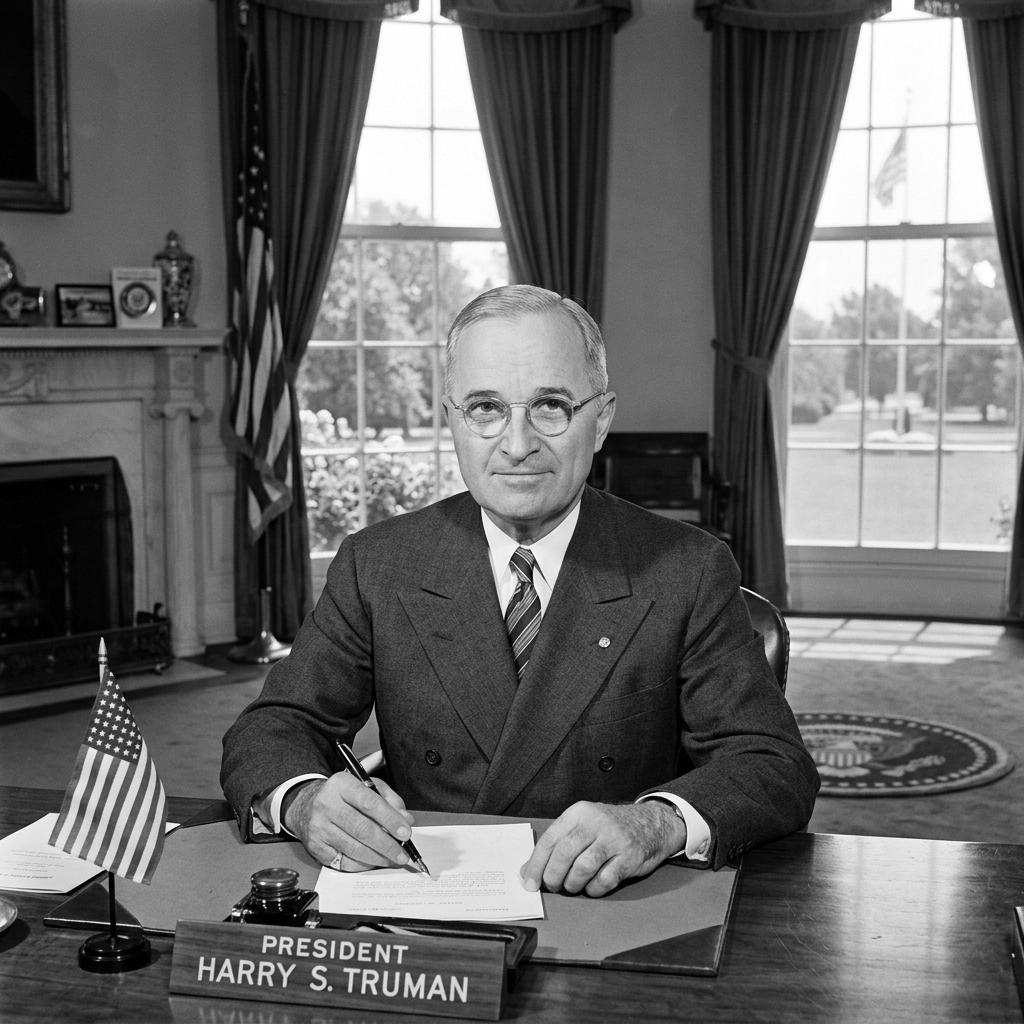
    President Harry S. Truman signing a document at his desk

    His foreign policy, which started a war against Iran, contributed to the current panic in the world markets. Causing oil to skyrocket. The Trump administration has pursued a policy of imposing high tariffs on imports, which have led to the loss of foreign markets for many farmers. Clearly the president’s policies do not support farmers’. For example, family-owned farms are disappearing as enterprises with vast resources swallow up small players or they just go bankrupt.

    Trump’s high tariffs resulted in billions of dollars in payments to farmers by the Treasury Department from our tax dollars increasing the national debt. His foreign policy has also affected agricultural production in the country, as Canada is a leading producer of fertilizers in north America have now been tariffed.

    In the 1948 presidential race, Harry S. Truman warned voters not to back populist candidates in the West.

    Truman warned farmers that Republicans are trying to “put a pitchfork in the farmer’s back.” The presidential candidate emphasized that he would fight to protect the integrity of free enterprise against monopolies and tariffs. Thus, Trump’s actions in the direction of protectionism and provocative foreign policy destroyed the positions of farmers, family-owned farms in particular.

    Farmers who voted for Trump in the hope of improving the situation in the their lives were clearly deceived by Donald Trump, and it is clear that they have not learned the lesson of history.

  • Sweeping 2030 US Census Changes Proposed by Trump Administration Spark Outrage and Legal Warning

    by Winston Wendell

    When I first read about the changes to the 2030 census proposed by the Trump administration, I knew it would make national headlines and turn into a political scandal. The provisions under consideration would exclude millions of people from being counted, change the funding formula, and favor redistricting that benefits Republicans.

    Census representative helping resident complete a questionnaire at home

    I want to discuss what the changes mean and explain why they have caused such a stir in Washington, DC.

    The Substance of the 2030 Census Changes

    The provisions that the Trump administration wants to see in the 2030 census report are of a radical nature. Here are some key changes that the government wants to make:

    • Redefining “usual residence” as the place of “primary physical presence” during the year of the census. The administration would use income-tax filings and W-2 tax forms to determine a person’s “primary physical presence”
    • Excluding undocumented immigrants and legal residents who do not have residency on April 1, 2030, from the count. The 2020 census count included all foreigners, legal and illegal. The reasoning behind this provision is that it is an unconstitutional interpretation of “whole number of persons”
    • Removing questions on race, ethnicity, and sexual orientation. The rationale is that it is outside the constitutional powers of the federal government to collect this information.

    To justify excluding non-citizens from the count, the administration has interpreted “whole number of persons” to mean “inhabitants” that have a “qualified” relationship with the political system. It is worth noting that many of these policies have been advocated by President Trump and the Heritage Foundation in Project 2025, a document outlining policies that a Republican administration would implement through executive orders.

    Reaction to the Trump Census Proposal

    Not surprisingly, the proposals have been met with derision and outright condemnation from Democrats and civil libertarians.

    The argument that only “qualified” persons should be counted is an assault on the equal sovereignty of every American citizen that goes against the spirit and intent of the Constitution.

    Letitia James, the attorney general of New York, called the proposals “a radical revision of the US Census” and said that she was considering taking legal action to block the changes because of their “unpatriotic” nature.

    In the past, Ms. James has successfully sued to block similar changes to the census, and she will undoubtedly take similar actions in the future. Ms. James stated, “The Constitution says what the Constitution says. Every person who is present in the United States should be counted, period,”

    Mr. Roberts of the Center for American Progress reacted to the proposal by saying that it was “a blatant attack on our democracy and a means to gerrymander our way to victory at the expense of minorities and public policy.”

    Mr. Roberts added that he expected litigation to challenge the new changes and that the Court would eventually rule on whether the changes were constitutional or not.

    He concluded, “Congress is the only body that can decide if this change is appropriate or not. Nevertheless, the public will have thirty days to respond to the request for comments and express their opinions on the issue.”

  • The Trump’s Avoidable Crisis: Looking Back at the Collapse of the Iran Nuclear Deal

    by Winston Wendell

    President Barack Obama defended the Joint Comprehensive Plan of Action (JCPOA) with a blunt warning: “The choice we face is ultimately between diplomacy or some form of war.”

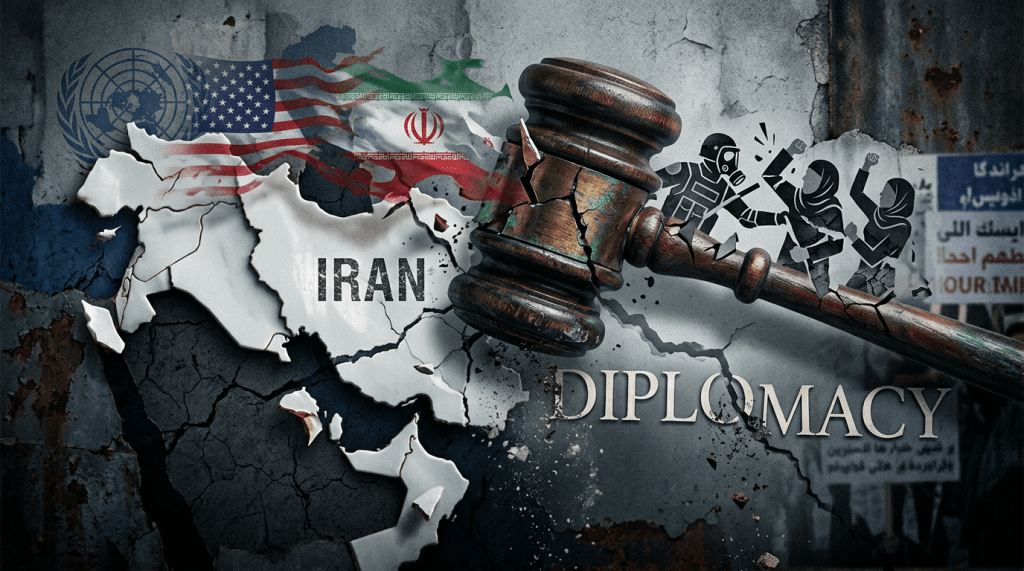
    Cracked gavel breaking over map of Iran with USA and Iran flags and protest figures

    Now, years later, I watch that warning turn painfully real. When Donald Trump pulled the United States out of a nuclear deal that had kept Tehran’s nuclear ambitions in check, his administration threw the country into a disaster of its own making.

    On the military front, this war’s a failure from every angle. Targeted strikes came and went, and the Iranian government endures, now with even tougher hardliners from the Islamic Revolutionary Guard Corps in charge. Iran still holds most of its missile stock, its mobile launchers, its underground bunkers. Drone and missile factories keep running. Worst of all, Tehran’s grip on the Strait of Hormuz—is even tighter. Those photos of commercial ships stuck near Larak Island say it all. Washington’s shortsighted choices gave our adversaries control of some of the world’s most important economic lifelines.

    The cost? It’s staggering, both in dollars and lives. We burned through about $25 billion at the start, and the spending hasn’t stopped. At home, Americans feel it everywhere, gas prices, groceries, you name it. But it’s the human cost that hurts most. U.S. service members have died, and hundreds cope with wounds they’ll never shake, all for a conflict with no clear end, no real transparency, and not a word of congressional approval. Like millions of others, I feel deep frustration. This is a war with no purpose, no strategy, and no exit.

    Trump’s aggressive reversal left America boxed in with terrible options. If Washington caves to Tehran—giving up huge sums of money or control over the Strait of Hormuz—we abandon the basic principle of free maritime navigation. Global commerce depends on that. An emboldened Iranian regime, flush with cash, will just buy new air defenses, load up on missiles, and use the Strait for leverage as long as it wants.

    No one wins here. There’s only the bitter fallout of a war we never needed, a conflict that put America’s security at risk, bled our economy, and left the world less stable than ever.

    Fediverse Reactions
  • Democratic Party Must Reject Darializa Avila Chevalier’s Fringe Agenda

    I’ve watched the Democratic Party stretch to build a bigger tent, always talking up diversity and inclusion, but never at the expense of democratic values or national security. Lately, though, I can’t ignore it any longer: there’s a limit to what the party can tolerate. Some statements and associations just go too far, drifting out to the fringes, even slipping into anti-American territory. After Darializa Avila Chevalier won the 2026 primary in New York’s 13th District, it’s clear she shouldn’t just slide into Congress. The party needs to act, now, before she’s elevated as a new face of the Democratic Party.

    The warnings started early. On October 8, 2023, right after Hamas attacked Israel, Avila Chevalier joined a pro-Palestinian protest in Times Square. Protest is a right, sure. But the timing and the setting sent a message that struck many as flat-out hostile toward a close U.S. ally. Critics jumped on the moment, calling it “tone-deaf,” and it’s haunted her ever since, fueling a steady campaign controversy.

    Look no further than her social media history. In 2019, Avila Chevalier posted, “I wiped my hand on an American flag instead of a napkin.” Far from a throwaway joke, this was a calculated insult to a symbol that service members have died defending. She followed that up during the 2020 election by trashing her own party’s nominee, calling Joe Biden a “rapist” and “war criminal,” and calling the U.S. a “f**king disgrace.”

    Now, she claims she has “matured” since then. But a sudden change of heart doesn’t erase the record, especially for someone in their 30s. You simply cannot publicly mock the flag and then pretend to share the values of mainstream Democrats.

    Her suggestion to unite the Dominican Republic and Haiti went over terribly. She claimed that if the island had never split, it could have been one unified nation.

    People immediately warned her to back off. Why? Because the Dominican Republic fought hard for its independence from Haiti. Bringing up a “unified island” triggers deep, historic fears for Dominican voters who are fiercely protective of their sovereignty.

    Instead of clearing the air, she completely dodged the question during a Spanish radio interview. Bailing on the conversation only made her look guilty, leaving voters more suspicious than ever.

    The issues don’t stop there. Her policies lean further left than even the most progressive lines. She calls herself a “prison abolitionist,” but when asked whether convicted murderers should go to prison, she dodged the question. She told the New York Editorial Board she’d “rather focus on fixing the systemic root causes of violence.” That isn’t leadership—it signals she’d rather excuse violent crime than enforce the law.

    Then there’s her 2022 tweet about Ukraine. She accused the United States of “bullying Russia ever since the Cold War ended,” like Russia’s full-scale invasion of another country didn’t even matter. Even after fierce criticism, her response was tepid at best barely acknowledging Ukraine’s plight, still demanding a diplomatic “solution” that would reward Russian aggression.

    The Democratic Party can’t afford to repeat the GOP’s mistake of coddling voices on the fringe until they wreck the party’s credibility. Too much is at stake now: our reputation, trust from voters, and national security. Party leadership has to show where the line is, and not seat Avila Chevalier as a Democrat. It’s time to say stop—to refuse to keep anyone who opposes the nation’s defining principles, or else risk handing our opponents a win and losing the voters we’re supposed to stand up for.

    The Democratic Party history is to support progress, inclusion, and upholding the law. Darializa Avila Chevalier’s record shows she doesn’t share those values. I’m calling on party leaders: take a stand, reject her candidacy, and keep the party rooted in the values that have always sustained American democracy.

  • Supreme Court Strikes Down Hawaii Gun-Carry Restrictions on Private Property

    Washington: 6/25/2026– In Wolford v. Lopez (2026), the U.S. Supreme Court struck down a Hawaii law that stopped licensed individuals from carrying firearms on private property open to the public unless the owner gave explicit permission. Justice Samuel Alito, writing for the majority, said the statute violated the Second and Fourteenth Amendments because it placed too heavy a burden on the right to carry firearms for self-defense.

    This law turned the usual common-law rule on its head. Normally, anyone—including legal gun carriers—can enter public-facing businesses unless the owner says otherwise. Hawaii’s law reversed that, demanding affirmative consent before someone could enter with a firearm. The Court said this change made everyday errands legally risky for permit holders and restricted routine activities.

    Using the test from New York State Rifle & Pistol Assn. v. Bruen (2022), the Justices decided the law plainly restricted conduct protected by the Second Amendment. They dismissed Hawaii’s historical arguments, noting that past laws covered hunting or trespassing and didn’t resemble modern limitations on carrying firearms in public.

    Justice Alito stressed that geography doesn’t change constitutional rights. He wrote, “merely local attitudes can neither shrink nor inflate the meaning of fundamental Bill of Rights guarantees.” He also wrote that Hawaii’s method “severely hampers the ability of law-abiding citizen[s] to exercise” the right to self-defense.

    Broader Impact Across States

    This decision goes beyond Hawaii. The opinion points out that states like California, New York, New Jersey, and Maryland have similar laws, making gun carriers get explicit permission before entering private property open to the public. Since the Court said Hawaii’s approach was unconstitutional, those states’ laws are now at risk of being challenged. The decision doesn’t wipe those laws off the books automatically, but it sets a clear precedent that lower courts will probably follow when looking at similar restrictions.

    There were strong dissents. Justice Kagan argued that there were enough historical analogues to support Hawaii’s law, and Justice Ketanji Brown Jackson saw the case as mainly about property rights, not gun rights.

    All in all, the Court doubled down on a broad view of the Second Amendment and made it harder for states to limit carrying firearms in everyday public-facing places.

  • The Art of the No-Deal: Inside Trump’s G7 Fatigue

    The Twilight of Trump’s Dealmaking

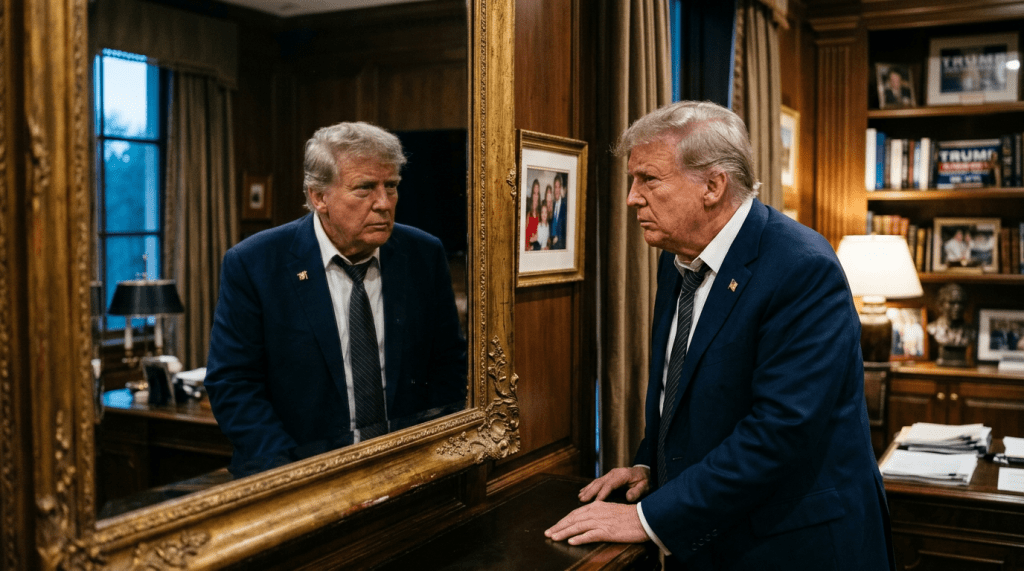
    Man in blue suit leaning on desk, looking at his reflection in an ornate mirror in an office
    .

    by Winston Wendell

    France feels different this week, quiet, maybe a bit somber. A decade of upended traditions is ending not with a bang, but a sigh. Take Donald Trump: he’s at his sixth G7, but the old swagger is gone. Back in 2017, you couldn’t miss him: loud, insistent, pulling everyone’s attention his way. Now? He looks worn down. Age hangs on him, the kind you can’t hide, no matter how much makeup you skip. At 80, the relentless drive isn’t there anymore. He seems smaller, almost faded, and it’s obvious the world isn’t watching him like it used to.

    His “big moment” in France—a supposed landmark deal with Iran—barely turned heads. Sure, there’s talk of a $300 billion economic boost for Tehran, lifting oil sanctions, and calling for a ceasefire. On paper, that sounds ambitious, a shot at lasting peace. But in reality, it just seems like an exhausted attempt to end a mess that’s sapped America’s cash and reputation. Benjamin Netanyahu already brushed it off. This isn’t bold diplomacy; it’s almost a repeat of Trump’s old routine, only without the drama.

    The contrast with Trump’s early G7 days is jarring. 2018, 2019—he showed up chomping at the bit. He demanded Russia’s return to the fold, gave NATO leaders lectures about money, even tried to turn the meetings into commercials for his hotels. That relentless energy, gone now. There’s a distant air about him. Ukraine barely comes up, and when it does, he sounds tired, going through the motions. The other G7 leaders feel the shift. They don’t count on the US for guidance the way they used to. They’re making their own plans for Kyiv, building their own safety nets.

    Everyone sees this drop in US influence. Pete Hegseth’s offhand remarks about the D-Day legacy still sting on this side of the Atlantic, and Europe’s leaders seem more focused than ever on going their own way. Waiting for Washington? Not anymore, they’re tired of the mood swings.

    Even the summit trappings fell flat. The German Chancellor handed Trump a soccer jersey. He barely cracked a smile, just mumbled thanks. At Versailles, standing in the hall of mirrors, gold everywhere, he looked a little more comfortable. Maybe it was all that gleaming reminder of power. For a second, you could almost believe he belonged.

    When it’s time to head home, Trump isn’t the “great negotiator” he set out to be. There’s no big legacy, no Nobel Prize, none of the things he once seemed sure he’d win. What’s left is an uncertain scene, with his spot in world affairs slipping away. Maybe, back in Washington, he’ll dream up another grand project—a hall of mirrors just for him. That’d fit. In these final days, it’s like he can’t look anywhere but at his own reflection. His aging reflection.

    Fediverse Reactions
  • A Hole in the Ground where American History Once Stood

    by Winston Wendell

    I stood at the edge of the Ellipse this week, just staring at what used to be the East Wing of the White House. Honestly, I’ve seen a lot in Washington, but nothing quite like this—a massive hole in the ground where American history once stood, and no one really knows what’s supposed to happen next.

    That’s what you get with this administration: ambition isn’t a problem. If Trump wants a ballroom—actually, let me fix that. If Trump wants a magnificent ballroom, one so spectacular Marie Antoinette would cry into her croissants, he’ll tear down a perfectly good historic building to make it happen. You gotta give him credit for going all in, even if you’re left wondering who’s paying the bill.

    About that bill: Congress was supposed to handle it. Republicans put together a shiny $1 billion package just for what they called the “East Wing Modernization Project,” which, in D.C. speak, means, “Please Mr. President, take the cash and build your big dance hall.” But then everything just collapsed, faster than a Jenga tower during an earthquake.

    Why? Well, turns out the ballroom wasn’t the only thing up for debate. There was also this $1.8 billion slush fund hanging around to pay off the January 6 rioters—or, as the White House likes to call them, “people who were just exercise-walking through the Capitol, dressed like medieval peasants.” Suddenly, Republicans started crunching the numbers and figured maybe, just maybe, this was worth voting on.

    So they ditched the bill, stormed out of Washington all annoyed, and now we have this huge hole in the ground where someone’s grandma used to have an office. I talked to a construction worker on site, and he just shrugged. “We have the excavators,” he said. “We’re ready to pour concrete as soon as someone tells us what it’s for. Right now, I’m just digging holes and filling them up again. Great exercise, honestly.”

    The courts haven’t helped either. Some judge decided you can’t just demolish parts of the White House without Congress signing off, which sounds pretty reasonable until you remember it’s the actual White House, where the President technically lives. If I want to knock out a wall in my own place, I don’t need my neighbors’ permission, but apparently the Founders had other ideas about presidential home renovations.

    So here we are. A hole. The dream of gilded chandeliers and a dance floor big enough for 500 Americans to do the hustle. And absolutely zero way to connect the two.

    Trump could appeal. He could drag this through the courts until the judges are begging for a break. He could wait for a new Congress that might play along, if that ever happens. For now, though, the hole just sits there—a monument to ambition crashing straight into a very specific budgetary Waterloo.

    I asked a White House spokesman what he thought, and he just sighed. “Sir, we’ve got a hole to stare at.” Then he wandered over and did exactly that.

    Somewhere out there, Karl Marx is probably nodding. History repeats itself, first as tragedy, then as a $1 billion unfinished ballroom with really good chandelier potential.

  • Reclaiming the Supreme Court: A Call for Judicial Reform in America

    by Winston Wendell

    The United States Supreme Court was founded to interpret the Constitution impartially, protecting both individual rights and guarding against the excesses of major political parties. Yet in the past decade, the Court shifted—becoming a political tool for a narrow, far-right coalition. Recent decisions on abortion, voting rights, gun regulation, and climate policy clash with most Americans’ views, exposing a structural flaw: a minority shapes the nation’s most powerful law-making body.

    Most Americans support reproductive freedom, common-sense gun safety, robust environmental protections, and strong voting-rights laws. Polls confirm this again and again. But the Court’s recent rulings—Dobbs v. Jackson Women’s Health Organization (overturning Roe v. Wade), West Virginia v. EPA (weakening the agency’s climate authority), and New York State Rifle & Pistol Association v. Bruen (expanding gun rights)—came from a six-justice majority whose beliefs line up with a small, conservative electorate, not the nation as a whole. The Court’s decisions aren’t rooted in “the true meaning and purpose” of the Constitution, as Chief Justice Earl Warren once urged; they’re grounded in a rigid ideological agenda.

    The problem isn’t just the justices, it’s also the process behind their appointments. The Senate was supposed to be a deliberative body, offering stability, but now it amplifies voices from the least populated states. A Wyoming voter has about seventy times more influence over Supreme Court appointments than a California voter. The twenty-five smallest states—most of them Republican—hold most Senate seats, yet their combined population makes up less than half the country.

    When Senate Republicans blocked Obama’s 2016 nominee Merrick Garland, letting the seat sit empty for an entire year, they created a partisan advantage that let Trump install a conservative bloc. That maneuver ignored what most Americans wanted: to fill the vacancy. The Court’s direction changed drastically as a result.

    Lifetime appointments once made sense when people lived just thirty-five years on average. Now, justices can stay for four or five decades, outlasting the presidents who picked them and the voters who supported those presidents. Justice Clarence Thomas, appointed in 1991, has been on the bench for over thirty years, often writing opinions that stray from mainstream sentiment. The only way to remove a justice is by impeachment a nearly impossible hurdle, so accountability is lost.

    Reforming the Court doesn’t mean tearing up the Constitution; it just needs a modest amendment to restore democratic balance. An eighteen-year term, with a new justice appointed every two years, guarantees regular turnover while protecting judicial independence. Each president gets to appoint two justices in a single four-year term, and the Court’s makeup would reflect the electorate’s current will not old political preferences from decades past.

    Critics insist that life tenure shields judges from politics, pushing them to rule on principle, not popularity. But the truth is, lifetime appointments have cut the Court off from democratic accountability and allowed politics to take over unchecked. Fixed terms would free justices from daily electoral pressures yet give the Court a steady rhythm of renewal the balance the founders imagined for an adaptable judiciary.

    America’s democracy is built on the idea that government draws its legitimacy from the people’s consent. When a minority seizes control of the Supreme Court, that consent breaks down. Setting term limits, plus modest changes to the Senate’s confirmation process, would bring the Court back in line with the majority’s will. Elected officials, especially Democrats who claim to defend democratic norms should champion this change without hesitation.

    Only by reclaiming the Court for the people can the United States guarantee that constitutional interpretation stays living, responsive, and truly representative.

    Fediverse Reactions
  • NATO Allies Pay the Price While Trump Undermines Unity

    “I Served There. And I Lost Friends There” – Prince Harry Rebukes Trump’s False NATO Claims

    Blue Press Journal – When President Donald Trump took the stage at the World Economic Forum in Davos, his remarks on NATO sent shockwaves across the transatlantic alliance. Trump claimed that NATO members would not come to America’s aid if called upon — a statement that flies in the face of historical fact. 

    On Friday, Prince Harry, Duke of Sussex, delivered a pointed rebuttal rooted in lived experience. Having served two tours in Afghanistan — including a harrowing 10-week stint in Helmand province — Harry is no stranger to the realities of war. 

    “I served there. I made lifelong friends there. And I lost friends there,” Harry said. “In 2001, NATO invoked Article 5 for the first — and only — time in history. It meant that every allied nation was obliged to stand with the United States in Afghanistan, in pursuit of our shared security. Allies answered that call.”

    The Truth About NATO’s Sacrifice

    In the wake of the September 11 attacks, NATO’s collective defense principle — Article 5 — was activated for the first time since the alliance was founded in 1949. The United Kingdom, Canada, Germany, France, Poland, Denmark, and other NATO nations deployed troops alongside U.S. forces in Afghanistan. 

    The cost was staggering: 

    • United Kingdom: 457 service members killed 
    • Canada: 158 killed 
    • Germany: 59 killed 
    • France: 86 killed 
    • Poland: 44 killed 
    • Denmark: 43 killed

    These numbers represent more than statistics — they tell stories of young lives cut short, families shattered, and nations standing shoulder-to-shoulder with the U.S. in its longest war. 

    Trump’s Draft-Dodging Past

    Trump’s dismissal of NATO’s contributions is even more striking given his own history. While tens of thousands of Americans served — and thousands died — in Vietnam, Trump avoided the draft five times: four student deferments and one medical deferment for alleged bone spurs. 

    For someone who never wore the uniform to question the loyalty and sacrifice of allied forces is, critics argue, both historically inaccurate and morally tone-deaf. 

    Why Truth Matters in Diplomacy

    Prince Harry’s words resonate not only because of his royal status, but because of his credibility as a veteran. His reminder is clear: diplomacy and military alliances are built on trust, truth, and shared sacrifice. 

    When leaders distort history, they undermine the very alliances that have safeguarded global stability for decades. NATO’s solidarity after 9/11 was real, and it came at a heavy human cost. 

    Harry’s closing reflection serves as a warning: 

    “Those sacrifices deserve to be spoken about truthfully and with respect, as we all remain united and loyal to the defense of diplomacy and peace.”

    In an era of rising geopolitical tension, remembering the truth about NATO’s commitment is not just good history — it’s essential for the future of global security. 


  • Transatlantic Rift Deepens as Trump’s Greenland Tariffs Ignite Calls for EU ‘Trade Bazooka’

    Donald Trump’s punitive tariffs on European nations supporting Greenland security have sparked unprecedented EU retaliation talks, risking a historic breakdown in transatlantic relations.

    Blue Press Journal – The fragile fabric of transatlantic relations is fraying at an alarming pace, as U.S. President Donald Trump’s decision to impose tariffs on European nations involved in Greenland security exercises triggers outrage across the European Union. What began as a geopolitical skirmish over the Arctic has rapidly escalated into a confrontation that EU leaders say could fundamentally reshape the balance of power between Washington and Brussels. 

    At the heart of the crisis is Trump’s move to punish countries — including France, Germany, Sweden, Finland, Norway, and the Netherlands — that deployed troops to participate in a Danish-led military exercise in Greenland. The exercise, part of a broader European effort to secure the Arctic amid rising Russian and Chinese activity, was described by participating governments as entirely defensive and non-provocative. Yet Trump’s administration framed the deployments as a direct affront to U.S. interests, slapping punitive tariffs in a move critics say is both reckless and diplomatically corrosive. 

    Europe’s Retaliatory Options: From Restraint to Confrontation

    For months, EU leaders have tolerated Trump’s unpredictable foreign policy in the hope of preserving NATO unity. They have weathered his wavering support for Ukraine, his pressure for lopsided trade agreements, and his demands for massive defense spending increases. But the Greenland tariffs appear to have crossed a line. 

    French President Emmanuel Macron has emerged as one of the loudest voices demanding a robust response, calling for the activation of the EU’s Anti-Coercion Instrument — a powerful trade retaliation tool originally designed to counter China’s economic intimidation. Deploying it against the United States would be unprecedented, signaling a profound shift in the EU’s willingness to confront Washington head-on. 

    “The EU must resist humiliation and economic vassalization,” said Jérémie Gallon, a former French diplomat now based in Washington. His sentiment echoes a growing consensus among centrist and left-leaning EU lawmakers who argue that Europe must assert itself as a geopolitical actor rather than simply react to U.S. pressure. 

    Diplomatic Fallout and Strategic Calculations

    Even leaders with warmer ties to Trump, such as Italian Prime Minister Giorgia Meloni, have acknowledged the severity of the rift. While urging dialogue to avoid escalation, Meloni conceded that tariffs on NATO allies “are a mistake” and risk undermining shared security goals. 

    The European Parliament is already signaling its readiness to derail ratification of a recently negotiated EU-U.S. trade deal — a move that would have been unthinkable only months ago. Blocking the agreement would be a symbolic yet potent act, but triggering the Anti-Coercion Instrument would represent a direct economic counterstrike. 

    The Bigger Picture: Europe’s Geopolitical Awakening

    This crisis coincides with the EU’s broader push for strategic autonomy. European Commission President Ursula von der Leyen has announced a new security framework, while plans to bolster cybersecurity are set to be unveiled imminently. The Greenland standoff may accelerate this trajectory, forcing Europe to invest in defense and economic resilience without relying on U.S. goodwill. 

    The fact that Trump’s tariffs came just days after the EU signed a major trade deal with Latin America adds insult to injury, deepening perceptions that the U.S. is willing to use economic coercion to undermine Europe’s global aspirations. 

    As EU leaders return from Latin America to Brussels for emergency talks, the stakes could not be higher. The decision they face — whether to retaliate against their most powerful ally — may define Europe’s role on the world stage for decades.