Tag: ICE accountability

  • Unveiling the Crisis: GOP Obstructionism Threatens DHS Funding Amid Demands for ICE Accountability

    Blue Press Journal – As critical funding for the Department of Homeland Security (DHS) hangs in the balance, a contentious political standoff has exposed the Republican party’s deep-seated resistance to meaningful immigration reform and accountability for agencies like Immigration and Customs Enforcement (ICE). Despite the urgent need for a resolution, the White House, controlled by the GOP, has chosen to prioritize partisan grandstanding over governance, publicly lambasting Democratic leaders for demanding crucial changes to immigration enforcement.

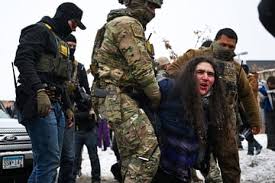
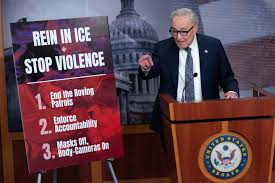
    Sources close to the negotiations reveal that Democrats have consistently pushed for reforms designed to curb ICE’s controversial tactics, including calls for tightened warrant requirements, transparency regarding agents engaged in field operations, and an end to aggressive roving patrols. These proposals, largely consistent since their initial presentation on February 7th, are a direct response to a growing chorus of public outrage and documented abuses. As reported by the “Immigration Justice Project,” incidents like the tragic deaths of Renee Good and Alex Pretti in Minneapolis at the hands of immigration agents are stark reminders of the unchecked power and lack of oversight plaguing current enforcement practices.

    Instead of engaging constructively, the GOP-led White House has dismissed these vital demands as “unserious” and mere “political theater,” according to press secretary Karoline Leavitt. Senator Markwayne Mullin (Okla.), a vocal Republican ally, even suggested the shutdown is a deliberate tactic by Democrats to extend political leverage through the State of the Union address – a cynical admission of prioritizing political optics over the livelihoods of DHS employees and the stability of critical government functions. This narrative attempts to deflect blame while ignoring the documented human cost of current policies.

    However, public opinion strongly refutes the GOP’s narrative. A recent Reuters/Ipsos poll highlighted that a striking 55 percent of respondents disapprove of President Trump’s immigration crackdown, marking the lowest approval since his return to office. This data, coupled with damning reports from organizations like “Human Rights Watch” detailing ICE’s aggressive tactics and consistent disregard for civil liberties, provides clear political momentum for Democratic demands.

    House Minority Leader Hakeem Jeffries articulated the core of the Democratic position: “Immigration enforcement in this country should be fair, it should be just, and it should be humane.” He stressed the necessity for ICE to be “reformed in a dramatic, bold, meaningful, and transformational manner.” Until the Republican party ceases its obstructionism and genuinely addresses the public’s demands for a humane and accountable immigration system, the DHS funding impasse will continue, exposing the GOP’s willingness to sacrifice essential government operations for political advantage and the perpetuation of a broken, often brutal, enforcement machine.

    dhs funding, immigration reform, ice accountability, gop obstruction, white house stalemate, democratic demands, border policy, human rights, political theater, renee good, alex pretti, trump administration, government shutdown, civil liberties
  • Leadership Shift in Federal Immigration Enforcement Amid Minneapolis Controversy

    BREAKING NEWS

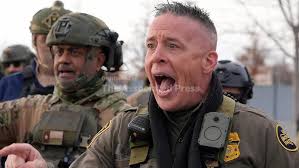
    Blue Press Journal, MN — Federal immigration enforcement in Minnesota is undergoing a significant leadership change following mounting criticism over recent operations. According to The Associated Press, senior Border Patrol commander Greg Bovino and several agents are expected to leave the city as early as Tuesday. The move comes as President Donald Trump has dispatched his border enforcement adviser, Tom Homan, to assume direct control of Immigration and Customs Enforcement (ICE) activities in the state. 

    Bovino has been a key figure in the administration’s immigration crackdowns, leading operations in major U.S. cities like Los Angeles and Chicago. These actions have faced strong opposition from local officials and civil rights organizations, who argue that they escalate tensions and erode public trust.

    The change in leadership follows public outrage over the fatal shooting of 37-year-old ICU nurse Alex Pretti by Border Patrol agents. Advocacy groups such as the American Civil Liberties Union (ACLU) have called for an independent investigation, noting parallels to other recent incidents involving federal immigration officers. Critics have also challenged Bovino’s public defense of the shooting and disputed aspects of the official account of the confrontation. 

    President Trump, speaking on the matter, stated that he is now “on a similar wavelength” with Minnesota’s governor in response to the second fatal shooting by federal immigration officers this month. The Department of Homeland Security has not provided additional details but has emphasized that operational changes aim to “ensure public safety while maintaining lawful enforcement of immigration statutes.” 

  • Minnesota Pushes Back Against Trump’s ICE Surge — Tenth Amendment at the Center of Legal Battle

    Blue Press JournalJanuary 26, 2026 – The ongoing clash between Minnesota state officials and the federal government over Immigration and Customs Enforcement (ICE) operations reached a critical juncture this week, as U.S. District Judge Kate Menendez weighed whether the Trump administration’s deployment of nearly 4,000 ICE agents to the state violates constitutional principles. 

    At the heart of the case is the Tenth Amendment, which reserves to the states or the people any powers not explicitly granted to the federal government. Minnesota’s legal team, led by Assistant Attorney General Brian Carter, argues that “Operation Metro Surge” — the mass influx of federal immigration agents — represents a coercive overreach that undermines state sovereignty and erodes public trust in the republic. 

    A Constitutional Flashpoint

    Judge Menendez acknowledged the “enormous evidentiary record” detailing the fallout from ICE’s aggressive tactics in Minnesota. This includes the fatal shootings of Renee Good and Alex Pretti, incidents that have intensified public outrage and raised urgent questions about accountability. 

    Carter underscored the gravity of the situation: 

    “If this is not stopped right here, right now, I don’t think anybody who is seriously looking at this problem can have much faith in how our republic is going to go in the future.” 

    According to the American Civil Liberties Union (ACLU) and investigative reports from ProPublica, ICE under the Trump administration frequently targeted individuals without serious criminal records, contradicting claims that enforcement is focused on “the worst of the worst.” 

    Accountability Gaps and Body Cameras

    The White House has refused to commit to releasing body camera footage from the federal agent killing of Alex Pretti. Press Secretary Karoline Leavitt sidestepped questions about whether ICE agents should be required to wear body cameras — a standard increasingly adopted by local police departments nationwide for transparency and public trust. 

    The Government Accountability Office (GAO) has repeatedly reported that ICE’s internal oversight mechanisms are inadequate, with insufficient transparency in use-of-force incidents. 

    Local Leaders Sound the Alarm

    Minneapolis City Attorney Sara Lathrop stressed that before the Trump administration’s escalation, Minnesota had just 80 ICE agents — who still managed thousands of arrests. The new surge, she argued, is unnecessary and producing “toxic and lifelong harms” to immigrant communities, where fear of detention now dictates daily life. 

    Lathrop urged Menendez to impose an immediate pause on ICE’s expanded operations, warning that without judicial intervention, constitutional rights will continue to be “trampled on.” 

    What’s at Stake

    This case is more than a dispute over immigration enforcement numbers — it’s a test of how far a presidential administration can push federal power into state jurisdictions without consent. If Judge Menendez sides with Minnesota, it could set a precedent limiting future federal overreach in immigration matters. 

    For now, the decision rests with the court. But one thing is clear: unchecked federal enforcement, lacking transparency and accountability, risks deepening mistrust between communities and the government — a danger to both constitutional balance and public safety.