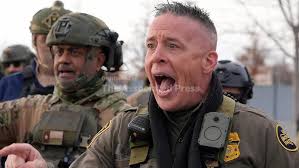
Blue Press Journal, MN — Federal immigration enforcement in Minnesota is undergoing a significant leadership change following mounting criticism over recent operations. According to The Associated Press, senior Border Patrol commander Greg Bovino and several agents are expected to leave the city as early as Tuesday. The move comes as President Donald Trump has dispatched his border enforcement adviser, Tom Homan, to assume direct control of Immigration and Customs Enforcement (ICE) activities in the state.
Bovino has been a key figure in the administration’s immigration crackdowns, leading operations in major U.S. cities like Los Angeles and Chicago. These actions have faced strong opposition from local officials and civil rights organizations, who argue that they escalate tensions and erode public trust.
The change in leadership follows public outrage over the fatal shooting of 37-year-old ICU nurse Alex Pretti by Border Patrol agents. Advocacy groups such as the American Civil Liberties Union (ACLU) have called for an independent investigation, noting parallels to other recent incidents involving federal immigration officers. Critics have also challenged Bovino’s public defense of the shooting and disputed aspects of the official account of the confrontation.
President Trump, speaking on the matter, stated that he is now “on a similar wavelength” with Minnesota’s governor in response to the second fatal shooting by federal immigration officers this month. The Department of Homeland Security has not provided additional details but has emphasized that operational changes aim to “ensure public safety while maintaining lawful enforcement of immigration statutes.”
Blue Press Journal (MN) — January 25, 2026 — In a late-night ruling that could reshape the relationship between federal agencies and state-level law enforcement, a federal judge in Minnesota has blocked the Department of Homeland Security (DHS) from destroying or altering evidence in the fatal shooting of Alex Pretti, a 37-year-old Minneapolis resident killed by a Customs and Border Protection (CBP) agent on January 24.
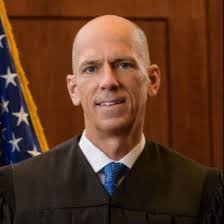
The order — issued by Judge Eric C. Tostrud, a Trump-appointed United States District Court judge — comes amid escalating tensions between Minnesota’s investigative authorities and federal agencies over transparency, accountability, and jurisdiction in officer-involved shootings.
The Court’s Intervention
In his temporary restraining order (TRO), Judge Tostrud prohibited DHS, Immigration and Customs Enforcement (ICE), CBP, and U.S. Border Patrol from “destroying or altering evidence related to the fatal shooting involving federal officers” near 26th Street and Nicollet Avenue in South Minneapolis.
The lawsuit was brought forward jointly by the Minnesota Bureau of Criminal Apprehension (BCA), the Hennepin County Attorney’s Office, and the Minnesota Attorney General’s Office. At its core, the legal action seeks to preserve crucial evidence in a case where state investigators say they’ve been deliberately excluded by federal authorities.
“We’re in uncharted territory here,” BCA Superintendent Drew Evans said during a Saturday press conference. “It’s been a long-standing understanding, both within our state and across the country, that entities like the BCA — which conduct the vast majority of officer-involved shooting investigations — are asked to investigate federal agents involved in shootings. That’s not happening here.”
DHS and CBP Under Scrutiny
This case is not an isolated incident. Earlier in January 2026, another ICE officer fatally shot Renee Good, also 37, in Minneapolis. In that case, state and local law enforcement — including the BCA — were similarly shut out of the investigation.
Critics say this pattern reflects a deliberate strategy by DHS and CBP to avoid independent oversight in fatal use-of-force cases. According to reporting by The Washington Post (source) and The Hill (source), federal agencies have increasingly resisted state-level investigative involvement, citing “internal protocols” and “operational security.”
However, civil rights advocates argue that this approach undermines public trust and may violate accountability norms established after decades of efforts to ensure transparency in officer-involved shootings.
The Trump Administration’s Legacy on Federal Accountability
Judge Tostrud’s involvement adds a political layer to the controversy. Appointed by former President Donald Trump in 2018, Tostrud has historically sided with federal agencies in jurisdictional disputes. Yet, in this case, his TRO represents a rare rebuke of DHS’s handling of evidence in deadly force incidents.
It’s worth noting that the Trump administration repeatedly expanded the authority of federal immigration and border enforcement agents while limiting state oversight. According to ProPublica (source), these policies — including allowing CBP officers broader latitude in use-of-force situations — have been linked to increased incidents of deadly shootings involving federal agents.
Minnesota Leaders Demand Transparency
Following the court ruling, Attorney General Keith Ellison issued a sharp statement:
“Alex Pretti was killed by DHS agents in broad daylight in front of all
Blue Press Journal – On January 7th, 2026, a disturbing incident unfolded in Minneapolis, where U.S. Immigration and Customs Enforcement (ICE) agents fatally shot 37-year-old Renee Nicole Good. The circumstances surrounding the shooting have sparked widespread outrage and criticism, with many calling into question the actions of the ICE agent involved. As the investigation into this incident continues, it is imperative that those responsible are held accountable for their actions.
According to eyewitness footage and expert analysis, the ICE agent who shot Good failed to follow accepted police training protocols. Gil Kerlikowske, former Commissioner of U.S. Customs and Border Protection (CBP) during the Obama administration, stated on CNN that the agent’s actions were “tactics that no legitimate law enforcement agency would use.” Kerlikowske emphasized that the agent’s decision to stand in front of Good’s vehicle and attempt to open the door handle put himself in harm’s way, a clear example of “self-imposed jeopardy.” The Supreme Court has recently weighed in on this issue, underscoring the importance of law enforcement officers avoiding such situations.
The video footage of the incident is disturbing. As the maroon SUV reverses and attempts to leave the scene, three ICE agents surround the vehicle. One agent approaches the driver’s side window, shouting “get out of the fucking car,” while another moves towards the front of the vehicle, which is against police protocol and places himself in self-imposed jeopardy. As the car accelerates to the right, the agent at the front left corner fires at least three shots into the driver’s side window. The fact, which is on tape, that Good was allowing another car to pass through the area before attempting to drive away raises questions about the agent’s justification for using deadly force.
The aftermath of the shooting is equally troubling. A physician who approached the scene to offer assistance was denied access by the ICE agents, who claimed they had their own medics on the way. This response not only demonstrates a lack of concern for Good’s well-being but also highlights the agency’s prioritization of their own protocols over the needs of the individual involved.
News outlets have extensively covered the incident, with many criticizing the ICE agent’s actions. On MSNBC’s “Morning Joe,” the panel repeatedly showed the footage of the shooting, highlighting the agent’s questionable behavior. “That’s not, you would think, the behavior of someone who was then planning to use their vehicle as a weapon when she’s letting another car drive through,” one panelist noted. The agent’s decision to grab the door handle, again placing himself in self-imposed jeopardy, which escalated the situation, and again has also been called into question.
ICE’s response to the incident has been widely criticized as misleading. In their initial statement, the agency failed to provide accurate information about the events leading up to the shooting. This lack of transparency has contributed to the growing distrust of ICE’s handling of the situation.
As the investigation into the shooting continues, it is essential that the ICE agent responsible is held accountable for their actions. The fact that Good was unarmed and posed no immediate threat to the agents involved raises serious concerns about the use of deadly force. The agent’s failure to follow established protocols and the agency’s subsequent misrepresentation of the facts demonstrate a clear need for greater oversight and accountability within ICE and the agents.
As we move forward, it is crucial that those responsible for this incident are brought to justice and that measures are taken to prevent similar incidents in the future. The public deserves transparency and accountability from law enforcement agencies.



 Blue Press Journal