Tag: ICE brutality

  • Federal Judge Blocks DHS From Destroying Evidence in Minneapolis CBP Shooting — Growing Concerns Over Transparency and Federal Overreach

    Blue Press Journal (MN) — January 25, 2026 — In a late-night ruling that could reshape the relationship between federal agencies and state-level law enforcement, a federal judge in Minnesota has blocked the Department of Homeland Security (DHS) from destroying or altering evidence in the fatal shooting of Alex Pretti, a 37-year-old Minneapolis resident killed by a Customs and Border Protection (CBP) agent on January 24. 

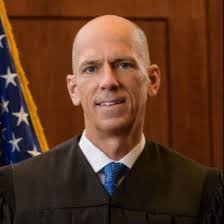
    The order — issued by Judge Eric C. Tostrud, a Trump-appointed United States District Court judge — comes amid escalating tensions between Minnesota’s investigative authorities and federal agencies over transparency, accountability, and jurisdiction in officer-involved shootings. 


    The Court’s Intervention

    In his temporary restraining order (TRO), Judge Tostrud prohibited DHS, Immigration and Customs Enforcement (ICE), CBP, and U.S. Border Patrol from “destroying or altering evidence related to the fatal shooting involving federal officers” near 26th Street and Nicollet Avenue in South Minneapolis. 

    The lawsuit was brought forward jointly by the Minnesota Bureau of Criminal Apprehension (BCA), the Hennepin County Attorney’s Office, and the Minnesota Attorney General’s Office. At its core, the legal action seeks to preserve crucial evidence in a case where state investigators say they’ve been deliberately excluded by federal authorities. 

    “We’re in uncharted territory here,” BCA Superintendent Drew Evans said during a Saturday press conference. “It’s been a long-standing understanding, both within our state and across the country, that entities like the BCA — which conduct the vast majority of officer-involved shooting investigations — are asked to investigate federal agents involved in shootings. That’s not happening here.” 


    DHS and CBP Under Scrutiny

    This case is not an isolated incident. Earlier in January 2026, another ICE officer fatally shot Renee Good, also 37, in Minneapolis. In that case, state and local law enforcement — including the BCA — were similarly shut out of the investigation. 

    Critics say this pattern reflects a deliberate strategy by DHS and CBP to avoid independent oversight in fatal use-of-force cases. According to reporting by The Washington Post (source) and The Hill (source), federal agencies have increasingly resisted state-level investigative involvement, citing “internal protocols” and “operational security.” 

    However, civil rights advocates argue that this approach undermines public trust and may violate accountability norms established after decades of efforts to ensure transparency in officer-involved shootings. 


    The Trump Administration’s Legacy on Federal Accountability

    Judge Tostrud’s involvement adds a political layer to the controversy. Appointed by former President Donald Trump in 2018, Tostrud has historically sided with federal agencies in jurisdictional disputes. Yet, in this case, his TRO represents a rare rebuke of DHS’s handling of evidence in deadly force incidents. 

    It’s worth noting that the Trump administration repeatedly expanded the authority of federal immigration and border enforcement agents while limiting state oversight. According to ProPublica (source), these policies — including allowing CBP officers broader latitude in use-of-force situations — have been linked to increased incidents of deadly shootings involving federal agents. 


    Minnesota Leaders Demand Transparency

    Following the court ruling, Attorney General Keith Ellison issued a sharp statement: 

    “Alex Pretti was killed by DHS agents in broad daylight in front of all

  • Trump’s ICE Playbook: Cruelty as Policy — And Why Minneapolis Should Be a Turning Point

    Blue Press Journal Editorial

    This is a Turning Point for America … Where do you stand?

    In the wake of yet another deadly incident involving federal immigration enforcement, this time in Minneapolis, we’re forced to confront the grim reality of Donald Trump’s approach to law enforcement: cruelty isn’t a bug in the system — it’s the feature. 

    On Thursday, an Immigration and Customs Enforcement (ICE) agent fatally shot a 32-year-old Minneapolis woman during what officials described as a “targeted operation.” Eyewitnesses say she was sitting in her car, unarmed, when the agent fired. The incident has sparked outrage across the city and reignited criticism of ICE’s tactics, which have long been accused of operating with excessive force and little accountability. 

    The Politics of Defending the Indefensible

    Some pundits claim that Trump’s—and the GOP’s—unwavering defense of these actions is “smart politics,” shifting public discourse away from other controversies like Jeffrey Epstein’s resurfaced ties to political elites or the worsening cost-of-living crisis. But let’s be clear: defending ICE after an act that looks, to many, like an execution in broad daylight, isn’t “smart.” It’s reckless. 

    ICE’s track record is already deeply unpopular. Polling from Pew Research and Gallup shows a majority of Americans disapprove of its methods, especially the high-profile deportations of families, the detention of children, and the use of militarized raids in immigrant communities. Trump’s ICE administration doesn’t just alienate progressives — it turns moderates and even some conservatives off. 

    When law enforcement violence starts landing squarely on U.S. citizens — particularly white, middle-class citizens who don’t fit the GOP’s caricature of “illegal immigrants” — it hits differently. The thought quickly shifts from “I don’t like seeing people brutalized” to “That could happen to me or my family.” That’s not a winning political strategy; it’s a ticking time bomb.

    Minneapolis Officials Aren’t Staying Quiet

    Minneapolis Mayor Jacob Frey condemned the shooting, saying: 

    “We cannot normalize federal agents using deadly force in situations where it’s clearly avoidable. Our residents deserve safety, not fear.” 

    City Council Member Aisha Chughtai went further: 

    “This department operates with impunity, and it’s costing lives. ICE has no place in our city.” 

    Their words reflect a growing frustration among urban leaders over Trump-era immigration enforcement policies that have persisted well beyond his presidency. 

    Lessons from 2020 That Trump Still Hasn’t Learned

    Trump’s political instincts on law enforcement are stuck in the summer of 2020 — a moment of mass racial justice protests and public reckoning over police brutality. Back then, he doubled down on defending every police action, no matter how egregious, and lost reelection in the process. 

    The reality is that public opinion doesn’t reward defending indiscriminate violence. People want safety, but they also want accountability. Minneapolis is still living with the trauma of George Floyd’s murder, and defending another federal killing in the city won’t play well — locally or nationally.

    Why This Matters for 2026 and Beyond

    With the 2026 mid-term elections looming, Trump’s embrace of ICE’s most aggressive tactics could further alienate swing voters. It’s one thing to talk about “law and order” in abstract terms; it’s another to defend an ICE agent shooting an unarmed woman in her car. 

    The GOP may think they’re steering the narrative toward “dangerous cities” and “radical protestors,” but the images coming out of Minneapolis tell a different story — one of excessive force, unchecked power, and an administration willing to defend the indefensible.