Tag: immigration policy

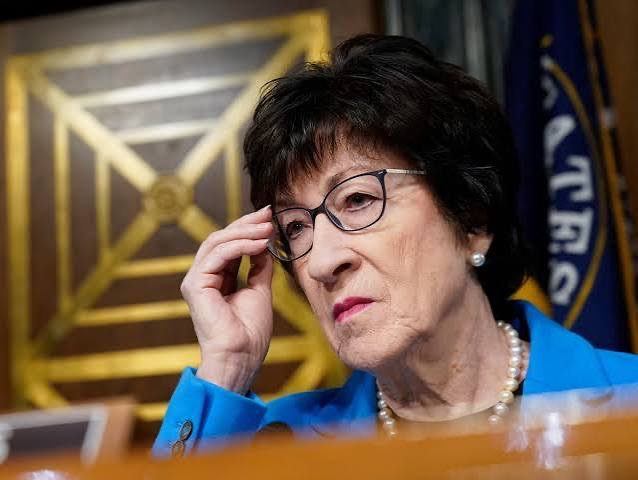
  •  Senator Susan Collins’ ICE Vote and the Fatal Shooting of Johan Sebastián Guerrero

    Biddeford, Maine is usually a quiet place. National tragedies—they don’t happen here. But then you see the headlines: 26-year-old Johan Sebastián Guerrero, shot and killed. This wasn’t random; no, it fits a larger, ugly pattern. He was a young father, a legal resident, a husband. Gone in a flash because of an operation that completely missed the mark.

    I read that ICE agents shot him while looking for someone else entirely. That shakes me. It exposes something broken far beyond a single mistake. How does a mission meant to catch one person end with the death of an uninvolved man just sitting in his car? People should answer for this, but watching the political response, it’s clear many would rather look away.

    I can’t help thinking about Senator Susan Collins. She keeps voting to pour more money into ICE, never pairing that support with real reform. That’s not just an abstract policy corner—it’s now the reality lived by a widow and a child suddenly without a father. Funding an agency without demanding accountability means backing its methods, whether you intend to or not. When Senator Collins doesn’t push for transparency or structural change, to me, she’s decided the way things are is good enough.

    But what really gets me is her silence afterward. No regret, no acknowledgment. That says a lot: she’ll defend the system as it stands, even if it costs innocent lives in her own state. A Senate candidate called her approach “signing the checks and hoping for the best.” That stings because it’s painfully true. Hope isn’t policy—it’s shirking responsibility.

    Biddeford’s tragedy shows you can’t separate immigration enforcement from real lives. This stuff unfolds where we live—our driveways, our neighborhoods, right in front of us. When we give agencies huge power and little oversight, we have to own what happens next.

    Watching all this, I think we’ve hit a turning point. This isn’t just about borders anymore—it’s public safety and the worth we assign to each person’s life. With elections heating up and talk of immigration on the rise, I’ll be paying close attention. Will Senator Collins stick to her choices? Because for the Guerrero family, her vote wasn’t about politics. It was a failure that left a wound no speech or policy spin can ever heal.


  • Trump’s Self‑Inflicted Economic Spiral Undermines GOP Prospects

    Figure resembling Donald Trump throwing a plate against a wall as shocked onlookers watch.

    Blue Press Journal – The past week has laid bare the consequences of President Trump’s overreach—a mix of policy missteps and self‑inflicted damage that is tanking his poll numbers and eroding congressional support. A stagnant labor market, combined with skyrocketing gas prices tied to the Iran‑U.S. conflict, is pushing the U.S. economy toward stagflation, a scenario Wall Street analysts now warn could become a reality (Reuters, March 5).

    Trump’s immigration agenda, already unpopular, hit a new low with the abrupt removal of DHS Secretary Kristi Noem. Critics argue the move was less about policy competence and more about political retaliation, exposing the administration’s chaotic leadership style  (The New York Times, March 4). The fallout has amplified voter frustration, as households grapple with higher gasoline costs that directly counter the president’s “America First” promises to ease living expenses.

    Meanwhile, the labor market shows little sign of recovery. The Bureau of Labor Statistics reported a flat employment growth rate for the second consecutive month, while wages remain stagnant  (BLS, March 2). This paradox of weak job creation and rising inflation undermines the administration’s narrative that its tax cuts and deregulation are revitalizing the economy.

    Polls reflect the shifting tide. A recent Quinnipiac survey placed Trump’s approval at a historic low, with many Republicans citing “economic anxiety” as the primary concern  (Quinnipiac, March 3). As the GOP struggles to keep voters focused on its agenda, the cascade of bad news threatens to derail any attempt to regain momentum before the midterm elections.

  • Federal Judge Blocks Trump Administration’s Attempt to Restrict Lawmakers’ Surprise Visits to Immigration Facilities

    Blue Press Journal

    WASHINGTON — A federal judge has once again ruled against the Trump administration’s efforts to restrict congressional oversight of immigration detention centers, finding that the policy likely violates existing federal law ensuring lawmakers’ access to those facilities. 

    U.S. District Judge Jia Cobb, appointed by President Biden, issued the decision Monday, halting a Department of Homeland Security (DHS) directive that would have required members of Congress to provide seven days’ notice before conducting visits to Immigration and Customs Enforcement (ICE) centers. The rule, reinstated last month by DHS Secretary Kristi Noem, applied to facilities funded under the so-called “Big Beautiful Bill,” a Republican-backed spending package enacted last summer that omitted a long-standing access provision. 

    This ruling marks the second time Judge Cobb has sided with a group of Democratic lawmakers who filed suit to preserve their ability to conduct unannounced inspections. In December, Cobb previously found that the Trump administration violated a congressional “rider” attached to DHS’s annual appropriations bill — a provision guaranteeing lawmakers the right to visit detention sites without advance notice. 

    In her latest opinion, Cobb criticized the administration’s argument that it could feasibly separate funding streams to determine which facilities were covered by the rider and which were not. “Defendants’ declarant provides almost no details or specifics as to how DHS and ICE would accomplish this task in the face of the practical challenges raised by Plaintiffs,” Cobb wrote. 

    Legal experts note that the decision reaffirms Congress’s constitutional oversight powers and underscores the judiciary’s role in upholding legislative intent. The ruling effectively prevents DHS from enforcing the notice requirement while the lawsuit proceeds. 


    Understanding Appropriations Riders and Congressional Oversight

    Appropriations riders are provisions in spending bills that direct or limit the use of federal funds. Congress has often used these riders to oversee executive agencies, particularly in sensitive areas like immigration enforcement, environmental regulation, and defense spending.

    According to the Congressional Research Service, riders have been used since the early 20th century to ensure compliance with congressional mandates, such as requiring public reporting on detainee conditions and restricting the transfer of Guantánamo Bay prisoners.

    Judge Cobb’s ruling reinforces that these riders carry the force of law and cannot be sidestepped by administrative reinterpretation or selective funding designations.