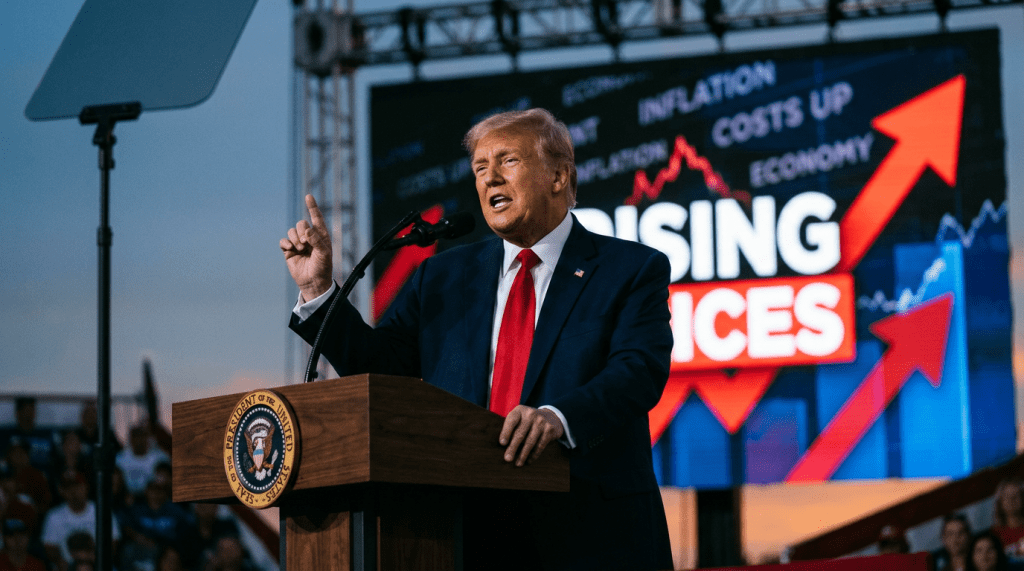
As hard-working Americans grapple with a relentlessly brutal economy and a cascade of “extraordinarily dire” financial warning signs, Trump has once again prioritized foreign ordnance over domestic survival.
by Winston Wendell
As I watch the economy spiral downwards, each day it seems as if the hardworking American citizens are faced with new and “extraordinarily dire” economic challenges. Despite the suffering of our own people, those in the Trump Administration continue to turn a blind eye towards the domestic crises and instead focus on “investing” in Israel’s military machine.
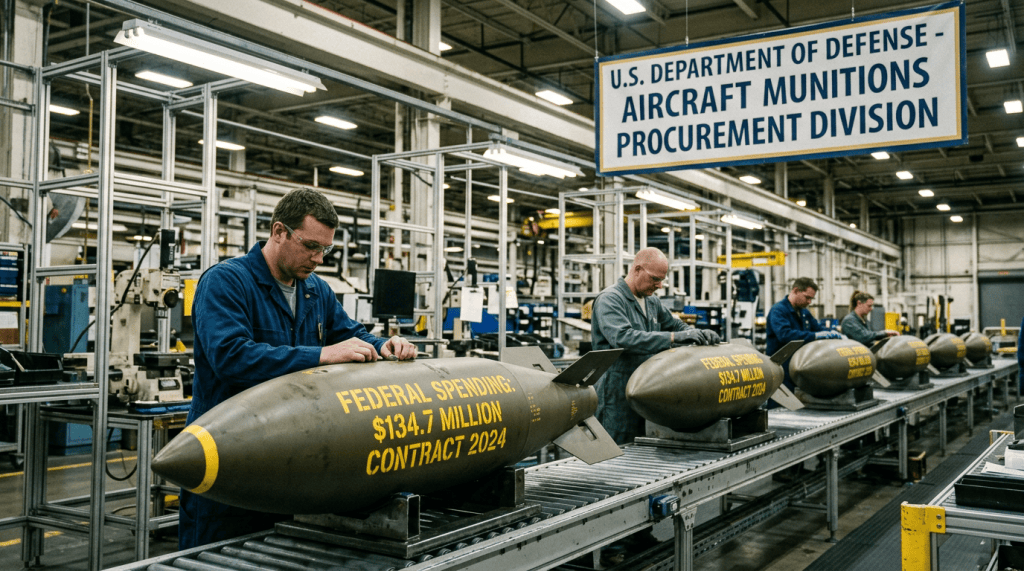
Just recently, the administration approved a shocking sum of 2.8 billion dollars to fund a new military package for Israel that includes 40,000 2,000-pound bombs. With all the shortage of military hardware for the senseless war with Iran, shouldn’t be keeping these in our inventory?
Despite the current state of our economy, the 2.8 billion dollar military package has been “paid for” through the Foreign Military Financing account. That’s taxpayer money!
It is an insult to the American people when our government can only think of ways to spend taxpayer dollars on bombs and not on our home front troops who are suffering through the “greatest recession of the modern era.”
What could the 2.8 billion dollars have done for America?
The 2.8 billion dollars could have been used to repair America’s crumbling infrastructure, such as bridges and public transportation or fully fund America’s public education system.
The 2.8 billion dollars could have been used to assist the veterans of our military who have sacrificed so much for our country and provide them with the healthcare that they deserve.
Instead, the “investment” decision was made by those in Trump Administration who only seem to worry about defense spending and not the suffering of the American people.
During these challenging times, it is an insult for the government to completely disregard the hardships of the American people and think only of ways to spend taxpayer dollars on foreign defense. Keep our money here to help Americans!
How a Needless Conflict Is Crushing American Family Budgets
By Winston Wendell
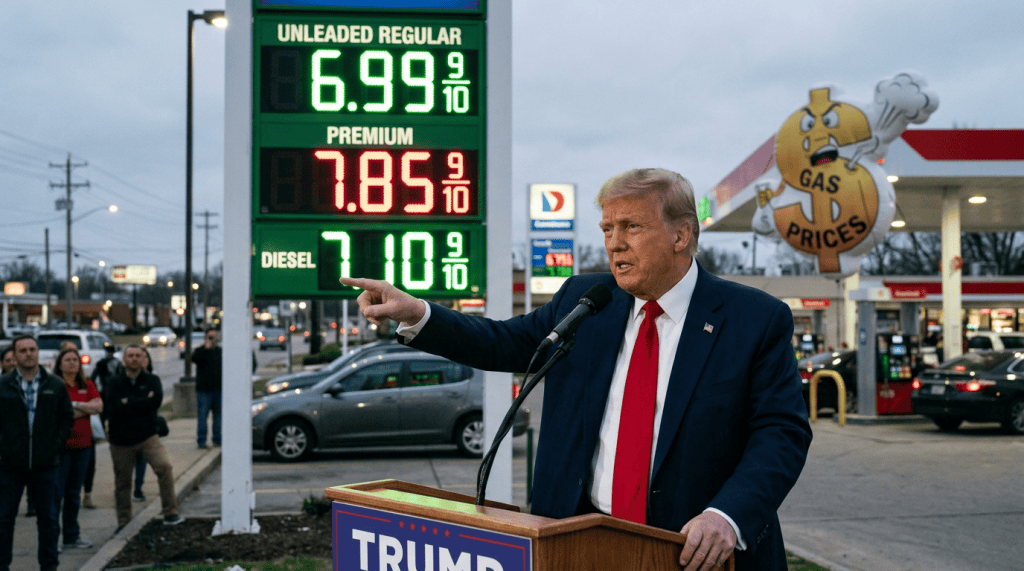
Gas prices in America have once again reached a breaking point. For many families, the prospect of filling up their cars is an unbearable prospect. Energy prices directly impact the global economy, and its repercussions are being felt by ordinary families. As an essential good, increases in its price effectively act as a tax on all other goods and services.
The devastating impact of this development is felt most strongly by middle-class families. Yet, what many people fail to understand is that this crisis is a direct result of an avoidable conflict engineered by Donald Trump.
During the 2024 election campaign, US president Donald Trump courted working-class voters by promising to ease the rising costs of living. Voters were promised that a Trump administration would be good for the economy and energy prices would plummet. Many were drawn to his populist rhetoric and pledged their vote to the former president, hoping that he would deliver on his promises.
They delivered their votes, but not much else.
With little provocation, the President decided to embark on a geopolitical and military adventure in Iran. By fueling a senseless war, Trump pushed global oil prices to a record high, devastating families that trusted him to restore stability to the economy.
This development is an unforgivable betrayal of the middle-class voters that placed their trust in him. Ordinary Americans that believed in his populism are now faced with the ugly reality of Trump’s presidency. With every visit to a gas station and a grocery store, they are reminded that their president is responsible for their financial struggles.
These people know that they were misled and their trust betrayed. They understand that the America First rhetoric masked Trump’s recklessness and irresponsibility as a leader.
For the American middle class, there is no justice. For everyone else, there is at least some form of redemption.
During the 2024 campaign, commentators, economists, and analysts warned of the potential economic ramifications of Trump’s presidency. They spoke of skyrocketing energy prices and a possible inflation crisis. Throughout the election race, they were dismissed as irresponsible and unworthy of attention.
Now, as the damage is being tallied, these commentators can finally take a deep breath and say: “we told you so”.
American families deserve better leadership than what they have been offered during the 2024 campaign. They deserve better than a foreign policy fueled by ego and a domestic policy of perpetual war and division.
The price for Trump’s vanity and incompetence will be paid in higher gas prices and unbearable costs of living. It is only fitting that those that promoted this vision of America, MAGA, are held accountable. Voters must understand that a vote for a Trump and Republicans are a vote for higher taxes and budget deficits. The electorate needs to hold the president and his Republican Party enablers in Congress responsible for the manufactured crisis at home and abroad.
How Trump’s Illegal Trade Duties Transformed Into a Multibillion-Dollar Corporate Windfall
by Winston Wendell
When President Donald Trump returned to office in January 2025, he promised a new set of tariffs would fix the damage caused by his own 2017 tax cuts. He said regular folks wouldn’t notice the extra charges on imported goods, American manufacturers would see a boom, and those millions in profits that used to flow to the national elite would finally go away.
That’s not what happened. Instead, import duties turned into a backwards tax on the middle class, who got hit with higher prices as businesses passed the costs right along. And now, after a historic Supreme Court decision called these Trump’s tariffs illegal, billions in refunds are landing right in shareholders’ pockets.
Tariff Refunds Go Right to Shareholders
This giant shift of cash from regular middle class Americans to the wealthiest is all thanks to a Supreme Court ruling in February. The Court said Trump’s use of the International Emergency Economic Powers Act for tariffs was illegal.
So the government had to pay back the businesses that shelled out $166 billion in tariffs, half that money, the Court decided, should go straight to the firms who paid it.
But are the companies who squeezed extra billions out of Americans actually planning to refund the people they overcharged?
Big corporations say they won’t. Even after these firms got their government refund (plus interest), they’re just using the money to make shareholders richer and further pump up profits.
Here’s how some companies are spending their “surprise” rebate:
Nike: In summer 2025, Nike executives said they’d cover a $1 billion tariff cost by getting creative, including strategic $5 to $10 price hikes to consumers on US goods. Fast forward, and after scoring nearly $1 billion back, Nike execs called the cash an “unplanned benefit” to bump up their profits. Meanwhile, there’s now a class-action lawsuit accusing Nike of “double-dipping”: raising prices to cover tariffs, then pocketing the refund.
Dollar Tree: The loss cost discount retailer landed $383 million in tariff refunds, but only set aside $22 million for price cuts as part of a “tariff reinvestment initiative.” The rest? It doesn’t even compare. Dollar Tree also announced a $605 million share buyback, a move to pad shareholders’ wallets, at 27 times the size of their consumer refund gesture.
Steve Madden: The shoe company bragged about just raising prices and letting customers pay for the tariffs. Now, they’re sitting on a $92 million rebate and say they’ll use it to pay off company debt.
Levi Strauss: After hiking prices to offset tariff costs, Levi’s got $80 million back. Execs said they’re not sure what to do with the cash. And like Nike, Levi Strauss faces a class-action lawsuit for not paying customers back.
Walmart, Target, and Lowe’s: These giants all made vague promises about using the rebate to lower prices or to help “fund price leadership” in their industries. Concrete numbers? Still missing. Lowe’s even changed its tune, swapping “customer-facing actions” for promises of “strong profitability” for itself and its shareholders.
The Truth About These Refunds
One reason companies get away with this? It’s almost impossible to figure out how to break the rebate apart for each individual shopper, since those tariff costs were part of millions of everyday items’ prices.
Still, the bigger problem is the federal government. If these tariffs had gone through proper approval, they would’ve just been another regressive tax on middle class Americans. But slapping them in as an executive order under the IEEPA set up this jackpot in the first place.
So, the policy, in the end, was just another regressive tax on the poor and middle class. Like the tax cuts from 2017 and 2025, this is yet another “win” for everyone except for the workers and consumers who always end up paying the bill.
Despite Trump’s optimism about the US economy, there are growing concerns about the gap between main street and wall street. In recent months, the stock market has seen a three week long rise. This has put the S&P 500 close to a record high which Trump is quick to point out as proof of his economic genius, especially when it comes to those with retirement plans. But many would say that the market’s success is misleading given the state of the economy for most Americans.
“The economic realities for most Americans are not nearly as positive as suggested by the president,” said Laura Tyson, a former Chair of the President’s Council of Economic Advisers for President Clinton. “While the stock market is doing well, wages are not keeping pace with inflation, therefore most Americans are not seeing an increase in their purchasing power.”
According to the latest report from the Labor Department, July saw an unexpected decrease in the number of new jobs. Although wages are rising, they are not keeping up with the increase in the size of the economy. The result? Average living standards for most of the population are actually dropping.
The impact of these numbers are being felt most by Americas’ middle and lower classes who are living from paycheck to paycheck. Credit card debt has skyrocketed as families with low wages are forced to use their savings or charge purchases to cover essentials such as groceries, housing and healthcare. Added to all this the price of electricity alone has jumped 12 percent since Trump took office, leaving many households struggling to pay their bills.
“Most people in America are not benefiting from the dramatic rise in profits of the large companies in the S&P 500, many of which are in the healthcare and energy industries,” said Joseph Stiglitz, a Nobel Prize-winning economist. “This imbalance cannot be beneficial to America’s future as it breeds social unrest amongst many groups due to growing inequalities in income and wealth.”
As Trump promotes the success of the stock market, many are concerned about the health of the American economy. Although those on the top of the economic ladder are enjoying the best increase in wealth in five years, many others are finding life as a middle class family becoming harder and harder to manage.
President Donald Trump has asserted that America has entered upon a new “Golden Age.” This is a far cry from the reality we see on the ground today, where over one hundred thousand jobs have been lost in just the past two months. Gas prices are skyrocketing, and groceries are costing a record amount.
Yet another consequence of the Trump administration’s disastrous war with Iran is that we are facing unprecedented deficits and soaring gas prices. More concerning still, the military’s most vital missiles for the defense of America’s allies and military installations in the Middle East are nearly depleted.
The Washington Post recently reported that the Pentagon’s stores of precision guided missiles and large diameter rockets needed for its most sophisticated missile-defense systems are nearly depleted after more than five months of relentless strikes on Iran. This leaves the president with only limited options regarding renewed attacks on the Islamic Republic.
At the same time, however, Reuters looked at this issue from a different angle, citing security analysts for the statement that the U.S. would be unable to respond adequately to a Chinese attack on Taiwan or other regional provocations if they were to occur, given the current levels of defense readiness. This development is exceptionally concerning given the heightened tensions with China at the moment, and it is not reassuring that the U.S. has so few options available in the event of a large-scale attack on any of its allies.
If Trump decides to continue with his campaign of airstrikes against Iran, the limited number of precision-guided weapons in the Pentagon’s inventory poses a potentially dangerous dilemma for the President. Reuters added that the U.S. is already down to just eight THAAD missiles and thirteen Patriot missiles, having burned through nearly 80% of THAAD and 50% of Patriot since the beginning of hostilities with Iran.
Despite the urgent need, defense officials estimate it will take several years before America’s missile inventory will be back to where it was before the war with Iran began, even if the defense-contracting companies ramp up their production rates to maximum.
It all boils down to the President himself, who, with his unilateral declaration of war on Iran, has placed the U.S. in an exceptionally perilous position both at home and abroad. Neither the American public nor our allies wanted this, and it is clear that Trump thought through the economic impact of his decision much too little. By launching this kind of reckless campaign, he has undermined both the economic and national security of the United States.
It has been quite an eventful year – to be more precise, the economic policy of President Trump during his second term of office is turning ordinary everyday activities into a burden. Americans jokingly refer to the current situation as “Trumpflation”. However, one might wonder what is causing the increase of prices? Let us examine the causes in detail.
Tariffs and Price Surges
In 2025, President Trump introduced the tariffs of 10% on imports and 60% on imports from China, claiming that it will boost production in the USA. However, economists from the Peterson Institute did not hesitate in criticizing the move as a sales tax for citizens.
By June 2026, the level of inflation in the USA reached 6.5% which is the highest one since before COVID-19.
One of the places where this process becomes obvious is a local supermarket. America is still dependent on foreign fertilizer, chemicals, and farming equipment. As a result, any increase in the costs of importing them makes local products more expensive. A gallon of milk cost increased by almost 80% reaching $5.10. Moreover, even staple goods and food are increasing in price faster than the rate of inflation, and families making $50,000 to $150,000 a year face this problem.
Oil Shock: The Iran War and Gasoline
However, things get worse overseas. By the end of 2025, Trump began to attack Iran causing the start of what became known later as “The Iran War”. This led to the closure of Strait of Hormuz which accounts for 20% of global oil transportation. As a result, gasoline prices exploded.
As a result, in early 2026, the average price of gasoline reached $5.65 a gallon. In Arizona and in the Midwest regions, the price per gallon was $6. With the yearly mileage of 12,000 miles, one will spend additional $1,200 on gasoline. Such expenses become unbearable for families with low budgets.
Forbes reports that small businesses suffered a great deal from the situation described above – particularly those which use trucks and ships. Many business owners decided to increase their prices, but some of them simply had to fire some workers to pay for their increased costs.
The 2025 Tax Law: The Winners and Losers
Also, Trump passed the tax reform legislation known as “the Big Beautiful Bill”. It was said that such legislation would benefit ordinary Americans. However, the examination of the law shows that most of the profits will not reach Americans. Corporate tax breaks which were introduced in 2017 remained unchanged, but sales and excise taxes increased drastically. The Congressional Budget Office and Tax Policy Center calculated that the 1% of the richest Americans received 65% of the total benefits, and most of other people received no or little changes to their wallets.
Such conclusion is supported by data from the Federal Reserve. Any advantage gained from tax breaks disappeared in front of rising prices. Families with middle incomes of $100,000 decreased their disposable income by 3 to 4% between 2024 and 2026.
How Everyone Survives
People are talking about this problem constantly. According to the Gallup poll conducted in June 2026, 68% of Americans believe that the current trend of the national economy is heading downwards. Also, according to the survey conducted by Pew, more than 75% of Americans are worried about the food and gas prices; they blame the trade war for keeping inflation.
What Will Happen in Future?
The Federal Reserve announced that it will continue holding interest rates at present levels to bring prices down. However, with constant tariffs and conflict with Iran, such action seems rather fruitless. Also, based on conversations with the experts, they claim that as long as the protectionism and foreign disputes remain the focus of government policy, stagflation (a combination of slow growth and high prices) is imminent.
Such trends cannot be overlooked. It is tariffs, foreign conflicts, and tax reforms favorable to corporations which increase the cost of goods for Americans. For America’s middle class, the slogan “America First” is becoming synonymous with spending extra money on goods and gasoline.
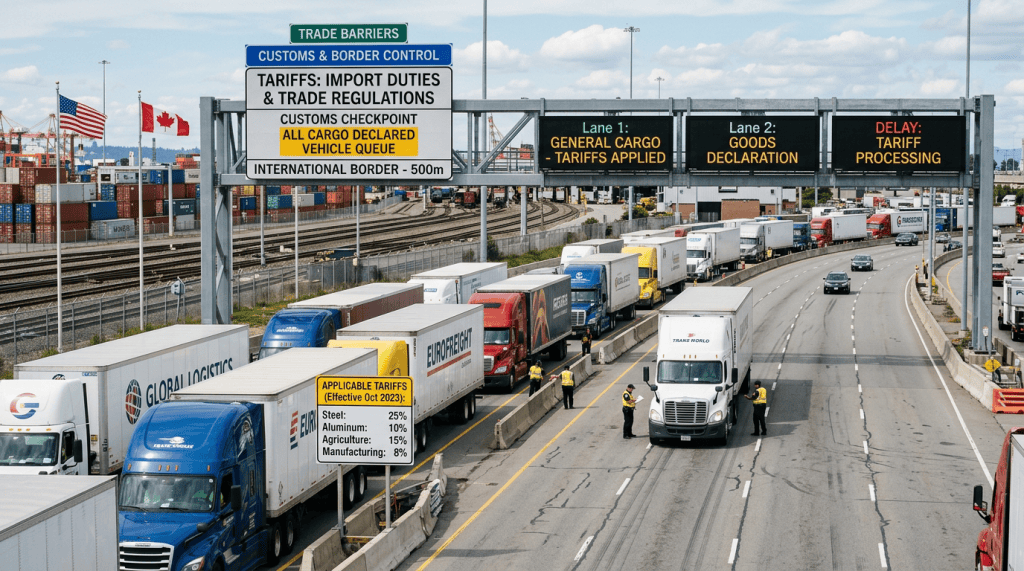
I’ve watched the White House do the same thing over and over: grab a tariff, call it “targeted,” and insist it’ll only hurt foreign rivals. But now, they’re rolling out up to 50% tariffs on $20 billion of Canadian goods and threatening a 100% duty on generic pharmaceuticals starting in 2028. It’s familiar, sure except the risks are bigger and the fallout is faster. As someone who wants economic policy to help regular people, not steamroll them, I see this as a costly mistake. It’ll drive up prices, mess up supply chains, and chip away at the Republican Party’s standing with the voters it claims are its top priority.
A Costly Bet on a Tired Storyline
Trump’s obsession with tariffs really took off during the China fight in 2018 and 2019. He pitched those tariffs as “tough love,” meant to bring jobs home. Now it’s the same formula: slap a 50% tariff on Canadian goods like hockey equipment, lumber, alcohol plus a 100% duty on generic drug ingredients set to hit in 2028. This time, tariffs on Canada start August 19, 2026, while the drug measure waits two more years.
Officials claim the grace period gives businesses time to “brace for impact” and that consumers won’t feel the squeeze. But history is pretty clear. Back in 2018, a Peterson Institute study showed about half the cost of U.S. tariffs winds up in consumer prices. So, when that burden lands on working families, the same folks Republicans are eyeing for November it’s more than just a broken promise; it’s downright cruel.
Consumers Can’t Dodge the Fallout, Even with Exemptions
The White House points out that groceries, energy, and other basic goods aren’t on the list, arguing inflation’s about housing and gas not hockey sticks. Still, thinking tariffs on “signature” Canadian goods won’t ripple out is just wishful thinking. Canada sends $383 billion in goods to the U.S. each year, and the $20 billion targeted for tariffs is baked right into our supply chains.
Canadian softwood lumber is a textbook example, it’s crucial to construction and furniture in the States. A 50% duty squeezes supply, making homes and rent pricier something voters in states like Michigan, New York, and Pennsylvania are already upset about. Bloomberg says a lumber tariff could add costs to a new Midwestern home. That’s not just a number; it’s real money for families trying to secure a roof.
Now look at the 100% threat on generic drugs. This isn’t about everyday aspirin, it’s the bulk pharmaceutical ingredients manufacturers need. When costs jump, the price hike rolls right down to patients. Reuters reports a common generic heart medication shot up 12% in the past year, more so as the White House added new duties in 2024. For seniors and low-income Americans who rely on affordable generics, the chance of prices doubling is alarming.
The Political Math Just Doesn’t Work
Republican strategists hope tariffs will feel too abstract for voters to notice. But every poll says the opposite. Quinnipiac’s June 2026 survey showed 57% of likely mid-term voters worried about inflation, 22% specifically troubled by prescription drug costs. Gallup found 61% of Americans now see trade policy as crucial, a sharp change from 2016 when hardly anyone cared.
Even a senior White House aide quietly admitted, “Any talk about more tariffs, unless it’s about cutting them, spells trouble for Republicans.” Yet the administration keeps going, banking on a tough image to rally the base. Trouble is, that base isn’t so uniform; a lot of those folks are already stretching to handle the higher costs from Trump’s old trade battles. When the impact finally lands at the pharmacy or lumberyard, the political math flips against the GOP.
Canada Fights Back and So Does U.S. Industry
Canada isn’t just watching. Officials warn of big consequences on both sides. If the U.S. wins concessions, like getting American liquor back in Canadian stores there’s no guarantee Canadians will actually buy it. Canada’s trade ministry expects a 50% tariff could cut U.S. imports of Canadian wood, paper, and farm goods by around 30% in two years.
That means trouble for local economies built on cross-border trade. Maine’s paper mills and Michigan’s auto-parts suppliers are barely hanging on. Patrick Woodcock, Maine’s Chamber of Commerce chief, didn’t mince words: hundreds of local businesses are reconsidering operations and getting ready for shocks that threaten jobs. When tariffs disrupt material flow, the hurt spreads farther than just importers, it hits manufacturers, transport, and workers.
Tariffs Are a Blunt Tool, Not a Strategy
Trump’s heavy reliance on tariffs doesn’t get much love from economists. The IMF’s 2024 report warned that hiking tariffs by yourself, especially over and over, just drives up domestic costs without any of the promised leverage. Legally, there’s not much support either. The Supreme Court ruled 6–3 on February 20, 2026, that President Trump overstepped his authority by using the 1977 International Emergency Economic Powers Act (IEEPA) to impose sweeping global and reciprocal import tariffs. That ruling casts a shadow over every new tariff the administration tries.
The Bottom Line
I see Trump’s latest tariff threats as political moves dressed up as strategy, ignoring clear evidence. Higher prices hit consumers, supply chains get backed up, and the GOP’s “average American” story rings hollow. Delays and carve-outs won’t stop the fallout, expect inflation in home materials, medicine, and more.
The Tariff Trap: Why Trump’s Economic Obsession Risks a “Catastrophic” Reckoning
by Winston Wendell
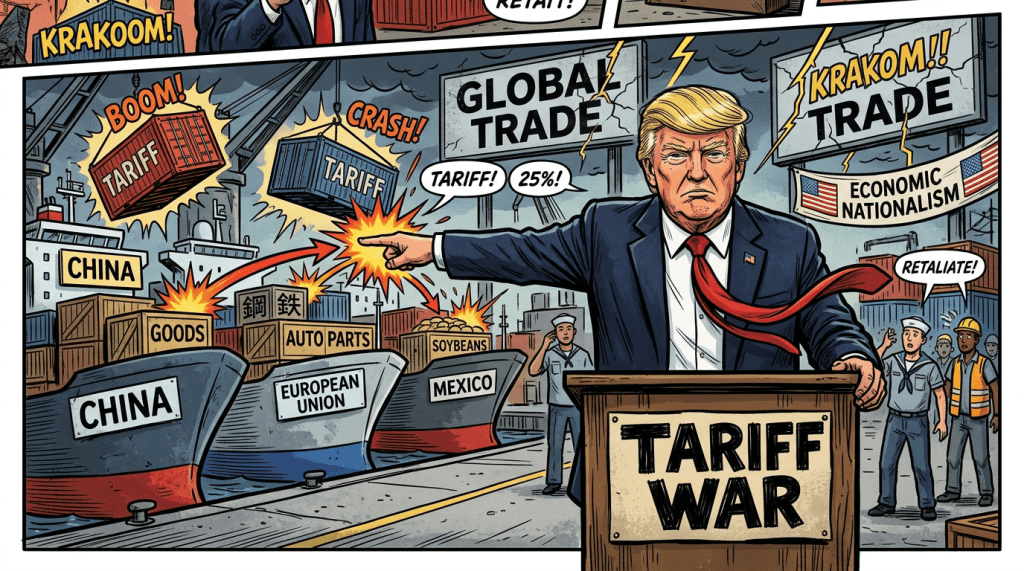
Watching the latest news about Donald Trump and his planned wave of new tariffs, I can’t help but feel like we’ve seen this before—and not in a good way. Trump likes to talk up these tariffs, spinning them as a way to force other countries to play by our rules and to shield the American economy. But truthfully, the reality looks a lot harsher. What we’re seeing is a strategy built for show, not for the real grind of keeping supply chains steady and costs down for everyday Americans.
Inside Trump’s own circle, people seem alarmed. The Financial Times reported that his advisers are scrambling behind the scenes, trying to steer him off this dangerous path. These aren’t just casual disagreements; his team is pulling the fire alarm, warning that this move could turn out to be a disaster.
What really worries me is how this policy feels like a classic “shoot the messenger” move. We all saw what happened during Trump’s first term: other countries fired back with their own tariffs, American factories struggled, and farmers got stuck with huge losses as export markets dried up. Even with the economy on shaky ground right now, Trump looks set to gamble one more time.
People are stretched thin—prices at the gas pump are heading toward $4 because of turmoil in places like Iran, and Americans are feeling the squeeze every time they shop or drive. Most voters aren’t happy with how Trump has handled living costs. And now, he wants to slap on new tariffs, knowing that every extra tax at the border gets passed straight to shoppers. That’s not just risky for a campaign—it really feels like economic arrogance.
Then there are those behind-the-scenes talks about dodging Supreme Court limits by labeling the tariffs as probes into “forced labor.” It’s a tactic, sure, but a pretty cynical one. Instead of leading with sound economic thinking, this approach depends on bending the rules to please his supporters, even if it causes bigger problems for everyone else.
At the end of the day, Trump’s advisers have good reasons to worry about the political fallout. If the idea is to protect American jobs, these tariffs could backfire and hurt the same prosperity he talks about defending. By shutting out the practical warnings from his own team, Trump is gambling with the one thing that was supposed to be his strongest campaign argument: the economy. At this point, we’re staring down the road to a trade war that could make life a lot more expensive for the people he swore to help.
Every time I see the numbers ticking higher at my local gas station, I get the strangest sense of déjà vu. We’ve gone through these price spikes before, but this time it feels heavier somehow, almost suffocating. The rising military tension with Iran, which has taken center stage for the Trump administration, isn’t just a headline; it’s merging with everyday life, impacting budgets and cranking up stress for millions across the country.
This isn’t just another blip, it’s a shift you can feel in the air. CNBC says economic anxiety hasn’t hit these heights since the inflation surge right after the pandemic in late 2023. People are tired, and honestly, the numbers just back up what everyone feels.
The Grim Reality Behind the Figures
The CNBC All-America Economic Survey doesn’t pull any punches. Sixty-one percent of people are now pretty pessimistic about the country’s financial future. Only around a quarter are still holding out hope.
So, what’s really lighting this fire? It’s basic stuff. Anyone in line at the grocery store or waiting to fuel up will tell you, it’s all about the cost of just getting by. Food and gas aren’t minor expenses anymore, they’re completely reworking how people live.
Sacrificing the Basics
This squeeze is making people choose between necessities. The latest survey hits hard:
Almost half of Americans (47%) are skimping on essentials, things like medical care, groceries, everyday basics, just to keep their heads above water.
Two out of three have slashed anything extra. The empty restaurants and quiet movie theaters are proof enough that people are choosing survival over fun.
Policy-Driven Discontent
Frustration is clear, and it’s pointed straight at the White House. Right now, President Trump’s handling of the economy gets just 38% approval, with about 60% giving him a thumbs down.
The administration’s approach to Iran is just as divisive. Only 35% of voters support the military moves, while 63% are against them. The link between decisions overseas and money woes at home is starting to look obvious to everyone.
The “Trauma” of Persistent Inflation
So why does the anxiety stick around, even when prices dip for a while? Democratic pollster Jay Campbell put it plainly to CNBC: that brief break in gas prices earlier this year didn’t fix the “financial trauma” everyday people feel.
Even when prices drop, nobody forgets what it felt like when they were sky-high for two years. That memory sticks, so small changes just don’t erase the frustration.
What the Pump Is Telling Us
AAA backs this up with tough stats. Last Friday, the national average for a gallon of regular gas hit $3.98, a ten-cent jump in just a week. Diesel’s hitting even harder, climbing past $5 per gallon and putting more pressure on the folks who keep the trucks and supply chains running.
Implications for Washington
Even with all these grim numbers, the political fallout is, for now, kind of muted. Democrats still have a slight four-point edge for Congress, but Campbell warns there’s no massive political wave building, not yet.
But things feel shaky. With the Iran conflict not cooling down and people’s savings evaporating, anxiety is running high. Folks across the country are just holding their breath, wondering if the costs of Trump’s foreign policy will end up outweighing the price of keeping things steady at home.
The today’s Consumer Price Index report makes it quite clear: April’s inflation rate climbed by 3.8% compared to the previous year, surpassing Wall Street’s 3.7% prediction. For American households already struggling with rising prices at the grocery store, these figures simply confirm their everyday experience that living expenses continue to increase under Donald Trumps administration.
Separately today, before heading to a meeting in China, Donald Trump discussed the significant financial burdens associated with his ongoing military actions in Iran. He stated that monetary considerations were not his primary concern when weighed against achieving his military objectives, whatever those are.
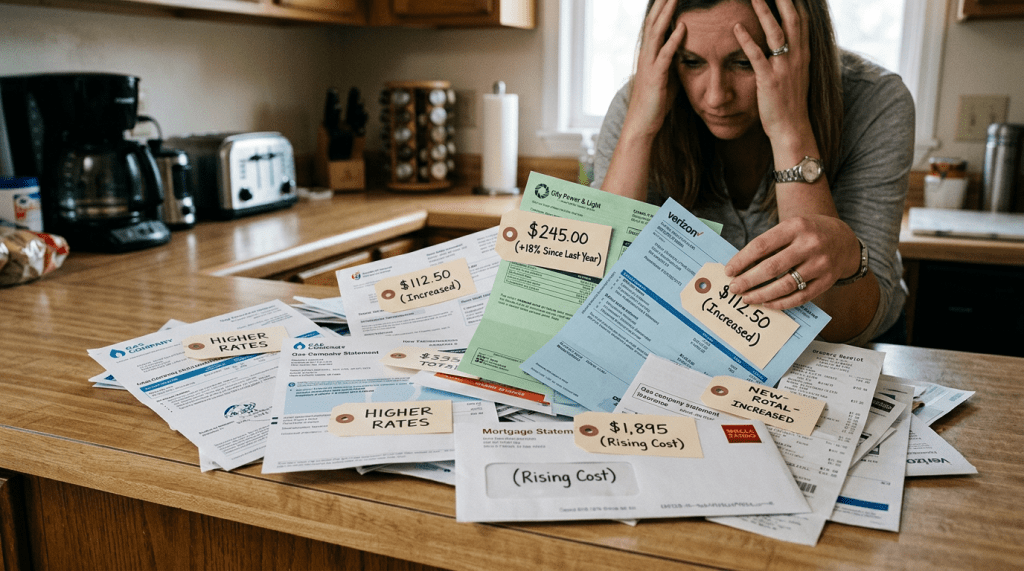
Energy prices led the way, soaring nearly 18% since April 2025. In a country still tethered to unpredictable oil markets, that’s meant higher gas and utility bills for everyone. Grocery shopping hasn’t brought much comfort either. Five out of six major food categories went up, beef’s 2.7% higher, fruits and vegetables bumped up 1.8%. Families just trying to make dinner now face real challenges.
Economists are no longer tiptoeing around the connection between Washington’s choices and what happens at people’s kitchen tables. Joseph Brusuelas at RSM came right out and said it … the U.S. economy is locked in a higher-inflation mode, and median-income households face tough adjustments for the rest of the year.
The University of Michigan’s Survey of Consumers reported record-low consumer confidence due to concerns over price hikes from the Iran conflict. Economist Justin Wolfers noted that economic uncertainty arises from “empty promises,” trade disputes, and military actions, leading to a shifting market cycle.
The public’s just as frustrated as the experts. A recent CNN poll found 70% unhappy with how the administration’s handled the economy, and 75% said the war with Iran has hit their finances personally.
Alex Jacquez from the Groundwork Collaborative didn’t hold back. He called the situation “Trump’s illegal and reckless war in Iran” and said it “reignited inflation,” and there’s just no clear end in sight.
April’s CPI report presents a critical question: Will Trump comprehend that his international decisions significantly impact American citizens at the gas station and grocery store? It is evident that voters are continuously forced to shoulder the financial burden of decisions they did not endorse.