Tag: interest rates

  • Trump’s Iran Conflict Fuels Highest Wholesale Inflation in Three Years

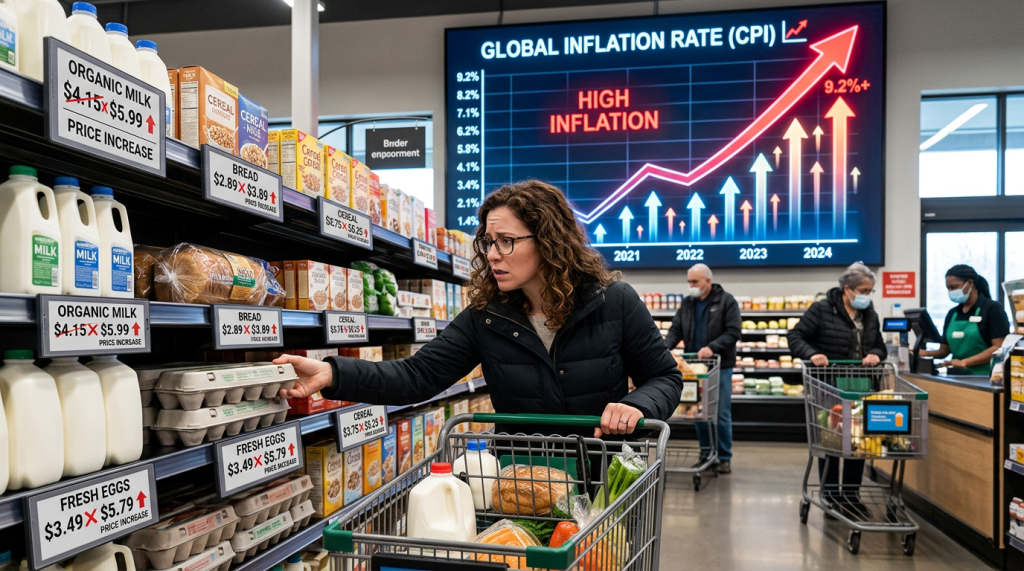
    Grocery store shelves showing price increases on milk, bread, eggs, and cereal

    Blue Press Journal (DC) – The escalating military engagement with Iran has propelled American producer inflation to its highest level in over three years, with the Labor Department confirming that the Producer Price Index surged 0.5% in March 2026 and climbed 4% annually. According to Bloomberg, the spike stems primarily from an 8.5% monthly explosion in energy costs as regional hostilities disrupt critical supply chains, while the Washington Post reports that retail gasoline prices have pushed consumer inflation to 3.3% over the past year.

    In spite of this growing pressure, President Trump continues to insist on reducing interest rates further, an action that the Financial Times observes runs counter to the emerging agreement between policymakers that there is a need to adopt stricter measures to avoid the economy from overheating. Even though inflation growth was only 0.1% when volatile industries were stripped off, Reuters points out that the International Energy Agency has recently made its first reduction of global oil demand forecasts since the COVID-19 period due to infrastructure sabotage and the closing of the Strait of Hormuz.

    Given that food costs offer little in terms of relief following the volatility seen in February, the potential disconnect between the government’s military and economic policies suggests that market uncertainty may persist even after the mid-term elections.
  • Inflation Rises More Than Expected in June Due to Trump Tariffs

    The latest inflation data from the Federal Reserve’s preferred gauge showed a surprising uptick in June, with the annual increase rising to 2.6 percent from 2.3 percent in the previous month. The increase was largely driven by the effects of President Trump’s tariffs, which have begun to make their way into the economy.

    The core personal consumption expenditures (PCE) index, which excludes the more volatile categories of food and energy, also saw a significant increase, rising to a 2.8 percent annual growth rate. This was above consensus estimates of 2.7 percent, indicating that the impact of tariffs on prices is more substantial than anticipated.

    Economists had been expecting some price growth as a result of the tariffs, but the extent of the increase has been notable. Certain categories, such as household furnishings and equipment, recreational goods, apparel, and motor vehicle parts, have been particularly affected, with prices rising sharply due to the tariffs.

    The Federal Reserve opted to hold short-term interest rates steady at a range of 4.25 percent to 4.5 percent after its meeting this week. The decision reflects the fact that while tariffs are driving up prices.

    The rise in inflation is likely to be closely watched by policymakers and economists, as it could have implications for future interest rate decisions. However, for now, the Fed appears to be taking a wait-and-see approach, monitoring the impact of the tariffs and other economic factors before making any further moves.

    The increase in inflation is also likely to have implications for consumers, who may see higher prices for a range of goods and services.