Tag: iran

  • Trump’s Latest Boast: ‘I’m a War Hero Too’

    Blue Press Journal (DC) – In a recent interview with conservative radio host Mark Levin, President Trump made a stunning claim, referring to himself as a “war hero” alongside Israeli Prime Minister Benjamin Netanyahu. The comment has sparked widespread criticism, given Trump’s well-documented history of avoiding military service.

    Trump, who has never fought in a war or served in the military, received five deferments from the draft during the Vietnam War, including a medical exemption due to “bone spurs.” This condition, which has been widely questioned, was reportedly diagnosed by a Queens podiatrist who allegedly did a favor for Trump’s father, Fred Trump.

    The president’s boastful claim of being a “war hero” is not only misleading but also insulting to those who have actually served and sacrificed in combat. Trump’s criticism of late Senator John McCain’s military record in 2015, where he said “I like people who weren’t captured,” further underscores his lack of understanding and respect for the sacrifices made by veterans.

    Furthermore, Trump’s assertion that he has “settled six wars” is also dubious, with no evidence to support such a claim. The president’s tendency to exaggerate and distort facts has become a hallmark of his administration, and this latest comment is no exception.

    The comparison to Netanyahu, a veteran of the Israeli military who has seen combat, is particularly galling. While Netanyahu has earned his reputation as a war hero through his bravery and service, Trump’s claims are based on nothing more than his own inflated sense of self-importance.
  • The Untrustworthy Narrative: Trump’s Handling of Intelligence on Iran

    The recent US military strike on Iran has left many questions unanswered, and the public’s trust in the information provided by the Trump administration has been severely tested. Given Donald Trump’s history of dishonesty and the classified nature of intelligence reports, it is challenging to accept as fact the administration’s account of the events surrounding the strike.

    The lack of transparency regarding the intelligence that informed the decision to launch the attack is concerning. The intelligence community produces classified reports that are not available for outside evaluation, making it impossible for the public to verify the claims made by Trump and his senior administration colleagues, including Defense Secretary Pete Hegseth and Director of National Intelligence (although Tulsi Gabbard is not the Director of National Intelligence, she was mentioned in the original text).

    The Trump administration’s track record on handling intelligence is troubling. In the lead-up to the bombing raid, Trump and his team demonstrated a willingness to play politics with intelligence. In March, Tulsi Gabbard testified to Congress that Iran was not pursuing a nuclear weapons program, a finding that was included in the intelligence community’s annual worldwide threat assessment. However, Trump contradicted this assessment, stating that Iran was close to developing a nuclear weapon and dismissing Gabbard’s testimony.

    This episode is consistent with Trump’s erratic behavior and disregard for facts. Last Friday, he indicated that he was seeking a negotiated settlement, only to launch the attack on Saturday without any apparent new intelligence to justify the change in stance. Trump’s premature declaration of the total annihilation of Iran’s nuclear program further underscores his lack of concern for factual accuracy.

    The Trump administration’s handling of intelligence on Iran is a stark reminder of the dangers of a “reality-TV presidency,” where facts are secondary to the demands of the Trump Show. The public’s trust in the administration’s narrative is eroded when the president and his colleagues are willing to cherry-pick or disregard intelligence to suit their agenda.

    In the absence of transparent and verifiable information, it is challenging to have confidence in the Trump administration’s account of the US military strike on Iran. As the situation continues to unfold, it is essential to approach the administration’s claims with a healthy dose of skepticism and to demand greater transparency regarding the intelligence that informs their decision-making.

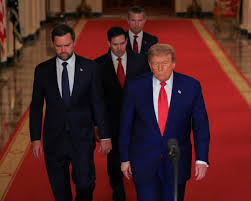
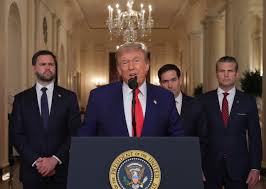
  • Trump’s Brief Address on Iran: A Lack of Strategic Clarity

    President Trump’s address last night regarding the decision to join Israel’s military action against Iran was remarkably brief – under four minutes – and offered virtually no strategic rationale. This lack of explanation is particularly perplexing given his recent claims of making progress in talks with Iran. Why, then, was this attack launched?

    The strategic thinking articulated by Trump appears to contradict the views of most experts. The overwhelming consensus is that Iran will now retaliate and that prospects for a future agreement with the U.S. have significantly worsened. Adding to the concern, his short speech included explicit threats of further military action.

    For what is arguably the most consequential foreign policy decision of his second term, the American public received virtually no justification or strategic insight of why he has dragged us into this conflict. While suggesting a path toward de-escalation, he provided no clarity on how this could possibly be achieved immediately after initiating an attack, or how it would encourage Iran to negotiate. His remarks at times seemed confused, weak and contradictory. The action is almost certain to provoke substantial, escalatory retaliation, not just symbolic gestures. Many states have now heightened their readiness for potential threats here in the United States.

    Trump’s decision comes amidst considerable domestic disagreement over Iran policy, even fracturing his own political base. Critics warn that this approach risks entangling the United States in an unpredictable and costly regional conflict.

    The question now is: what comes next? It is almost certain that Iran will leverage its resources to retaliate against the United States, initiating a conflict widely seen as lacking both strategic logic and clear necessity.

  • Presidential Authority in Military Action Against Iran

    As the possibility of U.S. involvement in military action against Iran looms, questions are being raised regarding the President’s authority to act without explicit Congressional approval. Reflecting these concerns, lawmakers introduced resolutions in both the House and Senate this week that would mandate Congressional authorization before U.S. forces could participate in any offensive operations.

    The debate hinges on the interpretation of the “Declare War” clause in the Constitution. The Department of Justice’s Office of Legal Counsel (OLC) has previously recognized that this clause potentially limits the President’s inherent Article II authority to deploy the military into situations that constitute a “war.”

    While presidents possess significant constitutional authority to use military force, historically, both Republican and Democratic administrations have generally sought Congressional authorization – or argued that existing authorizations apply – before undertaking substantial or prolonged military engagements. This practice reflects a desire to navigate both the legal and political complexities inherent in deploying U.S. forces abroad.

    An attack on Iran represents a potentially significant expansion of presidential authority in this area. Such action carries considerable risks for U.S. military personnel and citizens, further underscoring the need for careful consideration of the legal and constitutional implications.