Tag: Iran war

  • From “Cadet Bone Spurs” to Barron’s Challenge: Ventura’s Scathing Indictment of Trump’s Military Hypocrisy

    Blue Press Journal – Former Minnesota Governor and decorated Navy SEAL Jesse Ventura has issued a provocative challenge to Barron Trump, urging the president’s youngest son to “do something your father didn’t have the courage to do”—voluntarily enlist in the armed forces. Speaking on Piers Morgan’s Uncensored, Ventura articulated a stringent philosophy regarding military conflict: wars are only morally defensible when those who orchestrate them are willing to sacrifice their own children to the fight, a standard he argues Donald Trump has categorically failed to meet.

    The critique strikes at the heart of longstanding questions surrounding Trump’s military legacy. While he often claims the mantle of commander-in-chief, records from The New York Times reveal he received five Vietnam-era deferments—four for education while attending Fordham University and the University of Pennsylvania, plus a medical deferment in 1968 for bone spurs. This classification was later upgraded to 4-F (permanently ineligible), which rendered moot his claim of receiving a high draft lottery number. The contrast between his education at New York Military Academy and his avoidance of active duty earned him the nickname “Cadet Bone Spurs” from critics like Senator Tammy Duckworth, as noted by Business Insider.

    Yet Ventura’s condemnation extends beyond draft avoidance to alleged active contempt for those who served. The Atlantic reported that Trump privately referred to fallen World War I Marines at Aisne-Marne American Cemetery as “suckers” and “losers,” sentiments corroborated by former White House Chief of Staff General John Kelly. The former president allegedly questioned the utility of honoring deceased soldiers and reportedly requested that wounded veterans—whose visible injuries he reportedly found discomforting—be excluded from military parades, stating “no one wants to see that.” His infamous dismissal of Senator John McCain’s POW experience—”I like people who weren’t captured”—further cemented a pattern of derision toward service members.

    This record contrasts starkly with Trump’s aggressive foreign policy posture. General Mark Milley labeled the president as “fascist to the core,” while Admiral William McRaven and Secretary Jim Mattis have condemned his leadership. Ventura’s challenge highlights a “chickenhawk” critique: the president’s readiness for conflict with Iran while shielding his family from war’s costs, demanding sacrifices from working-class families his own evaded during Vietnam. For a commander-in-chief who struggled to understand why Americans volunteered for service—asking “What was in it for them?”—the SEAL veteran’s dare is a moral audit of privileged bellicosity.

  • Why Donald Trump’s War on Iran Was a Costly Mistake

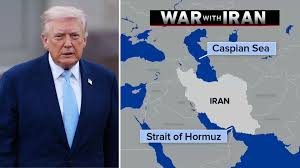
    Blue Press Journal – Donald Trump’s decision to launch a full‑scale war on Iran has already proven disastrous for the U.S. economy. By disrupting the Strait of Hormuz—through which about 20 % of global oil shipments flow—the conflict spiked crude prices by nearly 12 % in just two weeks, Reuters. Higher pump prices translate directly into elevated consumer‑price inflation, eroding purchasing power for American families already strained by lingering post‑pandemic price hikes, Bloomberg.

    Beyond the immediate fuel shock, the war has forced the Federal Reserve to confront a new inflationary spiral, prompting talks of an accelerated rate‑hike cycle that could choke off economic growth,Wall Street Journal. The longer‑term fallout is even more severe: sustained military spending drains fiscal resources, drives up the national debt, and distorts capital allocation away from productive sectors such as renewable energy and infrastructure—areas critical for long‑term competitiveness, NY Times.

    Critics argue that Trump’s reckless foreign policy ignored diplomatic alternatives and ignored expert warnings that a regional conflict would trigger a global supply‑chain crunch, AP News. The result is a distorted economy, soaring living costs, and an American public paying the price for a war that could have been avoided.

  • Trump’s Iran War Sparks a Chaotic Market Correction: Stocks Plunge as Economic Turmoil Escalates

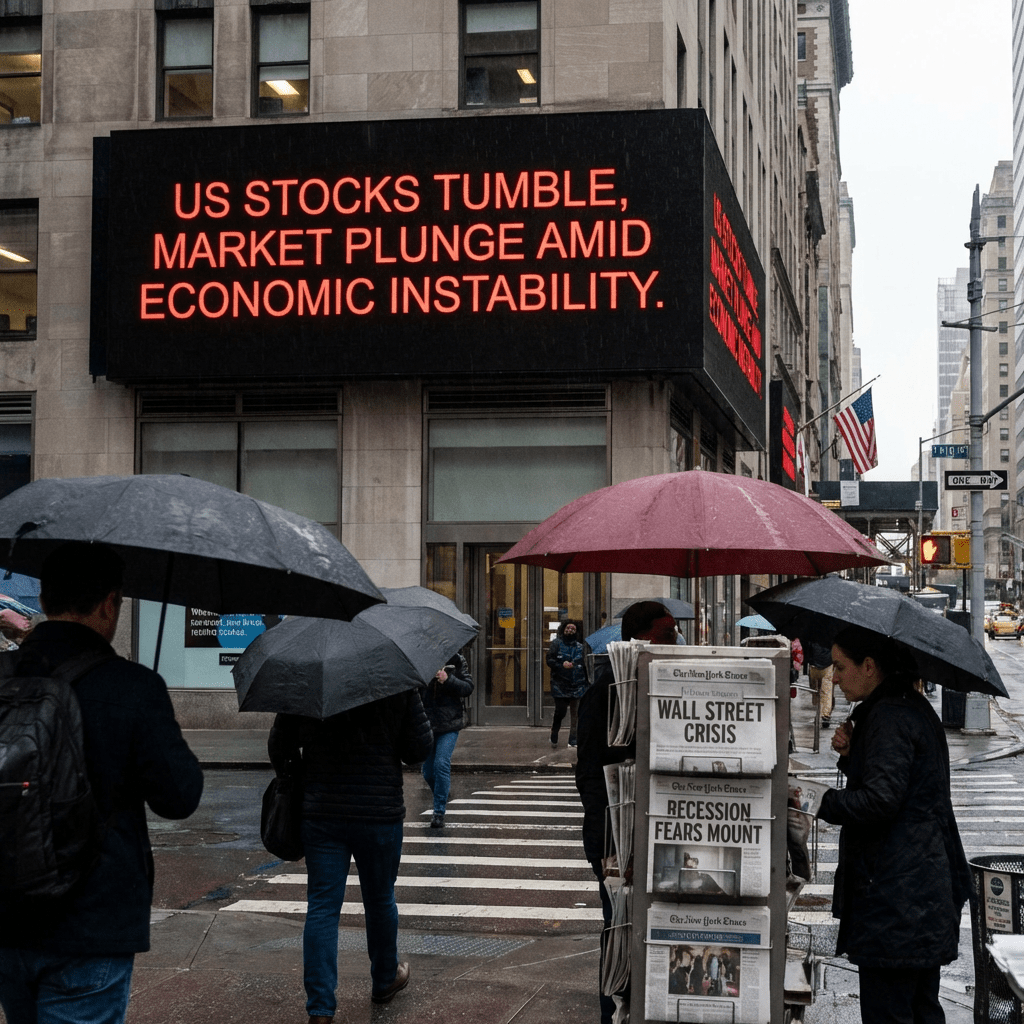
    Digital sign: US STOCKS TUMBLE, MARKET PLUNGE AMID ECONOMIC INSTABILITY. Newspapers: WALL STREET CRISIS, RECESSION FEARS MOUNT.

    Blue Press Journal – President Donald Trump’s escalating military confrontation with Iran has precipitated a severe market selloff, sending U.S. stocks tumbling Friday as investors grapple with mounting economic instability. The aggressive posture toward Tehran has triggered widespread anxiety across global financial centers, with the Russell 2000 index of small-cap firms plunging 2.7% into official correction territory—defined as a decline exceeding 10% from recent peaks—according to CNN.

    Major indices suffered parallel losses, with the Dow Jones Industrial Average dropping 444 points (0.96%), the S&P 500 sinking 1.51%, and the Nasdaq Composite falling 2.01%, briefly entering correction territory during Friday’s session. “The stock market remains in negative territory for the year, and has made new 2026 lows this week, which suggests that the market may not have yet found its bottom,” David Laut, chief investment officer at Kerux Financial, told CNN.

    The administration’s war strategy has exacerbated inflationary risks as energy costs spike, forcing central banks worldwide to reconsider interest rate trajectories. This uncertainty propelled U.S. Treasury yields to their highest levels since last July, while gold experienced its worst weekly performance since 1983, Reuters reports. Business leaders now face heightened volatility as military expansion threatens sustained economic disruption.

  • Geopolitical Turbulence: How the Iran Conflict, Ignited Under Trump, Threatens Global Economic Stability

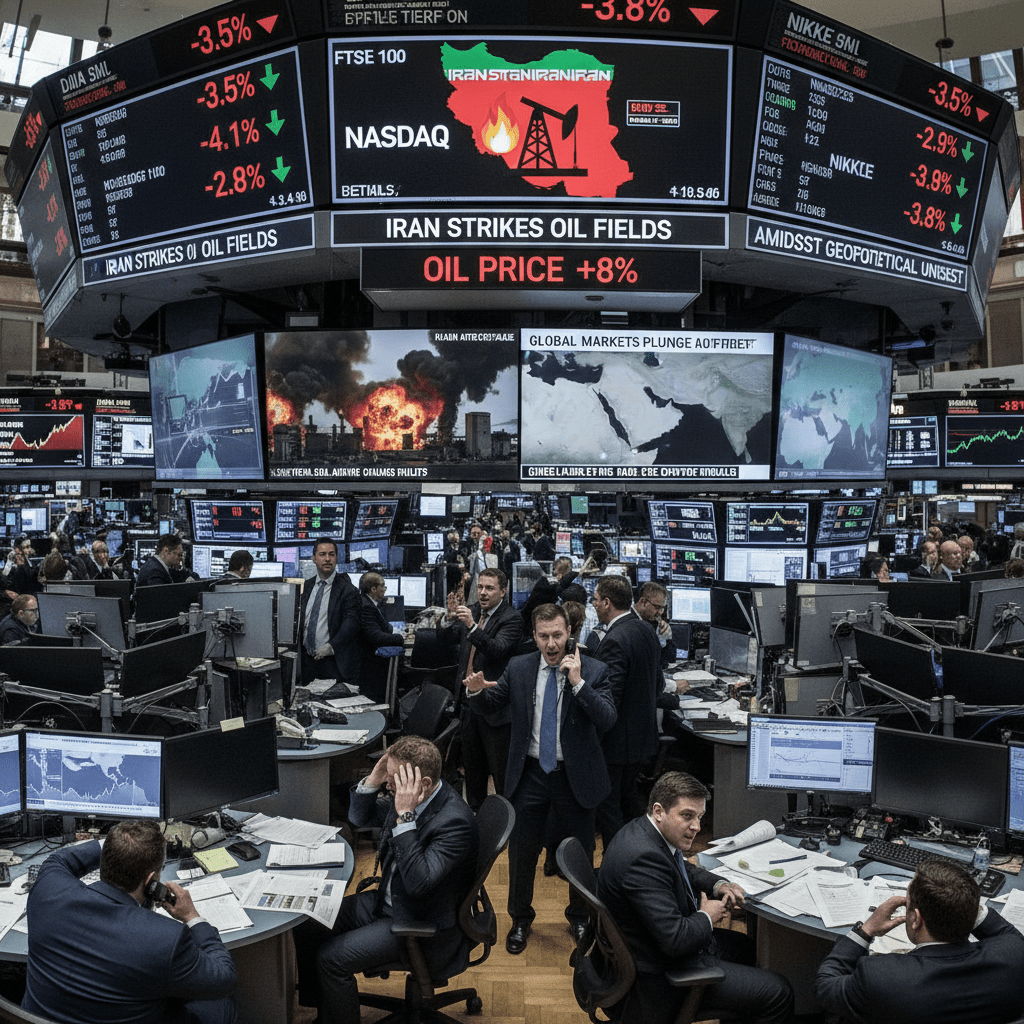
    Trading floor with screens showing IRAN STRIKES OIL FIELDS and falling stock indices.

    The Economic Fallout of Trump’s Iran Conflict

    Blue Press Journal – The global energy landscape is currently facing a catastrophic destabilization. Following targeted Iranian strikes on critical energy infrastructure in the Gulf—specifically two major refineries in Kuwait and Qatar’s vital Ras Laffan natural gas terminal—Brent crude has surged toward the $115 mark. As Tehran’s offensive disrupts the flow of approximately 20% of the world’s liquefied natural gas (LNG), the specter of a “macro wrecking ball” hanging over the global economy has become a grim reality.

    A Manufactured Crisis and the Trump Administration

    While the physical damage to the Strait of Hormuz and surrounding facilities is undeniable, financial analysts and geopolitical experts are increasingly pointing the finger at the White House. Critics argue that the Trump administration’s decision to initiate this conflict was a strategic blunder of historic proportions. According to reports from The New York Times, high-level security officials previously indicated there was no immediate or imminent security threat from Iran that warranted a full-scale kinetic engagement. 

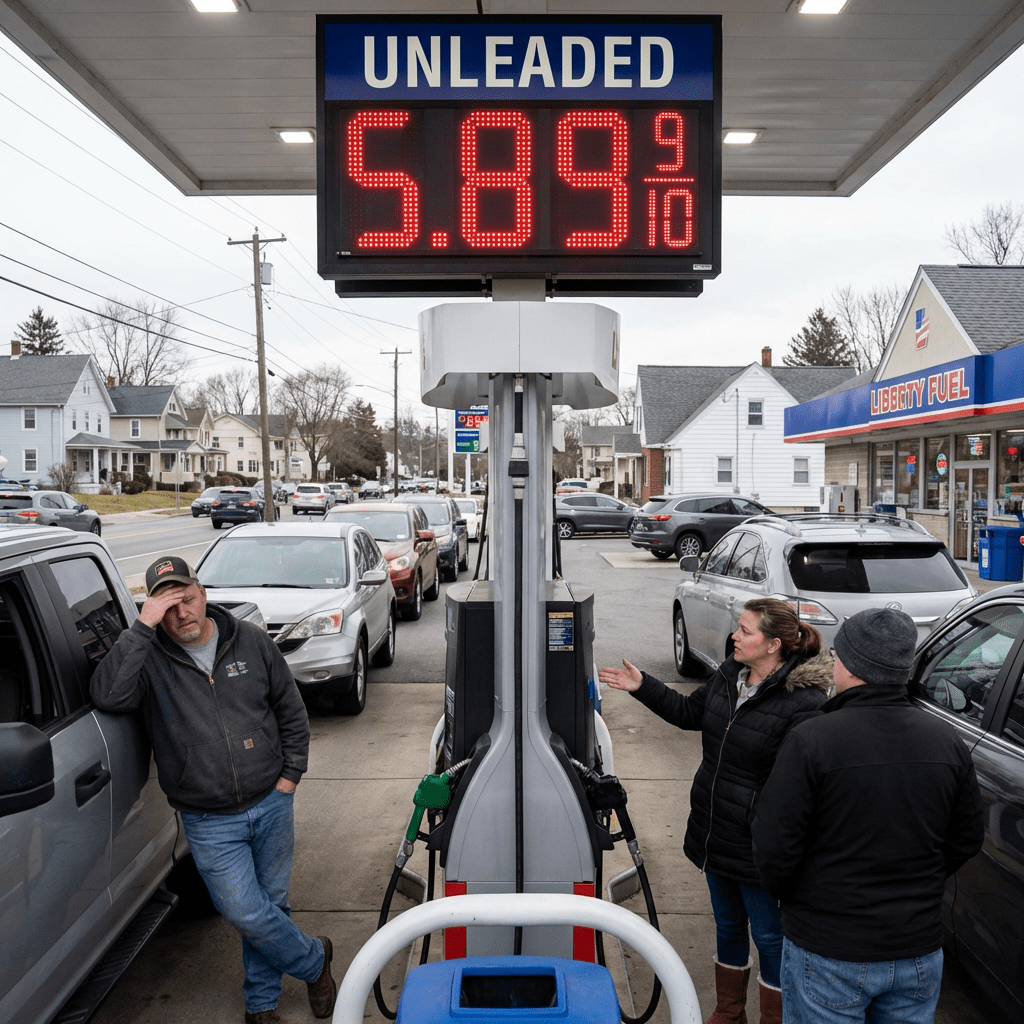
    By prioritizing a hawkish foreign policy over regional stability, the administration has arguably invited the very energy crisis it claimed to prevent. This “war of choice” has now pushed the national average price of gas to a staggering $3.88 per gallon as of March 19, 2026, placing an immense burden on American households.

    Global Market Contagion

    The economic repercussions are being felt far beyond U.S. borders. On Thursday, Brent crude jumped 6% to $113.77 per barrel, a massive leap from the sub-$73 levels seen prior to the commencement of hostilities. The Financial Times reports that European natural gas benchmarks have doubled in just thirty days, threatening a wave of “debilitating inflation” across the continent.

    Global indices are reflecting this instability:

    • Japan’s Nikkei 225 plummeted 3.4% as the Bank of Japan froze interest rates.
    • Germany’s DAX and London’s FTSE 100 both saw losses exceeding 2%.
    • Wall Street futures remain in the red as the Federal Reserve warns that persistent inflation, fueled by the war, limits their ability to provide further interest rate relief.

    As the Strait of Hormuz remains effectively shuttered to tanker traffic, the question remains: was the pursuit of this conflict worth the systematic dismantling of global economic stability? For now, the world pays the price at the pump and in the markets for a war that many intelligence experts claim was entirely avoidable.

  • Trump’s Oil‑Price Spin Masks a Growing Affordability Crisis and a Dangerous Iran War

    Trump’s Oil‑Price Spin Masks an Affordability Crisis and an Unnecessary Iran War

    Blue Press Journal – President Donald Trump tried to portray today’s surge in gasoline prices as a boon for U.S. producers, posting on TruthSocial that “the United States is the largest oil producer, so when oil prices go up, we make a lot of money.” But the reality, reported by Reuters and CNN, is that consumers are feeling the pinch of a “fuel shock” not seen since the 1970s, deepening an already‑severe affordability crisis for middle‑class families (Reuters). 

    Trump’s rhetoric also drifts into dangerous territory. He claims the war with Iran is necessary to stop a nuclear threat, yet The New York Times notes that diplomatic talks were nearing a mutually acceptable agreement and no credible evidence shows Tehran is building a bomb (NYT). Energy Secretary Chris Wright’s dismissal of a $200‑per‑barrel scenario as “unlikely” ignores Tehran’s explicit warning that regional destabilization will drive prices sky‑high (CNN). 

    Meanwhile, the president’s ongoing effort to suppress the Epstein files diverts attention from these urgent economic issues, raising questions about his priorities. As oil prices fluctuate, the real cost falls on American drivers, not on the Trump‑aligned oil lobby. 

  • Trump’s Iran War Triggers Global Market Crash: Dow Plunges 1,000 Points as Gas Prices Soar and Oil Nears Crisis Levels

    The Cost of Forever War: Trump’s Iran Escalation Triggers Global Market Meltdown and Gas Price Shock

    BLUE PRESS JOURNAL ( 3/3/2026) – Global financial markets plunged into chaos Tuesday as the economic realities of President Donald Trump’s widening war with Iran came crashing down on Wall Street, sending the Dow Jones Industrial Average plummeting over 1,000 points and driving crude oil prices toward the psychologically devastating $100-per-barrel threshold.

    The sell-off—echoing across trading floors from Seoul to Frankfurt—reflects growing panic that the administration’s decision to assassinate Iranian Supreme Leader Ayatollah Ali Khamenei and subsequent strikes on the U.S. Embassy in Riyadh have triggered a conflict with no clear exit strategy, one that threatens to choke global energy supplies just as inflation-weary consumers were hoping for financial relief.

    By 10 a.m. Eastern Time, the Dow had collapsed 1,048 points (2.1%), while the S&P 500 and Nasdaq Composite each shed 2% of their value. The rout extended far beyond American borders. South Korea’s Kospi index cratered 7.2%—its worst single-day decline since 2022—as the energy-import-dependent nation confronted the vulnerability of its supply chains. Germany’s DAX dropped 3.8%, hammered by soaring natural gas prices reminiscent of the energy crisis following Russia’s invasion of Ukraine.

    The Pump Price Punishment

    For American households, the war’s immediate sting is appearing at the gas station. The national average for regular unleaded jumped 11 cents overnight to $3.11 per gallon, according to data from motor club AAA, with analysts warning that prices could spiral toward $4.00 if hostilities disrupt traffic through the Strait of Hormuz—the narrow maritime chokepoint through which roughly 20% of global oil shipments pass daily.

    Brent crude, the international benchmark, surged another 7.5% to $83.58 per barrel, while U.S. West Texas Intermediate climbed 7.6% to $76.64. To put this in context, Brent was trading near $70 less than a week ago—a volatility spike that signals markets pricing in sustained supply risk.

    “This isn’t just a geopolitical crisis; it’s an economic assault on working families,” said economic analysts at the Roosevelt Institute, noting that every $10 increase in oil prices historically translates to roughly 25-30 cents added to the average gallon of gasoline. The timing could scarcely be worse for the Federal Reserve, which has been attempting to guide inflation toward its 2% target after years of price instability.

    Trump’s “Forever War” Doctrine

    The market collapse accelerated late Monday after Trump took to his social media platform to declare that “wars can be fought ‘forever,’ and very successfully” given America’s munitions stockpiles—a statement that extinguished hopes for a swift diplomatic resolution and suggested a prolonged, open-ended military commitment with incalculable economic costs.

    This rhetoric marks a dangerous escalation from the administration’s initial justification for strikes against Iranian leadership. Where officials initially framed the killing of Khamenei as a precision response to specific threats, Trump’s latest comments reveal a strategic framework that could commit the United States to years of asymmetric warfare, mirroring the quagmires of Iraq and Afghanistan but with significantly higher economic stakes for domestic consumers.

    Historical context underscores the risk. During Trump’s first term, the 2020 assassination of Iranian General Qassem Soleimani triggered immediate spikes in oil prices and temporary market instability, though de-escalation followed within days. The current scenario—involving the death of Iran’s supreme leader and attacks on diplomatic facilities in Saudi Arabia—represents a qualitatively superior level of conflict that threatens regional energy infrastructure directly.

    The Fed’s Impossible Position

    The economic fallout extends beyond the pump. Treasury yields spiked Tuesday, with the 10-year note climbing to 4.09% from 4.05% as bond markets priced in “warflation”—the toxic combination of supply shock-driven price increases and stagnating growth. Higher yields translate directly to more expensive mortgages, auto loans, and business financing, potentially choking off the soft landing the Federal Reserve has been carefully engineering.

    Critically, the inflationary pressure from oil shocks severely constrains the Fed’s ability to respond to slowing economic growth. While Trump has aggressively demanded rate cuts in increasingly personal terms targeting Fed Chair Jerome Powell, traders at CME Group are now pushing expectations for monetary easing deeper into the summer, recognizing that cutting rates while energy prices surge would risk unleashing runaway inflation.

    Aviation and Industry in the Crosshairs

    The transportation sector is bearing the immediate brunt. United Airlines cratered 5%, American Airlines dropped 4.4%, and Delta shed 4% as investors recalculated profit margins against jet fuel costs that rise in lockstep with crude prices. The industry, still recovering from pandemic-era disruptions, now faces the dual threat of canceled routes through Middle Eastern airspace and structurally higher operating costs that will inevitably pass to consumers in the form of expensive tickets.

    Gold, which had briefly touched $5,300 during the initial flight to safety, retreated 4.9% to $5,053 as rising yields made the non-interest-bearing asset less attractive, while Bitcoin fell below $67,000—demonstrating that even digital “safe havens” provide little shelter when war drives dollar-denominated borrowing costs upward.

    With inflation expectations unanchoring and global supply chains facing their most severe test since 2022, the economic verdict on Trump’s Iran strategy is becoming clear: this is a war that American households cannot afford, and one that global markets will not tolerate indefinitely.