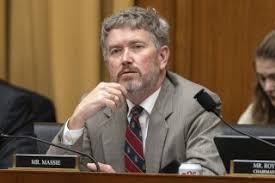
Blue Press Journal – In a sharply worded interview on ABC’s This Week, Representative Thomas Massie (R‑KY) accused President Donald Trump, senior cabinet members, and top White House officials of deliberately shielding a network of wealthy individuals tied to the late convicted sex offender Jeffrey Epstein. Massie called the effort a “systematic cover‑up” designed to protect what he labeled the “Epstein class” – a circle of billionaires who allegedly mingle with names appearing in the heavily redacted documents.
Massie reminded viewers that Trump had once promised full transparency after acknowledging social outings with Epstein‑linked guests in New York City and West Palm Beach. “He said he would be open about the issue,” Massie said, “yet he remains entrenched in the very class he vowed to expose.”
Since Epstein’s 2019 death (during Trumps first term) —officially ruled a suicide, though contested by his family—political pressure to release the remaining files has intensified. During the 2024 campaign, Trump and his allies pledged to make every Epstein‑related record public. After taking office, however, the administration stalled, dismissing the files as a “Democrat hoax” and delivering only heavily redacted versions from the Justice Department.
The limited disclosures have already raised fresh questions. According to a recent statement by Rep. Jamie Raskin (D‑MD), a search of unredacted text for “Don,” “Donald,” and “Trump” generated more than one million hits. The same files suggest deeper ties between Trump’s inner circle—Commerce Secretary Howard Lutnick, CMS Administrator Mehmet Oz, and former strategist Steve Bannon—and Epstein than previously reported.
While no direct criminal evidence against Trump or his aides has emerged, the growing web of connections fuels mounting political scrutiny. Massie seized the moment to label the current administration the “Epstein administration,” accusing it of retaliating against his push for full disclosure. In turn, Trump has publicly attacked Massie and even endorsed Massie’s primary opponent, underscoring the partisan stakes surrounding the dossier.
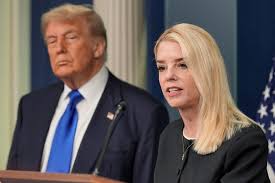
Blue Press Journal – During a recent House Judiciary Committee hearing, U.S. Attorney General Pam Bondi displayed an alarming disregard for democratic oversight, delivering a performance characterized by open hostility, personal insults, and an unsettling evasion of critical questions regarding a Department of Justice (DOJ) “enemies list” and the ongoing Jeffrey Epstein scandal. Her conduct underscored a deep-seated contempt for congressional authority and the public’s right to transparency, leaving many to question the integrity of the nation’s top law enforcement official.
A Pattern of Evasion and Disrespect
The hearing, intended to provide crucial oversight of the DOJ, quickly devolved into a testament to Bondi’s uncooperative stance. From the outset, Bondi reportedly lashed out at Democratic members of Congress, showcasing a level of disrespect rarely seen in such proceedings. Her refusal to acknowledge the profound harm inflicted upon victims of convicted sex offender Jeffrey Epstein, coupled with her dismissive attitude towards direct inquiries, painted a grim picture. As Rep. Mary Gay Scanlon (D-Pa.) pressed for answers, Bondi’s tactics became glaringly apparent: deflection, obstruction, and outright refusal to engage. The atmosphere grew so tense that Ranking Member Jamie Raskin (D-Md.) was compelled to implore Bondi to cease her “wild goose chase, another tangent,” in a desperate attempt to steer her back to the pressing matters at hand. Her disdain for the legislative body was palpable, making a mockery of the oversight process.
The Perilous “Enemies List” and Bondi’s Hypocrisy
At the heart of Scanlon’s questioning was the alarming revelation of an “enemies list” being compiled by the DOJ under Bondi’s direction. This initiative stems from President Donald Trump’s National Security Presidential Memorandum 7 (NSPM-7), signed months after the President baselessly claimed the “radical left” was “directly responsible” for an activist’s assassination. NSPM-7 mandates federal agencies to develop strategies to “investigate and disrupt networks, entities, and organizations that foment political violence,” with a disturbing focus on anti-fascist or left-wing groups.
Bondi’s subsequent memo to the DOJ took this directive a step further, ordering the compilation of a list of potential “domestic terrorism” groups. This move is particularly egregious given Bondi’s prior sworn testimony that the DOJ would “never be an enemies list.” As The Guardian recently reported, legal scholars across the spectrum have condemned these directives, citing profound constitutional concerns regarding freedom of speech and association, calling them “a chilling return to McCarthyism.”
When Scanlon directly asked Bondi to confirm the existence of this list, the Attorney General defiantly declared she was “not going to answer yes or no,” instead pivoting to an unrelated arrest of an “antifa member” in Minneapolis. This blatant attempt to obfuscate and avoid accountability was consistent with her overall performance. “We understand your current position is that you have a secret list of people or groups who you are accusing of domestic terrorism, but you won’t share it with Congress,” Scanlon retorted, exposing the deeply troubling implications of Bondi’s stonewalling.
A Broader Pattern of Surveillance and Suppression
Bondi’s evasiveness is not an isolated incident but rather part of a disturbing pattern under the current administration. Independent journalist Ken Klippenstein previously revealed that the FBI and Department of Homeland Security (DHS) have already amassed “secret and obscure” watchlists targeting pro-Palestinian and anti-Immigration and Customs Enforcement (ICE) protesters, labeling them “domestic terrorists.” Further, CNN reported on a DHS memo directing ICE agents in Minneapolis to collect personal data on protesters, while an ICE agent in Maine brazenly threatened a citizen filming him with inclusion in a “nice little database.” Despite these mounting reports, DHS Assistant Secretary for Public Affairs Tricia McLaughlin publicly denied the existence of any such database, a claim that strains credulity given the overwhelming evidence.
These actions, amplified by Bondi’s current stonewalling, illustrate a concerted effort to weaponize government agencies against political dissent. As Rep. Scanlon powerfully warned, “Americans have never tolerated political demagogues who use the government to punish people on an enemies list.” Such tactics historically brought down figures like Senator Joseph McCarthy and President Richard Nixon. The current administration, and Attorney General Bondi’s complicity, appear poised to follow a similar, ignominious path.
This urgent plea for full disclosure casts a critical light on the ongoing opacity surrounding Epstein’s network and potential complicity. World Without Exploitation asserts that over three million files related to Epstein remain unreleased, directly contradicting a Justice Department statement from January 30th that claimed the “final batch” of documents pertaining to the disgraced financier’s criminal dealings had been made public. This stark discrepancy fuels public distrust and raises pointed questions about the extent of withheld information.
Bondi’s Past Under Scrutiny
Pam Bondi, who served as Florida’s Attorney General during a period when Epstein’s controversial 2007 plea deal was finalized, has long faced scrutiny over her office’s handling of the case. While she wasn’t directly involved in the initial plea, the lingering questions about Florida’s role and the full extent of records from that era continue to shadow her. The call for truth in the Super Bowl ad effectively reopens these wounds, demanding accountability and shedding light on any potential past oversights or deliberate suppression of evidence. As reported by news outlets like The Miami Herald and ProPublica in their extensive investigations into Epstein’s initial leniency, the actions and inactions of Florida officials during that period are consistently cited as key factors enabling Epstein’s continued predatory behavior.
The Fight for Transparency and Survivor Voices
The released documents, though numerous, are heavily redacted, with explanations for these redactions yet to be provided to the public or even to lawmakers, as stipulated by the proposed Epstein Files Transparency Act. While members of Congress reportedly gained access to view these documents in a private Justice Department room, the public remains in the dark.
The emotional Super Bowl ad featured poignant cameos from survivors, whose collective voice powerfully declared, “After years of being ripped apart, we are standing together. Because this girl deserves the truth. Because we all deserve the truth.” These women, displaying images of their younger selves, underscored the profound human cost of silence.
The pressure on officials like Pam Bondi to facilitate genuine transparency regarding the Epstein files is intensifying. With millions of documents reportedly still hidden and survivors demanding answers, anything less than full disclosure only deepens the public’s suspicion and perpetuates the injustice.
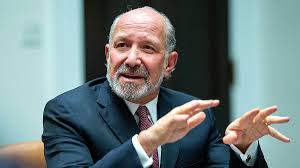
Blue Press Journal – The political landscape is reeling as newly unearthed documents detailing ties to convicted sex offender Jeffrey Epstein have ignited a firestorm around the current Commerce Secretary Howard Lutnick. Figures from across the political spectrum are now vocally demanding the Secretary’s immediate resignation, questioning the integrity of his past statements and his suitability for high office.
Recent disclosures from court documents related to Epstein’s network have revealed previously undisclosed interactions involving the Secretary. Among the most damaging are records of an invitation for the Secretary and his family to visit Epstein’s private island in 2012, as well as evidence of a private meeting between them for drinks in 2011. These revelations contradict the Secretary’s earlier claims of having ceased contact with Epstein around 2005 and asserting he “spent zero time with him socially, for business or even philanthropy.” (Source: The Guardian on Epstein document releases)
The profound discrepancy between these emerging facts and the Secretary’s earlier pronouncements has eroded confidence. Republican Congressman Thomas Massie, speaking on a national news program, unequivocally stated the Secretary “should just resign.” He drew stark parallels to high-profile resignations in British politics, emphasizing the seriousness of the alleged misrepresentations. (Source: CNN interview archives)
Echoing this sentiment, Democratic Senator Adam Schiff took to social media, asserting that the Secretary is unfit for his position. The bipartisan nature of these calls underscores the gravity of the situation and the perceived breach of public trust.
This development is not an isolated incident but forms part of the continuing fallout from the extensive Epstein revelations, which have implicated numerous prominent individuals. The ongoing exposure of powerful figures connected to Epstein’s sex trafficking operation continues to challenge institutional integrity and demand accountability from those in positions of power. (Source: New York Times reporting on Epstein fallout)
As the spotlight intensifies, the core question remains: Can a public official serve credibly when their past statements about a notorious figure contradict verified facts? The calls for the Commerce Secretary’s resignation highlight a growing demand for transparency and ethical standards from national leaders. The nation watches this critical episode unfold, with implications for government ethics and the Epstein scandal’s legacy.
BLUE PRESS JOURNAL – A rare bipartisan alliance in Congress is turning up the heat on the Department of Justice (DOJ), after the agency failed to hand over all documents tied to the late convicted sex offender Jeffrey Epstein — despite a legal requirement to do so. The controversy has sparked an unusual push for “inherent contempt” proceedings against Attorney General Pam Bondi, including the threat of daily fines until the full cache of files is released.
The Dispute Over Epstein Records
Earlier this year, lawmakers passed legislation mandating the DOJ to make public all federal documents related to Epstein, whose death in federal custody in 2019 continues to fuel questions about his network of associates and possible enablers. The bill — backed across party lines — was seen as a step toward transparency in one of the most notorious criminal cases in recent memory.
However, reports emerged last week that the DOJ had only delivered a portion of the mandated files, withholding several categories of records. According to congressional aides cited by Politicoand The Hill, these missing documents include internal communications, investigative notes, and certain sealed grand jury materials that lawmakers say should have been reviewed for public release under the new law.
Massie and Khanna’s Bipartisan Push
Reps. Thomas Massie (R-Ky.) and Ro Khanna (D-Calif.) — an unlikely pairing from opposite ends of the political spectrum — co-led the original transparency bill and are now spearheading the enforcement effort. In a joint statement, they accused the DOJ of “flouting the clear will of Congress” and undermining public trust.
Their solution: invoking Congress’s inherent contempt powers, a rarely used tool that allows lawmakers to directly penalize executive branch officials without going through the courts. Historically, this power has been employed to compel testimony or document production, though its use in the modern era is virtually unheard of.
Under their proposal, Attorney General Bondi could face monetary fines until the DOJ hands over the full tranche of Epstein-related records.
What Is “Inherent Contempt”?
The inherent contempt process dates back to the 19th century, when Congress asserted its authority to enforce subpoenas by detaining or fining noncompliant witnesses. While the Supreme Court has upheld the power in principle, it has fallen out of favor in the last century, replaced by criminal contempt referrals to the DOJ itself — an awkward arrangement when the DOJ is the target.
Massie and Khanna argue that the exceptional nature of the Epstein case warrants reviving the old enforcement mechanism. “When the agency breaking the law is the one that normally prosecutes contempt, Congress has to act for itself,” Massie said in recent interviews.
Why It Matters
The DOJ’s partial release has reignited public suspicion over Epstein’s connections to prominent figures in politics, finance, and entertainment. Transparency advocates say withholding the documents fuels conspiracy theories and undermines accountability for potential crimes beyond Epstein’s own convictions.
Bondi, a former Florida attorney general appointed to lead the DOJ last year, has defended the department’s approach, saying certain materials are too sensitive to release for reasons ranging from ongoing investigations to privacy concerns for individuals not charged with wrongdoing.
Still, with both Republicans and Democrats pressing for full disclosure — and willing to test the boundaries of congressional enforcement — the standoff could set a precedent for how lawmakers respond when executive agencies defy statutory mandates.
What’s Next
The Massie-Khanna resolution for inherent contempt is expected to be formally introduced in the coming weeks. If adopted, it could trigger a high-profile constitutional clash between Congress and the DOJ, potentially landing before the courts if Bondi challenges the fines.
Political analysts note that while bipartisan cooperation on transparency is rare, the Epstein case has cut across partisan lines due to its disturbing subject matter and unanswered questions. Whether this unity holds through a drawn-out enforcement battle remains to be seen.
Bottom line: The fight over the Epstein files is more than just a dispute over documents — it’s a test of Congress’s ability to compel compliance from the executive branch in the face of resistance. If Massie and Khanna succeed, they could revive an enforcement power unused for decades, reshaping the balance between the legislative and executive branches.
Washington, D.C. — Rumors are swirling among House Republicans that unreleased documents from late financier and convicted sex offender Jeffrey Epstein could contain highly damaging material involving former President Donald Trump, according to a report from veteran journalist David Shuster.
Shuster, a former reporter for MSNBC, CNN, and Fox News, posted on X (formerly Twitter) that several GOP lawmakers had heard from Justice Department sources that the Epstein files include evidence far more compromising than previously known.
“A few GOP House members say they’ve heard from FBI/DOJ contacts that the Epstein files (with copies in different agencies) are worse than Michael Wolff’s description of Epstein photos showing Trump with half-naked teenage girls,” Shuster wrote. Wolff, an author known for controversial exposes on Trump, had previously claimed that Epstein’s safe contained compromising images involving the former president.
The speculation reportedly intensified after Attorney General Pam Bondi, a Trump ally, appeared before the Senate Judiciary Committee. During her testimony, Bondi refused to answer a question from Sen. Sheldon Whitehouse (D-R.I.) about whether she had personally seen the photos seized from Epstein’s safe. Instead, she redirected by questioning Whitehouse about donations he received from LinkedIn co-founder Reid Hoffman, who has acknowledged ties to Epstein.
“She didn’t give a denial,” Shuster noted, adding that Bondi’s evasiveness had left some Republicans “spooked.”
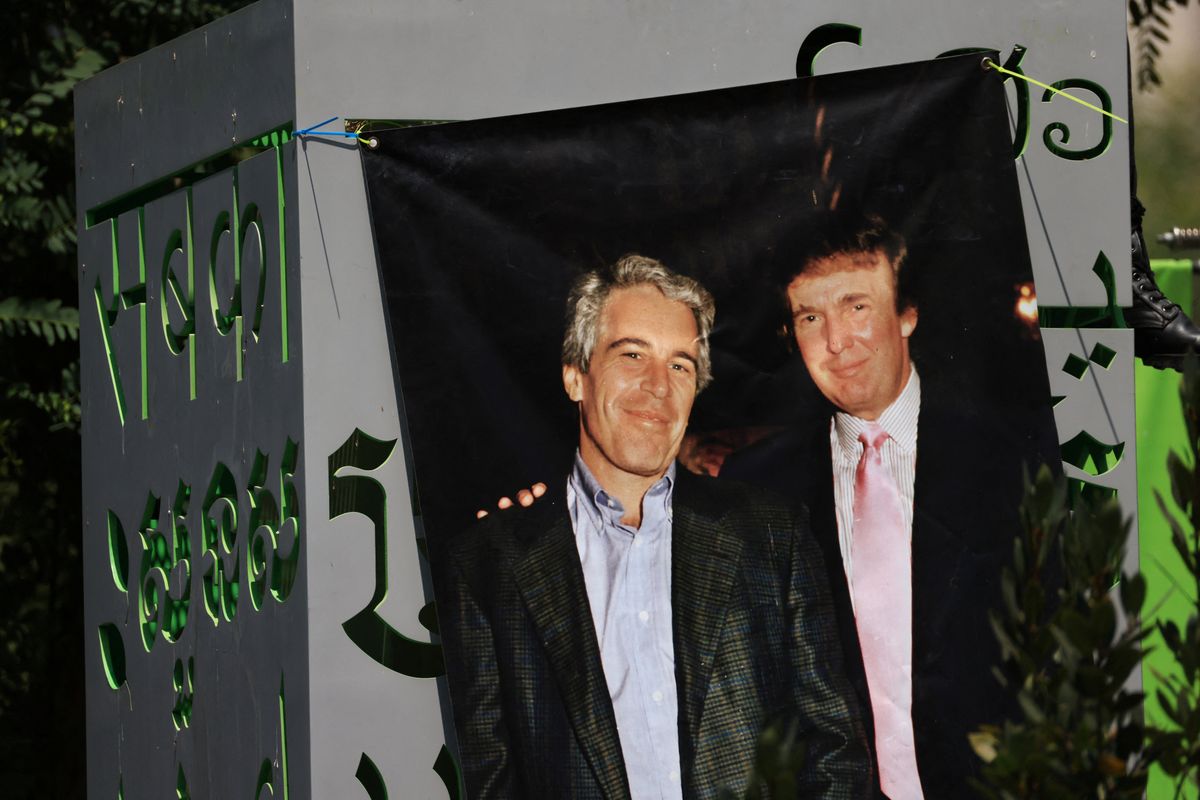
The Epstein case remains a political controversy, with both major parties minimizing their ties to the disgraced financier. Epstein died in a federal jail in 2019 while awaiting trial on sex trafficking charges and had connections with numerous high-profile figures, including Trump, and Prince Andrew.
Despite ongoing public pressure, the DOJ has resisted releasing the full cache of Epstein-related documents. If the claims circulating among GOP lawmakers are accurate, the unreleased files could reignite scrutiny of Trump’s past association with Epstein—a relationship the former president has previously dismissed as inconsequential.
Blue Press Journal – In a significant development, the House of Representatives has finally garnered the necessary support to demand the release of documents related to the late financier and convicted sex offender, Jeffrey Epstein. The momentum shift came after Democrat Adelita Grijalva’s victory in the special election for Arizona’s 7th District on Tuesday. Grijalva’s win is expected to tip the scales in favor of transparency, as she has pledged to sign a petition calling for the Department of Justice (DOJ) to unseal the Epstein files.
The petition, which now boasts 218 signatures, crosses party lines, with a handful of Republicans joining their Democratic counterparts in demanding accountability. The magic number of 218 signatures is crucial, as it triggers a vote on the matter. While it is uncertain whether President Donald Trump’s DOJ will comply with the request, the mounting pressure from lawmakers may ultimately lead to the release of the long-sought documents.
Epstein, a onetime close friend of President Trump, was embroiled in a high-profile sex trafficking scandal before his death in August 2019. The DOJ’s handling of the case has been shrouded in controversy, with many questioning the circumstances surrounding Epstein’s death and the extent of his connections to powerful figures.
Anouska De Georgiou, a woman who claims to have been abused by Epstein on his island in the Caribbean and elsewhere for years, spoke passionately about her experiences. “I am no longer weak, I am no longer powerless, and I am no longer alone,” she said. “And with your vote, neither will the next generation be.” De Georgiou directed her message to President Trump, urging him to use his influence and power to help the victims. “President Trump, you have so much influence and power in this situation. Please use that influence and power to help us,” she said.
De Georgiou was joined by Representatives Ro Khanna and Thomas Massie, who have been leading the charge for transparency in the Epstein case. Massie emphasized that the Epstein scandal is not a hoax, but a real and serious issue that involves powerful and wealthy individuals who have been protected by their connections to the establishment in Washington, D.C. “This is not a hoax,” Massie said. “This is real. There are real survivors. There are real victims in this criminal enterprise, and the perpetrators are being protected because they’re rich and powerful and political donors to the establishment here in Washington, D.C.”
The press conference also featured Rep. Marjorie Taylor Greene, a major Trump ally, who joined the call for transparency and accountability. The presence of such a large and diverse crowd, including media, activists, and onlookers, suggests that the Trump administration’s efforts to bury the story will not succeed.
One of the key issues at stake is the release of the Epstein files, which are currently being held by the Department of Justice (DOJ). While some pages have been released, they are heavily redacted, with some pages entirely blacked out. Massie criticized the DOJ’s handling of the documents, saying that they are allowing the department to “curate” the information that is being released. “If you’ve looked at the pages they’ve released so far, they’re heavily redacted,” Massie said. “Some pages are entirely redacted, and 97% of this is already in the public domain.”
The victims who spoke on Wednesday repeatedly rejected Trump’s claim that the Epstein scandal is a hoax. Annie Farmer, who was abused by Epstein and made some of the earliest police reports about his conduct, called Ghislaine Maxwell, Epstein’s former associate, “a major architect” of Epstein’s trafficking and abuse. Maxwell is currently serving a 20-year prison sentence for sex trafficking charges and is seeking a pardon from Trump.
De Georgiou, who claims to have been abused by both Epstein and Maxwell, said that Maxwell’s potential pardon is a “nightmare” scenario. “This woman abused children,” De Georgiou said. “I was abused by Epstein and Maxwell for over 10 years, and she was present for some of my abuse. She was present, complicit and enabling. It’s one of my worst nightmares that she not only be transferred but the possibility that is very much going around that she might be pardoned. This is not OK.”
The demand for transparency and accountability in the Epstein case is not going away. The victims and their supporters are determined to ensure that justice is served and that those responsible for the abuse and trafficking are held accountable. As De Georgiou said, “I am no longer weak, I am no longer powerless, and I am no longer alone.” The Epstein victims and their allies will continue to fight for the truth and for justice, and they will not be silenced.
Blue Press Journal – In a shocking twist, newly surfaced testimony from Ghislaine Maxwell, the disgraced socialite and former associate of convicted sex offender Jeffrey Epstein, has reignited concerns about the circumstances surrounding Epstein’s death. During a July testimony, Maxwell explicitly stated that she does not believe Epstein died by suicide, fueling speculation about a potential murder-for-hire plot.
The testimony that took place at a Florida prison where Maxwell was being held after receiving a 20-year sentence for her role in procuring victims for Epstein. Maxwell’s statements were made in response to Blanche’s inquiry about her thoughts on Epstein’s death. “I do not believe he died by suicide, no,” Maxwell replied, sparking renewed debate about the official narrative surrounding Epstein’s demise.
Epstein’s death in 2019, while in jail during Donald Trump’s presidency, was initially ruled a suicide. However, many have questioned the official account, citing suspicious circumstances and inconsistencies in the investigation. Early this year it was noted there was almost 3 minutes missing in the security camera footage of his death.
Mark Epstein, Jeffrey’s brother, has also cast doubt on the suicide ruling, citing a pathologist who claimed that the marks on Epstein’s body were more consistent with homicide than suicide.
The transfer of Maxwell to a minimum-security prison camp in Texas after her testimony has also raised eyebrows, as sex offenders like Maxwell are typically not eligible for such facilities without a waiver from the Department of Justice.
With many questions still unanswered, it remains to be seen whether the truth about Epstein’s death will ever be fully revealed. One thing is certain, however: the public deserves a more comprehensive and transparent accounting of the events surrounding this high-profile case.
Blue Press Journal – A recent audio recording and transcript of a two-day meeting between Ghislaine Maxwell, Jeffrey Epstein’s accomplice, and the Department of Justice has sparked concern among former FBI officials. The exchange, which took place in 2020, has been described as “curious” and “suspicious” by Andrew McCabe, a former FBI deputy director.
During the interview, Maxwell brought up President Donald Trump’s name unprompted, referring to him in glowing terms and addressing him as “president” rather than by his actual name. This unusual display of respect and admiration has raised questions about Maxwell’s motives and whether she was attempting to curry favor with the President.
McCabe noted that Maxwell’s behavior was “not a coincidence” and that her repeated references to Trump as “president” were likely a deliberate attempt to ingratiate herself with him. This theory is further supported by rumors that Maxwell is seeking a pardon from the President.
What’s more, the interview itself was conducted under unusual circumstances, with no line agents or investigators present to serve as witnesses. This lack of transparency and oversight has led many to speculate that the meeting was staged to allow Maxwell to perform for Trump’s benefit.
The exchange raises serious questions about the integrity of the Justice Department’s dealings with Maxwell, who sought to appeal to Trump’s ego for a pardon instead of genuinely cooperating with the government.
This debacle exemplifies the political manipulation and backroom dealing characterizing the Trump administration. Maxwell’s use of the interview to flatter the President and possibly secure a pardon is a slap in the face to the justice system and Epstein’s victims.




 Blue Press Journal