
Blue Press Journal – There’s a word that gets thrown around a lot these days: “unprecedented.” It’s often used to describe the chaotic political landscape, but sometimes, a single action manages to feel uniquely jarring, a break not just with recent norms but with the very fabric of American tradition. The latest case in point? The apparent attempt to rebrand the John F. Kennedy Center for the Performing Arts by adding Donald J. Trump name to the center.
This isn’t just another bizarre headline or a simple act of vanity. This is an attack on a federal institution, a desecration of a national memorial, and an action that legal experts are already calling profoundly, unequivocally illegal.
It’s a Federal Law, Not a Real Estate Deal
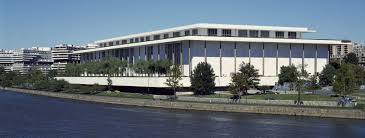
Let’s be perfectly clear about what the Kennedy Center is. It is not a private venue that can be bought, sold, or rebranded at the whim of its management. It is a living memorial, established by a specific act of Congress, the National Cultural Center Act of 1958, which was later amended and signed into law by President Lyndon B. Johnson in 1964, just months after President Kennedy’s assassination.
The law itself codifies the institution’s name: the “John F. Kennedy Center for the Performing Arts.” This name is not a suggestion; it is a legal mandate passed by the legislative branch of the U.S. government to honor a slain president.
As legal scholars and government ethics experts have pointed out, a president cannot simply issue an executive order or exert influence to unilaterally alter a federal law. The power to rename a federal memorial of this stature rests exclusively with Congress. To attempt to change it through administrative pressure or a deal with the center’s board is to bypass the fundamental American principle of separation of powers. It is, in a word, illegal.
An Assault on National Memory
Beyond the legalities, there’s the profound disrespect this move shows. The Kennedy Center was created to be a non-partisan, national institution—a monument to a president’s vision for arts and culture in America. It stands as a symbol of a bygone era of national aspiration.
To change the centers name and add that of a contentious modern political figure is nothing short of a political upheaval. It aims to obliterate a fragment of our collective national memory while driving a partisan wedge into a monument that should serve as a beacon for all Americans. It would be akin to defacing the Lincoln Memorial with a crude spray-painting of a new name. Such an act is a profound desecration of its sacred purpose.
A Presidency as a Brand
This move is part of a larger, more troubling pattern. We have seen the president’s name stamped on everything from stimulus checks to federal buildings, blurring the line between public service and personal branding. Federal law actually prohibits government officials from using their office for self-promotion, but the norms have been systematically eroded.
Turning the Kennedy Center into “the Trump Center” would be the ultimate expression of this ethos. It’s an attempt to secure a legacy not through historical achievement, but through the forceful rebranding of public property. It turns a national monument into a personal monument, a federal building into a family business asset.
Where Do We Draw the Line?
If this can happen to the Kennedy Center—a landmark enshrined in federal law—what is next? The Lincoln Memorial? The Jefferson Memorial? Are they all subject to the political whims of the person in the Oval Office?
This isn’t about one president or another. It’s about whether we are a nation of laws and shared heritage, or a nation of personalities and brand loyalty. The Kennedy Center is more than a building; it’s a promise—a promise that some things in America are bigger than any one of us, and that they belong to all of us. We cannot allow that promise to be broken.
 Blue Press Journal