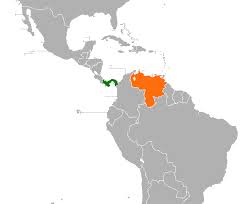
Blue Press Journal – When American policymakers reflect on the past century of interventions in Latin America, one case remains prominent in Washington’s historical narrative: Operation Just Cause, the 1989 invasion of Panama. It exemplified what many would categorize as a “successful” U.S. intervention—swift, decisive, and ostensibly judicious. Within a span of less than two weeks, the United States effectively removed General Manuel Noriega, established a compliant government led by Guillermo Endara, and largely withdrew its military presence. There was no protracted insurgency, nor any humiliating deadlock. For numerous officials in Washington, this operation represented an uncommon occasion where military force achieved the precise objectives sought by the White House.
But Venezuela is not Panama, and any attempt to treat it as such risks a catastrophic misreading of history and geography alike.
A Different Battlefield
When George H.W. Bush ordered troops into Panama, the United States already had a military footprint deeply embedded in the country. The U.S. Southern Command was headquartered there. More than 10,000 American troops were stationed on the ground, with full logistical networks, airfields, and intelligence infrastructure ready to act. The operation didn’t need to project power across oceans—it was already in place. American forces quickly dismantled the Panama Defense Forces, captured Noriega, and oversaw a relatively orderly transfer of power.
None of these conditions exist in Venezuela.
Today, U.S. forces sit offshore—aboard the USS Gerald R. Ford and the Iwo Jima Amphibious Ready Group, impressive symbols of U.S. power, but still distant from the realities of governing a nation of nearly 28 million people. A lightning strike might remove a head of state, but it cannot occupy, stabilize, or rebuild a country with deep institutional and social fissures. The challenge is not the operation itself—it’s “the day after.”
The Problem of What Comes Next
In Panama, the United States could install Endara because Panama’s political elite were, by and large, aligned with Washington’s interests. The country had long functioned under U.S. influence, its economy tied to the Canal Zone, its military modest and dependent.
Venezuela, however, has evolved under an entirely different model. The Bolivarian Armed Forces (FANB)remain cohesive and loyal to the state, not fractured and demoralized like Noriega’s forces were in 1989. Defense Minister Vladimir Padrino López has already called for “massive deployment” to resist foreign troops, and Vice President Delcy Rodríguez has vowed that the government “will not yield.” Even if Nicolás Maduro is removed, the apparatus that sustains his regime will not vanish overnight.
The Trump Administration faced this reality as early as 2019, when it backed opposition figure Juan Guaidó. Washington assumed that diplomatic pressure, sanctions, and a show of resolve would fracture the regime. It didn’t. The military held firm. The same dynamic is likely to repeat if the U.S. attempts to enforce regime change by force.
Geopolitics Beyond Caracas
There’s also the matter of global reaction. Panama’s invasion occurred at the tail end of the Cold War, when the Soviet Union was collapsing and China was not yet a global power. The world’s geopolitical center of gravity allowed the U.S. to act with relative impunity.
Venezuela, by contrast, is a strategic partner to China, which has invested billions in its oil sector, infrastructure, and digital networks. Beijing will not view an American intervention as a regional policing operation—it will see it as a direct challenge to its influence. Russia, too, has military advisers and energy interests in Venezuela. The consequences of unilateral U.S. action ripple far beyond the Caribbean.
Regionally, the response has been equally fraught. Mexico’s government has condemned the operation, warning that any foreign military action “seriously jeopardizes regional stability.” Other Latin American nations, still wary of U.S. interventionism, are divided or outright hostile. The vision of a hemispheric coalition supporting American leadership has not materialized.
Legitimacy and the Law
The Trump Administration’s refusal to clarify whether it sought congressional authorization speaks volumes. The War Powers Resolution exists precisely to prevent unilateral executive military adventures, yet Washington has seen a steady erosion of those constraints. Declaring victory from the podium is easy; governing a fractured post-conflict society is not.
And here lies the uncomfortable truth: whatever one thinks of Maduro’s legitimacy—and few would argue he won the July 2024 election fairly—toppling an autocrat is not the same as creating a democracy. Without a credible plan for governance, reconstruction, and reconciliation, military action risks deepening chaos rather than resolving it.
The Mirage of “Just Cause 2.0”
Every generation of U.S. policymakers seems to search for its own “Just Cause”—the operation that proves American power can still reshape the world for the better. But history rarely repeats so neatly. Panama was small, strategically contained, and already under Washington’s thumb. Venezuela is large, complex, and enmeshed in global rivalries that make any intervention far more perilous.
If history offers any lesson, it is this: a quick victory on the battlefield can mask a long defeat in the years that follow. Without legitimacy, without local support, and without a plan for the day after, even the most “successful” operation risks becoming another cautionary tale.
In the end, the question is not whether Maduro deserves to stay—by most accounts, he does not—but whether the United States, acting alone and without a clear mandate, can deliver something better. Panama’s ghost still haunts Washington, whispering promises of easy triumph. But Venezuela, in all its complexity and resistance, is poised to remind America that history is a poor template for wishful thinking.
 Blue Press Journal