Tag: market volatility

  • Trump’s Iran War Sparks a Chaotic Market Correction: Stocks Plunge as Economic Turmoil Escalates

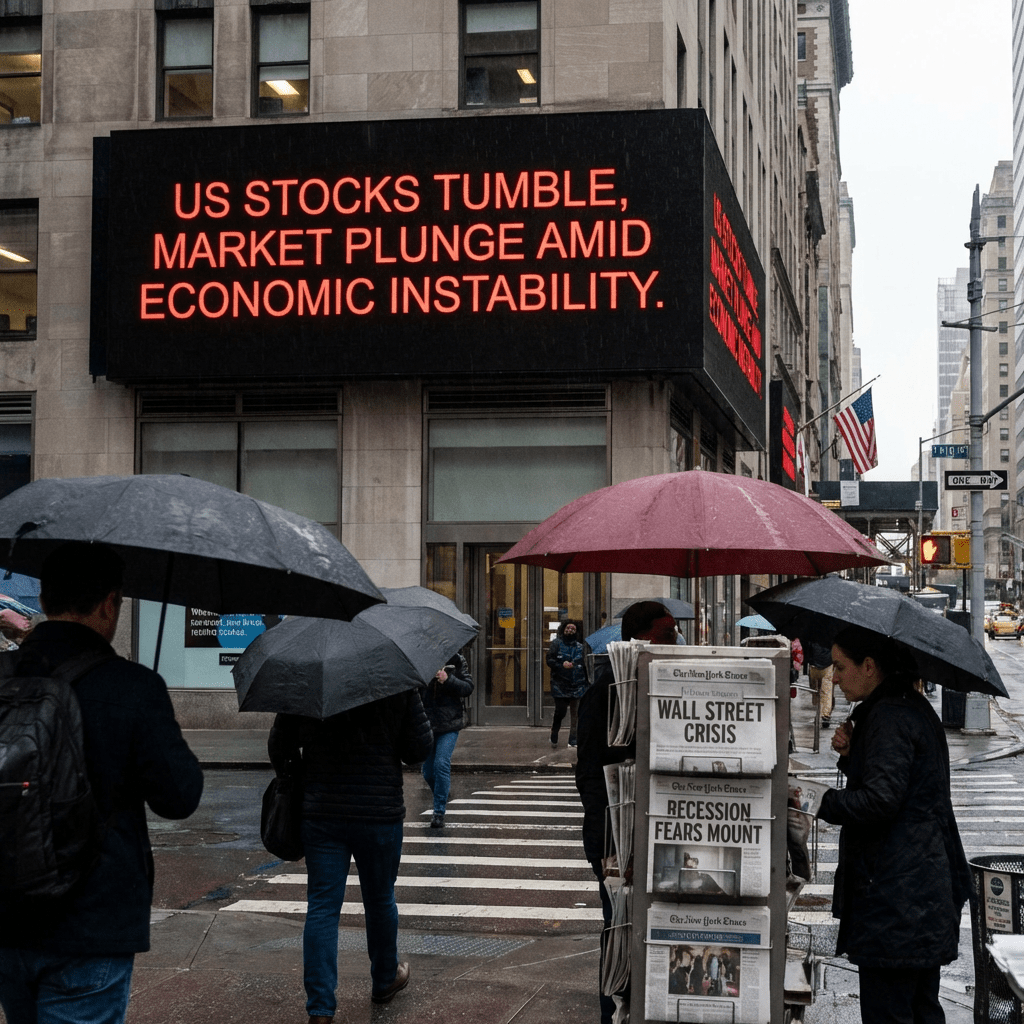
    Digital sign: US STOCKS TUMBLE, MARKET PLUNGE AMID ECONOMIC INSTABILITY. Newspapers: WALL STREET CRISIS, RECESSION FEARS MOUNT.

    Blue Press Journal – President Donald Trump’s escalating military confrontation with Iran has precipitated a severe market selloff, sending U.S. stocks tumbling Friday as investors grapple with mounting economic instability. The aggressive posture toward Tehran has triggered widespread anxiety across global financial centers, with the Russell 2000 index of small-cap firms plunging 2.7% into official correction territory—defined as a decline exceeding 10% from recent peaks—according to CNN.

    Major indices suffered parallel losses, with the Dow Jones Industrial Average dropping 444 points (0.96%), the S&P 500 sinking 1.51%, and the Nasdaq Composite falling 2.01%, briefly entering correction territory during Friday’s session. “The stock market remains in negative territory for the year, and has made new 2026 lows this week, which suggests that the market may not have yet found its bottom,” David Laut, chief investment officer at Kerux Financial, told CNN.

    The administration’s war strategy has exacerbated inflationary risks as energy costs spike, forcing central banks worldwide to reconsider interest rate trajectories. This uncertainty propelled U.S. Treasury yields to their highest levels since last July, while gold experienced its worst weekly performance since 1983, Reuters reports. Business leaders now face heightened volatility as military expansion threatens sustained economic disruption.
  • The Unrecoverable Losses: Understanding the True Impact of Trump’s Iran War on the Stock Market

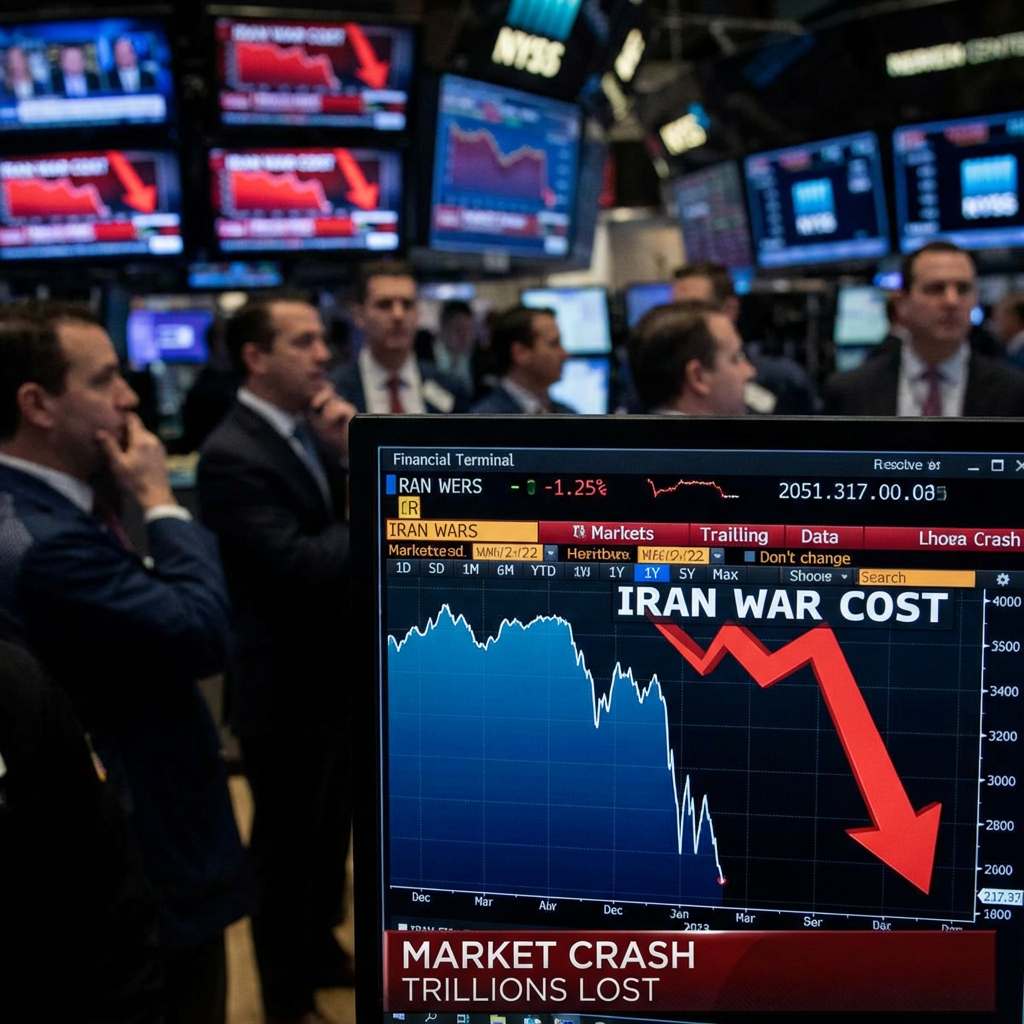
    Financial monitor showing 'IRAN WAR COST' and 'MARKET CRASH' with a plummeting line graph.

    “Time is Money”

    Blue Press Journal – The recent deep decline in the stock market, triggered by Trump’s Iran war, has left investors reeling. Financial advisers are quick to reassure their clients that the losses will be recouped, and the market will bounce back. However, they often fail to mention a crucial aspect of market volatility: the lost time.

    When the market is down, the clock keeps ticking, and the time lost is not recoverable. The gains made prior to the decline are not just put on hold; the opportunity to make new gains during that time is also lost. To illustrate this point, let’s consider a hypothetical example.

    MonthMarket PerformanceCumulative Gains
    January10% gain$10,000 to $11,000
    February15% loss$11,000 to $9,350

    In this example, an initial investment of $10,000 in January yields a 10% gain, bringing the total to $11,000. However, in February, a 15% loss wipes out the gains, leaving the investor with $9,350. While the financial advisers might say that the market will recover, the reality is that the two months of lost time cannot be regained. The investor missed out on potential gains that could have been made during those two months.

    The tone of the article is cautionary, highlighting the often-overlooked consequence of market volatility. By using hypothetical numbers, we can see that the lost time can have a significant impact on an investor’s overall returns. As investors, it’s essential to be aware of this hidden cost and not solely rely on the promise of a market rebound.

  • Trump’s Iran Attack: Economic Fallout Threatens US Recovery and Global Trade Stability

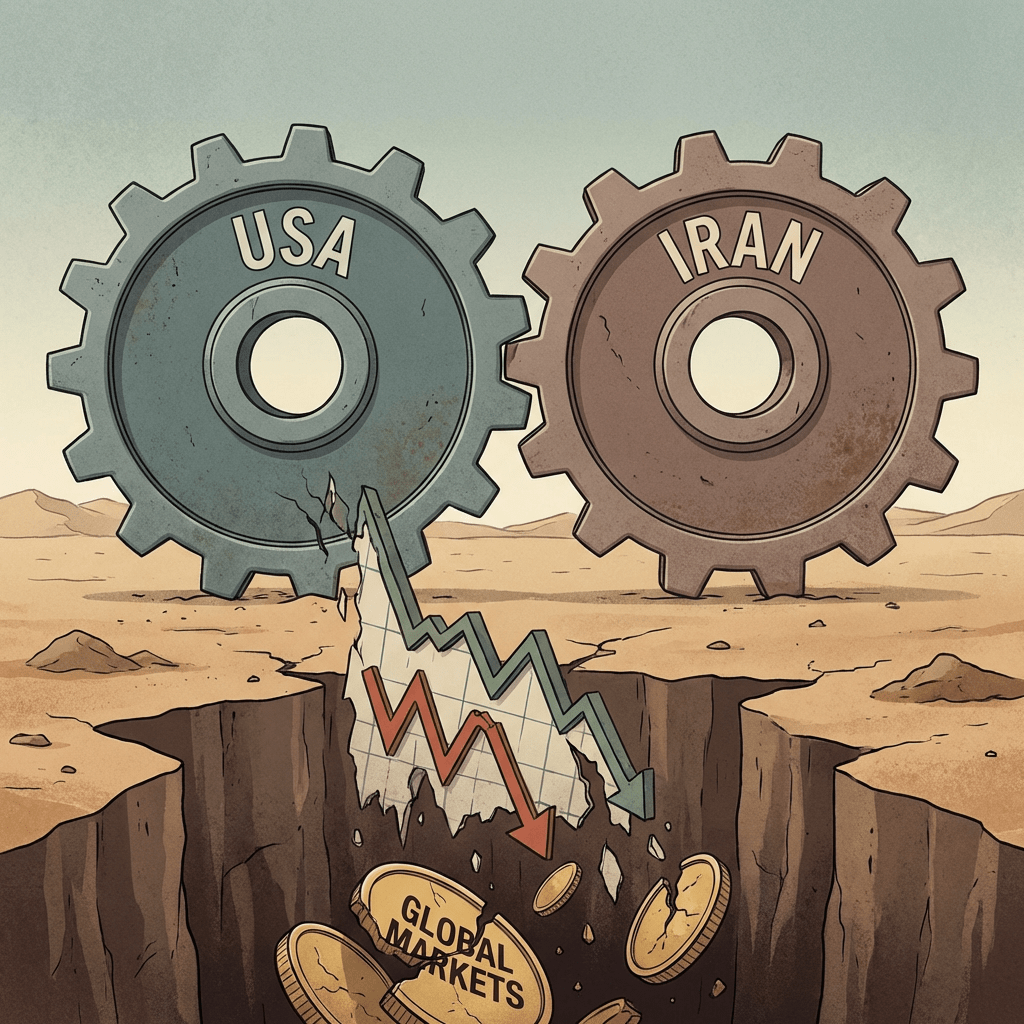
    Gears labeled USA and IRAN over a chasm swallowing falling charts and GLOBAL MARKETS coins.

    BLUE PRESS JOURNAL – Trump’s reckless military escalation against Iran today poses an existential threat to American economic stability and global commerce. Far from projecting strength, these strikes risk catalyzing a catastrophic financial crisis that will burden working families while destabilizing international markets.

    The immediate consequence centers on energy markets. Iran’s geographic dominance over the Strait of Hormuz—a chokepoint handling roughly 20% of global oil shipments—means even limited conflict triggers catastrophic price spikes. Analysts predict Brent crude could surge past $130 per barrel, translating to $5+ gasoline for American consumers already battered by persistent inflation. This shockwave ripples through every sector, from transportation to agriculture, effectively imposing a regressive tax on households least equipped to absorb it.

    Global trade faces imminent paralysis. Military activity in the Persian Gulf threatens container shipping routes vital for Asian-European commerce, potentially replicating the supply chain disruptions that fueled 2021’s inflationary spiral. Insurance premiums for maritime freight have already spiked 40%, costs ultimately borne by American consumers through higher retail prices.

    Financial markets reflect this anxiety, with defense stocks soaring while broad indices plummet. The dollar’s safe-haven status offers minimal protection against the stagflationary pressures of simultaneous energy shortages and slowing growth. Moreover, diverting billions toward military operations steals resources from infrastructure and domestic manufacturing initiatives essential for long-term competitiveness.

    This economic warfare against American pocketbooks serves no strategic purpose beyond political theater. Diplomatic alternatives remain unexplored while the administration gambles with global recession. History demonstrates that Middle East military adventures consistently deliver economic devastation—higher deficits, volatile currencies, and diminished purchasing power—while failing to achieve sustainable security outcomes.