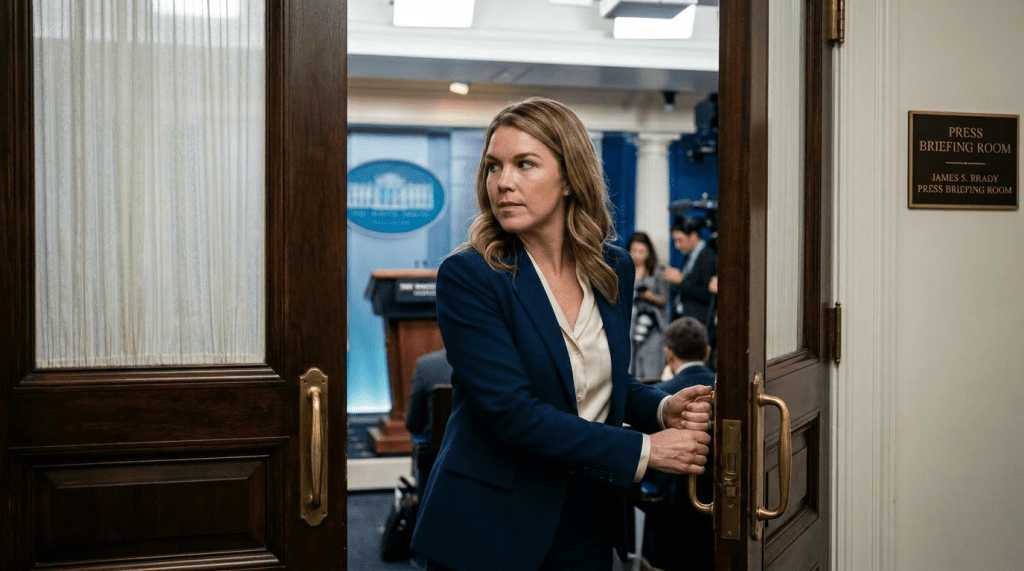
BLUE PRESS JOURNAL – After the recent assassination attempt connected to the White House Correspondents’ Association Dinner, the conversation in this country quickly fell apart again—everyone just pointing fingers. Right-wing pundits rushed to play the victim, shouting about an “assassination culture” they claim the other side invented. But even a quick look around shows how hollow this is. The right loves to say that a silly roast by Jimmy Kimmel crosses the line into incitement, but at the same time, they choose to ignore the nonstop flood of dehumanizing talk pouring out from the top of their own party.
There’s this common story that “both sides” are equally to blame for all the anger and ugliness poisoning the country, but that doesn’t really line up if you actually look at what’s happened under the man leading a big chunk of America. Donald Trump hasn’t just joined in on the decline of our political culture—he’s orchestrated it. He never pulls back; when things are tense, he piles on even harder. Every crisis is a new chance to inflame, divide, and go further.
Now, we’ve reached the point where the conservative movement’s top guy regularly talks about people he disagrees with as if they’re not even human. He’s called immigrants “poison” in America’s bloodstream. He’s branded rivals “garbage,” “crazy,” or “evil.” When someone’s always describing their fellow Americans as a contagious threat, they’re basically giving a green light to anyone looking for an excuse to get violent. Every time Trump calls out judges, journalists, or his political enemies as being flat-out enemies of the state—not just adversaries, but existential threats—he’s not having a policy argument. He’s fueling a narrative of all-out war.
You hear a lot of outrage from the right over jokes made by comedians or little digs from critics, but where’s all that outrage when their own leader crosses the line? Look at what happened after Special Counsel Robert Mueller died. Trump didn’t even bother with the basic decency you’d expect from an ex-President. He jumped on Truth Social to launch a nasty, personal attack. That pretty much sums up his playbook: no space for grief, no respect, and definitely no humanity, as long as the target is someone Trump doesn’t like.
Let’s be honest, conservative media—right down to the daily gripes of famous podcasters—drives this narrative too. They live in a reality bubble where any criticism of their own mean-spirited talk is “an attack,” but when they ridicule and dehumanize, it’s “just being honest.” They want us to believe that a comedy skit is what’s really making the country volatile, all while their own words light a match in a room full of gasoline.
We need to stop pretending this is a fifty-fifty issue. There’s no balance here. Fixing violence in our politics means dropping the notion that everyone’s equally responsible. It means actually holding the people with the loudest microphones, the most power, and the biggest platforms accountable for what they say. If we keep letting leaders treat their opponents like they’re subhuman, it’s on all of us when things get worse. Real, honest debate gets snuffed out fast when every speech carries a dose of barely disguised menace. The latest wave of anger and division isn’t just something in the air—it’s a deliberate choice, made over and over, by people who know exactly what they’re doing.