Tag: Medicaid and SNAP

  • The Irony of Red Counties: How Rural America Relies on the Government They Love to Hate

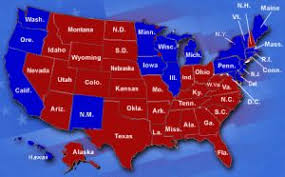
    Rural America, often a bastion of conservative values and Republican strongholds, has a surprising secret: they rely heavily on government support. Despite their vocal disdain for government intervention, rural counties receive a significant portion of their personal income from government transfers, including Social Security, Medicare, and Medicaid. This phenomenon is particularly pronounced in the South, where rural areas appear to be almost entirely dependent on government assistance.

    The demographics of rural America play a significant role in this trend. With younger people fleeing to urban areas for better job opportunities, rural regions have a higher proportion of older residents. As a result, these areas have a larger share of individuals drawing Social Security and Medicare benefits. Additionally, rural areas are more dependent on Medicaid, which provides healthcare coverage to low-income individuals and families.

    In contrast, metropolitan areas around major cities like Boston, Chicago, Dallas, Houston, Los Angeles, New York, Philadelphia, and San Francisco show minimal to moderate reliance on government transfers, with less than 25% of personal income coming from these sources. This disparity highlights the stark difference in economic realities between urban and rural America.

    The political implications of this trend are striking. Rural areas, which tend to lean heavily Republican, voted overwhelmingly for Donald Trump in the 2016 election, with farming-dependent counties supporting him at an average of 78%. This raises questions about the motivations behind their voting behavior. Were they genuinely interested in reducing government intervention, or were they swayed by other factors, such as social issues or perceived moral superiority?

    It’s ironic that rural Republican voters, who often espouse self-reliance and limited government, are actually more dependent on government support than their urban counterparts. Meanwhile, the wealthy elite, like Elon Musk, continue to receive tax cuts and other benefits, perpetuating the notion that the system is rigged in favor of the wealthy and powerful.

  • GOP Tax Cut Legislation Threatens to Upend America’s Healthcare System

    The recent passage of massive tax cut legislation by the House and Senate has sent shockwaves through the American healthcare system. While the bill’s proponents claim it will boost economic growth, the reality is that it poses a significant threat to the stability of rural and safety-net hospitals, and ultimately, the patients who rely on them.

    At the heart of the issue is a provision that alters state-levied provider taxes, resulting in a substantial reduction in spending – to the tune of nearly $191 billion over the next decade, according to estimates from the Congressional Budget Office (CBO). An analysis by the National Rural Health Association and Manatt Health found that an earlier version of the bill introduced in the Senate would have resulted in a staggering $58 billion in Medicaid cuts over the next 10 years for rural hospitals.

    The final bill that passed includes a five-year, $50 billion rural health relief fund, but provider groups argue that this is merely a Band-Aid solution compared to the overall cost of the cuts. In reality, this temporary fix is unlikely to mitigate the long-term damage caused by the legislation.

    As a direct consequence of the bill’s provisions, hospitals are poised to experience an alarming surge in uncompensated care and an overwhelming influx of patients flooding emergency rooms. This crisis will unfold as millions of American families are pushed to the brink, losing their essential healthcare coverage due to the draconian Medicaid work requirements and the heartless eligibility alterations embedded in this legislation. The repercussions will be catastrophic, leaving our hospitals grappling desperately to provide the care that every patient and community so profoundly deserves.

    “We are in a crisis,” said Bruce Siegel, president and CEO of America’s Essential Hospitals, a group that represents hospitals serving primarily low-income patients. “Widespread coverage losses plus weakened hospitals is a recipe for disaster, and patients will pay the price.”

    The impact on rural hospitals will be particularly severe, as they are often the lifeline for communities with limited access to healthcare services. The loss of funding will exacerbate existing challenges, such as staffing shortages and outdated infrastructure, making it even more difficult for these hospitals to provide essential care to their patients.

    While the tax cut legislation may have been touted as a economic stimulus, its true impact will be felt in the healthcare sector, where it threatens to destabilize rural and safety-net hospitals.

  • Republicans Push Through Tax Cut Bill, Leaving Millions to Suffer the Consequences

    In a move that has been widely criticized, the Republican-controlled House of Representatives passed a massive bill on Thursday that cuts taxes and slashes Medicaid funding, sending the legislation to President Donald Trump’s desk for signature. The bill, which passed by a narrow margin of 218-214, is expected to have far-reaching and devastating consequences for millions of Americans.

    The bill’s passage was made possible by Republican lawmakers who, despite previously expressing concerns about the legislation, ultimately caved to pressure from the Trump administration and party leadership. All Democrats and two Republicans, Reps. Brian Fitzpatrick (R-Pa.) and Thomas Massie (R-Ky.), voted against the bill.

    The legislation threatens to strip millions of Americans of their health insurance, as devastating cuts to Medicaid funding will leave hospitals, especially those in rural areas, teetering on the brink of financial collapse. Moreover, the harsh reductions to SNAP, which provides crucial nourishment for countless children, are simply inexcusable. To add insult to injury, the bill’s tax cuts, which primarily benefit the wealthiest households, will only serve to deepen the national debt, inflating it by an astronomical $3.4 trillion.

    The $4.5 trillion price tag of the tax cuts is only partially offset by $1 trillion in cuts to federal food and health programs, a move that will have serious consequences for vulnerable populations. The bill’s fiscal irresponsibility and slapdash legislative process are hallmarks of Republican governance in the Trump era, where ideology and party loyalty have taken precedence over responsible policymaking.

    The bill’s passage is also expected to supercharge Trump’s efforts to round up, detain, and deport millions of immigrants who lack legal authorization to remain in the country, further exacerbating an already fraught immigration system.

    In a stark illustration of the bill’s priorities, the tax cuts will largely benefit wealthy households, while the Medicaid cuts and other reductions in federal health and food programs will harm low- and middle-income Americans. The bill’s supporters have touted it as a “big, beautiful bill,” but the reality is that it is a deeply flawed piece of legislation that will have serious and long-lasting consequences for the country.

    When President Trump signs the bill into law, it is clear that the Republican Party has chosen to prioritize the interests of the wealthy and large corporations over those of ordinary Americans. The bill’s passage is a stark reminder of the deep partisan divisions in Washington and the need to elect a Democratic Majority in 2026!

  • Tax Cuts for the Rich: What’s the Real Cost?

    When republican policymakers propose massive tax breaks for the wealthy, what are the consequences for average Americans? Proposals put forth by Republicans, including those aligned with former President Trump, prioritize significant tax cuts for millionaires and billionaires. But analysis from the nonpartisan Congressional Budget Office (CBO) reveals the projected costs.

    The CBO estimates such policies would increase the national deficit by $2.4 trillion over the next decade. To pay for these tax cuts, spending is targeted. Proposals include phasing out green energy tax breaks and implementing new work requirements for Medicaid and SNAP, projected to cut millions from critical healthcare and food assistance programs – the CBO previously estimated nearly 4 million fewer people would receive food stamps monthly under similar changes, and projects 10.9 million more uninsured by 2034.

    This approach is projected to balloon the national debt, requiring a $4 trillion increase to the debt limit just to accommodate the borrowing. Critics point out a concerning pattern: while Republicans often express alarm over the debt when Democrats are in charge, their own policies are projected to dramatically increase it, largely to fund tax cuts for the rich.

    The message is clear: while the wealthy see tax reductions, average taxpayers face cuts to essential services, increased uninsured rates, and a rising national debt. The question of who benefits and who pays is answered by the numbers.