Tag: Middle East conflict

  • The Price Of hubris: Iran, Gas Prices, And Polls Put Trump In Tight Spot

    by Winston Wendell

    President Trump and the military establishment are learning that the campaign to strike Iran has been an expensive affair with diminishing returns and that the President’s political capital may be quickly running out.

    In a tight presidential election year, Iran appears to have the best hand at the table. According to a number of media reports, Tehran has calculated that it already has the most to gain from whatever confrontation may unfold – and believes it may soon have reason to stop playing the game.

    At this stage, the war may prove to be too costly, too long and too unpopular to achieve its political aims.

    War Chest is Empty

    The President’s options are being severely limited by the growing realization that the Pentagon is running low on long-range precision-guided munitions.

    While the President’s press secretary has quickly dismissed such reports as false, the costs of war are nevertheless proving to be very real.

    The Iranians know that time is not on America’s side and they have little doubt that eventually, even the most bellicose elements in Washington will come to realize the same thing.

    At the Gas Pump

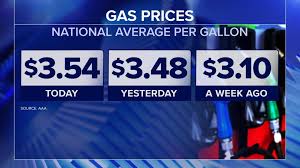
    Meanwhile, back on American soil, the President’s economic policies are taking their toll: after another month of heightened hostilities, the national average for a gallon of gasoline now exceeds $4 and voters are not happy.

    For the GOP, this is especially bad news, since it is the party that has benefited most from the recession and the voters who feel the effects of a tightening economy are likely to remain leery about any further adventures abroad.

    With the midterms looming, voters are already starting to think about their options and higher prices at the pump are unlikely to help Trump’s chances.

    Approval Ratings Plummet

    According to a survey conducted last month by YouGov, Trump’s overall job approval rating has plunged to a shocking 34 percent – the lowest it has ever been, according to this pollster.

    When it comes to the war, his numbers were even worse: according to a recent Associated Press-NORC survey, only 28 percent of voters approved of the job he has done in handling the crisis.

    A president engaged in an unpopular war, with an economy that is still struggling under the weight of inflation, is likely to have an exceptionally difficult time during the electoral cycle.

    Looking For An Exit Strategy

    According to a recent report by the Wall Street Journal , Trump has already started considering ways to cut his losses and end his involvement in the crisis. In this scenario, Trump has apparently proposed to declare victory if and when Iranian forces open up the Strait of Hormuz for commercial traffic to resume.

    However, this “win” scenario does not appear to include limiting Iran’s nuclear capabilities, the original goal of the campaign which, ironically, no longer seems desirable to its initiators.

    In effect, if Trump were to declare victory, he would have to do so even as he leaves in place the very policies that continue to threaten America’s national security.

    The lesson to be learned from his campaign of aggression against Iran appears to be that endless wars of decision have an unfortunate habit of making even the most well-intentioned politicians look like fools.

    Gas prices, his own party, the polls, and the military budget are all combining to put unprecedented pressure on the President and he is beginning to feel it. Tehran certainly realizes it, and so does the GOP, which is already looking for ways to spin a hasty withdrawal as a presidential triumph.

    Fediverse Reactions
  • The Trump’s Avoidable Crisis: Looking Back at the Collapse of the Iran Nuclear Deal

    by Winston Wendell

    President Barack Obama defended the Joint Comprehensive Plan of Action (JCPOA) with a blunt warning: “The choice we face is ultimately between diplomacy or some form of war.”

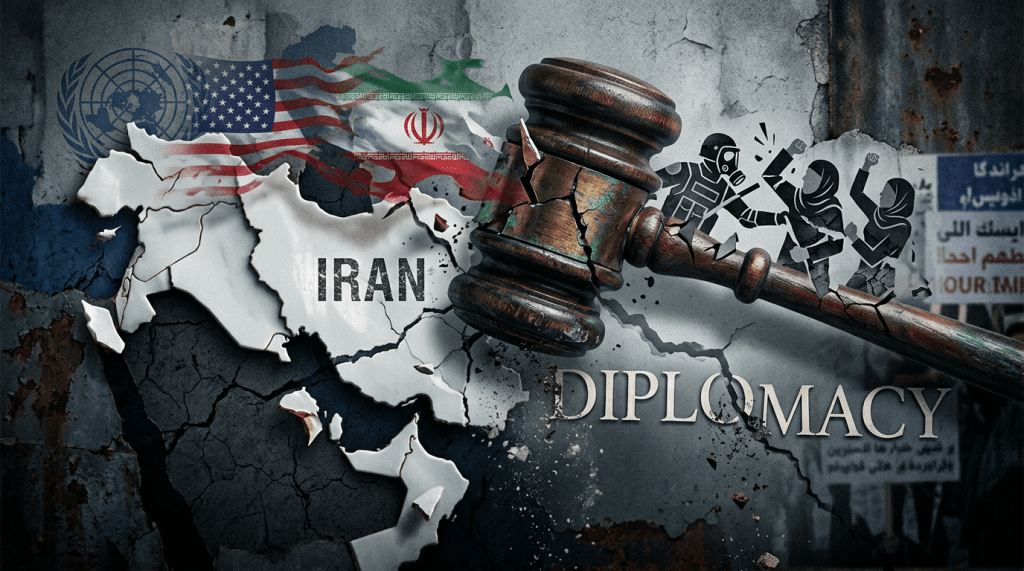
    Cracked gavel breaking over map of Iran with USA and Iran flags and protest figures

    Now, years later, I watch that warning turn painfully real. When Donald Trump pulled the United States out of a nuclear deal that had kept Tehran’s nuclear ambitions in check, his administration threw the country into a disaster of its own making.

    On the military front, this war’s a failure from every angle. Targeted strikes came and went, and the Iranian government endures, now with even tougher hardliners from the Islamic Revolutionary Guard Corps in charge. Iran still holds most of its missile stock, its mobile launchers, its underground bunkers. Drone and missile factories keep running. Worst of all, Tehran’s grip on the Strait of Hormuz—is even tighter. Those photos of commercial ships stuck near Larak Island say it all. Washington’s shortsighted choices gave our adversaries control of some of the world’s most important economic lifelines.

    The cost? It’s staggering, both in dollars and lives. We burned through about $25 billion at the start, and the spending hasn’t stopped. At home, Americans feel it everywhere, gas prices, groceries, you name it. But it’s the human cost that hurts most. U.S. service members have died, and hundreds cope with wounds they’ll never shake, all for a conflict with no clear end, no real transparency, and not a word of congressional approval. Like millions of others, I feel deep frustration. This is a war with no purpose, no strategy, and no exit.

    Trump’s aggressive reversal left America boxed in with terrible options. If Washington caves to Tehran—giving up huge sums of money or control over the Strait of Hormuz—we abandon the basic principle of free maritime navigation. Global commerce depends on that. An emboldened Iranian regime, flush with cash, will just buy new air defenses, load up on missiles, and use the Strait for leverage as long as it wants.

    No one wins here. There’s only the bitter fallout of a war we never needed, a conflict that put America’s security at risk, bled our economy, and left the world less stable than ever.

    Fediverse Reactions
  • Elise Stefanik’s Defense of Trump’s Iran Genocide Threat Exposes Political Hypocrisy and Religious Contradiction

    CNN’s Jake Tapper confronted the GOP Representative over her double standards on inflammatory rhetoric, her justification for “civilizational obliteration” revealed dangerous inconsistencies in MAGA’s moral calculus. By Windsor Wendell – Blue Press Journal

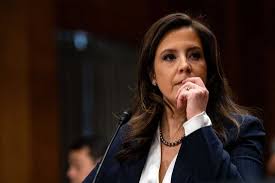
    On the latest episode of CNN’s State of the Union, Jake Tapper pressed Representative Elise Stefanik about Donald Trump’s comments on Iran. But it wasn’t just routine political back-and-forth—you could actually see the strain of trying to defend her party over what was said. The whole thing was sparked by Trump’s latest social media post, where he basically threatened to wipe out Iran’s entire civilization.

    I watched Stefanik twist herself up, scrambling to make Trump’s words sound harmless. Tapper called out Trump’s post as, essentially, a “call for genocide,” even quoting the “your whole civilization will die tonight” line almost directly. Stefanik immediately jumped in, insisting Tapper was just misrepresenting what Trump meant, brushing off the threat against eighty million people as no more than “diplomatic back-and-forth.” But Tapper wasn’t stretching the truth—he was quoting Trump almost word-for-word. This was way more than a warning to the Iranian regime. It was aimed right at a whole culture, one with a long, rich history. That distinction matters, especially when you think of international law and the rules we have in place to stop genocide.

    It’s tough to ignore the double standard here, remembering how fiercely Stefanik grilled college presidents in 2023. The Guardian covered the way she went after them, claiming students who chanted “from the river to the sea” were making genocidal threats, demanding the schools condemn those protests immediately. But now, when the President uses even stronger language about annihilating Iranians, Stefanik suddenly gets cagey, refusing to call it out—and always finding a way to protect Trump. The hypocrisy is hard to watch.

    The part that really gets to me is how easily religious values get sidelined for politics. Both the Pew Research Center and the National Catholic Register say Stefanik’s a Roman Catholic. That faith puts God and the Pope above any politician. Scripture lays it out plainly—faith comes first, not political leaders. Yet here she is, making excuses for threats against civilians, showing more loyalty to a political figure than to the principles her faith is supposed to stand for. This is all happening as tensions with Tehran ratchet up even further, all thanks to President Trump pulling the U.S. out of the JCPOA and pushing his “maximum pressure” approach. The Iran nuclear deal—the JCPOA—was a 2015 agreement between Iran and the P5+1 to roll back Iran’s nuclear program as sanctions were lifted. And honestly, it was working.

    Now, with war looming, Stefanik’s shifting logic feels like a betrayal—of both her oath to the Constitution and the heart of her religious beliefs. Her district up in Northern New York deserves real answers, not dodges and blind loyalty. The bigger question is, will voters call her out and finally demand she put basic decency over political showmanship?

  • Trump’s Iran Conflict Fuels Highest Wholesale Inflation in Three Years

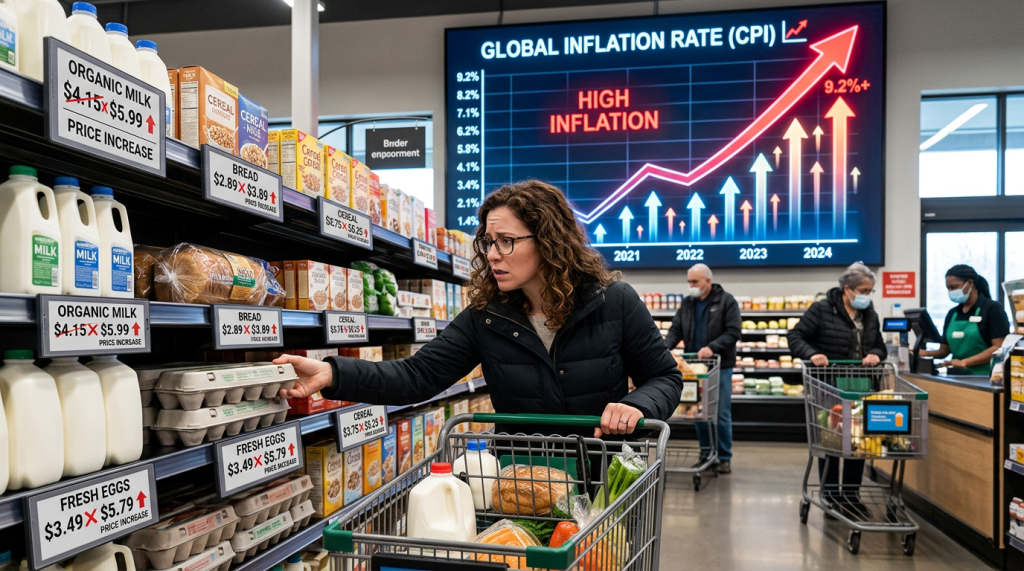
    Grocery store shelves showing price increases on milk, bread, eggs, and cereal

    Blue Press Journal (DC) – The escalating military engagement with Iran has propelled American producer inflation to its highest level in over three years, with the Labor Department confirming that the Producer Price Index surged 0.5% in March 2026 and climbed 4% annually. According to Bloomberg, the spike stems primarily from an 8.5% monthly explosion in energy costs as regional hostilities disrupt critical supply chains, while the Washington Post reports that retail gasoline prices have pushed consumer inflation to 3.3% over the past year.

    In spite of this growing pressure, President Trump continues to insist on reducing interest rates further, an action that the Financial Times observes runs counter to the emerging agreement between policymakers that there is a need to adopt stricter measures to avoid the economy from overheating. Even though inflation growth was only 0.1% when volatile industries were stripped off, Reuters points out that the International Energy Agency has recently made its first reduction of global oil demand forecasts since the COVID-19 period due to infrastructure sabotage and the closing of the Strait of Hormuz.

    Given that food costs offer little in terms of relief following the volatility seen in February, the potential disconnect between the government’s military and economic policies suggests that market uncertainty may persist even after the mid-term elections.

  • The Hidden Tax: How Global Conflict is Quietly Draining Our Bank Accounts

    Editorial

    Man in denim jacket refueling black car with gas pump at gas station

    Blue Press Journal – I was standing at the pump this Sunday morning, watching the numbers tick upward on the digital display, and I couldn’t help but feel that familiar, sinking pit in my stomach. Like millions of Americans, I’m constantly balancing the household budget, but lately, that balance feels more like a tightrope walk. 

    With tensions escalating in the Middle East—specifically the war with Iran, which many experts claim was unnecessary, have caused the global oil markets to spike. When crude prices jump in response to the war in Iran, the ripple effect isn’t just felt at the pump; it’s felt at the grocery store, the pharmacy, and every single time we make a decision about our daily commute.

    The Immediate Pain at the Pump

    Energy markets are inherently reactive. According to the U.S. Energy Information Administration (EIA), even a minor disruption in supply chains or a mere risk will cause a push to national averages. When gas prices spike, they act as a “hidden tax” on every American worker.

    Mark Zandi, Chief Economist at Moody’s Analytics, and other economic analysts, have pointed to the regressive nature of high energy prices, noting that they act as a hidden tax that disproportionately impacts low- and middle-income households. When you spend a larger percentage of your income on fuel, you have significantly less discretionary capital left for housing, food, or savings.

    The “Follow-On” Cost: Our Grocery Bill

    What many of us don’t immediately account for is the logistical cost of getting goods to market. Almost everything we buy—from fresh produce in California to electronics in New York—traveled on a truck or train to get to our shelves. As diesel prices climb alongside gasoline, those transportation costs are passed directly to the consumer.

    Consider a hypothetical breakdown of how these costs impact our monthly spending:

    Expenditure CategoryEstimated Weekly Impact of High Gas Prices
    Commuting+$15 – $25 per week
    Grocery/Food Staples+$10 – $20 per week (transportation surcharges)
    Family Activities+$10 – $15 per week (sports/errands)
    Total Estimated Hit$35 – $60 per week

    Tough Choices for Our American Families

    For the average family, an extra $50 a week isn’t just “pocket change.” It’s the difference between a savings account contribution and a credit card balance. I’ve found myself cutting back on non-essential trips, consolidating errands to save on mileage, and—regrettably—choosing generic brands at the grocery store to offset the rising cost of “transported” goods.

    We are entering a season of adaptation. Americans are experts at tightening their belts, but it’s becoming increasingly difficult to find more “slack” in the rope under the Trump administration. We are choosing between the kid’s soccer tournament and an extra trip to the grocery store; we are opting for home-cooked meals over dining out; and we are delaying major purchases while we wait for the economic and political smoke to clear.

    Our Bottom Line

    As of today, analysts from sources like Bloomberg and The Wall Street Journal suggest that while the U.S. is more energy-independent than it was a decade ago, we are still beholden to the global price of oil. Until stability returns to the Middle East, volatility will remain the “new normal.”

    For those of us at the pump this weekend, my advice is simple: track your expenses, prioritize your essential travel, and keep a close watch on your budget. We may not be able to control the price of a barrel of oil or the war in Iran, but we can manage how we navigate the political choices at home. It’s clear the Trump administration has made bad choices so let’s not compound them with ours. The midterms should be where we make a clear choice for change.

  • The High Cost of Chaos: Questioning the Trump Administration’s Iran Strategy

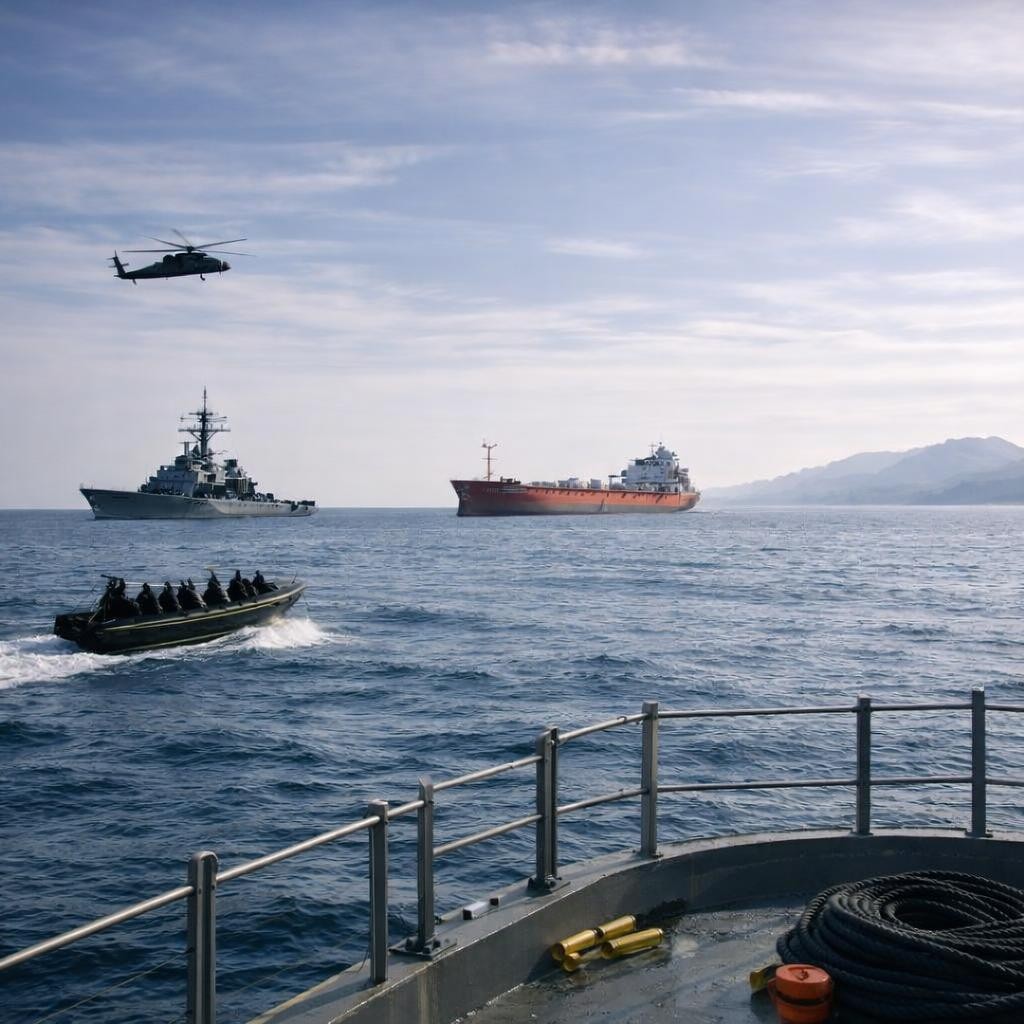
    Naval combat scene with burning ships, missiles, helicopters, and a soldier operating a gun on a boat

    Blue Press Journal – The escalation of conflict between the United States and Iran has pushed the global economy to the brink, fostering an environment of instability that many experts argue was entirely preventable. By initiating a campaign of military aggression without congressional authorization, the Trump administration has by passed legislative oversight, leaving the American public to bear the brunt of surging inflation and a precarious geopolitical landscape.

    Current negotiations center on a fragile two-week ceasefire, yet this “peace” effort remains deeply troubling. Critics argue that using the threat of mass civilian casualties as a bargaining chip to reopen the Strait of Hormuz is not only reprehensible but strategically bankrupt. Data from Lloyd’s List Intelligence confirms that shipping volumes plummeted 90% at the height of the conflict, while reports from the Financial Times indicate that Iran intends to levy hefty cryptocurrency tolls on vessels—effectively turning a vital international waterway into a proprietary toll road.

    The administration’s shifting narrative and erratic policy goals have created what many characterize as a “credibility gap.” While the White House touts progress, the Associated Press notes that claims of regional stability are contradicted by continued missile fire reported across Kuwait, the UAE, and Qatar. Furthermore, as the New York Times reports, the imposition of $2 million fees per ship suggests a significant concession that threatens the status of the Strait as an international waterway.

    Many military analysts have a scathing assessment of the presidents war describing his current posture as a “total fold.” After weeks of reckless bluster, the U.S. now finds itself negotiating on terms dictated by an Iranian 10-point proposal. We are left asking: What has actually been gained? With Iranian nuclear capabilities degraded, by how much? Now we face the potential for Russian or Chinese rearmament of Iran looming, the administration’s strategy appears to be a reactive, uncoordinated mess.

    If an American president cannot maintain a coherent policy, ignores the potential for long-term strategic catastrophe, and accelerates the financial hardship of working families, we must critically evaluate their fitness for office. This unnecessary war, characterized by its lack of transparency and disregard for international norms, remains a defining failure of the Trump administration.


  • Trump’s $200 Billion Iran Conflict: Funding Forever Wars by Slashing American Healthcare

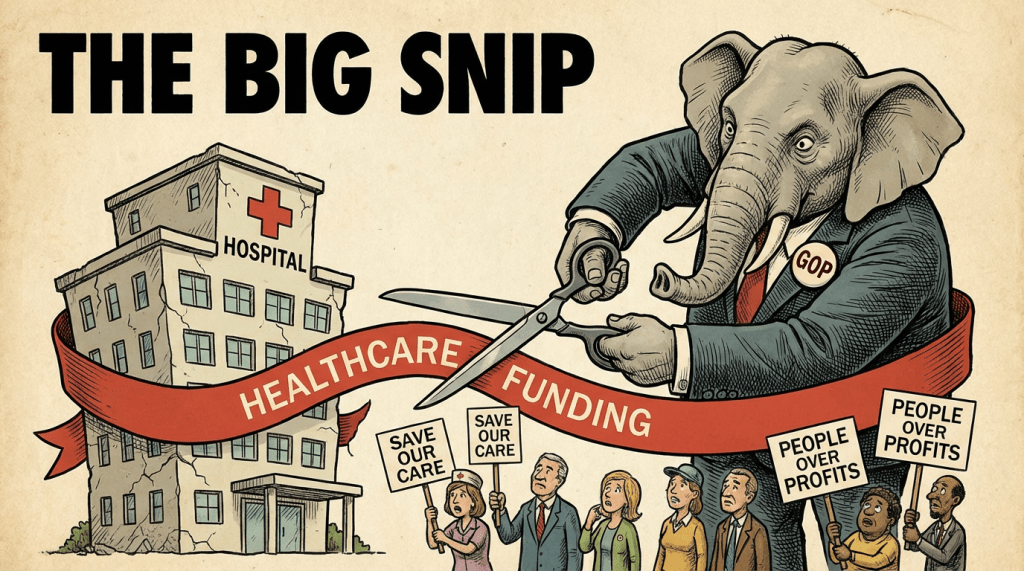
    Cartoon THE BIG SNIP: GOP elephant cuts HEALTHCARE FUNDING ribbon; signs read SAVE OUR CARE and PEOPLE OVER PROFITS.

    Blue Press Journal – The escalating prospect of a $200 billion conflict with Iran under Donald Trump’s “America First” banner is exposing a deep hypocrisy in current Republican fiscal policy. National leadership is now eyeing drastic cuts to Medicaid and essential nutrition programs to bankroll foreign military intervention—a move that prioritizes global volatility over domestic survival.

    As reported by The Hill, House Budget Committee Chair Jodey Arrington is championing this pivot, framing a “war on fraud” as a convenient mask for gutting social safety nets. However, this strategy is meeting fierce resistance from those who see it as a betrayal of the working class. HuffPost notes that millions of Americans have already lost insurance coverage due to previous GOP maneuvers, yet Trump’s allies seem intent on further dismantling healthcare to finance a reckless Middle East strategy.

    Critics argue this policy shift is not only economically dangerous but morally bankrupt. According to The New York Times, the reliance on “reconciliation” to bypass legislative debate shows a willingness to sacrifice the health of the American public for unilateral executive aggression. Rather than focusing on the surging cost of living, which Reuters reports remains a primary concern for the electorate, this administration’s trajectory trades the well-being of families for the catastrophic costs of an avoidable war.

  • Trump’s Iran War Faces Diplomatic Revolt as Allies Declare ‘Not Our Conflict’

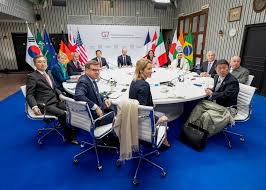
    Blue Press Journal – As the Trump administration escalates military operations in Iran, Washington confronts mounting isolation from its closest Western partners. During a tense G7 foreign ministers’ summit at Vaux-de-Cernay Abbey outside Paris, major NATO allies made clear they want no part in offensive operations against Tehran, according to coverage from Reuters and the Associated Press.

    French Defense Minister Catherine Vautrin explicitly distanced Paris from the conflict, declaring the war “is not ours” while emphasizing strictly defensive positioning. The remarks, reported by France 24 and European outlets, underscore deepening transatlantic fractures four weeks into the American and Israeli military campaign that has roiled global oil markets and threatened regional stability.

    Multiple EU governments revealed they received no prior consultation before Washington launched strikes, despite facing severe economic consequences from the resulting instability. British Foreign Secretary Yvette Cooper acknowledged London’s divergence from U.S. strategy, favoring diplomatic channels over offensive military action, while German Foreign Minister Johann Wadephul emphasized post-conflict planning for Strait of Hormuz security rather than active combat participation, according to BBC and Guardian reports.

    The diplomatic rupture widened when Trump publicly berated NATO allies during a Thursday Cabinet meeting, falsely claiming the alliance had done “absolutely nothing” regarding Iran. This criticism ignores that Canada, France, Germany, Italy and Britain—all G7 members—belong to NATO while maintaining sovereign foreign policies independent of Washington’s unilateral decisions.

    Compounding anxieties, Secretary of State Marco Rubio suggested Ukraine might face diverted weapon shipments for Middle East demands, prompting urgent German warnings against compromising Kyiv’s defense. French Foreign Minister Jean-Noël Barrot secured G7 consensus on immediate civilian protection and freedom of navigation in Hormuz, sidelining the administration’s go-it-alone approach as Trump complains about insufficient support for his widening war.

  • Trump’s Oil‑Price Spin Masks a Growing Affordability Crisis and a Dangerous Iran War

    Trump’s Oil‑Price Spin Masks an Affordability Crisis and an Unnecessary Iran War

    Blue Press Journal – President Donald Trump tried to portray today’s surge in gasoline prices as a boon for U.S. producers, posting on TruthSocial that “the United States is the largest oil producer, so when oil prices go up, we make a lot of money.” But the reality, reported by Reuters and CNN, is that consumers are feeling the pinch of a “fuel shock” not seen since the 1970s, deepening an already‑severe affordability crisis for middle‑class families (Reuters). 

    Trump’s rhetoric also drifts into dangerous territory. He claims the war with Iran is necessary to stop a nuclear threat, yet The New York Times notes that diplomatic talks were nearing a mutually acceptable agreement and no credible evidence shows Tehran is building a bomb (NYT). Energy Secretary Chris Wright’s dismissal of a $200‑per‑barrel scenario as “unlikely” ignores Tehran’s explicit warning that regional destabilization will drive prices sky‑high (CNN). 

    Meanwhile, the president’s ongoing effort to suppress the Epstein files diverts attention from these urgent economic issues, raising questions about his priorities. As oil prices fluctuate, the real cost falls on American drivers, not on the Trump‑aligned oil lobby. 

  • Trump’s Iran War Threatens Catastrophic Oil Crisis as Aramco Warns of Global Market Collapse

    Trump’s Iran Escalation Threatens Catastrophic Oil Crisis for American Consumers

    Poster TRUMP v. IRAN GLOBAL OIL CRISIS showing Trump gesturing towards a burning map of Iran.

    Blue Press Journal – As working Americans face mounting costs at the pump, Saudi Aramco’s CEO has issued a stark warning that President Donald Trump’s escalating conflict with Iran could trigger “catastrophic consequences” for global oil markets. Amin Nasser told reporters Tuesday that blocking the Strait of Hormuz—through which roughly 20% of global oil shipments flow—represents “the biggest crisis the region’s oil and gas industry has faced” (Reuters). 

    The Iranian Revolutionary Guards have vowed to halt “one litre of oil” from passing if U.S. attacks persist, already choking shipments through the vital artery. Despite Brent crude surging to three-year highs near $120 per barrel, Trump has doubled down on aggression, threatening “much harder” strikes while proposing an unrealistic naval escort plan that energy officials dismiss as insufficient (Bloomberg). 

    With global inventories at five-year lows and Aramco suspending Gulf exports entirely—removing 350 million barrels from the market—Trump’s brinkmanship directly threatens American consumers with sustained price spikes across aviation, agriculture, and transportation sectors. As one Gulf energy official noted to CNBC (2026), only stopping the war—not escalating it—can reopen these critical shipping lanes.

    Chart: Brent Crude Price Surge During Iran Crisis

    DatePrice (USD)Event
    Pre-Escalation$70Baseline pricing
    Week 1$85Initial Hormuz tensions
    Current Peak$118-120Iran blocks shipping threats

    Source: Market data via Bloomberg/New York Mercantile Exchange