Tag: Midterm Elections

  • Trump’s “Communist” Rhetoric: A Desperate Political Strategy

    by Winston Wendell

    Watching this election season unfold, I can’t help but notice how much Donald Trump seems to have run out of new tricks. Same old slogans, the usual list of complaints, those rallies loaded with nostalgia and bitterness, they’re just not hitting like they used to. Now, with his usual playbook worn thin, Trump’s decided to go back to one of the oldest strategies around: fearmongering, this time in the threadbare costume of anti-communism. It’s basically Cold War reruns, and honestly, it should have stayed in the past.

    Trump’s Playbook Feels Tired

    Here’s what stands out to me: Trump’s running on empty. He can’t lean on the economy, it’s a tough sell when folks see their paychecks eaten up by inflation each month, buying less and less while everything keeps getting pricier. That “economic revival” he pushed in 2016? People know it never materialized.

    Foreign policy? Not much shelter there either. The situation with Iran is unresolved, his tariffs fell flat both as leverage and as economic policy, and he didn’t end the war in Ukraine like he’d said he would. These aren’t just small blips, this is the story falling apart, top to bottom. Any claims that Trump had some special knack for foreign affairs ring hollow now.

    Even his supposed home turf—immigration and mass deportations—has run out of steam. The drama just doesn’t whip up crowds the same way. The talking points sound old, and voters seem to see his proposals for what they are: more show than action.

    Dragging Out the Red Scare

    So, what does he do when the old moves don’t work? He leans on the most cynical tactic in conservative politics: calling progressive leaders “communists.” This isn’t new. It’s almost identical to the “Red Scare” playbook from after both world wars—a moment when anti-communist panic was turned into a weapon to smear the left, ruin reputations, and block policies that might actually help people.

    When Senator Joe McCarthy whipped up anti-communist frenzy, he wasn’t protecting democracy. He was out for power, and he used fear to silence critics and strengthen his own hand, tearing down any institution that didn’t fit his vision. It’s the same story, just dusted off for a new generation.

    This wasn’t just McCarthy, either. After World War II, Republicans tried to brand the New Deal as communism, which couldn’t be further from reality. Southern segregationists then used the same trick to demonize civil rights activism and labor movements. This tactic helped the GOP grab power in 1946 and launched careers like Richard Nixon’s. But strip away the drama, and it was always about fear and spin, not the truth.

    Take Trump’s speech at Mount Rushmore, he stood there and painted the country’s 250th birthday as a final battle against “radicals” threatening American values. He made it sound like you either vote for him or open the door to communist takeover. It’s right out of the old playbook, like a rerun that hopes to scare up different results.

    Completely Out of Step

    What stuns me most is just how out of touch this approach is with what’s happening today. Trump tries to paint people like Zohran Mamdani or Alexandria Ocasio-Cortez as dangerous left-wing radicals, but it just doesn’t stick. Their ideas, Medicare for All, affordable childcare, making big corporations play fair—these aren’t communist schemes. They’re attempts to fix real, everyday problems for Americans. 

    And the old scare words are losing their bite, especially for younger people. Look at the numbers from the Cato Institute or Axios-Generation Lab—Gen Z doesn’t have much faith in a capitalist system that leaves them struggling to afford housing, healthcare, or any sense of security. “Socialism” isn’t an insult to them; it’s looking more and more like a possible solution. The same solution “ Social Security” was for their grandparents and parents. 

    The fearplay that fired up older crowds just doesn’t connect with young voters who already feel the system’s failed them. It’s not that Democrats are messaging badly. The ground is shifting, and younger Americans simply see the economy differently.

    What Trump’s Really After

    If I’m honest, Trump’s jump into anti-communist theatrics isn’t going to do much for him in the midterms. More than that, it says something larger about who he really is. People care more about trust in their government right now—they’re worried about corruption and democracy falling apart, not labels that have lost their punch.

    What bugs me most is that Trump doesn’t have any real philosophy or plan. He’s not out to save America from socialism. He just craves the spotlight. It’s self-preservation masquerading as political battle, a last-ditch attempt to stay relevant by recycling the ghosts of McCarthy and his mob.

    The guy who once bragged about being a “stable genius” is grabbing for the loudest, tiredest tricks in the book. This isn’t leadership. It’s just survival, and that really says it all: Trump isn’t leading anybody, he’s just refusing to take the exit. The anti-communist schtick is just his latest attempt to find an audience.

    So, as the midterms draw closer, I’m not really scared. I’m almost curious. The show goes on, but the crowd’s losing interest. Eventually, even the most desperate act has to face the music when the seats are empty.

    Fediverse Reactions
  • Supreme Court’s Delay Thwarts GOP Plan to Gut Black Voting Power Ahead of Midterms

    Supreme Court’s Delay Thwarts GOP Plan to Gut Black Voting Power Ahead of 2026

    Blue Press Journal – A Republican-led scheme to systematically dismantle Black-majority congressional districts across the South has been temporarily thwarted, not by a legal defense, but by the Supreme Court’s own delayed timetable, according to election law experts.

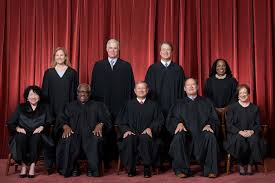
    The plan hinged on the high court’s anticipated ruling in Louisiana v. Callais, a case that could severely weaken or outright strike down Section 2 of the landmark Voting Rights Act. This provision prohibits voting practices that discriminate based on race, a critical tool used to prevent the dilution of Black voting power through gerrymandering.

    Had the conservative-majority Court, shaped by three justices appointed by President Donald Trump, issued a ruling gutting the VRA shortly after re-hearing the case in October, it would have greenlit a frantic redistricting process. GOP-controlled state legislatures would have been empowered to “crack” and “pack” Black voters, effectively eliminating districts currently represented by Black Democrats.

    According to a stark analysis by the voting rights group Fair Fight Action, this could have targeted up to 19 House seats across nine Southern states. The move was a blatant partisan power grab, designed to permanently entrench a white conservative majority and make it “increasingly hard for Democrats to win back control of the House,” as reported by HuffPost.

    However, the Court’s failure to issue a decision has now made this scenario “functionally impossible” for the 2026 elections, as primary calendars have rendered it too late for states to redraw maps.

    “We’re at the point where it’s functionally impossible for most Southern states to redraw their maps, unless they do something extraordinary like move or redo primaries,” Michael Li, a redistricting expert at the Brennan Center for Justice, confirmed. States like North Carolina and Texas have already held primaries, while others face imminent deadlines to print ballots for military and overseas voters.

    The GOP’s intent was clear. Louisiana’s Republican Governor, Jeff Landry, called a special legislative session on redistricting last fall, anticipating a swift ruling from the Supreme Court. This tactic aligns with the Republican project, championed by Donald Trump, to roll back voting rights protections for Democratic-leaning minority voters.

    The delayed ruling is a temporary reprieve, but the case remains a loaded weapon aimed at the heart of American democracy.

  • The Unrelenting Shadow of the Big Lie: Trump’s Assault on Election Integrity

    The bedrock of American democracy—free and fair elections—is under persistent assault from debunked claims of election fraud, notably propagated by Donald Trump. This ongoing narrative, termed the “big lie,” recently escalated in Fulton County, Georgia, where officials are taking extraordinary legal action against the FBI.

    Fulton County Challenges FBI Over Seized Ballots

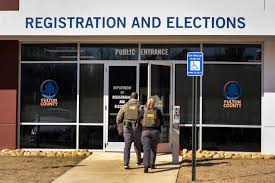
    Blue Press Journal – Fulton County has requested a federal court to compel the FBI to return ballots and election documents from the 2020 election, seized during a warehouse search near Atlanta. This move responds to Trump’s “persistent demands for retribution over claims, without evidence, that fraud cost him victory in Georgia,” which have been “debunked” by numerous audits and investigations.

    Fulton County’s legal filing directly challenges the FBI’s actions, asserting that the federal government breached the Fourth Amendment, which protects individuals against “unreasonable searches and seizures.” The filing argues the affidavit for the search lacked “probable cause,” instead describing “types of human errors that its own sources confirm occur in almost every election — without any intentional wrongdoing whatsoever.” As the filing succinctly states, “The Fourth Amendment demands ‘probable cause’ — not ‘possible cause.’” Fulton County Chairman Robb Pitts emphasized the gravity, stating, “This case is not only about Fulton County. This is about elections across Georgia and across the nation.”

    Trump’s Rhetoric: A Threat to Democratic Norms

    This incident is not isolated; it aligns with Trump’s stated desire to “take over” elections in Democratic-run areas, referencing “15 places” for targeting. Critics fear this rhetoric could lead to actions “beyond the Constitution,” a concern echoed by U.S. Sen. Mark Warner (D-Va.). Trump’s infamous 2020 call pressuring Georgia’s Secretary of State Brad Raffensperger to “find” 11,780 ballots remains a stark reminder of his willingness to undermine election results.

    Despite a White House spokesperson trying to frame Trump’s remarks as supporting the SAVE Act, Trump claimed that cities like Atlanta face “horrible corruption on elections,” insisting “the federal government should not allow that.” This position directly contradicts the Constitution, which grants states authority over election administration, leading even Republican Senator Thom Tillis (R-N.C.) to state, “Nationalizing elections and picking 15 states seems a little off strategy.” The involvement of figures like Tulsi Gabbard—mentioned as Trump’s Director of National Intelligence—at the Fulton search raises concerns about the boundaries between intelligence and law enforcement.

    Ultimately, the actions in Fulton County and Trump’s rhetoric embody the “big lie,” seeking to erode faith in democratic institutions and undermine elections. As Chairman Pitts said about the seized ballots, “What they’re doing with the ballots now, we don’t know, but if counted fairly, the results will be the same.” Vigilance against those undermining election integrity is crucial.