by Winston Wendell
Remarks by Senator Jon Ossoff (D‑Ga.) that President Trump “travels with Natalie” has rekindled interest in the relationship between the president and his 35-year-old aide Natalie Harp. Known as the “human printer” for providing printouts of positive online stories about Donald Trump while he was in transit, Ms. Harp was once again in the news for an alleged altercation over her travel arrangements following the president’s recent court appearance in New York City.
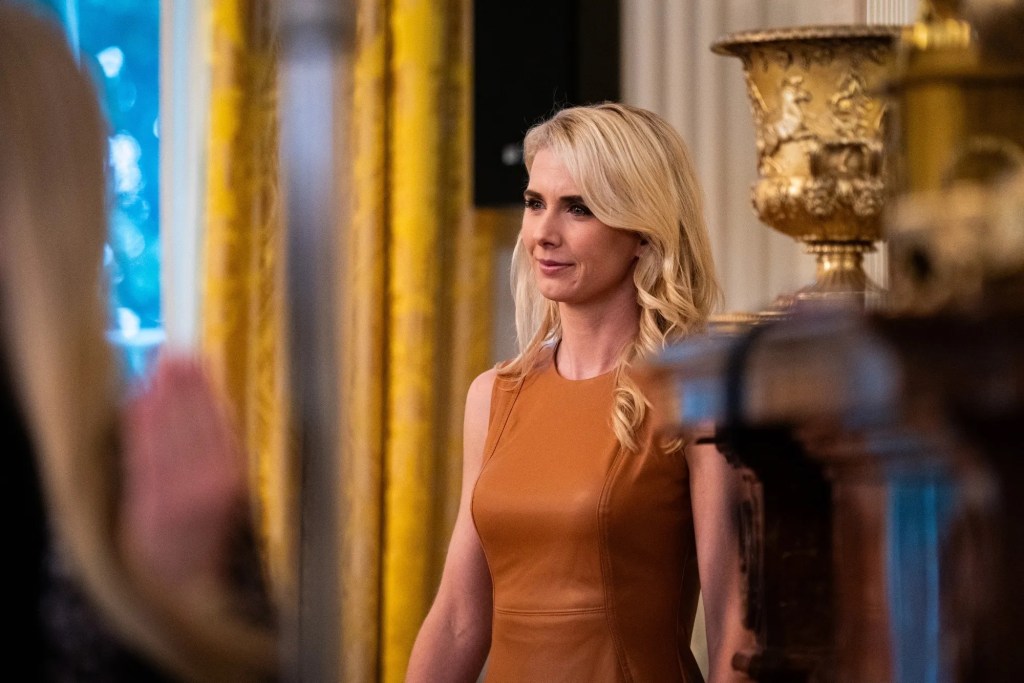
According to a CNN report from October 24, 2023, Ms. Harp was brought to New York City to brief Trump in the days leading up to his court appearance. The news outlet reported that when the President’s motorcade arrived at the destination, the staff told Ms. Harp that there were no available seats for her in the front of the vehicle. Nevertheless, Ms. Harp insisted that she would only return with Mr. Trump because she had previously been requested by the President to accompany him to the courtroom. Following a “screaming match” with the President’s staff, Ms. Harp climbed into the trunk of one of the SUVs and arrived in New York City. In addition, CNN reported that it had received a photograph of Ms. Harp in the trunk of the vehicle, which has since been shared on several news websites.
The alleged incident in the trunk of the SUV is the latest development in the ongoing controversy surrounding Ms. Harp’s relationship with Mr. Trump. In September 2023, Politico reported that Ms. Harp has served as the President’s “gatekeeper,” providing him with printouts of online articles containing information that the president may find of interest. According to Politico , since her hiring, Natalie Harp has been responsible for screening news feeds and choosing which news items to print out for the President based on their perceived relevance. Similarly, The New York Times , in its March 2024 article about Trump’s staff, noted that Harp has been a “near-constant presence” at both the president’s rallies and court proceedings.
Although the White House did not respond directly to the allegations regarding the trunk incident, former Trump officials told Reuters that the president sometimes engaged in “unorthodox” behavior with his staff. According to the news outlet, the President’s staff members are generally willing to comply with his requests due to his status as a national leader.
Senator Ossoff’s remarks were made during a hearing of the Senate Judiciary Committee on January 15, 2024. Following his comments, several representatives laughed and discussed the extent to which staff members are permitted to travel with the President. However, as this story continues to gain traction in the national news, it is likely to raise additional questions about the potential risks and dangers facing Trump’s staff. From this standpoint, the “trunk controversy” may have significant implications for the White House.


 Blue Press Journal