BLUE PRESS JOURNAL – Brent crude futures clung fiercely to the $100 per barrel mark on Monday, a stark reminder of the escalating energy crisis that looms over the globe. As Iranian military maneuvers wreak havoc on essential infrastructure and strangle vital maritime chokepoints crucial to international trade, the repercussions are felt far and wide, igniting a sense of urgency that cannot be ignored.
The temporary closure of Dubai International Airport—one of the world’s busiest—after Iranian drone strikes shows the expanding conflict’s geographic scope, according to aviation data from FlightAware and Reuters. Meanwhile, Tehran’s blockade of the Strait of Hormuz has cut off about one-fifth of global oil shipments, causing supply shocks similar to the 1970s energy crisis, confirms the U.S. Energy Information Administration.
Since Donald Trump and Jerusalem initiated coordinated strikes against Iranian targets on February 28, regional tensions have metastasized beyond bilateral conflict. Iranian forces have systematically targeted Israeli population centers, American military installations across the Levant, and energy infrastructure belonging to Gulf Arab states, military analysts confirmed to the Associated Press.
The economic reverberations extend far beyond pump prices. The World Food Program has warned that surging fertilizer costs—directly linked to hydrocarbon price spikes—threaten agricultural output across the Global South, potentially triggering famine conditions in import-dependent nations while complicating inflation control efforts by central banks worldwide.
President Donald Trump’s diplomatic isolation has worsened the crisis. Despite requesting naval contributions from about seven allied nations for Hormuz transit lanes, the administration has gained zero formal commitments, defense officials told Bloomberg. This highlights the decline of American coalition-building under Trump’s “America First” approach, leaving Washington without the necessary multinational naval presence to ensure freedom of navigation in the Persian Gulf.
Iranian Foreign Minister Abbas Araghchi extinguished speculation on negotiated settlements, stating via social media that Tehran seeks “neither truce nor talks,” hinting at prolonged economic volatility. The International Energy Agency warns that prices above $100 may compel central banks to maintain high interest rates, potentially leading to recession amid ongoing inflation.
BLUE PRESS JOURNAL – The Supreme Court’s decisive ruling that nullified President Donald Trump’s emergency tariffs ignited a frantic legal scramble. Hundreds of companies—from a New York wine importer to shipping giant FedEx—are now filing lawsuits to reclaim duties they allege were unlawfully collected. The fight has split into two competing jurisdictional tracks, while the Trump administration and the Department of Justice (DOJ) deliberately drag their feet.
Two Front‑Line Challengers VOS Selections, a New York wine and spirits importer represented by the Liberty Justice Center, is pressing the U.S. Court of Appeals for an immediate mandate so lower courts can begin processing refunds. The importer previously secured a verbal guarantee from the administration that any successful claim would be reimbursed promptly. In contrast, AGS Company Automotive Solutions of Michigan, the lead docket in a consolidated case, is demanding a hearing to lift a December‑23 judicial stay, arguing that each day of delay deepens the prejudice to plaintiffs.
DOJ’s 90‑Day Freeze: A Stalling Tactic Despite early assurances, the DOJ now argues for a 90‑day freeze to let “political branches consider options,” labeling rapid refunds as “ill‑conceived.” President Trump, meanwhile, has suggested the process could take years and has urged the Supreme Court to rehear the case—a rarity not seen in nearly seven decades (Reuters). Such postponements appear designed to protect the administration’s political capital rather than remedy wronged businesses.
Political Backlash and Legislative Action Democratic governors from Illinois, New York, Maryland and California have issued invoices demanding billions in refunds for their residents. Senators Ed Markey, Ron Wyden and Jeanne Shaheen have introduced legislation compelling U.S. Customs and Border Protection to issue full refunds with interest within 180 days, prioritizing small‑business owners (Politico).
A Call for Uniform, Court‑Supervised Relief The Liberty Justice Center warns that a “900‑case pileup” will overwhelm the courts if each company pursues separate suits. Yet the administration’s resistance to an expedited, uniform process leaves businesses in limbo, facing mounting legal costs and uncertain timelines.
Bottom line:The Trump administration’s deliberate delays and the DOJ’s procedural roadblocks betray a disregard for fiscal justice, forcing American businesses to fight a protracted legal battle for money they are rightfully owed.
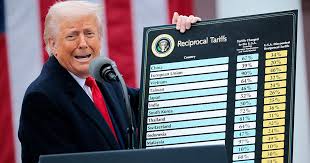
BLUE PRESS JOURNAL (D.C) – In a landmark decision, the Supreme Court delivered a significant blow to President Donald Trump’s trade policies, ruling 6-3 on Friday to invalidate certain “emergency” tariffs imposed during his administration. The high court’s verdict decisively reasserts Congress’s constitutional authority over taxation, curtailing unchecked executive power in international trade.
The ruling centered on the International Emergency Economic Powers Act (IEEPA), which the Court determined did not authorize the President to unilaterally impose tariffs. Chief Justice John Roberts, writing for the majority, critically observed that the expansive interpretation of IEEPA by the administration to levy broad tariffs was unsustainable. “Those words cannot bear such weight,” Roberts stated, referring to the Act’s language.
This decision marks a rebuke of Trump’s trade war tactics, which often bypassed congressional oversight, and suggests a costly reckoning. A U.S. appeals court had previously ruled many “reciprocal” tariffs unlawful, pausing refund processes until the Supreme Court weighed in [Source: Reuters, “U.S. appeals court says Trump’s China tariffs unlawful,” e.g., August 2023 report]. While small businesses that sued stand to gain refunds, the path ahead for others seeking redress is still being clarified. This ruling underscores the critical importance of democratic checks and balances against executive overreach in economic policy, potentially paving the way for substantial financial implications for the government.
Exposed: The Perilous Playbook of Debunked Election Lies and Trump’s Weaponization of the FBI
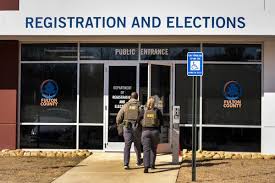
Blue Press Journal – The recent FBI raid on Fulton County, Georgia, seizing nearly 700 boxes of 2020 election ballots and records, has unveiled a deeply disturbing pattern: the aggressive recycling of thoroughly debunked election lies. Far from uncovering new evidence, the court-ordered affidavit supporting the raid reads like a greatest hits compilation of conspiracy theories, long-ago disproven in countless courts and by exhaustive audits. This alarming development signals a dangerous escalation in the campaign to undermine American democracy, leveraging law enforcement agencies for overtly political ends.
The Return of Baseless Allegations
The FBI’s affidavit, intended to establish probable cause for a criminal offense, relies heavily on claims that have been exhaustively investigated and widely discredited. Georgia’s Republican Secretary of State Brad Raffensperger, who famously resisted pressure to “find” votes in 2020, aptly dismissed these assertions as “baseless and repackaged.” [Source: The Atlanta Journal-Constitution] Even Fulton County Board of Commissioners Chair Robb Pitts described the affidavit as based on “recycled rumors, lies, untruths and unproven conspiracy theories.” [Source: CNN]
Consider the affidavit’s core arguments:
Missing Scanned Images: The FBI highlighted that Fulton County “does not have scanned images of all the 528,777 ballots.” Yet, this was not a violation of Georgia law at the time of the 2020 election. The requirement was added by the GOP-led state legislature months later, in March 2021. To present this as evidence of wrongdoing is deliberately misleading.
Multiple Ballot Scans: The affidavit also pointed to instances of ballots being scanned multiple times. Independent investigations into this issue, including those in Fulton County, found no evidence of fraud. Ballots can be rescanned due to tabulation errors, with initial erroneous scans deleted. Crucially, multiple audits—the initial count, a hand-counted audit, and a machine recount—consistently affirmed Joe Biden’s victory margin of 11,779 votes in Georgia. [Source: Associated Press] The affidavit offers no evidence to suggest these procedural issues were the result of intentional criminal action.
As Stanford Law professor Orin Kerr succinctly stated, “In drafting a search warrant affidavit, the Fourth Amendment requires the inclusion of facts that would negate probable cause, if they exist. The government can’t pick facts that, if true, could support a finding a probable cause, but omit the facts that cancel that.” [Source: X / @OrinKerr] The Fulton County affidavit appears to be a stark example of such crucial omissions, presenting a one-sided narrative divorced from established facts and legal precedents.
The Legal System’s Resounding Rejection of Election Lies
These recycled theories have not just been debunked by election officials and independent journalists; they have been definitively rejected by virtually every level of the American judiciary. Following the 2020 election, Donald Trump and his allies filed over 60 lawsuits alleging widespread fraud, from state courts to the Supreme Court.
Pennsylvania: In Trump v. Boockvar, federal courts found no evidence of fraud sufficient to overturn the election, a decision upheld on appeal.
Georgia: Cases like Pearson v. Kemp, which challenged the state’s election procedures, were dismissed for lack of standing or merit.
Supreme Court: The most significant rebuke came when the U.S. Supreme Court, in Texas v. Pennsylvania, et al., unequivocally rejected a lawsuit seeking to overturn results in four key states, citing Texas’s lack of standing. This unanimous decision underscored the absence of credible evidence for systemic fraud.
These judicial pronouncements, delivered by judges across the ideological spectrum, consistently affirmed the integrity of the 2020 election. The attempt to resurrect these thoroughly discredited claims through an FBI investigation represents an appalling disregard for legal due process and factual accuracy.
The Insidious Role of Kurt Olsen and the Weaponization of the FBI
Perhaps the most alarming revelation from the affidavit is that the FBI’s “criminal investigation originated from a referral sent by Kurt Olsen,” a temporary White House employee and a figure central to the “Stop the Steal” movement. Olsen is a notorious election denier who lobbied the Department of Justice to intervene in 2020 and was intimately involved in efforts to overturn the election. His record of promoting unsubstantiated allegations is so extensive that he was sanctioned by a federal court for making “false, misleading and unsupported factual assertions” in a 2022 Arizona election challenge. [Source: Arizona Republic]
Olsen’s involvement in initiating an FBI investigation he has used as a political weapon poses a serious threat to American democracy. This is not a legitimate inquiry but a blatant political weaponization of federal agencies. Allowing a known purveyor of debunked conspiracies, who has faced legal penalties for dishonesty, to trigger an FBI raid sets a troubling precedent. It signifies a dangerous erosion of federal law enforcement’s impartiality and its vulnerability to partisan manipulation.
The unusual involvement of the Office of the Director of National Intelligence (ODNI) in a domestic law enforcement operation further amplified concerns, prompting Senators Alex Padilla (D-Calif.) and Mark Warner (D-Va.) to demand immediate briefings. [Source: The Washington Post] This intermingling of intelligence and domestic law enforcement, particularly when driven by demonstrably false premises, poses an existential threat to the rule of law.
A Clear and Present Danger to Democracy
This episode is more than just a rehash of old lies; it is a calculated effort to “dramatically remake our elections to curtail who is able to vote and whose votes are counted,” as Lauren Groh-Wargo, CEO of Fair Fight Action, warned. [Source: NPR] The willingness of federal agencies to act on such flimsy, politically motivated referrals—rooted in the discredited narratives of figures like Kurt Olsen—sets a perilous precedent. It undermines public faith in democratic institutions, emboldens those who seek to disenfranchise voters, and paves the way for further partisan interference in our electoral processes. The deliberate recycling of debunked election lies, now amplified by the power of the federal government, is an undeniable assault on the foundations of American democracy.
Washington Post layoffs and Jeff Bezos’s role in dismantling the newsroom, and how this aligns with the erosion of the First Amendment and appeasement of Donald Trump
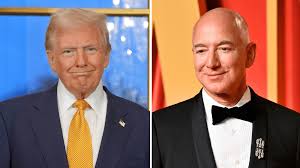
The news industry this week witnessed a seismic shift that threatens the very foundation of American democracy. The Washington Post, a nearly 150-year-old institution and a pillar of the democratic system, began a fresh wave of mass layoffs. Under the ownership of billionaire Jeff Bezos and the stewardship of publisher Will Lewis, the paper is closing its Sports department, gutting its International and Metro desks, and ending its signature podcast.
While management frames these cuts as a necessary business realignment, a closer examination reveals a more troubling narrative. These layoffs represent a systematic dismantling of the Fourth Estate’s ability to hold power accountable. When viewed alongside Bezos’s history of appeasing Donald Trump and his interference in editorial independence, it becomes clear that these cuts are not just financial—they are a direct threat to the First Amendment.
The Erosion of Institutional Integrity
The Washington Post has long been synonymous with investigative journalism, most famously exposing the Watergate scandal. However, under Jeff Bezos’s ownership, the paper has pivoted away from its role as a public watchdog toward a model that prioritizes business interests over journalistic missions.
According to a statement released by the Washington Post Guild, “Continuing to eliminate workers only stands to weaken the newspaper, drive away readers and undercut The Post’s mission.” This is not hyperbole; it is a factual assessment of the current trajectory. By decimating the Metro desk and closing the Books section, the Post is severing its connection to the local community and intellectual discourse—areas essential for a well-informed citizenry.
The human cost of these decisions is staggering. As reported by The Guardian, laid-off journalists took to social media to voice their anger. The former Cairo bureau chief revealed she was laid off alongside the “entire roster” of Middle East correspondents, while a Ukraine-based correspondent lamented losing her job “in the middle of a warzone.” When a major news outlet abandons on-the-ground reporting in conflict zones, it creates an information vacuum that authoritarianism thrives in.
Bezos, Trump, and the Politics of Appeasement
To understand the First Amendment implications of these layoffs, one must look at the broader context of Jeff Bezos’s behavior over the last two years. There is a growing trend in American media, as identified by media critics, where “media companies and other key institutions of civil society responding to Donald Trump’s efforts to bully and intimidate them by knuckling under, sucking up, and appeasing him.”
Jeff Bezos has emerged as a chief practitioner of this appeasement.
In a move that broke with decades of tradition, the Post announced it would not endorse a presidential candidate for the 2024 election—a decision made directly by Bezos. As noted by NPR, this decision resulted in the swift loss of tens of thousands of subscribers. This was not a neutral act; it was a strategic maneuver to protect Bezos’s vast business empire, including Amazon and Blue Origin, from potential retribution should Donald Trump return to power.
Furthermore, Bezos’s interference extends to the editorial pages. He previously forced the opinion section to pivot toward “personal liberties and free markets,” a move that prompted the section’s editor to resign. This editorial meddling signals to readers that the paper’s content is subject to the whims of a billionaire rather than the principles of journalistic integrity.
The Financial Fallacy and the “Puff Piece” Paradox
Critics argue that the layoffs are a response to financial struggles, yet the Post’s decline in subscribers correlates directly with Bezos’s political decisions, not a lack of demand for news. In fact, competitors like The New York Times have thrived. As reported by The New York Times itself, the paper added approximately 450,000 digital-only subscribers in the last quarter of 2025 alone. The difference? The Times continues to invest in its newsroom while the Post is slashing it.
The contradiction in Bezos’s strategy is glaring. While he cuts essential reporting staff, reports have surfaced regarding massive spending on non-journalistic projects. Critics point to the investment of tens of millions in a documentary about the First Lady—a project that serves as a “puff piece” rather than hard news. This allocation of resources suggests that Bezos is more interested in curating a favorable public image than in funding the investigative reporting that defines the Washington Post.
The First Amendment in Peril
The First Amendment guarantees freedom of the press, but that freedom is meaningless without the infrastructure to support it. A free press requires funding, staff, and the independence to report without fear of billionaire reprisal.
By gutting the International and Metro departments, Bezos is effectively shrinking the scope of information available to the American public. A democracy relies on a press that can cover local city hall meetings just as much as it covers international conflicts. When those layers of coverage are stripped away, the public is left with a superficial understanding of the world, making them more susceptible to disinformation and authoritarian rhetoric.
As former Washington Post executive editor Marcus Brauchli once noted, the paper’s value lies in its ability to provide “indispensable” coverage. If Bezos continues to view the Post solely as a financial asset to be liquidated for parts rather than a civic institution, the paper may not survive the decade.
A Call for Responsible Stewardship
The layoffs at The Washington Post are not merely a business restructuring; they are a symptom of a larger disease in American media—the consolidation of power in the hands of billionaires who prioritize self-preservation over public service.
Jeff Bezos has the wealth to sustain the Washington Post for decades, investing in the next generation of reporters and expanding coverage. Instead, he has chosen a path of austerity that weakens the paper’s ability to function as a check on power. By silencing foreign correspondents and dismantling local desks, he is aiding the efforts of those who wish to diminish the free press.
If Bezos is unwilling to be a steward of this beloved institution, he should heed the advice of critics and consider selling the Washington Post to owners who value the First Amendment over personal gain. Until then, the slow death of the Washington Post serves as a chilling warning: the freedom of the press is only as strong as the will of those who own it.
The unhinged presidency of Donald Trump has raised concerns about his mental health and authoritarian tendencies. Experts warn that his behavior is eroding American democracy and posing a threat to national security.
Blue Press Journal – As the 47th President of the United States, Donald Trump has consistently demonstrated a blatant disregard for the norms of democracy, dignity, and decency. His former White House attorney, Ty Cobb, has recently sounded the alarm, warning that Trump’s unbridled behavior in his second term may be a symptom of declining mental health (Source: Substack interview with Jim Acosta). Cobb’s concerns are not unfounded, as Trump’s erratic and authoritarian tendencies have been well-documented by reputable news sources, including The New York Times, The Washington Post, and CNN.
Cobb, who served as a White House counsel during Trump’s first administration, has accused the President of “tarnishing everything that was once dignified and sacred about America” (Source: Substack interview). He has also expressed concern that Trump is being enabled by a White House staff comprised largely of sycophants, including advisors like Stephen Miller and Russell Vought. According to Cobb, these individuals are encouraging Trump to act on his worst impulses, leading to a situation where the President is “just doing what he wants” (Source: Substack interview).
This lack of restraint has resulted in a presidency marked by chaos, controversy, and a blatant disregard for the rule of law. Trump’s actions have been widely criticized by experts, including former FBI Director James Comey, who has described the President’s behavior as “unfit” and “outside the bounds of normal human behavior” (Source: The New York Times). Furthermore, Trump’s authoritarian tendencies have been highlighted by The Atlantic, which has noted that the President’s actions are “eroding the foundations of American democracy” (Source: The Atlantic).
Cobb’s concerns about Trump’s mental health are not isolated. Psychology Today has published numerous articles examining the President’s behavior through the lens of psychology, with some experts suggesting that Trump may be exhibiting symptoms of narcissistic personality disorder (Source: Psychology Today). Additionally, The Lancet, a reputable medical journal, has published articles highlighting the potential risks of Trump’s behavior to global health and stability (Source: The Lancet).
The consequences of Trump’s actions are far-reaching and devastating. As Cobb noted, the President’s behavior has resulted in damage to the United States’ relationships with its allies, with some countries refusing to share intelligence with the US due to concerns about Trump’s ties to Russia (Source: The Washington Post). This has significant implications for national security, as highlighted by The Center for Strategic and International Studies (Source: The Center for Strategic and International Studies).
The evidence suggests that Donald Trump’s presidency is marked by a disturbing lack of restraint, a blatant disregard for the rule of law, and a worrying decline in mental health. As Cobb warned, “we are in a place we have never seen before and we need to navigate out of it as quickly as possible or we’re going down” (Source: Substack interview). It is imperative that the American people demand accountability from their leaders and take action to protect the integrity of their democracy.
WASHINGTON — A federal judge has once again ruled against the Trump administration’s efforts to restrict congressional oversight of immigration detention centers, finding that the policy likely violates existing federal law ensuring lawmakers’ access to those facilities.
U.S. District Judge Jia Cobb, appointed by President Biden, issued the decision Monday, halting a Department of Homeland Security (DHS) directive that would have required members of Congress to provide seven days’ notice before conducting visits to Immigration and Customs Enforcement (ICE) centers. The rule, reinstated last month by DHS Secretary Kristi Noem, applied to facilities funded under the so-called “Big Beautiful Bill,” a Republican-backed spending package enacted last summer that omitted a long-standing access provision.
This ruling marks the second time Judge Cobb has sided with a group of Democratic lawmakers who filed suit to preserve their ability to conduct unannounced inspections. In December, Cobb previously found that the Trump administration violated a congressional “rider” attached to DHS’s annual appropriations bill — a provision guaranteeing lawmakers the right to visit detention sites without advance notice.
In her latest opinion, Cobb criticized the administration’s argument that it could feasibly separate funding streams to determine which facilities were covered by the rider and which were not. “Defendants’ declarant provides almost no details or specifics as to how DHS and ICE would accomplish this task in the face of the practical challenges raised by Plaintiffs,” Cobb wrote.
Legal experts note that the decision reaffirms Congress’s constitutional oversight powers and underscores the judiciary’s role in upholding legislative intent. The ruling effectively prevents DHS from enforcing the notice requirement while the lawsuit proceeds.
Understanding Appropriations Riders and Congressional Oversight
Appropriations riders are provisions in spending bills that direct or limit the use of federal funds. Congress has often used these riders to oversee executive agencies, particularly in sensitive areas like immigration enforcement, environmental regulation, and defense spending.
According to the Congressional Research Service, riders have been used since the early 20th century to ensure compliance with congressional mandates, such as requiring public reporting on detainee conditions and restricting the transfer of Guantánamo Bay prisoners.
Judge Cobb’s ruling reinforces that these riders carry the force of law and cannot be sidestepped by administrative reinterpretation or selective funding designations.
The FBI’s unprecedented seizure of Georgia’s 2020 ballots raises critical questions about federal overreach, Trump’s lingering influence, and the fragile chain of custody that underpins American democracy.
Blue Press Journal – When news broke of an FBI raid at Fulton County’s central election facility in Georgia, it barely registered in the national conversation. Yet, for many observers, the January 28 operation—reportedly involving the seizure of more than 700 boxes of 2020 election materials—raises troubling questions about federal overreach and political motives behind revisiting an election that courts and recounts have already settled.
According to The New York Times and Reuters, the raid was conducted under the pretext of “protecting election integrity.” But the optics are hard to ignore. Why would federal agents intervene in a state-controlled election process nearly four years after Donald Trump lost Georgia, a defeat confirmed by multiple recounts and upheld in more than 60 court cases nationwide?
A Chain of Custody—or a Chain of Command?
Legal experts and state officials have voiced concern about the lack of transparency surrounding the operation. Fulton County election staff say they were given little explanation for the seizure, and no clear chain of custody documentation has been made public. Election law analysts note that such actions could undermine faith in the very institutions charged with safeguarding democracy.
Maine’s Secretary of State, Shenna Bellows, summed up the unease in a statement to The Associated Press:
“We maintain strict control over our ballots. If the federal government can simply seize them without explanation, it sets a dangerous precedent.”
Trump’s Shadow Over the Investigation
Trump’s continued insistence that the 2020 election was “rigged”—despite bipartisan certification and judicial rejection of fraud claims—looms over this latest development. His public comments following the raid, amplified on Truth Social, again alleged wrongdoing in Fulton County, echoing disproven narratives from his post-election campaign.
CNN and FactCheck.org have repeatedly debunked these claims, noting that Georgia conducted both a hand recount and an audit, confirming Joe Biden’s victory. Still, the former president has expressed regret that he “didn’t order the National Guard to seize voting machines,” a statement that blurs the line between political rhetoric and authoritarian impulse.
Election Integrity or Political Intimidation?
The presence of senior intelligence officials, reportedly including the Director of National Intelligence, raises another question: is this truly about election security—or about sending a message to local election workers? As one Fulton County official anonymously told The Washington Post,
“This feels like intimidation. It’s meant to make officials think twice before standing up to federal power.”
Critics argue that actions like this risk chilling effect on election staff and voters alike, particularly in diverse, high-turnout counties such as Fulton—where turnout was key to Biden’s 2020 win.
Democracy Under Scrutiny
While Trump’s allies claim the raid is part of a legitimate transparency effort, the broader context suggests a deeper pattern: using federal agencies to re-litigate political defeats. The FBI, the Department of Justice, and intelligence agencies now find themselves caught between protecting electoral systems and appearing complicit in partisan agendas.
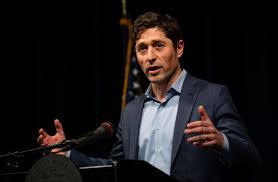
Minneapolis Mayor Jacob Frey condemns a federal court ruling allowing Trump-era immigration raids in Minnesota, calling it an invasion undermining safety and local authority.
Blue Press Journal – Minneapolis Mayor Jacob Frey condemns a federal court ruling allowing Trump-era immigration raids in Minnesota, calling it an invasion undermining safety and local authority.
Minneapolis Mayor Jacob Frey and Minnesota officials are vowing to continue their fight against the Trump administration’s aggressive escalation of federal immigration enforcement in the Twin Cities — even after a federal judge rejected the state’s request to halt the operation.
The decision, handed down by U.S. District Judge Katherine Menendez, denied an injunction against what locals have described as an “invasion” of federal immigration officers under Operation Metro Surge. This initiative, launched during Trump’s presidency, has sent waves of heavily armed Immigration and Customs Enforcement (ICE) and Customs and Border Protection (CBP) agents into Minneapolis neighborhoods.
Mayor Frey: “This Has Brought Fear, Not Safety”
Mayor Frey issued a strong rebuke following the ruling, stating that the surge has disrupted communities, instilled fear among residents, and undermined public safety. “This decision doesn’t change the lived reality here — fear, disruption, and harm caused by a federal operation that never belonged in Minneapolis in the first place,” Frey said.
He emphasized that Minneapolis’s sanctuary city policies are designed to protect immigrant communities, fostering trust between residents and local law enforcement. Critics argue that Trump’s immigration crackdowns — often targeting sanctuary jurisdictions — were politically motivated, aiming to punish cities that refused to cooperate with federal deportation efforts.
Tragic Consequences of Federal Overreach
The lawsuit, filed by Minnesota Attorney General Keith Ellison and Twin Cities officials, gained urgency after two local residents — ICU nurse Alex Pretti and Renee Good — were killed in incidents tied to federal immigration actions. These deaths have intensified calls for accountability and raised questions about the safety and necessity of such operations in urban areas far from the border.
Researchers and immigration advocacy groups note that deploying militarized federal agents in sanctuary cities is not only legally contentious under the Tenth Amendment’s anti-commandeering doctrine, but also socially destabilizing. It can discourage crime victims from seeking help and erode trust in public institutions.
Sanctuary Cities Under Siege
Under Trump’s leadership, sanctuary cities like Minneapolis, New York, and San Francisco repeatedly faced threats of funding cuts, public shaming, and targeted enforcement surges. The administration claimed such measures upheld federal law, but critics, including the American Civil Liberties Union (ACLU), warned they were designed to intimidate immigrant communities and score political points rather than improve safety.
Mayor Frey has made it clear that Minneapolis will not serve as an arm of federal immigration enforcement. “Undocumented residents should be able to call 911 without fearing deportation,” he said, reaffirming the city’s commitment to being a “welcoming, inclusive place for all.”
Despite the setback in court, Minneapolis officials are appealing the decision, determined to hold the Trump administration accountable. The broader legal battle touches on fundamental questions about states’ rights, local autonomy, and the limits of federal power in immigration enforcement.
Blue Press Journal – A critical hearing scheduled for Friday is set to spotlight the escalating immigration enforcement operations in Minnesota, as the acting director of Immigration and Customs Enforcement (ICE), Todd Lyons, is summoned to testify. This unprecedented move comes in response to mounting legal challenges against ICE’s aggressive tactics amid a controversial crackdown.
“The Court’s patience is at its limit,” stated Chief Judge Patrick Schiltz of Minnesota’s federal district court in a recent ruling. His remarks reflect the growing frustration within the judiciary as ICE’s operations face increasing scrutiny, particularly under the Trump administration’s policies which appear to shield the agency from accountability.
Minnesota’s state government is actively pursuing legal action to limit ICE’s presence in the Twin Cities. Local prosecutors have petitioned for access to evidence related to a recent shooting incident involving ICE officers, while civil rights advocates are contesting the agency’s heavy-handed approach to protests. Additionally, numerous migrants affected by the ongoing enforcement surge have filed individual lawsuits challenging their detention conditions (Source: Minnesota District Court Records).
The surge of enforcement actions has seen approximately 3,000 ICE and U.S. Customs and Border Protection (CBP) agents deployed in the Minneapolis area, as disclosed in recent court filings. Judge Schiltz noted that despite previous assurances from the government about complying with court directives, violations have persisted.
One notable case involves Juan Hugo Tobay Robles, who remains in custody despite a court ruling mandating a bond hearing or his release. His situation exemplifies the plight of many migrants who have filed habeas petitions—hundreds have inundated Minnesota courts since the initiation of Operation Metro Surge (The Gavel Analysis of Court Dockets).
The immigration crackdown has ignited tensions between federal authorities and state officials, particularly following two tragic shootings. On January 7, Renee Good, a 37-year-old mother, was shot by an ICE officer during an encounter that escalated rapidly. Video evidence shows her vehicle surrounded by officers, with conflicting reports regarding the officer’s justification for the shooting (Eyewitness Accounts and Video Analysis).
Just days later, ICU nurse Alex Pretti was fatally shot by a Border Patrol agent under similarly controversial circumstances. Initial claims from the Department of Homeland Security (DHS) suggested Pretti posed a threat; however, evidence from the incident challenges this narrative, raising questions about the use of lethal force by federal agents (Analysis of Surveillance Footage).
In the wake of these incidents, Minnesota Attorney General Keith Ellison and Hennepin County Attorney Mary Moriarty swiftly filed a lawsuit aimed at preserving evidence, emphasizing the federal government’s unusual approach that appears to compromise standard investigative protocols (Emergency Motion Filed in Court).
The situation is further complicated by ongoing litigation from the American Civil Liberties Union (ACLU), which is representing six Minnesota residents in a case challenging ICE’s alleged retaliatory tactics against peaceful protestors. U.S. District Judge Katherine Menendez has previously blocked the use of excessive force against demonstrators, though this decision was recently contested by the 8th U.S. Circuit Court of Appeals, marking a significant moment in the ongoing legal battle surrounding the operation (ACLU Press Release).





 Blue Press Journal