Tag: news

  • The Texas Test: Will Republicans Uphold Their Own Gerrymandering Rules?

    A question that challenges the very essence of democracy itself, as it stands before the Supreme Court.

    Blue Press Journal – The Republican Party’s commitment to integrity is about to be put to the test once again, this time in Texas. A federal district court has blocked the state’s redrawn congressional map from taking effect, leaving the GOP majority with a difficult decision: will they uphold the gerrymandering rules they created, or will they turn a blind eye to Texas’ racial gerrymandering?

    The controversy surrounding Texas’ congressional map is not new. In 2021, the state’s Republican-led legislature redrew the map to favor their party, sparking allegations of racial gerrymandering. The new map was challenged in court, and on Tuesday, a federal district court ruled that it was likely unconstitutional, blocking its implementation.

    This development is significant, coming on the heels of several Supreme Court decisions that have made it easier for state legislatures to gerrymander their congressional maps. In 2019, Chief Justice John Roberts ruled in Rucho v. Common Cause that partisan gerrymandering claims are non-justiciable, effectively allowing state legislatures to rig their maps to protect their own party. As Roberts himself wrote, “The federal courts have no power to resolve” partisan gerrymandering claims.

    However, this decision, combined with last year’s ruling in Alexander v. South Carolina State Conference of the NAACP, has created a worrying precedent. In Alexander, Justice Samuel Alito wrote that if a redrawn map hurts minority voters but legislators can plausibly claim it was drawn for partisan gain, courts must presume that “the legislature acted in good faith” and rule in their favor. This has effectively created a roadmap for state legislatures to bypass the Constitution’s prohibition on racial gerrymandering.

    As Elora Mukherjee, a law professor at Columbia University, noted, “The Supreme Court’s decisions have made it increasingly difficult to challenge gerrymandered maps in court.” She added, “The Texas case is a test of whether the Republican Party will uphold their own rules and ensure that their gerrymandering does not harm minority voters.”

    The Texas case is particularly egregious, as the state’s redrawn map appears to have been designed to disenfranchise minority voters. The map would have reduced the number of majority-minority districts, making it harder for minority communities to elect representatives of their choice.

    As the Republican Party grapples with this issue, they must confront the consequences of their own actions. By creating a framework that allows for partisan gerrymandering, they have opened the door to racial gerrymandering. Now, they must decide whether to uphold their own rules or turn a blind eye to Texas’ racial gerrymandering.

    As The New York Times editorial board wrote, “The Supreme Court’s decisions have emboldened state legislatures to push the boundaries of gerrymandering.” The Texas case is a stark reminder that the fight against gerrymandering is far from over.

    In a statement, the NAACP Legal Defense Fund said, “The Texas case is a critical test of the Supreme Court’s commitment to ensuring that voting rights are protected.” The organization’s president, Janai Nelson, added, “We will continue to fight against gerrymandering in all its forms, and we will not back down in the face of attempts to disenfranchise minority voters.”

    As the Texas case makes its way through the courts, one thing is clear: the integrity of the Republican Party will be on full display. Will they uphold their own gerrymandering rules, or will they allow Texas’ racial gerrymandering to slide? The answer will have significant implications for the future of democracy in America.

    In the words of Rucho v. Common Cause dissenting Justice Elena Kagan, “The Court’s decision today will have disastrous consequences for representative democracy.” The Texas case is a stark reminder that the consequences of gerrymandering are very real, and that the fight for fair representation is far from over.

  • Navigating the ObamaCare Cliff: GOP’s Dwindling Options

    The Stakes are High: 22 Million Americans at Risk

    Blue Press Journal – As the clock ticks down, the GOP is hurtling towards a critical deadline: the expiration of ObamaCare subsidies on December 31. With only 12 legislative days to act, the party is struggling to find a unified stance, leaving millions of Americans facing potential health insurance premium spikes.

    President Trump’s recent directive to Congress to refrain from “wasting time and energy” on subsidy extensions has only added to the uncertainty. Despite warnings from conservative groups and pollsters about the political perils of inaction, Republican senators remain divided. Senators Tillis and others have proposed competing plans, each claiming to align with Trump’s vision, but a clear path forward remains elusive.

    The stakes couldn’t be higher: a staggering 22 million individuals are poised to have their health insurance premiums skyrocket, all due to Congressional inaction. Democrats have swiftly tossed aside Republican proposals as absurd “nonstarters,” highlighting their utter failure to tackle the pressing healthcare crises facing our nation. Senate Minority Leader Chuck Schumer is ready to crush any Republican-led initiative, standing firm against a party that stubbornly refuses to engage in a meaningful bipartisan solution involving Democrats.

    As the deadline approaches, the GOP grapples with deep divisions. With 13 Republican senators needed to join Democrats for a 60-vote threshold in the Senate, the stakes are high. Can these lawmakers set aside differences to extend crucial subsidies, or will millions suffer due to inaction? The next 12 legislative days will be pivotal for ObamaCare subsidies and the future of healthcare in America.

  • White House Hiring Plan Faces Lawsuit Over Partisan Allegations

    White House Merit Hiring Plan Under Fire for Partisan Bias

    Blue Press Journal – A group of federal labor unions has filed a lawsuit against the White House, arguing that its new “merit hiring plan” infringes on job applicants’ First Amendment rights. The plan, introduced by the Office of Personnel Management (OPM) earlier this month, includes a contentious essay question that asks applicants to outline how they would advance the President’s executive orders and policy priorities if hired.

    The unions claim that this question creates a discriminatory system where applicants are rewarded or penalized based on their political views, effectively politicizing the traditionally nonpartisan civil service. The lawsuit asserts that this approach is “unconstitutional” and undermines the principles of a merit-based hiring process.

    The OPM’s hiring plan is part of a broader effort by the Trump administration to reshape the federal workforce in its image, sparking concerns that it may be attempting to revive an old-style spoils system. Critics argue that this move will erode the integrity of the civil service and compromise its ability to serve the public interest.

    “This question is a clear violation of my free speech rights and goes against everything that the United States stands for,” said a federal employee, who wished to remain anonymous. “As a civil servant, I do not have to profess loyalty to a particular President. I instead profess loyalty to the Constitution.”

    The lawsuit highlights the unease among federal employees and unions regarding the Trump administration’s efforts to politicize the civil service. By linking hiring decisions to an applicant’s willingness to support the President’s agenda, the administration fosters a culture of partisanship that undermines the merit-based principles of federal hiring.

  • Trump’s Temper Tantrum: A Desperate Attempt to Conceal the Truth

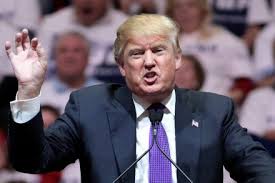
    In a shocking display of rage, yesterday, Donald Trump snapped at a female reporter on Monday, shouting “Quiet! Quiet, piggy” when questioned about the impending release of Jeffrey Epstein’s files. This outburst is a clear indication of a man who is far from at peace, and is desperate to avoid scrutiny.

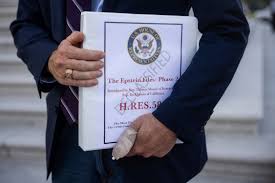
    The trigger for Trump’s tantrum was the GOP-controlled House’s decision to overwhelmingly pass a bill forcing the Justice Department to release a trove of documents related to the notorious pedophile, Jeffrey Epstein. The vote was a significant defeat for Trump, who had spent months attempting to kill the measure. Faced with certain defeat, Trump attempted to save face by reversing course and directing House Republicans to back the bill.

    However, it was a classic case of too little, too late. The damage was irreversible, and Trump’s reputation nosedived yet again. Speaker Johnson tried to spin the narrative, labeling the vote a “political show vote” orchestrated by Democrats, but the stark truth is that Trump’s own party, the Republicans, rallied behind the bill with shocking unity. His abrupt capitulation reeks of desperation, a feeble attempt to cushion the blow from yet another humiliating news cycle that tattoos his name alongside Epstein’s.

    As Trump lashed out at the reporter, a woman, it became clear that he was losing his temper with those who dare to hold him accountable for the truth. His characteristic cruelty was on full display, revealing a man who is more concerned with concealing his own involvement with Epstein than with facing the facts.

    The release of Epstein’s files is a significant development, and one that has the potential to expose the dark secrets of those involved with the convicted pedophile. Trump’s attempts to suppress the truth have been thwarted, and it remains to be seen what the documents will reveal. One thing is certain, however: Trump’s tantrum is a sign of a man who is guilty and is trying to hide something.

    As the saying goes, “when the facts are against you, pound the table; when the law is against you, pound the facts; and when both are against you, pound the messenger.” Trump’s outburst is a classic example of this adage, and it’s clear that he’s more concerned with silencing his critics than with facing the truth.

    Trump’s behavior is increasingly erratic, and his attempts to conceal the truth are desperate. As the investigation into Epstein’s crimes continues, it’s clear Trump is not at peace. The American people demand answers, and the question remains: what is he trying to hide? Only the unredacted release of the Epstein files will tell.

  • The Unaffordability Crisis: How Trump’s Economic Policies are Hurting Americans

    Blue Press Journal – The current state of the economy has left many Americans struggling to make ends meet. The rising costs of everyday essentials like beef, bananas, insurance, and healthcare have become a pressing concern for voters. According to experts, the root cause of this unaffordability crisis can be attributed to Donald Trump’s economic policies, particularly his imposition of tariffs on imported products.

    The most urgent issue in politics is how it affects voters’ finances,” said a prominent economist, highlighting the gravity of the situation. As prices continue to soar, many are finding it increasingly difficult to afford the basics. The Trump’s blame on Biden is attempting to shift the responsibility to his predecessor is just childish.

    However, this strategy is being called out as “nonsensical” by critics, who argue that Trump’s policies are the primary driver of the current economic woes. The tariffs imposed by Trump on imported goods have led to a significant increase in prices, making it even harder for Americans to afford the things they need.

    It’s clear that the effects of Trump’s so-called Big Beautiful Bill are not paying off,” warned a leading economic analyst. “If the situation doesn’t improve, it could spell serious trouble for Republicans in the 2026 midterms.” As the economy continues to struggle, it’s becoming increasingly evident that Trump’s economic policies are to blame. Let’s not to forget the republican congress has been fully supportive of.

    The impact of these policies is felt nationwide, with many Americans struggling to make ends meet. As one citizen put it, “I just can’t afford the things I need anymore. Everything is getting more expensive, and my paycheck isn’t going as far.” This sentiment is echoed by countless others feeling the pinch of Trump’s economic policies.

  • A Federal Court Delivers a Significant Blow to Racial Gerrymandering: The Implications for the 2026 Midterm Elections

    Blue Press Journal – In a stunning upheaval, a panel of federal judges has fiercely dismantled the Republican Party’s brazen national redistricting plot by tossing the newly crafted congressional map in Texas into the trash. This audacious ruling, which unmistakably exposes the map’s roots in discriminatory intent and outright racial gerrymandering, sends seismic shockwaves across the political arena, gearing up for an all-out war as the 2026 midterm elections loom on the horizon.

    The 2-1 decision, which included a dissenting opinion, was a clear rebuke to the Texas GOP’s efforts to redraw the state’s congressional districts to their advantage. The new map, engineered earlier this year, was designed to yield up to five additional House seats for the Republicans in 2026, potentially bolstering their chances of maintaining control of the House despite an unfavorable electoral climate. However, the court’s finding that the map was racially gerrymandered has thrown a wrench into the GOP’s plans.

    The decisive vote came from Judge Jeffrey Brown, a Trump appointee, who noted that while partisan politics influenced the redistricting process, the Texas GOP engaged in racial gerrymandering. The court declared, “substantial evidence shows that Texas racially gerrymandered the 2025 Map.” This ruling strongly criticizes the Texas GOP’s tactics and underscores the judiciary’s role in upholding the democratic process.

    The repercussions of this decision ripple far beyond Texas, striking a severe blow to the Republican Party’s national redistricting ambitions. What was supposed to be a slick maneuver by the GOP to redraw congressional maps in their favor has been laid bare by the court’s ruling, exposing their underhanded tactics and casting a long, ominous shadow over their entire strategy. Meanwhile, the fierce counteroffensive launched by California Democrats, culminating in the state’s voters approving a new redistricting plan, has thrown a wrench in the GOP’s schemes, making their path forward all the more treacherous.

    The decision is not just a partisan victory for Democrats but a milestone in the struggle for voting rights. By invalidating the discriminatory map, the court has made the electoral process in Texas fairer and more representative of its diverse population. The ruling sends a clear message that attempts to manipulate democracy will not be tolerated and that the judiciary is a crucial safeguard against such efforts.

    While Governor Greg Abbott and Texas Republicans are expected to appeal the decision to the Supreme Court, the damage is done. The court’s ruling exposes the GOP’s attempts to manipulate the electoral process, significantly hindering their efforts for an unfair advantage in the 2026 midterm elections. This ruling marks a victory for those advocating for voting rights and ensuring a fair democratic process.

    As this case progresses, the ruling’s impact will be observed closely, establishing a precedent for future redistricting nationwide. It underscores the judiciary’s role as a check against the manipulation of democracy and highlights the ongoing struggle for voting rights. With the 2026 midterms approaching, the decision will have lasting effects on the electoral landscape and power dynamics in Washington.

    The federal court’s decision to strike down the Texas congressional map is a significant victory for voting rights and a blow to racial gerrymandering. The ruling has revealed the GOP’s attempts to manipulate the electoral process for an unfair advantage in the 2026 midterm elections. The judiciary continues to be a crucial safeguard against rigging the democratic process.

  • The Trump-Epstein Conundrum: Unpacking the Former President’s Sudden Change of Heart

    Blue Press Journal – In a shocking reversal, former President Donald Trump has urged House Republicans to support a measure that would compel the Justice Department to release the Jeffrey Epstein files. This move comes as a surprise, given Trump’s previous objections to releasing the documents. The likelihood of dozens of House Republicans voting in favor of releasing the files, driven by the strong desire of the MAGA base to uncover the truth, appears to have prompted Trump’s change of heart.

    According to Rep. Andy Biggs (R-AZ), “It’s a no-brainer… The American people have a right to know.” This sentiment is echoed by many House Republicans who are now pushing for the release of the Epstein files. Trump’s sudden support for the measure has raised eyebrows, with some speculating that it’s just another attempt to deflect attention from his own potential involvement with Epstein.

    As journalist and author, Vicky Ward, noted, “Trump has a lot to hide when it comes to Epstein.” The stakes are indeed high for Trump, as the release of the Epstein files could potentially implicate him in wrongdoing. If Trump was one of Epstein’s clients, it could lead to his impeachment in the House and conviction in the Senate, as his involvement with pedophilia would be a betrayal of the trust of his MAGA base.

    The Department of Justice (DOJ) may stubbornly cling to its secrecy over files connected to Epstein, all under the guise of protecting ongoing investigations. Meanwhile, Trump’s directive to the DOJ to hunt down Democrats serves as nothing more than a smokescreen for his own agenda. This has ignited a fiery debate over the crucial issues of transparency and accountability. Rep. Jamie Raskin (D-MD) hit the nail on the head when he declared, “The Justice Department has an undeniable obligation to expose the truth about Epstein’s heinous crimes and the influential figures who allowed him to thrive.”

    Trump’s reversal on the Epstein files has sparked more questions than answers.

    As the situation continues to unfold, one thing is clear: Trump’s efforts to hide his potential involvement with Epstein have only fueled the speculation and scrutiny. The release of the Epstein files is now more crucial than ever, and it’s up to the DOJ to decide whether to comply with the growing demand for transparency.

  • Judge Orders DOJ to Hand Over Grand Jury Materials to James Comey, Citing ‘Disturbing Pattern’

    Blue Press Journal – Political Correspondent

    In an extraordinary and rare move, a federal judge has ordered the Department of Justice to turn over grand jury materials to former FBI Director James Comey, citing serious concerns about the integrity of the investigation that led to the secret proceedings. 

    U.S. District Judge William Fitzpatrick ruled on Monday that Comey’s right to due process outweighs the longstanding secrecy afforded to grand jury proceedings. Prosecutors have been directed to deliver the specified materials to Comey’s legal team by the end of the day. 

    The Court recognizes that the relief sought by the defense is rarely granted,” Fitzpatrick wrote in his order. “However, the record points to a disturbing pattern of profound investigative missteps, missteps that led an FBI agent and a prosecutor to potentially undermine the integrity of the grand jury proceeding.” 

    The decision is highly unusual, as grand jury materials are almost never released to defendants or their attorneys. Secrecy is considered a cornerstone of the process, designed to protect the identities of witnesses, encourage candid testimony, and safeguard ongoing investigations. To pierce that protection, courts typically require a clear showing of prosecutorial misconduct or a significant threat to a defendant’s constitutional rights. 

    Here, Fitzpatrick’s order suggests the court has found compelling indications that such misconduct may have occurred. While the judge’s statement did not elaborate on the exact nature of the “profound investigative missteps,” the language leaves little doubt about the seriousness of the concerns. 

    Legal analysts say the ruling could have far-reaching implications, both for Comey’s case and for the Justice Department itself. “When a judge uses phrases like ‘disturbing pattern’ in reference to law enforcement conduct, that’s a strong signal of judicial distrust,” said one former federal prosecutor. “It suggests the court believes the misconduct wasn’t isolated or accidental.” 

    Comey, who was FBI director from 2013 to 2017, remains a polarizing figure in national politics due to his high-profile investigations into Hillary Clinton’s email use and Russian interference in the 2016 election. The current grand jury proceedings’ specifics are undisclosed, but Monday’s ruling is likely to reignite debate about Comey’s actions and the DOJ.

    The Department of Justice declined to comment on the order or the nature of the investigative missteps. It remains unclear whether prosecutors will comply immediately or attempt to challenge the ruling through an emergency appeal. 

    For now, this decision savagely slaps down federal investigative conduct, exposing the dark, murky underbelly of a process that’s typically cloaked in secrecy from the lens of public scrutiny.

  • Dillon Slams Trump, Predicts “Ballroom” Obsession for Remainder of Term

    Blue Press Journal – In a scathing assessment, comedian and podcaster Tim Dillon declared the end of the Trump administration on Sunday, lambasting the president’s recent defense of H-1B visas for high-skilled foreign workers. Dillon, a self-proclaimed member of the online “manosphere” that helped propel Trump to power, took to his podcast to excoriate the president’s stance, claiming America has enough talented individuals to fill specialized jobs.

    Dillon’s harsh words mark a significant shift for the comedian, who had previously been aligned with Trump’s base. Now, he believes the Trump administration is on its last legs. “This is the end of the Trump administration,” Dillon declared, criticizing the president’s interview with Fox News’ Laura Ingraham, where he argued that the US lacked sufficient talent to fill high-skilled positions.

    According to Dillon, Trump’s presidency has been in decline, and the recent controversy surrounding his decision to demolish the East Wing to build a lavish ballroom has sealed his fate. Dillon predicted that for the remainder of Trump’s supposed second term, the president will be fixated on “talking about the ballroom” he’s constructing at the White House.

    The ballroom project has been met with widespread criticism, with many viewing it as a symbol of Trump’s extravagance and disregard for historical preservation. Dillon’s comments suggest that Trump’s fixation on the project will become an all-consuming force, distracting from the administration’s policy failures.

    Dillon’s about-face on Trump is significant, given his previous influence within the online “manosphere” that helped propel the president to power in 2024. His harsh assessment is a testament to the growing disillusionment among Trump’s base, who are increasingly frustrated with the president’s antics.

    As Dillon sees it, Trump’s presidency is careening towards a ignominious end, with the president more concerned with showcasing his opulent ballroom than addressing the country’s pressing issues. With his characteristic candor, Dillon has delivered a damning verdict on the Trump administration, one that may signal a turning point in the president’s already tumultuous tenure.

  • The Epstein Files: Uncovering the Truth Behind Trump’s Resistance

    The recent controversy surrounding the release of Jeffrey Epstein’s files has sparked intense debate, with many questioning why Donald Trump is so adamant about keeping them under wraps. The files, which contain a trove of emails and documents related to Epstein’s alleged sex trafficking ring, have already implicated several high-profile individuals, including Trump himself.

    As a result of the ongoing court battles, a significant number of documents have been released, shedding light on the connections between Epstein and various influential figures. Trump, in particular, has been mentioned in numerous emails, raising eyebrows about his involvement and potential wrongdoing. Despite this, the former President has been vocal about his opposition to releasing the remaining files, even going so far as to pressure Republicans in Congress to vote against their disclosure.

    The Department of Justice (DOJ) initially announced plans to release the files, only to perform a sudden about-face after Trump demanded they remain sealed. This U-turn has fueled speculation about what the files might contain and why Trump is so desperate to keep them hidden. Georgia Republican Marjorie Taylor Greene has been a vocal critic of Trump’s stance, tweeting, “I never thought that fighting to release the Epstein files, defending women who were victims of rape, and fighting to expose the web of rich powerful elites would have caused this, but here we are.”

    Greene’s comments suggest that Trump’s resistance to releasing the files is not only unjustified but also damaging to his own reputation. “This and the Epstein files is why I’m being attacked by President Trump,” she posted. “It really makes you wonder what is in those files and who and what country is putting so much pressure on him?” Greene’s words echo the sentiments of many who are calling for transparency and accountability.

    The fact that Trump has been linked to Epstein through their years-long friendship and the mysterious circumstances surrounding Epstein’s death have only added to the intrigue. Despite Trump’s claims that the story is a “Democratic made up story,” the connections between him and Epstein are undeniable.

    So, why is Trump so opposed to releasing the Epstein files? If there’s nothing incriminating in the documents, why not let the public see them? The answer, it seems, lies in the potential consequences of exposing the truth. As Greene astutely observed, “It truly speaks for itself. There needs to be a new way forward.” The American public deserves to know the truth about Epstein’s activities and the extent of Trump’s involvement.

    The resistance to releasing the Epstein files is not only about Trump; it’s also about the broader implications for accountability and transparency in government. As the debate continues, one thing is clear: the public will not rest until the truth is finally revealed. As we move forward, it’s essential to demand answers and push for the release of the remaining files, no matter how uncomfortable the revelations may be.

    In conclusion, the Epstein files controversy has brought to the forefront the complex web of relationships between powerful individuals and the lengths to which they will go to protect themselves. Trump’s opposition to releasing the files has only fueled speculation and raised more questions about his involvement. As we continue to follow this story, one thing is certain: the truth will eventually come to light, and when it does, it will be a defining moment in the pursuit of justice and accountability.