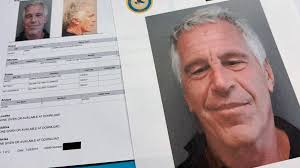
Blue Press Journal – The national conversation is dominated by breaking news—President Trump’s proposed ICE raids on blue cities, speculation over a Greenland purchase, escalating tariffs on Canada, and his stance on Venezuela. While these stories grab attention, they risk overshadowing a critical matter: the Epstein files release.
These files contain potentially explosive information about networks of abuse and accountability at the highest levels. Public focus must stay fixed on ensuring full disclosure, rather than shifting to every new political headline. Diversions—whether through immigration crackdowns, trade disputes, or international real estate ambitions—should not derail efforts to demand transparency.
The Epstein case is not just another news cycle—it’s a test of the public’s will to hold power accountable. Stay informed, speak out, and keep the pressure on for the release of the Epstein files.
Blue Press Journal – Jan 26, 2026 – The fatal shooting of 37-year-old American citizen Alex Pretti by federal immigration officers in Minneapolis has triggered bipartisan outrage — and a rare public rebuke of the Trump administration’s immigration enforcement tactics from within the Republican Party itself.
Senator Lisa Murkowski (R-Alaska) condemned the incident on social media, declaring that Customs and Border Protection (CBP) and Immigration and Customs Enforcement (ICE) “do not have carte blanche” to operate without accountability. Murkowski noted that Pretti was lawfully carrying a firearm with a permit — a fact confirmed by Minneapolis Police Chief Brian O’Hara — and questioned why lethal force was used, especially after video evidence appears to show Pretti being disarmed before shots were fired.
This is not an isolated incident. Pretti’s killing follows the death of another U.S. citizen, Renee Good, in a separate enforcement action, fueling criticism that the Trump administration’s deployment of CBP and ICE personnel to Democratic-led cities such as Minneapolis, Los Angeles, and Chicago is reckless and politically motivated.
Adding to the tension, former Rep. Marjorie Taylor Greene — a staunch Trump ally — urged MAGA supporters to “take off their political blinders” and examine the situation objectively. While reaffirming her support for border security and law enforcement, Greene asserted that “legally carrying a firearm is not the same as brandishing a firearm” and warned against a partisan double standard in assessing excessive force.
The Department of Homeland Security (DHS) has taken over the investigation, sidelining Minnesota’s Bureau of Criminal Apprehension, prompting concerns from Superintendent Drew Evans about the lack of state-federal cooperation. Meanwhile, Democratic senators are threatening to withhold DHS funding, risking a partial government shutdown, while GOP lawmakers such as Thom Tillis and Bill Cassidy join Murkowski in calling for independent investigations and congressional hearings.
This growing chorus of Republican dissent underscores a larger problem: the Trump administration’s aggressive immigration enforcement strategy is alienating both sides of the aisle, and ICE’s actions are increasingly seen as undermining public trust — even among the GOP.
Blue Press Journal – January 26, 2026 – The ongoing clash between Minnesota state officials and the federal government over Immigration and Customs Enforcement (ICE) operations reached a critical juncture this week, as U.S. District Judge Kate Menendez weighed whether the Trump administration’s deployment of nearly 4,000 ICE agents to the state violates constitutional principles.
At the heart of the case is theTenth Amendment, which reserves to the states or the people any powers not explicitly granted to the federal government. Minnesota’s legal team, led by Assistant Attorney General Brian Carter, argues that “Operation Metro Surge” — the mass influx of federal immigration agents — represents a coercive overreach that undermines state sovereignty and erodes public trust in the republic.
A Constitutional Flashpoint
Judge Menendez acknowledged the “enormous evidentiary record” detailing the fallout from ICE’s aggressive tactics in Minnesota. This includes the fatal shootings of Renee Good and Alex Pretti, incidents that have intensified public outrage and raised urgent questions about accountability.
Carter underscored the gravity of the situation:
“If this is not stopped right here, right now, I don’t think anybody who is seriously looking at this problem can have much faith in how our republic is going to go in the future.”
According to the American Civil Liberties Union (ACLU) and investigative reports from ProPublica, ICE under the Trump administration frequently targeted individuals without serious criminal records, contradicting claims that enforcement is focused on “the worst of the worst.”
Accountability Gaps and Body Cameras
The White House has refused to commit to releasing body camera footage from the federal agent killing of Alex Pretti. Press Secretary Karoline Leavitt sidestepped questions about whether ICE agents should be required to wear body cameras — a standard increasingly adopted by local police departments nationwide for transparency and public trust.
The Government Accountability Office (GAO) has repeatedly reported that ICE’s internal oversight mechanisms are inadequate, with insufficient transparency in use-of-force incidents.
Local Leaders Sound the Alarm
Minneapolis City Attorney Sara Lathrop stressed that before the Trump administration’s escalation, Minnesota had just 80 ICE agents — who still managed thousands of arrests. The new surge, she argued, is unnecessary and producing “toxic and lifelong harms” to immigrant communities, where fear of detention now dictates daily life.
Lathrop urged Menendez to impose an immediate pause on ICE’s expanded operations, warning that without judicial intervention, constitutional rights will continue to be “trampled on.”
What’s at Stake
This case is more than a dispute over immigration enforcement numbers — it’s a test of how far a presidential administration can push federal power into state jurisdictions without consent. If Judge Menendez sides with Minnesota, it could set a precedent limiting future federal overreach in immigration matters.
For now, the decision rests with the court. But one thing is clear: unchecked federal enforcement, lacking transparency and accountability, risks deepening mistrust between communities and the government — a danger to both constitutional balance and public safety.
MINNEAPOLIS — The fatal shooting of 37-year-old ICU nurse Alex Pretti by federal immigration agents has ignited a firestorm of controversy, pitting sworn witness testimony against the official narrative released by the Department of Homeland Security (DHS) and Immigration and Customs Enforcement (ICE).
As details emerge, a stark contrast is forming between what local residents saw and what federal agencies are claiming. While DHS officials assert that agents acted in self-defense, multiple eyewitnesses allege that Pretti was unarmed, attempting to de-escalate a chaotic situation, and was shot without provocation.
The Incident: A Disputed Narrative
On Saturday, federal agents descended on a Minneapolis neighborhood, sparking a tense confrontation with onlookers. According to official statements released by DHS, agents fired “defensive shots” after a male subject, later identified as Alex Pretti, brandished a firearm and “violently resisted” arrest.
However, this version of events is being vehemently challenged by individuals who were feet away when the shots were fired.
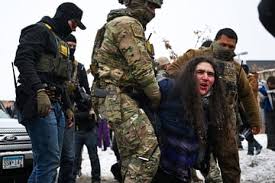
In a sworn affidavit filed in federal court, one Minneapolis resident described seeing Pretti directing traffic before the situation escalated. The witness stated that agents forced Pretti and two others onto the sidewalk and deployed pepper spray. When Pretti attempted to help a female observer who had been knocked to the ground, he was swarmed by agents and shot.
“I don’t know why they shot him. He was only helping,” the witness attested. “I was five feet from him and they just shot him.”
The witness also provided a recording of the incident to the court, adding a layer of evidence that contradicts the government’s claim of a threatening brandishing.
A Medical Perspective
A second witness, identified as a 29-year-old licensed pediatrician, viewed the shooting from an apartment window. The physician stated they saw “absolutely no need for any violence, let alone lethal force by multiple officers.”
What followed the shooting further fueled the controversy. The physician observed that federal agents failed to perform standard emergency protocols, such as checking for a pulse or administering CPR. Driven by a “professional and moral obligation,” the witness rushed outside to offer medical aid.
“I felt a professional and moral obligation to help this man, especially since none of the agents were helping him,” the physician stated.
Upon reaching Pretti, the witness found him with at least four gunshot wounds and no pulse. They initiated CPR before emergency medical services arrived to take over.
Legal Context and ICE Controversies
The shooting occurred amidst a high-stakes legal battle in Minneapolis. The witness affidavits were filed as part of a lawsuit seeking to reinstate an order prohibiting immigration forces from retaliating against protesters.
This legal backdrop is crucial. In the past three weeks alone, immigration forces have killed two individuals in the Minneapolis area, raising urgent questions about the escalation of force and accountability within federal agencies.
Furthermore, the reliability of the DHS narrative has come under scrutiny. Reports from major news outlets, including the Associated Press and Reuters, have highlighted a pattern of discrepancies in official statements regarding federal immigration operations. Critics and legal observers argue that ICE frequently provides vague or shifting accounts of shootings, often withholding body camera footage or key details during ongoing investigations.
Local advocates have expressed concern over a lack of transparency, suggesting that federal agencies may be attempting to control the narrative by restricting local law enforcement’s ability to investigate incidents involving ICE agents.
Fear and Retaliation
The climate of fear following the shooting is palpable among the witnesses. Both individuals noted in their affidavits that they are afraid to return to their residences, citing concerns over retaliation or arrest by federal agents.
“I don’t know what the agents will do when they find me,” the witness who recorded the incident stated. “I do know that they’re not telling the truth about what happened.”
The death of Alex Pretti has become more than a singular tragedy; it is a flashpoint in the ongoing debate over federal immigration enforcement tactics. As a dedicated ICU nurse, Pretti’s life was defined by saving others. Now, sworn witness accounts suggest his death may have been a preventable tragedy—one where the official story offered by DHS and ICE fails to align with the reality seen by local residents.
Blue Press Journal – A deadly shooting by federal immigration officers in Minneapolis has reignited legal and public scrutiny over the aggressive enforcement tactics deployed in Minnesota — tactics that critics say were supercharged during the Trump administration’s “Operation Metro Surge.”
On Saturday evening, Alex Jeffrey Pretti, a 37-year-old intensive care nurse, was shot and killed by federal agents during what the Department of Homeland Security (DHS) described as a “targeted immigration enforcement operation.” DHS officials claim Pretti was armed and violently resisted arrest, but eyewitness testimony included in new court filings paints a starkly different picture.
“He was only helping. I was five feet from him and they just shot him,” one witness stated in a sworn declaration.
This incident marks the second fatal shooting linked to federal immigration agents in Minnesota since Operation Metro Surge began, a program critics say represents a dangerous escalation of militarized immigration enforcement in urban communities. According to the American Civil Liberties Union of Minnesota, these tactics have disproportionately impacted peaceful protestors, journalists, and bystanders exercising their First Amendment rights.
Renewed Legal Fight Over Protest Protections
Following the killing, a group of Minnesota residents — plaintiffs in an ongoing lawsuit against the federal government — urgently returned to court seeking to reinstate restrictions on agents’ protest-response tactics. Their legal team, which includes the ACLU-MN, argues that the shooting proves “escalating, imminent risks” to the public.
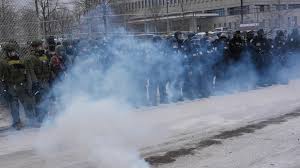
Earlier this month, U.S. District Judge Katherine Menendez limited federal agents’ use of pepper spray and non-lethal munitions against peaceful demonstrators. The Justice Department quickly challenged the ruling, claiming it endangered officer safety.
On Wednesday, the Eighth Circuit Court of Appeals temporarily lifted those restrictions, siding — at least for now — with federal enforcement priorities. Plaintiffs are now urging the court to restore the injunction, warning that “every hour” without intervention creates new opportunities for harm.
Trump-Era Policies and “Operation Metro Surge”
Operation Metro Surge, initiated during the Trump administration, was part of a nationwide crackdown on undocumented immigrants. Reports from The Washington Post and ProPublica indicate that Trump’s DHS expanded immigration enforcement into previously low-priority cities, increasing raids and surveillance to intimidate immigrant communities and suppress dissent.
In Minnesota, the operation coincided with a rise in confrontations between federal agents and protestors, including documented incidents of excessive force. Civil rights advocates argue that the current administration has failed to roll back many of these aggressive policies, despite promises of reform.
Why This Matters
As the Eighth Circuit weighs the reinstatement of protest protections, Minnesota stands at the center of a critical legal battle — one that could set precedent for how federal agents are allowed to operate in American cities.
Blue Press Journal (MN) — January 25, 2026 — In a late-night ruling that could reshape the relationship between federal agencies and state-level law enforcement, a federal judge in Minnesota has blocked the Department of Homeland Security (DHS) from destroying or altering evidence in the fatal shooting of Alex Pretti, a 37-year-old Minneapolis resident killed by a Customs and Border Protection (CBP) agent on January 24.
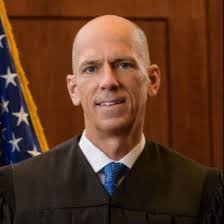
The order — issued by Judge Eric C. Tostrud, a Trump-appointed United States District Court judge — comes amid escalating tensions between Minnesota’s investigative authorities and federal agencies over transparency, accountability, and jurisdiction in officer-involved shootings.
The Court’s Intervention
In his temporary restraining order (TRO), Judge Tostrud prohibited DHS, Immigration and Customs Enforcement (ICE), CBP, and U.S. Border Patrol from “destroying or altering evidence related to the fatal shooting involving federal officers” near 26th Street and Nicollet Avenue in South Minneapolis.
The lawsuit was brought forward jointly by the Minnesota Bureau of Criminal Apprehension (BCA), the Hennepin County Attorney’s Office, and the Minnesota Attorney General’s Office. At its core, the legal action seeks to preserve crucial evidence in a case where state investigators say they’ve been deliberately excluded by federal authorities.
“We’re in uncharted territory here,” BCA Superintendent Drew Evans said during a Saturday press conference. “It’s been a long-standing understanding, both within our state and across the country, that entities like the BCA — which conduct the vast majority of officer-involved shooting investigations — are asked to investigate federal agents involved in shootings. That’s not happening here.”
DHS and CBP Under Scrutiny
This case is not an isolated incident. Earlier in January 2026, another ICE officer fatally shot Renee Good, also 37, in Minneapolis. In that case, state and local law enforcement — including the BCA — were similarly shut out of the investigation.
Critics say this pattern reflects a deliberate strategy by DHS and CBP to avoid independent oversight in fatal use-of-force cases. According to reporting by The Washington Post (source) and The Hill (source), federal agencies have increasingly resisted state-level investigative involvement, citing “internal protocols” and “operational security.”
However, civil rights advocates argue that this approach undermines public trust and may violate accountability norms established after decades of efforts to ensure transparency in officer-involved shootings.
The Trump Administration’s Legacy on Federal Accountability
Judge Tostrud’s involvement adds a political layer to the controversy. Appointed by former President Donald Trump in 2018, Tostrud has historically sided with federal agencies in jurisdictional disputes. Yet, in this case, his TRO represents a rare rebuke of DHS’s handling of evidence in deadly force incidents.
It’s worth noting that the Trump administration repeatedly expanded the authority of federal immigration and border enforcement agents while limiting state oversight. According to ProPublica (source), these policies — including allowing CBP officers broader latitude in use-of-force situations — have been linked to increased incidents of deadly shootings involving federal agents.
Minnesota Leaders Demand Transparency
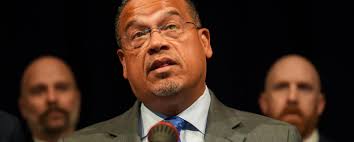
Following the court ruling, Attorney General Keith Ellison issued a sharp statement:
“Alex Pretti was killed by DHS agents in broad daylight in front of all
President Trump’s latest 100% tariff threat against Canada will hurt American consumers, damage U.S. industries, and strain vital trade relationships. Learn why Trump’s trade war is bad economics and worse policy.
Blue Press Journal – President Donald Trump’s recent threat Satruday to impose a 100% tariff on Canadian imports has sent shockwaves through North American trade circles. The move, aimed at punishing Canada for its newly negotiated trade concessions with China, reflects the same protectionist instincts that have defined Trump’s economic agenda since his first term. But beyond the political theater, tariffs like these come with a steep price — one paid directly by American consumers, businesses, and workers.
The Canada-China Trade Context
Earlier this month, Canadian Prime Minister Mark Carney announced a deal with China to lower tariffs on Chinese electric vehicles in exchange for reduced import taxes on Canadian agricultural products. While Canada maintains no free-trade agreement with China, the arrangement was crafted to support Canadian farmers and diversify trade relationships amid global tensions.
Trump initially praised the deal, but quickly reversed course, accusing Canada of becoming a “drop-off port” for Chinese goods destined for the U.S. His retaliation? Threatening a 100% import tax on Canadian goods if Ottawa proceeds — a move that would affect everything from steel to agricultural products to critical minerals.
Why Tariffs Hurt Americans More Than They Help
Tariffs are often sold to voters as a way to protect domestic industries, but the reality is that tariffs operate as a hidden tax on U.S. consumers. When the U.S. imposes tariffs, importers pay higher costs, which are then passed along to businesses and consumers in the form of higher prices.
According to a 2019 study by the Federal Reserve Bank of New York, U.S. tariffs during the Trump administration’s first trade war with China led to $1.4 billion in additional costs per month for American consumers. Similarly, research from the Peterson Institute for International Economics found that the average U.S. household paid $800 more per year due to tariff-driven price increases.
For context:
Canada is the largest export destination for 36 U.S. states.
Nearly $2.7 billion USD in goods and services cross the Canada-U.S. border daily.
Canada supplies 60% of U.S. crude oil imports and 85% of U.S. electricity imports.
It is also a key supplier of steel, aluminum, uranium, and critical minerals essential for the auto industry, defense and technology.
Imposing a 100% tariff on these imports would cause instant price spikes in energy, manufacturing, and consumer goods — directly hitting U.S. households and industries.
Economic Fallout of Trump’s Tariff Threat
If enacted, Trump’s proposed tariffs would:
Raise Costs for Energy and Manufacturing – U.S. industries dependent on Canadian oil, electricity, and metals would face supply shortages and higher costs.
Damage Cross-Border Supply Chains – The deeply integrated Canada-U.S. manufacturing sector, especially in automotive and aerospace, would be disrupted.
Invite Retaliation from Canada – Ottawa could respond with its own tariffs on U.S. exports, hurting American farmers, particularly in states that rely on agricultural trade with Canada.
Undermine NATO and Western Alliances – Trump’s antagonistic stance toward Canada, paired with his push to acquire Greenland and social media provocations, risks alienating a key ally.
Political Theater vs. Economic Reality
Trump’s rhetoric — including calling Carney “Governor Carney” and posting altered maps showing Canada as part of U.S. territory — may play well to a certain political base. But such antics undermine serious diplomatic relationships and erode trust among allies.
Carney’s speech at the World Economic Forum in Davos, urging “middle powers” to unite against coercive tactics by great powers, clearly struck a nerve with Trump. As Carney’s popularity rises on the world stage, Trump’s trade threats appear less about protecting American workers and more about retaliating against political rivals.
The Consumer’s Perspective
For the average American, tariffs mean:
Higher grocery bills (due to increased costs on Canadian agricultural imports).
More expensive cars and electronics (Canadian manufacturing is a key part of U.S. supply chains).
Higher energy costs (Canadian oil, electricity, and uranium are essential to U.S. energy security).
In short: Tariffs punish consumers first, industries second, and political rivals last.
So What Does it Mean
President Trump’s threat of a 100% tariff on Canadian goods is more than a diplomatic provocation — it’s an economic self-inflicted wound. Canada is one of America’s most important trading partners, and disrupting that relationship will raise prices, strain industries, and weaken alliances.
If history is any guide, Trump’s tariffs will not force Canada to change course with China. Instead, they will drive up costs for American families, hurt U.S. competitiveness, and isolate the United States in a world where cooperation — not coercion — is the key to economic success.
A federal judge ruled against alleged Trump-era targeting of campus activists, warning officials not to alter immigration status as retaliation.
Blue Press Journal – In a landmark ruling, U.S. District Judge William Young has warned the Trump administration against altering the immigration status of certain university association members in what he described as unconstitutional retaliation for their political speech.
The ruling follows a high-profile trial last year where Judge Young found evidence that senior Cabinet officials conspired to target noncitizens — particularly pro-Palestinian activists critical of Israel’s military actions in Gaza — for deportation. The plaintiffs, members of the American Association of University Professors (AAUP) and the Middle East Studies Association (MESA), alleged that the administration’s actions were designed to silence dissent on U.S. campuses.
“Unconstitutional Conspiracy”
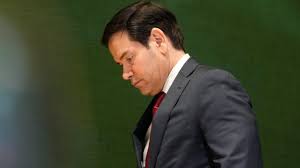
At a recent hearing, Judge Young accused Homeland Security Secretary Kristi Noem and Secretary of State Marco Rubio of orchestrating an “unconstitutional conspiracy” intended to chill free speech. He went further, suggesting that the president himself was complicit in violating First Amendment protections.
“The big problem in this case is that the Cabinet secretaries, and ostensibly, the president of the United States, are not honoring the First Amendment,” Young said. “There doesn’t seem to be an understanding of what the First Amendment is by this government.”
Young, a Reagan appointee, emphasized that his order serves as a remedial safeguard for noncitizen plaintiffs who are lawfully present in the U.S. and engaged in constitutionally protected political expression.
Relief Criteria Under the Court’s Order
To seek relief if their immigration status changes, affected individuals must:
Be members of AAUP or MESA between March 25, 2025, and September 30, 2025.
Have valid immigration status with no criminal convictions after September 30, 2025. If these conditions are met, any change in immigration status will be presumed retaliatory unless the government can prove otherwise.
Reaction from Advocacy Groups
Ramya Krishnan, senior staff attorney at the Knight First Amendment Institute, hailed the decision as a clear rebuke to what she called a “campaign of intimidation.”
“Students and scholars shouldn’t have to live in fear that ICE agents could seize them from their homes merely for engaging in political expression,” Krishnan stated.
High Stakes for Academic Freedom
The case, which Judge Young labeled “perhaps the most important ever to fall within the jurisdiction of this district court,” exposed that more than 5,000 pro-Palestinian protestors were identified using online blacklists like Canary Mission. ICE officials admitted shifting resources from counterterrorism and cybercrime units to compile profiles on demonstrators.
With appeals looming and campus activists closely watching, Young’s order may prove to be a defining moment in the intersection of immigration law, political speech, and academic freedom.
“I Served There. And I Lost Friends There” – Prince Harry Rebukes Trump’s False NATO Claims
Blue Press Journal – When President Donald Trump took the stage at the World Economic Forum in Davos, his remarks on NATO sent shockwaves across the transatlantic alliance. Trump claimed that NATO members would not come to America’s aid if called upon — a statement that flies in the face of historical fact.
On Friday, Prince Harry, Duke of Sussex, delivered a pointed rebuttal rooted in lived experience. Having served two tours in Afghanistan — including a harrowing 10-week stint in Helmand province — Harry is no stranger to the realities of war.
“I served there. I made lifelong friends there. And I lost friends there,” Harry said. “In 2001, NATO invoked Article 5 for the first — and only — time in history. It meant that every allied nation was obliged to stand with the United States in Afghanistan, in pursuit of our shared security. Allies answered that call.”
The Truth About NATO’s Sacrifice
In the wake of the September 11 attacks, NATO’s collective defense principle — Article 5 — was activated for the first time since the alliance was founded in 1949. The United Kingdom, Canada, Germany, France, Poland, Denmark, and other NATO nations deployed troops alongside U.S. forces in Afghanistan.
The cost was staggering:
United Kingdom: 457 service members killed
Canada: 158 killed
Germany: 59 killed
France: 86 killed
Poland: 44 killed
Denmark: 43 killed
These numbers represent more than statistics — they tell stories of young lives cut short, families shattered, and nations standing shoulder-to-shoulder with the U.S. in its longest war.
Trump’s Draft-Dodging Past
Trump’s dismissal of NATO’s contributions is even more striking given his own history. While tens of thousands of Americans served — and thousands died — in Vietnam, Trump avoided the draft five times: four student deferments and one medical deferment for alleged bone spurs.
For someone who never wore the uniform to question the loyalty and sacrifice of allied forces is, critics argue, both historically inaccurate and morally tone-deaf.
Why Truth Matters in Diplomacy
Prince Harry’s words resonate not only because of his royal status, but because of his credibility as a veteran. His reminder is clear: diplomacy and military alliances are built on trust, truth, and shared sacrifice.
When leaders distort history, they undermine the very alliances that have safeguarded global stability for decades. NATO’s solidarity after 9/11 was real, and it came at a heavy human cost.
Harry’s closing reflection serves as a warning:
“Those sacrifices deserve to be spoken about truthfully and with respect, as we all remain united and loyal to the defense of diplomacy and peace.”
In an era of rising geopolitical tension, remembering the truth about NATO’s commitment is not just good history — it’s essential for the future of global security.
Is Donald Trump’s mental fitness and behavior a threat to U.S. credibility?
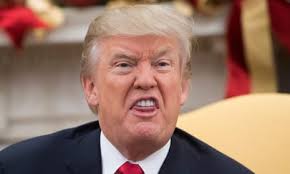
Blue Press Journal – In recent weeks, questions about former President Donald Trump’s mental acuity have intensified. Lawmakers, political analysts, and global observers are expressing alarm at a pattern of public behavior that many describe as incoherent, unpredictable, and increasingly disconnected from reality.
Rep. Alexandria Ocasio-Cortez (D–N.Y.) joined the chorus of concern, stating in an interview that Trump “has been acting in increasingly erratic ways” and criticizing the lack of media scrutiny compared to the attention given to President Joe Biden’s health during his tenure.
Trump’s Recent Public Missteps Draw Global Attention in Davos
The renewed debate over Trump’s mental fitness was sparked by a rambling press briefing marking his first year back in the political spotlight. Multiple observers noted his tendency to veer off-topic, repeat unrelated anecdotes, and lose track of his primary message.
This behavior was mirrored during his appearance at the World Economic Forum in Davos, where Trump delivered a speech peppered with tangents about unrelated political grievances and personal disputes. International media outlets, including The Guardian and BBC News, reported that attendees were “puzzled” and “concerned” by both his tone and substance, with some questioning whether he understood the economic and diplomatic stakes of the event.
AOC Highlights the Double Standard in Media Coverage
Speaking with Pablo Manríquez of Migrant Insider, Ocasio-Cortez pointed out a perceived media imbalance:
“Trump’s behavior is increasingly erratic and alarming, and everyone is pretending that this is normal. I don’t really understand why that is. It is very bizarre.”
She argued that while Biden’s verbal slip-ups and age-related concerns were headline news throughout his presidency, Trump’s apparent cognitive lapses have not received the same sustained coverage. According to Ocasio-Cortez, this double standard allows dangerous behavior to be normalized in the public eye.
Experts Weigh In on the Risks of Erratic Leadership
Political psychologists warn that erratic behavior in a head of state can undermine both domestic governance and international relations. Dr. Bandy Lee, a forensic psychiatrist who has written extensively on presidential mental health, has stated that such behavioral patterns — including incoherent speech, impulsive decision-making, and hostility toward perceived enemies — can signal deeper cognitive or psychological decline.
These concerns are amplified by the partisan environment, where party loyalty often outweighs objective assessment. As Ocasio-Cortez noted, global partners may view the situation not simply as a reflection of one individual’s decline, but as evidence of a political apparatus willing to ignore warning signs for the sake of retaining power.
International Repercussions of Trump’s Behavior
Global confidence in U.S. leadership is critical for trade negotiations, military alliances, and diplomatic initiatives. Erratic public performances — particularly in high-profile gatherings like Davos — risk undermining America’s credibility.
European officials have reportedly voiced private concerns about whether Trump’s unpredictability could destabilize negotiations on climate policy, NATO commitments, and trade agreements. According to Politico, some diplomats are preparing contingency plans for dealing with a U.S. administration that may be less reliable in honoring international commitments.
Why This Matters for U.S. Voters
For American voters, the question is not just about Trump’s fitness for office, but about the broader implications for democracy and governance. If political institutions fail to address or even acknowledge signs of cognitive decline in leaders, it sets a dangerous precedent — one that could erode public trust and weaken checks and balances.
Final Thoughts
The growing body of evidence — from rambling speeches to off-topic tangents in critical policy settings — points to a troubling pattern in Donald Trump’s public behavior. When political leaders exhibit signs of decline and their party refuses to intervene, the consequences extend far beyond partisan politics. They touch the credibility of the nation itself.
As the 2026 election cycle heats up, voters and journalists alike face a pressing responsibility: to scrutinize not only policy positions but also the capacity of candidates to fulfill the demanding role of President of the United States.




 Blue Press Journal