Tag: news

  • Public Trust Erodes Over Epstein Files Delay Under Trump Administration

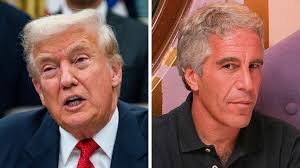
    Two-thirds of Americans believe the government is hiding explosive Jeffrey Epstein case files. Critics accuse the Trump administration of stalling and using Greenland negotiations as a political smokescreen.

    Blue Press Journal – Recent polling paints a damning picture of public sentiment toward the federal government’s handling of the Jeffrey Epstein case. A CNN/SSRS survey released this week reveals two-thirds of Americans believe Washington is deliberately withholding critical case files that could shed light on Epstein’s powerful network and alleged crimes

    Only 16% of respondents believe the government is actively working to release all relevant documents. This distrust spans political divides — with nearly nine in ten Democrats, 72% of independents, and even 42% of Republicans suspecting a cover-up


    DOJ Releases Less Than 1% of Files Despite Deadline

    According to the U.S. Department of Justice, less than 1% of Epstein-related files have been made public, despite a December 19 congressional deadline. In a move that critics see as too little, too late, officials have brought in 80 additional attorneys to expedite the process. 

    Public satisfaction is at historic lows — only 6% are happy with the government’s disclosures, while a 49% plurality are dissatisfied. The numbers underscore a bipartisan erosion of trust in federal transparency. 

    Source: CNN/SSRS Poll, U.S. Department of Justice release data


    Greenland Controversy as a Possible Political Smokescreen

    The Trump administration’s high-profile interest in purchasing Greenland drew extensive media coverage, overshadowing ongoing demands for transparency in the Epstein case. Critics argue this may have been a calculated distraction — a way to steer public discourse away from politically damaging revelations about Epstein’s connections to influential figures. 

    Political analysts from outlets such as The Atlantic and Politico have noted that governments often use foreign policy spectacles to divert attention from domestic controversies. The timing of the Greenland push, coupled with the stalled release of Epstein files, has fueled speculation of strategic misdirection. 


    Why Full Disclosure Matters

    The Epstein case is not simply about one individual’s crimes — it raises serious questions about systemic corruption, elite privilege, and the integrity of American institutions. Transparency is essential to restoring public trust and ensuring accountability for all involved, regardless of status or political affiliation. 


  • FBI’s Civil Rights Probe Into ICE Officer’s Killing of Renee Good Abruptly Shifted — Critics Say DOJ Is Covering Up for Trump Allies

    Blue Press Journal – In early January, the FBI quietly opened a civil rights investigation into Jonathan Ross, an Immigration and Customs Enforcement (ICE) officer who fatally shot Renee Good in Minneapolis. According to reporting from The Washington Post and CNN, the probe initially focused on whether Ross had violated Good’s civil rights during the deadly encounter. 

    But within days, the investigation took a sharp and controversial turn. Instead of scrutinizing Ross’s actions, the FBI began targeting Good herself — and even her grieving widow. CNN reports that at least six federal prosecutors in Minnesota resigned in protest over what they viewed as an unjustifiable and politically motivated pivot directed by senior Trump-era DOJ officials. 

    Political Motivation and DOJ Bias Under Todd Blanche

    Deputy Attorney General Todd Blanche, appearing on Fox News Sunday, dismissed the need to investigate Ross entirely, claiming that the DOJ does not “just go out and investigate every time an officer is forced to defend himself.” Critics argue this stance ignores the seriousness of potential civil rights violations and sends a dangerous message that law enforcement officers are above scrutiny when politically convenient. 

    Blanche’s comments align with a broader pattern under Trump’s Department of Justice — shielding federal agents from accountability while aggressively targeting civilians, especially those on the receiving end of government force. Civil rights advocates and legal scholars have pointed out that such selective enforcement corrodes public trust and undermines the DOJ’s stated mission of impartial justice. 

    Signs of a Cover-Up

    The resignation of multiple prosecutors, the abrupt shift in investigative focus, and the refusal to examine Ross’s conduct all point to what critics call a calculated cover-up. By redirecting the probe toward Good’s widow, the DOJ appears to be deflecting attention from possible misconduct by a federal officer — a move that benefits Trump’s political allies and protects ICE from public scrutiny. 

    As passionate advocates for justice emphasize, the politicization of investigations threatens to undermine the integrity and independence of federal law enforcement, transforming the Justice Department into a mere instrument of partisan agendas. The situation is glaringly evident: the FBI was bravely seeking accountability, yet the actions of Trump’s DOJ leadership abruptly halted that crucial progress.

  • Transatlantic Rift Deepens as Trump’s Greenland Tariffs Ignite Calls for EU ‘Trade Bazooka’

    Donald Trump’s punitive tariffs on European nations supporting Greenland security have sparked unprecedented EU retaliation talks, risking a historic breakdown in transatlantic relations.

    Blue Press Journal – The fragile fabric of transatlantic relations is fraying at an alarming pace, as U.S. President Donald Trump’s decision to impose tariffs on European nations involved in Greenland security exercises triggers outrage across the European Union. What began as a geopolitical skirmish over the Arctic has rapidly escalated into a confrontation that EU leaders say could fundamentally reshape the balance of power between Washington and Brussels. 

    At the heart of the crisis is Trump’s move to punish countries — including France, Germany, Sweden, Finland, Norway, and the Netherlands — that deployed troops to participate in a Danish-led military exercise in Greenland. The exercise, part of a broader European effort to secure the Arctic amid rising Russian and Chinese activity, was described by participating governments as entirely defensive and non-provocative. Yet Trump’s administration framed the deployments as a direct affront to U.S. interests, slapping punitive tariffs in a move critics say is both reckless and diplomatically corrosive. 

    Europe’s Retaliatory Options: From Restraint to Confrontation

    For months, EU leaders have tolerated Trump’s unpredictable foreign policy in the hope of preserving NATO unity. They have weathered his wavering support for Ukraine, his pressure for lopsided trade agreements, and his demands for massive defense spending increases. But the Greenland tariffs appear to have crossed a line. 

    French President Emmanuel Macron has emerged as one of the loudest voices demanding a robust response, calling for the activation of the EU’s Anti-Coercion Instrument — a powerful trade retaliation tool originally designed to counter China’s economic intimidation. Deploying it against the United States would be unprecedented, signaling a profound shift in the EU’s willingness to confront Washington head-on. 

    “The EU must resist humiliation and economic vassalization,” said Jérémie Gallon, a former French diplomat now based in Washington. His sentiment echoes a growing consensus among centrist and left-leaning EU lawmakers who argue that Europe must assert itself as a geopolitical actor rather than simply react to U.S. pressure. 

    Diplomatic Fallout and Strategic Calculations

    Even leaders with warmer ties to Trump, such as Italian Prime Minister Giorgia Meloni, have acknowledged the severity of the rift. While urging dialogue to avoid escalation, Meloni conceded that tariffs on NATO allies “are a mistake” and risk undermining shared security goals. 

    The European Parliament is already signaling its readiness to derail ratification of a recently negotiated EU-U.S. trade deal — a move that would have been unthinkable only months ago. Blocking the agreement would be a symbolic yet potent act, but triggering the Anti-Coercion Instrument would represent a direct economic counterstrike. 

    The Bigger Picture: Europe’s Geopolitical Awakening

    This crisis coincides with the EU’s broader push for strategic autonomy. European Commission President Ursula von der Leyen has announced a new security framework, while plans to bolster cybersecurity are set to be unveiled imminently. The Greenland standoff may accelerate this trajectory, forcing Europe to invest in defense and economic resilience without relying on U.S. goodwill. 

    The fact that Trump’s tariffs came just days after the EU signed a major trade deal with Latin America adds insult to injury, deepening perceptions that the U.S. is willing to use economic coercion to undermine Europe’s global aspirations. 

    As EU leaders return from Latin America to Brussels for emergency talks, the stakes could not be higher. The decision they face — whether to retaliate against their most powerful ally — may define Europe’s role on the world stage for decades. 

  • Americans Increasingly Condemn Harsh ICE Tactics, New Poll Reveals

    Americans Increasingly Reject Harsh ICE Tactics, Poll Shows

    Blue Press Journal – A growing majority of Americans believe U.S. Immigration and Customs Enforcement (ICE) is using excessively harsh tactics, according to a new CBS News/YouGov poll. Conducted January 14–16, the survey of 2,523 adults found 61% now say ICE’s methods when stopping or detaining individuals are too tough. This marks a significant shift from November, when 53% held that view.

    Rising Discontent Across Political Lines

    The sharpest increases in criticism came from Democrats and independents, with 94% of Democrats and 68% of independents now condemning ICE’s approach — both up nine percentage points from November. Even among Republicans, the share who say ICE has been too tough rose to 19%.

    This growing skepticism extends to the Trump administration’s stated deportation priorities. 56% of respondents believe the government is targeting people who are not dangerous criminals, up from 52% in November. Overall support for the administration’s deportation program has dropped from 52% to 46%.

    Recent Incidents Fuel Public Concern

    The shift in public opinion comes in the wake of two high-profile shootings involving ICE officers in Minneapolis. In one case, 37-year-old Renee Good was killed during a standoff with protesters. Officials claim the officer acted in self-defense, but critics say video evidence shows Good was attempting to drive away, not harm the officer. Days later, another ICE officer shot and injured a Venezuelan migrant after a traffic stop, alleging the individual attacked him during a foot chase.

    A Call for Accountability

    These incidents underscore concerns that ICE’s aggressive enforcement methods blur the line between lawful policing and excessive force. Civil rights advocates argue that prioritizing community safety means de-escalation, transparency, and focusing on truly dangerous individuals — not broad sweeps that ensnare non-criminal migrants.

    With public opinion turning sharply against ICE’s tactics, pressure is mounting for policy reforms that protect human rights while maintaining legitimate law enforcement objectives.

  • Trump’s Threat to Invoke the Insurrection Act in Minnesota Is a Dangerous Abuse of Power

    The Insurrection Act is not a political tool for silencing dissent. Minnesota is not in rebellion — it is exercising democracy

    Blue Press Journal (MN) — The Trump administration’s latest move to prepare active-duty soldiers for possible deployment to Minnesota marks yet another alarming escalation in its campaign to blur the line between lawful governance and authoritarian overreach. According to multiple reports, the Pentagon has placed roughly 1,500 soldiers from the 11th Airborne Division — trained for cold-weather combat — on standby as protests against the administration’s aggressive deportation drive continue in Minneapolis and surrounding areas.

    This development follows President Donald Trump’s inflammatory threat to invoke the Insurrection Act, a rarely used federal statute that allows the president to deploy military forces domestically to suppress insurrections or restore order when local authorities fail. Trump’s stated justification? To stop demonstrators from confronting Immigration and Customs Enforcement (ICE) agents — agents whose recent conduct has sparked outrage after an ICE officer fatally shot Renee Good, a U.S. citizen and mother of three, earlier this month.


    Why the Insurrection Act Doesn’t Apply Here

    The Insurrection Act is not a blank check for sending the military into American cities at will. It was designed for extraordinary circumstances such as rebellions, violent uprisings, or situations where state governments cannot maintain basic public order. None of those conditions exist in Minnesota today.

    Governor Tim Walz has already mobilized the Minnesota National Guard to support law enforcement. State and local agencies are fully functioning. The protests — while tense and occasionally confrontational — are constitutionally protected political demonstrations. Deploying active-duty military under the Insurrection Act without clear evidence of a true “insurrection” would be a gross distortion of the law, potentially illegal, and a direct threat to civil liberties.

    Legal experts have repeatedly warned that using the Act against political protesters is an abuse of presidential authority. It turns a tool intended for rare emergencies into a weapon for silencing dissent.


    A Pattern of Federal Overreach

    This is not an isolated incident. Since early last week, Trump has sent nearly 3,000 federal agents from ICE and Border Patrol into Minneapolis and St. Paul, despite local opposition. The president has also deployed federal forces to other Democratic-led cities such as Los Angeles, Chicago, Washington, D.C., Memphis, and Portland — often citing exaggerated claims of lawlessness. Many of these deployments have faced legal setbacks and public backlash.

    What’s more troubling is the administration’s fixation on Minnesota’s Somali immigrant community, frequently framing its enforcement actions in ways that stigmatize an entire group. Trump has leaned on a welfare fraud scandal involving stolen federal funds as a pretext for sending in immigration agents, despite no evidence that sweeping military involvement is warranted.


    Weaponizing Fear for Political Gain

    This militarized response appears less about restoring public order and more about sending a political message. By painting protesters as “professional agitators” and “insurrectionists,” Trump is attempting to justify extraordinary measures that bypass local control. It’s a tactic that feeds into his broader narrative of “Democratic cities in chaos” — a narrative that benefits him politically but undermines democratic norms.

    The notion that Minnesota’s elected officials are “corrupt” simply because they oppose his deportation drive is pure political theater. Trump’s repeated threats to deploy troops create an atmosphere of intimidation, chilling the right to protest and eroding trust between communities and the government.


    The Real Danger

    The true danger here isn’t in the streets of Minneapolis; it’s in the precedent being set. If a sitting president can invoke the Insurrection Act against lawful protesters, it opens the door to using military force to suppress political opposition anywhere in the country. That is not how democracy works — that’s how authoritarian regimes operate.

    Minnesota’s situation underscores the importance of constitutional guardrails. The decision to send active-duty troops into an American city should never be made lightly, nor should it be used as a political cudgel. The Trump administration’s willingness to flirt with this kind of military intervention is not just reckless — it’s profoundly un-American.


    Legal Analysis: Why the Insurrection Act Doesn’t Apply

    The Insurrection Act (10 U.S.C. §§ 251–255) allows the president to deploy the military domestically in very narrow circumstances: 

    1. To suppress an insurrection against a state’s government. 
    2. To enforce federal laws when a state is unable or unwilling to do so. 
    3. To protect civil rights when a state fails to act.

    Historically, its use has been rare and reserved for extraordinary emergencies: 

    • Little Rock, Arkansas (1957) – President Eisenhower sent federal troops to enforce school desegregation after the state defied Supreme Court orders. 
    • Detroit Riots (1967) – President Johnson deployed troops after violent unrest overwhelmed local police. 
    • Los Angeles Riots (1992) – President George H.W. Bush acted at California’s request after the Rodney King verdict sparked widespread violence.

    In each case, there was either a breakdown in state authority or a clear refusal to enforce federal law. Minnesota’s situation today does not meet these criteria. The protests, while heated, remain fundamentally political in nature—opposing federal immigration policies and demanding accountability for a fatal shooting. The state government is fully operational, has mobilized its own Guard units, and has not refused to enforce the law.

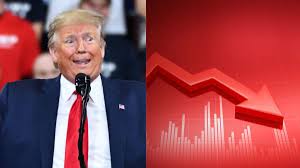
  • Trump Faces Record-Low Approval Ratings as Polls Show Declining Support Across Key Issues

    President Trump’s approval ratings are at or near historic lows, with declining support on the economy, immigration, and foreign policy.

    Blue Press Journal – As President Donald Trump concludes the first year of his second term, a series of new national polls reveal a sharp decline in public approval, underscoring deepening political divisions and waning confidence in his leadership. 

    Public Sentiment Turns Negative

    CNN poll released Friday found that nearly 60% of Americans view Trump’s first year back in office as a failure. Even on the economy—historically one of his strongest areas—55% say conditions have worsenedunder his leadership, with only 36% believing he is focused on the right priorities, a nine-point drop since last year. Trump’s overall job approval now sits at 39%, down from 48% in February 2024. 

    The same survey reports that a majority believe he has overstepped his presidential authority, reflecting growing concerns about the use of executive power. 

    Erosion in Party Support

    The Associated Press–NORC poll also reveals troubling signs for Trump within his own party. Only 16% of Republicans believe he has significantly helped with the cost of living—down from 49% in April 2024. Approval of his immigration policies among Republicans has slipped from 88% in March to 76% now, with overall national approval on immigration at 38%

    These numbers mark some of the lowest economic ratings recorded for Trump during both his presidencies. 

    Foreign Policy Opposition

    Other surveys echo similar concerns. A Reuters/Ipsos poll shows 58% disapproval of Trump’s job performance, with just 36% approving of his economic handling. Notably, 71% oppose military action against Greenland, and a Marist poll finds 56% against intervention in Venezuela—highlighting widespread discomfort with his foreign policy approach.

  • President Trump’s Greenland Tariffs and Military Threat: A Strategic Misstep That Risks NATO Unity

    Trump Risks to NATO and Global Stability

    Blue Press Journal – President Donald Trump’s recent announcement of a 10 percent tariff on Denmark and key European allies — paired with hints at possible military action to acquire Greenland — has sparked outrage across the political spectrum. Criticism has poured in not only from Democrats but also from prominent Republican senators like Thom Tillis (R-N.C.) and Lisa Murkowski (R-Alaska), who warn that these moves could fracture the NATO alliance, damage U.S. businesses, and hand geopolitical advantages to adversaries such as Russia and China.


    The Tariff Announcement

    On Saturday, Trump announced that 10 percent import taxes would be applied to Denmark, Norway, Sweden, France, Germany, the United Kingdom, the Netherlands, and Finland starting February 1, with rates rising to 25 percent by June 1. This sweeping measure targets some of America’s closest allies — nations that form the backbone of the North Atlantic Treaty Organization (NATO).

    The timing was no accident. Just days earlier, troops from several European countries arrived in Greenland to participate in joint military exercises led by Denmark. Rather than view this as a sign of allied cooperation, Trump framed it as a challenge to U.S. ambitions to control Greenland — ambitions he has been vocal about since 2019, when he publicly expressed interest in buying the territory.


    Greenland: Strategic Importance and Diplomatic Tensions

    Greenland’s location in the Arctic makes it strategically vital for defense and trade routes, especially as melting ice opens new shipping lanes. The U.S. already maintains a presence at Thule Air Base, but Trump’s suggestion of outright acquisition — and now the threat of military force — represents a sharp escalation.

    According to Danish officials, Greenland is not for sale. Denmark’s Prime Minister Mette Frederiksen famously called Trump’s proposal “absurd” in 2019, a remark that reportedly prompted Trump to cancel a state visit. That diplomatic rift has never fully healed, and the new tariffs risk deepening the divide.


    Republican Pushback

    While Trump often enjoys unified support from his party, this issue has triggered rare public dissent. Senator Thom Tillis criticized the idea of seizing territory from a NATO ally as “beyond stupid,” warning that it undermines Trump’s own stated goal of strengthening NATO.

    Lisa Murkowski echoed these concerns, calling the tariffs “unnecessary, punitive, and a profound mistake.” She stressed that such actions push European allies further away while offering zero tangible benefit to U.S. national security.

    Their warnings align with polling data showing that Americans overwhelmingly oppose military action to acquire Greenland. The notion of using force against an ally has alarmed foreign policy experts, who argue that it sets a dangerous precedent and erodes trust.


    Risks to NATO and Global Stability

    NATO’s strength lies in unity and mutual defense commitments. By imposing punitive tariffs on member states and suggesting military intervention against one of them, Trump risks splintering the alliance. This plays directly into the hands of leaders like Vladimir Putin, who have long sought to weaken NATO from within.

    The Danish-led exercises in Greenland were intended to bolster Arctic security against potential Russian expansion. Trump’s hostile response undermines that effort, forcing allies to divert resources toward defending against a hypothetical U.S. incursion rather than focusing on shared threats.


    Economic Consequences

    Beyond geopolitical fallout, Trump’s tariffs will likely hurt American businesses and consumers. Denmark and other targeted allies export high-quality goods — from pharmaceuticals to renewable energy technology — that support U.S. industries. Tariffs will raise costs, reduce competition, and strain supply chains at a time when global markets are already volatile.

    Trade wars have historically led to retaliatory measures. European nations could respond with tariffs of their own, further escalating tensions and harming sectors like agriculture, manufacturing, and technology.


    A Path Toward Diplomacy, Not Division

    President Trump’s aggressive stance toward Greenland — combining economic punishment with the possibility of military force — represents a high-stakes gamble that could damage U.S. credibility, weaken NATO, and aid rival powers. The bipartisan criticism from Senators Tillis and Murkowski underscores that this is not a partisan issue, but a matter of national interest and international stability.

    Rather than pursuing coercive tactics, the United States should focus on collaborative Arctic strategies with Denmark and its allies. Diplomacy, joint security initiatives, and respect for sovereignty are far more likely to strengthen America’s position in the Arctic than tariffs or threats.

  • Bari Weiss Accused of Pushing Dubious Pro-Trump Propaganda at CBS Amid Plummeting Ratings

    Exposing Bari Weiss’s reckless editorial decisions at CBS News, her allegiance to Trump-era narratives, and the network’s 40% decline in viewership.

    Blue Press Journal – Amid a deepening crisis of credibility and a historic collapse in viewership, CBS News, under the leadership of Editor-in-Chief Bari Weiss, is facing intense internal backlash for publishing a thinly-sourced report that appears to amplify Trump administration talking points. The controversial story, which claimed an ICE agent suffered severe “internal bleeding” after a fatal shooting, was approved by Weiss despite strenuous objections from senior staff who warned it was unverified and likely political propaganda.

    The report, based solely on anonymous sources regarding the shooting of 37-year-old Renee Nicole Good by ICE agent Jonathan Ross, immediately triggered red flags within the CBS newsroom. According to sources, two senior network officials sounded the alarm, pointing out the report’s lack of crucial details and questionable provenance. Their concerns were not just noted; they were actively overruled in a decision that has demoralized journalists committed to basic factual standards.

    Internal emails reveal a desperate plea for journalistic integrity that was ultimately ignored by top leadership. A medical producer urgently cautioned that the vague claim of “internal bleeding” required clarification, asking what specific treatment the agent received and whether he had undergone surgery. CBS News Senior Vice President David Reiter echoed these concerns in a scathing email, protesting the rush to publication. “I’m no doctor, but internal bleeding is a very broad term,” Reiter wrote, adding, “We do know that the ICE agent walked away from the incident—we have that on camera.” His warning was a clear signal that the narrative being pushed was, at best, misleading and, at worst, a deliberate fabrication.

    Despite these reservations from experienced news and medical personnel, Weiss reportedly expressed intense interest in pushing the story forward during an editorial call, steamrolling any and all opposition. As one beleaguered CBS staffer characterized the climate, “There was big internal dissension about the ‘internal bleeding’ report here last night. It was viewed as a thinly-veiled, anonymous leak by the Trump administration to someone who’d carry it online.” Under Weiss’s leadership, CBS News has seemingly become that carrier, eagerly publishing unverified claims that benefit a right-wing political agenda.

    Viewership Plummets as Trust Evaporates
    Weiss’s tenure has been marked by a steep decline in CBS News’ credibility and audience. Since her appointment in May 2022, CBS Evening News has seen its prime-time viewership drop by 40%—from an average of 2.8 million viewers in 2022 to just 1.68 million by late 2024. The network’s digital reach has also contracted, with social media engagement down 35%. Critics argue that Weiss’s push for Trump-sympathetic stories and her penchant for controversial, unverified claims have alienated both audiences and advertisers.

    The decision to run the dubious ICE agent story serves as a stark illustration of a news division at war with itself. With agenda-driven leadership overriding the cautions of its own journalists, CBS News under Bari Weiss is facing a catastrophic loss of trust—from its staff and the public alike. As ratings continue to freefall, the network’s future appears inextricably linked to the controversial and damaging path charted by its editor-in-chief.

  • Pentagon Blasted For Turning U.S. Military Newspaper Into Trump ‘Mouthpiece’

    Critics say the Trump administration’s move to limit editorial independence at Stars and Stripes threatens press freedom for U.S. service members

    Blue Press Journal – The Pentagon faced a backlash following its decision to effectively take control of the legendary U.S. military newspaper Stars and Stripes and crack down on its apparent “woke” tendencies.

    Defense Department spokesperson Sean Parnell on Thursday announced the publication would be returning to “its original mission: reporting for our warfighters.”

    It follows a controversial Pentagon’s press corps edict that saw scores of reporters leave the building, and a new Trump “loyalty test” for Stars and Stripes reporters.

    But free speech advocates hit out at out the decision to throttle an outlet that was first published during the Civil War, and whose editorial independence is mandated by Congress despite being part of Defense Department.

    Tim Richardson, journalism and disinformation program director of PEN America, said the country “needs more independent reporting – not less” as Trump’s foreign policy positions turn increasingly aggressive. 

    “American troops overseas deserve credible, trustworthy news guaranteed by the First Amendment, a cornerstone of the Constitution they defend,” he said in a statement. “Instead, the Pentagon is trying to turn this independent newsroom into a mouthpiece for the administration’s political messaging.”

    In a message to staff published in Stars and Stripes, Erik Slavin, the newspaper’s editor-in-chief, said “the people who risk their lives in defense of the Constitution have earned the right to the press freedoms of the First Amendment.”

    “We will not compromise on serving them with accurate and balanced coverage, holding military officials to account when called for,” he added.

  • Why Trump’s Healthcare Plan Fails Americans: A Critique of Vagueness, Risk, and Political Strategy

    Trump’s Healthcare Plan He Released Today Fails Americans

    Blue Press Journal (DC) – Donald Trump’s “affordability framework” for healthcare, touted as a solution to soaring drug prices and insurance premiums, has sparked significant criticism from experts, advocacy groups, and even within Congress. While the plan aims to address a pressing issue—healthcare costs for millions of Americans—the lack of concrete details, its potential risks, and its divergence from existing safeguards under the Affordable Care Act (ACA) render it inadequate, if not outright counterproductive. 

    Vagueness and Exclusion of Preexisting Conditions

    Trump’s proposal calls for allowing individuals to use government subsidies to purchase insurance plans of their choice. However, the plan conspicuously avoids specifying whether these plans would adhere to ACA mandates, including coverage for preexisting conditions. This omission has raised alarm among healthcare advocates, who argue that without such protections, people with chronic illnesses could face discrimination, unaffordable premiums, or outright denial of coverage. 

    The advocacy group Protect Our Care, among others, has lambasted the plan as a “joke” and a “gimmick,” emphasizing that Trump’s past policies have already weakened consumer protections. For instance, Trump’s administration rolled back the ACA’s community rating rules, allowing insurers to charge older Americans up to three times more than younger counterparts. Critics warn that his latest plan could exacerbate this problem by enabling insurers to offer cheaper, watered-down policies with minimal coverage, leaving vulnerable populations unprotected. 

    Failure to Address Expired ACA Subsidies

    One of the most urgent issues facing healthcare affordability today is the expiration of enhanced ACA premium subsidies, which led to a dramatic spike in costs for millions of Americans. The House passed a bipartisan three-year extension of these subsidies, which the Congressional Budget Office (CBO) estimates would add 3 million insured Americans by 2027 and 4 million by 2028. Yet Trump and Senate Republicans have stalled action on the extension, with Senate Majority Leader John Thune refusing to bring it to a vote. 

    Instead of supporting the proven solution, Trump advocates for subsidies to go directly to individuals rather than insurers—a shift that lacks a clear implementation strategy or funding mechanism. Protect Our Care accused the administration of “gaslighting” Americans by ignoring the root cause of the crisis: Trump’s own cuts to Medicaid and his refusal to reauthorize subsidies, which have left 22 million Americans in a coverage gap. “The solution isn’t rocket science,” the group stated. “It’s a clean extension of the ACA credits that passed the House.” 

    Vague Funding and No Concrete Cost-Containment Strategies

    Trump’s framework offers a broad outline but provides no specifics on how it would be funded or how it would lower drug prices—a central promise of the proposal. While Trump has long railed against pharmaceutical companies, his administration has failed to implement aggressive price negotiations that could reduce costs. Meanwhile, critics argue that his plan’s focus on subsidizing individuals rather than regulating insurers or drug manufacturers ignores systemic issues like hospital consolidation and insurance company profiteering. 

    The White House called the plan “comprehensive,” but the absence of legislative text or cost projections has led experts to question its feasibility. Without clear mechanisms to hold insurers and pharmaceutical companies accountable, the plan risks merely shifting costs rather than addressing them. 

    Undermining the ACA’s Infrastructure

    Rather than building on the ACA’s success in expanding coverage to 20 million Americans, Trump’s proposal risks destabilizing the existing healthcare market. By bypassing the ACA’s insurance marketplace rules, the plan could disrupt the system that subsidizes coverage for low- and middle-income families. Furthermore, Trump’s past attempts to repeal the ACA—and his cuts to Medicaid funding—have already eroded trust in his commitment to healthcare access. 

    Senators who blocked the House’s subsidy extension (via a unanimous consent agreement) underscored the political nature of the stalemate. Protect Our Care accused Trump of prioritizing “tax breaks for billionaires” over the needs of working families, noting that his administration’s policies have “taken a hammer to American healthcare.” 

    The Need for a Proven, Bipartisan Solution

    Trump’s healthcare plan lacks the substance, protections, and funding to meaningfully lower costs or expand access. Its omissions—particularly regarding preexisting conditions and expired subsidies—highlight its reliance on vague promises rather than tangible reforms. In contrast, the House’s three-year ACA subsidy extension, supported by bipartisan majorities and backed by the CBO, offers a clear, data-driven path forward. 

    As the midterm elections loom, Americans are sick of empty political theater and demand genuine solutions. Congress better wake up and prioritize the House’s critical extension to stabilize insurance markets or risks a public outcry as premiums spiral out of control. Meanwhile, Trump’s so-called plan is nothing more than a hollow shell, fixated on fleeting optics instead of ensuring real healthcare stability for the long haul. As Protect Our Care rightly asserts, “The American people deserve real solutions, not gimmicks.”