Tag: news

  • Blurring the Lines Between Fact and Fiction: Trump lies

    Donald Trump manipulates reality to support his authoritarian agenda by fabricating problems for the purpose of claiming he has resolved them. A pertinent example of this is his decision to deploy troops to Los Angeles.

    A decade ago, Trump famously descended an escalator, flanked by paid supporters who cheered on cue, to announce his presidential candidacy. He portrayed a grim picture of America, claiming it was a “dumping ground for everybody else’s problems.” He insisted the nation was “getting weaker” and no longer had greatness. In reality, his statements were constructed on false premises that contradicted the actual facts.

    Trump has engaged in a persistent disinformation campaign, presenting the United States as a catastrophic landscape whenever it serves his twisted political interests. In the lead-up to the 2024 election, he made outrageous assertions, such as claiming that Haitian immigrants were consuming cats and dogs and that Venezuelan criminals were overtaking towns in the Midwest. These statements lacked any factual basis and were purely fabricated in his distorted mind.

    Recently, he has invoked fictitious emergencies to exploit presidential power, alleging that the influx of undocumented immigrants constitutes an invasion orchestrated by a foreign entity. In response to protests in Los Angeles against his inhumane mass deportation efforts, Trump has redirected his disinformation campaign by sending troops to the city, with plans to extend this military presence to other cities to strengthen his control.

    Los Angeles exemplifies Trump’s manipulation of reality for his own ends. He claimed that the protests had resulted in “a lot of death” and suggested that the city would have been “obliterated” without the intervention of National Guard troops. These statements are far from accurate; the protests were predominantly peaceful until his troops were deployed, leading to only a few minor incidents that were adequately managed and put down by local law enforcement. Trump is shamelessly fabricating a dangerous narrative that vilifies American citizens who were peacefully protesting, their consstitutional right, for his own political gain.

    Many of Trump’s supporters and viewers of Fox News tend to accept his statements without question. A single photograph of three burning, driverless taxis has been repeatedly circulated to validate his actions. This pattern of misinformation resembles a game of whack-a-mole; as one falsehood is disproven, another is quickly generated to divert attention.

    We are witnessing a perilous moment in America. Masked federal agents are patrolling our streets, sometimes detaining American citizens without justification and striping them of their due process rights. In a recent incident, federal agents forcibly removed and assaulted Senator Alex Padilla (D-Calif.) as he attempted to ask a question at a press conference held by Homeland Security Secretary Kristi Noem within a federal building that housed his own offices.

    Trump’s trajectory leads toward authoritarianism, which some might label fascism. This is not reflective of American democracy. At its core, Trump’s disinformation campaign seeks to undermine—if not obliterate—our diverse and imperfect democracy, and his supporters are at the forefront of this assault on America’s fundamental promise.

    As he ages—79 and counting—do you really think things will improve? What’s it like for your grandfather at this ripe old age? Is he the kind of guy who gets into heated debates with the TV like it’s a worthy opponent?
  • Trump’s Brief Address on Iran: A Lack of Strategic Clarity

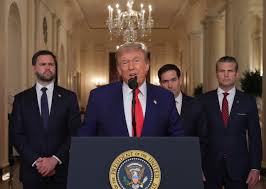
    President Trump’s address last night regarding the decision to join Israel’s military action against Iran was remarkably brief – under four minutes – and offered virtually no strategic rationale. This lack of explanation is particularly perplexing given his recent claims of making progress in talks with Iran. Why, then, was this attack launched?

    The strategic thinking articulated by Trump appears to contradict the views of most experts. The overwhelming consensus is that Iran will now retaliate and that prospects for a future agreement with the U.S. have significantly worsened. Adding to the concern, his short speech included explicit threats of further military action.

    For what is arguably the most consequential foreign policy decision of his second term, the American public received virtually no justification or strategic insight of why he has dragged us into this conflict. While suggesting a path toward de-escalation, he provided no clarity on how this could possibly be achieved immediately after initiating an attack, or how it would encourage Iran to negotiate. His remarks at times seemed confused, weak and contradictory. The action is almost certain to provoke substantial, escalatory retaliation, not just symbolic gestures. Many states have now heightened their readiness for potential threats here in the United States.

    Trump’s decision comes amidst considerable domestic disagreement over Iran policy, even fracturing his own political base. Critics warn that this approach risks entangling the United States in an unpredictable and costly regional conflict.

    The question now is: what comes next? It is almost certain that Iran will leverage its resources to retaliate against the United States, initiating a conflict widely seen as lacking both strategic logic and clear necessity.

  • RFK Jr. Poses a Threat to Vaccine Policy. Here’s How Doctors Are Preparing

    When it comes to vaccines, there are two kinds of parents coming into Dr. Megan Prior’s office in Washington, D.C., these days.

    One set are parents who pepper the pediatrician with increasingly panicked questions about the future availability of vaccines and whether their children can get any shots early. Then there are the parents who feel vindicated in their decision not to vaccinate their kids, despite vaccines’ overall safety and record of disease prevention.

    READ FULL STORY HERE

  • Amidst Crises, Trump Chooses Golf Over Governance

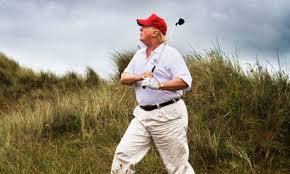
    We must relentlessly hammer this home until it resonates with the American voter. While the world crumbles around us, Trump sneaks off early yet again to indulge in a round of golf. How can we stand idly by?

    “Can you believe that, with all of the problems and difficulties facing the US, President Obama spent the day playing golf,” Trump tweeted in October 2014. “Worse than Carter.” Donald J. Trump

    By late March, estimates show his leisure trips have cost the public roughly $26 million, with projections nearing $30 million in early April.

    As global crises rage on, with headlines saturated by international conflict, domestic turmoil, and a faltering economy, Trump brazenly dashes away from the White House once more, seeking refuge in his private golf club in New Jersey for yet another weekend of indulgence.

    Trump is set to leave Washington at 2:00 PM, long before the usual workday wraps up. Oh, how many of us would cherish the chance to escape the relentless grind, to walk away from our unfinished tasks and embrace a taste of freedom!

    The president’s hasty exit highlights a troubling trend that critics slam as grossly misplaced priorities, prioritizing fundraising galas and comfortable getaways while neglecting the urgent responsibilities of governance.

  • Presidential Authority in Military Action Against Iran

    As the possibility of U.S. involvement in military action against Iran looms, questions are being raised regarding the President’s authority to act without explicit Congressional approval. Reflecting these concerns, lawmakers introduced resolutions in both the House and Senate this week that would mandate Congressional authorization before U.S. forces could participate in any offensive operations.

    The debate hinges on the interpretation of the “Declare War” clause in the Constitution. The Department of Justice’s Office of Legal Counsel (OLC) has previously recognized that this clause potentially limits the President’s inherent Article II authority to deploy the military into situations that constitute a “war.”

    While presidents possess significant constitutional authority to use military force, historically, both Republican and Democratic administrations have generally sought Congressional authorization – or argued that existing authorizations apply – before undertaking substantial or prolonged military engagements. This practice reflects a desire to navigate both the legal and political complexities inherent in deploying U.S. forces abroad.

    An attack on Iran represents a potentially significant expansion of presidential authority in this area. Such action carries considerable risks for U.S. military personnel and citizens, further underscoring the need for careful consideration of the legal and constitutional implications.

  • Climate Crisis: Effects of Trump’s Withdrawal on Agriculture and Our Future

    Donald Trump’s decision reflects a profound lack of foresight and jeopardizes the future for generations to come.

    Presidents Trump’s withdrawal from the Paris Agreement, a landmark accord representing global cooperation and shared responsibility in addressing climate change, marked a significant setback. As climate-related disasters surge in frequency and severity, from devastating wildfires and intense hurricanes to unprecedented heat waves, this decision casts a long shadow over future national and international progress.

    A recent 2025 study underscores the escalating threat, revealing that extreme weather patterns are poised to severely impact crop yields. The study projects potential production declines of key U.S. crops by as much as 50% by the end of the century. This potential damage to the global food system stands as one of the most alarming consequences of climate change. Researchers analyzed six vital crops – maize, soybeans, rice, wheat, cassava, and sorghum – across over 12,000 regions in 54 countries. These crops collectively provide more than two-thirds of the world’s caloric intake.

    The revelations are alarming: for each 1 degree Celsius rise above the pre-industrial threshold, the world faces a staggering drop of 120 calories in daily food production per person. Imagine this—should we endure a 3-degree Celsius surge, we would witness a dramatic decline in the caloric intake of our global family, akin to the heartbreaking scenario of every individual on this planet skipping breakfast.

    Trump’s withdrawal doesn’t signify a failure of the Paris Agreement itself, but rather a critical lapse in leadership. It represents a deliberate weakening of the multilateral system at a moment when global solidarity is paramount to effectively combat the climate crisis.

    With the next decade considered a crucial window for curbing global warming, the ramifications of federal inaction will resonate across the nation. Climate change is already intensifying hurricanes, triggering devastating floods, and fueling wildfires, as demonstrated by recent catastrophic events. These extreme weather events inflict over $100 billion in damages annually in the United States, forcing families to flee their homes and tragically resulting in the loss of lives and livelihoods.

    Donald Trump’s decision reflects a profound lack of foresight and jeopardizes the future for generations to come.

  • Public Concern Grows Over Trump’s Policies and Approval Decline

    President Trump’s declining approval ratings should be a cause for concern for the Republican Party, particularly as they push forward with a budget that prioritizes tax cuts for the wealthy. Recent polling data, such as the June 16th Reuters/Ipsos poll showing Trump’s approval at 42%, reveals a significant erosion of public support. This decline is particularly evident in key areas: his immigration policies have seen a drop in approval from 47% in May to 44%, while a majority (52%) disapprove of his handling of the economy and foreign policy. These figures suggest widespread dissatisfaction with the President’s overall policy agenda.

    Further fueling public unease is the perception of conflicts of interest. A substantial 62% of Americans express worry about the potential influence of the President’s personal wealth on his political decisions. This concern is likely exacerbated by Trump’s recent actions, such as his brinkmanship regarding potential military conflict in the Middle East between Iran and Israel. This aggressive posture, while perhaps consistent with his campaign rhetoric, seems to have generated a sense of buyer’s remorse among some voters. The combination of falling approval ratings and growing concerns about conflicts of interest presents a significant challenge to the Republican Party as they navigate the current political landscape.

  • Noem’s Spending Spree: A $1 Billion DHS Over Budget

    Homeland Security Secretary Kristi Noem seems to be treating the Department of Homeland Security (DHS) budget like a party fund, already blowing it by about $1 billion—who knew there was so much cash for glitter? Must be all those costumes she wears. And if that wasn’t enough, she’s eyeing a $40 million plane for her personal joyrides! Meanwhile, Immigration and Customs Enforcement (ICE) is deporting individuals slower than a turtle on vacation compared to last year under President Joe Biden—yet this juicy tidbit is hardly ever mentioned by FOX News, probably because it doesn’t fit their favorite storybook plot.

    Noem’s spending on ICE appears to surpass authorized amounts by roughly a billion dollars, which raises serious legal concerns regarding the misuse of funds.

    President Donald Trump, meanwhile, is like the kid in class who blames everyone else for his messy desk instead of cleaning up his own act. You know the type—“Whine, whine, it’s not my fault!” During one of his riveting speeches at the G7 summit in Canada, he took aim at “Democrat-run cities” and his predecessor, showcasing his unique ability to miss the point entirely. When he’s not perfecting his golf swing, Trump loves to scribble on executive orders—sometimes with the same level of comprehension as a toddler drawing on the walls—or unleashes fiery speeches that could ignite a campfire. Plus, he’s got a knack for turning his presidential perch into a personal cash register, always looking for a way to cash in!

  • Trump and the Military Crossed a Line

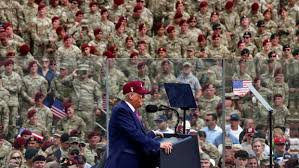
    Recent internal communications from the 82nd Airborne Division reveal a carefully orchestrated effort to shape the narrative around President Trump’s recent visit. Documents indicate that soldiers were selectively chosen to appear behind Trump based on their political affiliations and physical characteristics. The men chosen to stand behind him during the event were predominantly male. Their enthusiastic laughter and applause during Trump’s partisan speech marked a startling and uncommon moment where military personnel publicly engaged in overt political partisanship.

    One source disclosed a message to troops indicating that those who held opposing political views to the current administration and preferred not to be present should discuss with leadership to not attend. This situation unfolded at Fort Bragg, North Carolina, showcasing a stark departure from the usual presidential visit, which is typically characterized by decorum and neutrality. Instead, Trump delivered a speech filled with partisan rhetoric, drawing boisterous responses from soldiers behind him, thereby blurring the critical line between military duty and political engagement.

    Compounding the unconventional nature of the event, a retailer from Tulsa, Oklahoma, sold pro-Trump merchandise on-site. Allowing the sale of explicitly partisan items on an Army base likely violates numerous Defense Department regulations designed to uphold the military’s longstanding commitment to political neutrality, a commitment the Army has historically taken great care to maintain.

    Trump has taken partisanship further than any prior president, treating gatherings with troops as campaign events and openly criticizing his rivals. Retired Army Lt. Gen. Russel Honore, renowned for his role in coordinating military aid during Hurricane Katrina, labeled the speech “inappropriate,” asserting he had never witnessed anything like it during his 37 years of service.

    With military presence in LA and directives from the President aimed at political military initiatives, it is essential for Americans to recognize the gravity of this situation. The military’s involvement in such overtly partisan activities poses a significant threat to our constitutional principles, marking a dangerous departure from the ideals of neutrality and professionalism that have long defined our armed forces.

  • Army Values that Trump does not Support or Understand

    On Saturday evening, the capital of the United States will take on an appearance reminiscent of North Korea’s Pyongyang, China’s Beijing, and Russia’s Red Square, featuring tanks and missile launchers parading through the streets. This spectacle—a $45 million “birthday gift” to himself, funded by taxpayers—highlights a troubling trend in American politics.

    The U.S. military is designed to remain apolitical, standing apart from politics and the whims of elected officials. This principle is what sets America apart from other nations and contributes to its greatness. 

    Kentucky Republican Senator Rand Paul expressed skepticism about the parade’s symbolism, telling HuffPost, “I don’t really think the symbolism of tanks and missiles is really what we’re all about. If you ask me about a military parade, the first images that come to mind are of the Soviet Union and North Korea.” 

    Interestingly, this monumental event aligns with the 250th birthday of the U.S. Army, overshadowing Donald Trump’s own 79th birthday. Isn’t it ironic how the mainstream media has made such a fuss over Biden’s age at 81, while we often overlook that Trump is just 79? Let’s not ignore the math here.

    Although both the Navy and the Marines also celebrate significant anniversaries this year, there has been no discussion of organizing lavish $45 million events for them. This raises questions about why only Trump’s birthday seems to warrant such extravagant recognition.

    The military parade appears to promote an authoritarian display of power, further emphasized by the unnecessary deployment of U.S. troops to police American streets, as confirmed by the Los Angeles police chief. 

    Historically, the United States has held very few military parades, the last occurring in 1991 during George H.W. Bush’s presidency, after American forces pushed Iraqi dictator Saddam Hussein out of Kuwait—an event justifying a celebration of military success.

    Despite Trump’s frequent proclamations of support for the armed forces, his history reveals a stark disregard for military service and its values. He evaded the Vietnam War draft, citing “bone spurs,” with a doctor who was a family friend providing the diagnosis. Moreover, during his presidential campaign in 2015, Trump insulted Arizona Senator John McCain—an esteemed veteran who endured nearly six years of imprisonment and torture—by claiming he was not a hero simply because he was captured, stating he preferred those who avoided capture. Reports from his former chief of staff indicate that Trump referred to fallen military members as “suckers” and “losers,” demonstrating a clear lack of respect for their sacrifices.

    Trump also broke the long-standing tradition of a commander-in-chief personally shaking hands with every graduating cadet at a military academy, leaving West Point immediately after his speech to return to his golf resort in New Jersey. In contrast, Joe Biden devoted time to congratulating each graduate last year, spending 70 minutes with them—reflecting a commitment to honoring military service that Trump failed to show during his tenure, even when he had participated in similar ceremonies in the past.

    As we witness this parade today, it’s crucial to honor the Army’s 250 years of service to our nation and celebrate the values they embody—principles that Trump himself seems to overlook or misunderstand.